Loading...
Heng Swee Keat vs John Adams
John Adams leads by 15.3 pts · 2 figures compared
…

Heng Swee Keat
Politician · Modern
49.4Total
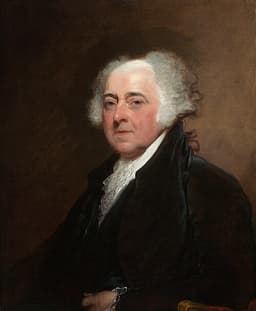
John Adams
Politician · Modern
64.7Total
Basic Information
Born
1961
1735
Died
—
1826
Era
Modern
Modern
Nationality
Singapore
United States
Occupation
Politician
Politician
Civilization
Eastern
Western
Score Comparison
Military (10%)
15.1
49.7
Political (20%)
72.0
70.0
Influence (20%)
51.0
82.0
Legacy (20%)
39.2
55.0
Leadership (15%)
72.0
72.0
Strategy (15%)
37.9
42.0
TOTAL
49.4
64.7
Heng Swee Keat — Complete Timeline
2011 AD
Appointed Minister for EducationPolitical Action◆ Major
Heng Swee Keat was appointed Minister for Education, where he oversaw reforms in Singapore's education system, including the introduction of the 'Learn for Life' movement and changes to the PSLE scoring system.
EducationReformSingapore
Impact: nationalconstructive
Elected to Parliament for Tampines GRCPolitical Action
Heng Swee Keat was first elected to Parliament as a Member of Parliament for Tampines GRC. This marked the start of his political career in the People's Action Party.
ElectionParliamentPAP
constructive
2015 AD
Appointed Deputy Prime MinisterPolitical Action◆ Major
Heng Swee Keat was appointed Deputy Prime Minister, serving until 2024. He was widely seen as the designated successor to Prime Minister Lee Hsien Loong, but stepped aside from the succession race in 2021.
GovernmentLeadershipSuccession
Impact: national
Appointed Minister for FinancePolitical Action◆ Major
Heng was appointed Minister for Finance, overseeing Singapore's fiscal policy and economic management. He introduced the 'Singapore Together' movement and managed the budget during the COVID-19 pandemic.
FinanceEconomyBudget
Impact: nationalconstructive
2021 AD
Stepped Aside from Prime Minister SuccessionPolitical Action◆ Major
Heng Swee Keat announced he would step aside as the designated successor to Prime Minister Lee Hsien Loong, citing age and the need for a younger leader. This reshuffled the leadership succession within the People's Action Party.
SuccessionPAPLeadership
Impact: national
John Adams — Complete Timeline
1770 AD
Defense of the British Soldiers in the Boston Massacre TrialPolitical Action◆ Major
Adams defended British soldiers accused of murder in the Boston Massacre. He secured acquittals for most, arguing for fair trial rights. This action demonstrated his commitment to rule of law despite political pressure.
Boston MassacreLegal DefenseAmerican Revolution
1796 AD
Election as Second President of the United StatesPolitical Action◆ Major
Adams was elected as the second US president, defeating Thomas Jefferson. His presidency was marked by tensions with France, the XYZ Affair, and the passage of the Alien and Sedition Acts.
PresidencyUS PoliticsElection
Impact: national
1798 AD
Signing of the Alien and Sedition ActsPolitical Action◆ Major
Adams signed the Alien and Sedition Acts, which restricted immigration and criminalized criticism of the government. These acts were widely condemned as violations of free speech and led to the Kentucky and Virginia Resolutions.
Alien and Sedition ActsCivil LibertiesUS Politics
Impact: nationaldestructive
1801 AD
Appointment of John Marshall as Chief JusticePolitical Action◆ Major
Adams appointed John Marshall as Chief Justice of the Supreme Court in the final months of his presidency. Marshall's tenure established judicial review and shaped American constitutional law for decades.
Supreme CourtJudicial ReviewUS Constitution
Impact: nationalconstructive
Peaceful Transfer of Power to Thomas JeffersonPolitical Action
Adams peacefully transferred power to his political rival Thomas Jefferson after losing the 1800 election. This set a precedent for peaceful transitions of power in the United States.
Peaceful TransferUS PoliticsDemocracy
Impact: nationalconstructive
Expert Analysis
Origins
Heng Swee Keat was born in 1961 in Singapore. He studied at the University of Cambridge, earning a degree in economics, and later obtained a master's in public administration from Harvard. His formative years were shaped by Singapore's rapid development. He worked in the civil service, rising to become Principal Private Secretary to Prime Minister Lee Kuan Yew. John Adams was born in 1735 in Braintree, Massachusetts. He graduated from Harvard College in 1755 and became a lawyer. His early experiences included witnessing the injustices of British colonial rule, which fueled his revolutionary fervor.
Rise to Power
Heng Swee Keat entered politics in 2011, winning a seat in Tampines GRC. He quickly rose through the ranks, becoming Minister for Education in 2011 and Minister for Finance in 2015. In 2019, he was appointed Deputy Prime Minister and was widely seen as the designated successor to Prime Minister Lee Hsien Loong. However, in 2021, he announced he would step aside from the succession race, citing age and the need for a younger leader. John Adams rose to prominence as a lawyer and a leader of the American Revolution. He was a delegate to the Continental Congress and played a key role in drafting the Declaration of Independence. He served as a diplomat in Europe during the war and became the first Vice President under George Washington in 1789. He was elected as the second President in 1796.
Leadership & Governance
Heng Swee Keat's leadership style is technocratic and consensus-driven. As Minister for Finance, he introduced the "Singapore Together" movement, emphasizing partnerships between government, businesses, and citizens. His governance approach focused on fiscal prudence and managing Singapore's reserves. In contrast, John Adams was a passionate and often combative leader. His presidency was marked by the Quasi-War with France and the passage of the Alien and Sedition Acts, which restricted civil liberties. Adams's leadership score of 72.0 matches Heng's 72.0, but their styles differed: Heng's incremental vs. Adams's confrontational.
Triumph & Tragedy
Heng Swee Keat's greatest success was his stewardship of Singapore's economy during uncertain times, including the COVID-19 pandemic. He oversaw significant fiscal stimulus and helped maintain confidence. His tragedy was his failure to secure the premiership; stepping aside marked a rare instance of a designated successor withdrawing. John Adams's greatest triumph was his role in securing American independence and establishing a peaceful transfer of power after losing the 1800 election. His tragedy was the Alien and Sedition Acts, which damaged his reputation and contributed to his defeat. Adams also failed to avoid war with France, though he ultimately avoided full conflict.
Character & Destiny
Heng Swee Keat is known for his meticulous, analytical approach. He is reserved and avoids confrontation. His decision to step aside reflects a pragmatic, self-aware character. John Adams was proud, principled, and often irritable. His character led him to take unpopular stands, such as defending British soldiers after the Boston Massacre. His destiny was to be a founding father but a one-term president, overshadowed by Washington and Jefferson.
Legacy
Heng Swee Keat's legacy is still forming. He will be remembered for his contributions to education and finance policy, and for his graceful exit from the succession race. His political influence score of 51.0 reflects his limited time at the top. John Adams's legacy is more established. He is remembered as a key architect of American independence and a defender of the rule of law. His appointment of John Marshall as Chief Justice shaped the Supreme Court for centuries. Adams's legacy score of 55.0 is higher than Heng's 39.2.
Conclusion
John Adams had a greater impact on history than Heng Swee Keat. Adams's total score of 64.7 exceeds Heng's 49.4 by 15.3 points. Adams shaped the founding of a nation and set precedents for democratic governance. Heng Swee Keat, while competent, operated within an established system and his influence was largely domestic and temporary. Adams's decisions—from the defense of British soldiers to the peaceful transfer of power—have enduring global significance. Heng's stepping aside was notable but not transformative. Therefore, John Adams stands as the more consequential figure.
Rankings
🥇
John AdamsLeader
Mil: 49.7Pol: 70.0Inf: 82.0
64.7
🥈
Heng Swee Keat
Mil: 15.1Pol: 72.0Inf: 51.0
49.4
+15.3 behind
How This Comparison Works
Algorithm
Each figure is scored on 6 dimensions (0—100 scale) based on structured historical data: Military (10%), Political (20%), Influence (20%), Legacy (20%), Leadership (15%), Strategy (15%). The weighted total produces the final ranking.
Data Sources
Scores are computed from structured sub-indicators in the database. Scale factors adjust for era (Ancient ×0.85, Modern ×1.0) and civilization size (Eastern ×1.05, Other ×0.80) to account for differences in population and military scale.
Maximum 3 Figures
Comparisons are limited to 2—3 figures to ensure readability and statistical meaningfulness.
Error Margins
±5 points per dimension — Sub-scores are derived from historical records with inherent uncertainty. Two figures within 5 points on a dimension should be considered roughly equivalent in that area.
Total Score Accuracy
±3 points overall — The weighted combination of 6 dimensions produces a total score with approximately ±3 points of uncertainty. Differences of less than 3 points are not statistically significant— the figures are effectively tied.
Known Limitations
- Historical records are incomplete and uneven across civilizations
- Figures from oral-tradition societies may be underrepresented
- Occupation labels can misclassify multi-role figures
- Scores measure capability and impact, not moral character
- Quantitative scoring is a comparison tool, not absolute truth
Capability Radar
Military (10%) — Battles & Warfare
Battles
12
26
Win Rate
17
32
Expansion
21
38
Political (20%) — Governance & Reform
Reform
55
75
Diplomacy
60
85
Economy
70
55
Influence (20%) — Cultural & Global Reach
Cultural
20
65
Global
25
65
Legacy (20%) — Historical Impact
Historical
20
75
Longevity
15
70
Leadership (15%) — Power & Stability
Tenure
65
60
Stability
60
50
Strategy (15%) — Tactics & Innovation
Strategy
22
41
Tactics
24
38
Reform
27
42
Similar Comparisons
Comments & Discussion
No comments yet. Be the first to share your thoughts!