Loading...
John Adams vs Suleyman Demirel
John Adams leads by 8.1 pts · 2 figures compared
…
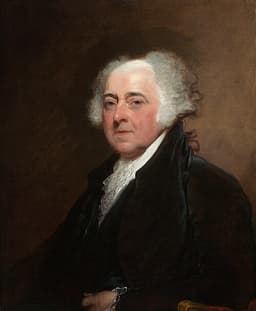
John Adams
Politician · Modern
64.7Total

Suleyman Demirel
Politician · Modern
56.6Total
Basic Information
Born
1735
1924
Died
1826
—
Era
Modern
Modern
Nationality
United States
Turkey
Occupation
Politician
Politician
Civilization
Western
Middle Eastern
Score Comparison
Military (10%)
49.7
28.3
Political (20%)
70.0
59.3
Influence (20%)
82.0
61.0
Legacy (20%)
55.0
54.0
Leadership (15%)
72.0
78.0
Strategy (15%)
42.0
44.1
TOTAL
64.7
56.6
John Adams — Complete Timeline
1770 AD
Defense of the British Soldiers in the Boston Massacre TrialPolitical Action◆ Major
Adams defended British soldiers accused of murder in the Boston Massacre. He secured acquittals for most, arguing for fair trial rights. This action demonstrated his commitment to rule of law despite political pressure.
Boston MassacreLegal DefenseAmerican Revolution
1796 AD
Election as Second President of the United StatesPolitical Action◆ Major
Adams was elected as the second US president, defeating Thomas Jefferson. His presidency was marked by tensions with France, the XYZ Affair, and the passage of the Alien and Sedition Acts.
PresidencyUS PoliticsElection
Impact: national
1798 AD
Signing of the Alien and Sedition ActsPolitical Action◆ Major
Adams signed the Alien and Sedition Acts, which restricted immigration and criminalized criticism of the government. These acts were widely condemned as violations of free speech and led to the Kentucky and Virginia Resolutions.
Alien and Sedition ActsCivil LibertiesUS Politics
Impact: nationaldestructive
1801 AD
Appointment of John Marshall as Chief JusticePolitical Action◆ Major
Adams appointed John Marshall as Chief Justice of the Supreme Court in the final months of his presidency. Marshall's tenure established judicial review and shaped American constitutional law for decades.
Supreme CourtJudicial ReviewUS Constitution
Impact: nationalconstructive
Peaceful Transfer of Power to Thomas JeffersonPolitical Action
Adams peacefully transferred power to his political rival Thomas Jefferson after losing the 1800 election. This set a precedent for peaceful transitions of power in the United States.
Peaceful TransferUS PoliticsDemocracy
Impact: nationalconstructive
Suleyman Demirel — Complete Timeline
1965 AD
First Term as Prime Minister of TurkeyPolitical Action◆ Major
Suleyman Demirel became Prime Minister of Turkey for the first time, leading a coalition government of the Justice Party. He served seven non-consecutive terms as prime minister between 1965 and 1993.
Prime MinisterJustice PartyCoalition
Impact: nationalconstructive
1971 AD
Ousted by the 1971 Military MemorandumPolitical Action◆ Major
The Turkish military issued a memorandum demanding Demirel's resignation, citing political instability and economic crisis. Demirel resigned, leading to a period of military-backed governments.
Military InterventionResignationPolitical Crisis
Impact: nationaldestructive
1980 AD
Ousted by the 1980 Military CoupPolitical Action
The Turkish military staged a coup, overthrowing Demirel's government amid widespread political violence and economic turmoil. Demirel was banned from politics for a decade.
Military CoupPolitical Ban1980 Coup
Impact: nationaldestructive
1991 AD
Return to Politics and Seventh Term as Prime MinisterPolitical Action◆ Major
After the 1987 referendum lifted the political ban, Demirel returned as leader of the True Path Party. He became prime minister for the seventh time, leading a coalition government.
Return to PoliticsTrue Path PartyCoalition
Impact: nationalconstructive
1993 AD
Elected President of TurkeyPolitical Action◆ Major
Demirel was elected as the 9th President of Turkey by the Grand National Assembly. He served as president until 2000, focusing on stability and European integration.
PresidencyHead of StateEuropean Integration
Impact: nationalconstructive
Expert Analysis
Origins
John Adams was born in 1735 in Braintree, Massachusetts, into a modest farming family. He graduated from Harvard College in 1755 and initially taught school before studying law. His Puritan upbringing instilled a strong sense of duty and moral rectitude. Suleyman Demirel was born in 1924 in Islamkoy, Turkey, into a peasant family. He studied civil engineering at Istanbul Technical University and later worked on large infrastructure projects. His rural background shaped his populist appeal and pragmatic approach to politics.
Rise to Power
Adams rose to prominence as a leading voice for American independence. He served in the Continental Congress, drafted the Massachusetts Constitution, and was a key diplomat in Europe. His defense of British soldiers after the Boston Massacre in 1770 showcased his commitment to the rule of law. He was elected the first vice president under George Washington and then became the second president in 1796, narrowly defeating Thomas Jefferson. Demirel entered politics in the 1960s as a technocrat and became leader of the Justice Party. He first became prime minister in 1965, advocating for economic development and close ties with the West. His rise was marked by coalition building and navigating a volatile political landscape.
Leadership & Governance
Adams' leadership was principled but often confrontational. He signed the Alien and Sedition Acts in 1798, which curtailed civil liberties and alienated many. He also avoided war with France through diplomacy, a significant achievement. His governance style was formal and legalistic, emphasizing constitutional order. Demirel, by contrast, was a master of political survival. He served seven terms as prime minister and one as president, often shifting alliances to maintain power. He pursued economic liberalization and infrastructure projects, but his tenure was punctuated by military interventions. In 1971 and 1980, the Turkish military forced him from office, yet he returned each time. His leadership scored 78.0 for its resilience, but his political score of 59.3 reflects the instability of his era.
Triumph & Tragedy
Adams' greatest triumph was the peaceful transfer of power to his rival Jefferson in 1801, setting a precedent for democratic transitions. His appointment of John Marshall as Chief Justice shaped American jurisprudence for centuries. However, the Alien and Sedition Acts were a major failure, tarnishing his legacy and fueling opposition. Demirel's triumphs include overseeing Turkey's economic growth and preserving democratic processes amidst military threats. He was a symbol of civilian rule. His tragedies include the 1980 coup that banned him from politics for a decade, and the ongoing political instability that marred his terms. Demirel scored 54.0 in legacy, slightly below Adams' 55.0.
Character & Destiny
Adams was intelligent, honest, but also vain and combative. His inability to compromise alienated allies and opponents alike. His character led to a single-term presidency and a sense of being underappreciated. Demirel was pragmatic, charismatic, and resilient. He adapted to changing circumstances, often at the cost of ideological consistency. His destiny was to be a perennial figure in Turkish politics, surviving coups and bans. Historical assessments note Adams as a foundational architect of American democracy, while Demirel is seen as a durable but flawed politician.
Legacy
Adams' legacy is secure as a Founding Father who championed independence and the rule of law. His defense of British soldiers underscores his commitment to justice. The peaceful transfer of power he initiated remains a cornerstone of American democracy. Demirel's legacy is mixed: he is credited with modernizing Turkey's economy and maintaining civilian governance, but criticized for political opportunism and instability. His scores: military 28.3, political 59.3, influence 61.0, legacy 54.0, leadership 78.0, strategy 44.1, total 56.6. Adams: military 49.7, political 70.0, influence 82.0, legacy 55.0, leadership 72.0, strategy 42.0, total 64.7.
Conclusion
John Adams had a greater impact than Suleyman Demirel. His contributions to the founding of the United States and the establishment of democratic norms have global significance. While Demirel was a significant figure in Turkish politics, his influence was more transient and context-dependent. Adams' total score of 64.7 surpasses Demirel's 56.6, reflecting his higher political and influence scores. The peaceful transfer of power alone is a legacy that outweighs Demirel's achievements. Thus, Adams holds the edge in historical importance.
Rankings
🥇
John AdamsLeader
Mil: 49.7Pol: 70.0Inf: 82.0
64.7
🥈
Suleyman Demirel
Mil: 28.3Pol: 59.3Inf: 61.0
56.6
+8.1 behind
How This Comparison Works
Algorithm
Each figure is scored on 6 dimensions (0—100 scale) based on structured historical data: Military (10%), Political (20%), Influence (20%), Legacy (20%), Leadership (15%), Strategy (15%). The weighted total produces the final ranking.
Data Sources
Scores are computed from structured sub-indicators in the database. Scale factors adjust for era (Ancient ×0.85, Modern ×1.0) and civilization size (Eastern ×1.05, Other ×0.80) to account for differences in population and military scale.
Maximum 3 Figures
Comparisons are limited to 2—3 figures to ensure readability and statistical meaningfulness.
Error Margins
±5 points per dimension — Sub-scores are derived from historical records with inherent uncertainty. Two figures within 5 points on a dimension should be considered roughly equivalent in that area.
Total Score Accuracy
±3 points overall — The weighted combination of 6 dimensions produces a total score with approximately ±3 points of uncertainty. Differences of less than 3 points are not statistically significant— the figures are effectively tied.
Known Limitations
- Historical records are incomplete and uneven across civilizations
- Figures from oral-tradition societies may be underrepresented
- Occupation labels can misclassify multi-role figures
- Scores measure capability and impact, not moral character
- Quantitative scoring is a comparison tool, not absolute truth
Capability Radar
Military (10%) — Battles & Warfare
Battles
26
22
Win Rate
32
22
Expansion
38
26
Political (20%) — Governance & Reform
Reform
75
65
Diplomacy
85
70
Economy
55
60
Influence (20%) — Cultural & Global Reach
Cultural
65
45
Global
65
50
Legacy (20%) — Historical Impact
Historical
75
55
Longevity
70
50
Leadership (15%) — Power & Stability
Tenure
60
85
Stability
50
55
Strategy (15%) — Tactics & Innovation
Strategy
41
31
Tactics
38
33
Reform
42
36
Similar Comparisons
Comments & Discussion
No comments yet. Be the first to share your thoughts!