Loading...
Janos Kadar vs Yashwantrao Chavan
Yashwantrao Chavan leads by 1.9 pts · 2 figures compared
…
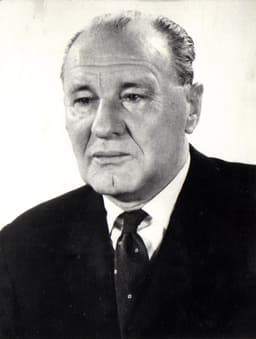
Janos Kadar
Politician · Modern
56.5Total

Yashwantrao Chavan
Politician · Modern
58.4Total
Basic Information
Born
1912
1913
Died
1989
1984
Era
Modern
Modern
Nationality
Hungary
India
Occupation
Politician
Politician
Civilization
Western
Indian
Score Comparison
Military (10%)
49.8
37.9
Political (20%)
60.0
72.0
Influence (20%)
56.4
58.0
Legacy (20%)
49.2
50.0
Leadership (15%)
79.8
72.0
Strategy (15%)
41.7
60.0
TOTAL
56.5
58.4
Janos Kadar — Complete Timeline
1956 AD
Appointment as First Secretary of the Hungarian Socialist Workers' PartyPolitical Action◆ Major
Kadar was appointed First Secretary after the Soviet invasion crushed the Hungarian Revolution. He initially supported the revolution but then collaborated with the Soviets, a move that defined his controversial legacy.
Communist leadership1956 Revolution
Impact: national
1958 AD
Execution of Imre NagyPolitical Action◆ Major
Kadar's government tried and executed former Prime Minister Imre Nagy for his role in the 1956 Revolution. This act solidified Kadar's power but also made him a deeply unpopular figure among many Hungarians.
Political repression1956 Revolution
Impact: nationaltragic
1968 AD
Introduction of Goulash CommunismReform◆ Major
Kadar introduced the New Economic Mechanism, a series of market-oriented reforms that allowed limited private enterprise and consumer goods. This 'goulash communism' improved living standards and made Hungary the most liberal country in the Eastern Bloc.
Economic reformLiberalization
Impact: nationalconstructive
1988 AD
Resignation from PowerPolitical Action◆ Major
Facing economic stagnation and growing political opposition, Kadar was forced to resign as party leader. He was replaced by a reformist faction, marking the end of his 32-year rule.
Fall of communism
Impact: national
Yashwantrao Chavan — Complete Timeline
1960 AD
Became First Chief Minister of MaharashtraPolitical Action◆ Major
Yashwantrao Chavan became the first Chief Minister of the newly formed state of Maharashtra after the bifurcation of Bombay State. He led the state through its formative years, focusing on industrial development and cooperative movements.
Chief MinisterMaharashtraState Formation
Impact: regionalconstructive
1971 AD
Served as Defence Minister during the 1971 Indo-Pakistan WarWar◆ Major
As Defence Minister, Chavan oversaw India's military operations during the war that led to the creation of Bangladesh. The war resulted in a decisive Indian victory and the largest military surrender since World War II.
Indo-Pakistan WarDefence MinisterBangladesh Liberation
Impact: regionalconstructive
1973 AD
Served as Finance Minister and Presented the 'Black Budget'Political Action
As Finance Minister, Chavan presented the 1973-74 Union Budget, which became known as the 'Black Budget' due to its large fiscal deficit. The budget included measures to nationalize coal mines and impose a ceiling on urban land holdings.
Finance MinisterBudgetEconomic Policy
Impact: national
1979 AD
Served as Deputy Prime Minister of IndiaPolitical Action◆ Major
Chavan served as Deputy Prime Minister under Prime Minister Morarji Desai in the Janata Party government. He also held the Home Ministry portfolio, dealing with internal security and political stability during a turbulent period.
Deputy Prime MinisterHome MinisterJanata Party
Impact: nationalconstructive
Expert Analysis
Origins
Janos Kadar was born on May 26, 1912, in Fiume (now Rijeka, Croatia), into a poor family. His father worked as a sailor and died when Kadar was young; he was raised by his mother in relative poverty. He left school at age 14 and worked as a mechanic, joining the illegal Hungarian Communist Party in 1931. His early experiences of hardship and his commitment to communism shaped his pragmatic approach to politics.
Yashwantrao Chavan was born on March 12, 1913, in a farming family in Devrashtre, Maharashtra. He was the eldest of three children and faced financial struggles, walking several miles to school. He earned a degree in law from the University of Bombay and became involved in the Indian independence movement, joining the Indian National Congress. His rural background and legal training grounded his political career.
Rise to Power
Kadar rose within the Hungarian Communist Party, but his ascent was marked by betrayal. During the 1956 Hungarian Revolution, he initially supported the reformist government of Imre Nagy. However, after the Soviet invasion, Kadar switched sides and was appointed First Secretary of the Hungarian Socialist Workers' Party on November 4, 1956, with Soviet backing. He consolidated power by purging opponents and, in a decisive act, sanctioned the execution of Imre Nagy in 1958, which cemented his authority but also tarnished his reputation.
Chavan's rise was more conventional within India's democratic framework. He became the first Chief Minister of Maharashtra on May 1, 1960, after the state's formation. He skillfully managed the linguistic reorganization and established Marathi as an official language. His administrative competence led to his appointment as Defence Minister in 1966, and later as Home Minister. He served as Deputy Prime Minister in 1979 under Morarji Desai, though his tenure was brief.
Leadership & Governance
Kadar's leadership style was authoritarian but pragmatic. He introduced the New Economic Mechanism (NEM) in 1968, which allowed limited private enterprise and market mechanisms within a socialist framework—dubbed "Goulash Communism." This improved living standards and consumer goods availability, scoring 79.8 in leadership. However, political dissent was suppressed; Kadar maintained strict one-party rule. His governance balanced economic liberalization with political repression.
Chavan's leadership was democratic and consensus-driven. As Chief Minister, he implemented land reforms and promoted cooperative farming. As Defence Minister during the 1971 war, he oversaw India's military success, scoring 72.0 in leadership. However, his tenure as Finance Minister in 1973-74 produced the "Black Budget," which had a large fiscal deficit and contributed to inflation. Chavan believed in federalism and empowered state governments, contrasting with Kadar's centralization.
Triumph & Tragedy
Kadar's greatest triumph was the NEM, which raised Hungary's standard of living and earned him popularity among citizens. His tragedy was the betrayal of Imre Nagy and the suppression of the 1956 revolution, which stained his legacy. By the 1980s, economic stagnation and debt forced his resignation in 1988, ending his rule on a sour note. His military score of 49.8 reflects his reliance on Soviet force.
Chavan's triumph was his role in the 1971 war, leading to Bangladesh's creation, and his foundational work in Maharashtra. His tragedy was the "Black Budget" and his failure to secure a lasting national legacy, as he lacked a strong political base outside Maharashtra. He died in 1984, his influence waning after the Janata government fell. Chavan's political score of 72.0 reflects his skill, but his influence score of 58.0 shows limited national impact.
Character & Destiny
Kadar was pragmatic and ruthless, willing to betray allies for power. His character—cautious, calculating—allowed him to survive Soviet purges and rule for 32 years. His destiny was to be a transitional figure between Stalinist repression and reform communism, but his collaboration with the Soviets defined his fate.
Chavan was moderate, diplomatic, and conciliatory. He built bridges across factions, but his lack of ambition for the top post limited his national stature. His destiny was to be a key regional leader who rose to national office but never became Prime Minister, reflecting India's coalition politics. Both men's character shaped their paths: Kadar's ruthlessness secured long tenure; Chavan's moderation earned respect but not ultimate power.
Legacy
Kadar's legacy is mixed: he is remembered for Goulash Communism, which improved daily life, but also for betraying the 1956 revolution. His reforms influenced later Hungarian transition to market economy. He scores 49.2 in legacy, as his political system collapsed soon after his rule.
Chavan's legacy is more positive: he is revered in Maharashtra as a founding father, and his role in the 1971 war is celebrated. His federalist approach influenced Indian politics. He scores 50.0 in legacy, slightly higher than Kadar, reflecting his enduring regional impact.
Conclusion
Though Kadar had higher leadership scores (79.8 vs 72.0), Chavan's overall total of 58.4 beats Kadar's 56.5. Chavan's impact was more ethical and enduring within a democratic framework. He contributed to India's military success and state-building without resorting to political executions. Kadar's achievements in economic reform were undercut by his betrayal of the revolution and reliance on Soviet support. Therefore, Yashwantrao Chavan had the greater impact, as his work fostered democratic federalism and national security, while Kadar's legacy is compromised by authoritarian repression.
Rankings
🥇
Yashwantrao ChavanLeader
Mil: 37.9Pol: 72.0Inf: 58.0
58.4
🥈
Janos Kadar
Mil: 49.8Pol: 60.0Inf: 56.4
56.5
+1.9 behind
How This Comparison Works
Algorithm
Each figure is scored on 6 dimensions (0—100 scale) based on structured historical data: Military (10%), Political (20%), Influence (20%), Legacy (20%), Leadership (15%), Strategy (15%). The weighted total produces the final ranking.
Data Sources
Scores are computed from structured sub-indicators in the database. Scale factors adjust for era (Ancient ×0.85, Modern ×1.0) and civilization size (Eastern ×1.05, Other ×0.80) to account for differences in population and military scale.
Maximum 3 Figures
Comparisons are limited to 2—3 figures to ensure readability and statistical meaningfulness.
Error Margins
±5 points per dimension — Sub-scores are derived from historical records with inherent uncertainty. Two figures within 5 points on a dimension should be considered roughly equivalent in that area.
Total Score Accuracy
±3 points overall — The weighted combination of 6 dimensions produces a total score with approximately ±3 points of uncertainty. Differences of less than 3 points are not statistically significant— the figures are effectively tied.
Known Limitations
- Historical records are incomplete and uneven across civilizations
- Figures from oral-tradition societies may be underrepresented
- Occupation labels can misclassify multi-role figures
- Scores measure capability and impact, not moral character
- Quantitative scoring is a comparison tool, not absolute truth
Capability Radar
Military (10%) — Battles & Warfare
Battles
29
41
Win Rate
32
49
Expansion
34
51
Political (20%) — Governance & Reform
Reform
65
60
Diplomacy
70
70
Economy
60
55
Influence (20%) — Cultural & Global Reach
Cultural
40
50
Global
40
40
Legacy (20%) — Historical Impact
Historical
50
55
Longevity
45
45
Leadership (15%) — Power & Stability
Tenure
75
65
Stability
55
60
Strategy (15%) — Tactics & Innovation
Strategy
36
51
Tactics
40
58
Reform
45
60
Similar Comparisons
Comments & Discussion
No comments yet. Be the first to share your thoughts!