Loading...
Felipe Calderon vs Janos Kadar
Janos Kadar leads by 4.2 pts · 2 figures compared
…

Felipe Calderon
Politician · Modern
52.3Total
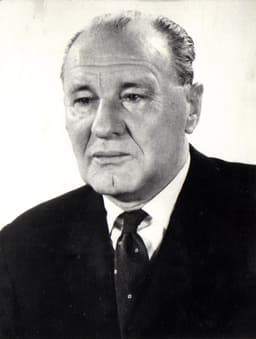
Janos Kadar
Politician · Modern
56.5Total
Basic Information
Born
1962
1912
Died
—
1989
Era
Modern
Modern
Nationality
Mexico
Hungary
Occupation
Politician
Politician
Civilization
Western
Western
Score Comparison
Military (10%)
41.6
49.8
Political (20%)
68.0
60.0
Influence (20%)
54.1
56.4
Legacy (20%)
44.2
49.2
Leadership (15%)
65.0
79.8
Strategy (15%)
35.7
41.7
TOTAL
52.3
56.5
Felipe Calderon — Complete Timeline
2006 AD
Launch of the Mexican Drug WarWar
President Felipe Calder
Drug WarViolenceMilitarization
Impact: nationaldestructive
2009 AD
Capture of major drug cartel leadersWar◆ Major
Calderón's government captured or killed several top cartel figures, including Arturo Beltrán Leyva and Vicente Zambada. These operations disrupted cartel hierarchies but also triggered internal power struggles and increased violence.
Cartel LeadersCaptureDrug War
Impact: national
2009 H1N1 influenza pandemic responseOther◆ Major
Mexico was the epicenter of the H1N1 swine flu outbreak. Calder
PandemicPublic HealthResponse
Impact: global
Janos Kadar — Complete Timeline
1956 AD
Appointment as First Secretary of the Hungarian Socialist Workers' PartyPolitical Action◆ Major
Kadar was appointed First Secretary after the Soviet invasion crushed the Hungarian Revolution. He initially supported the revolution but then collaborated with the Soviets, a move that defined his controversial legacy.
Communist leadership1956 Revolution
Impact: national
1958 AD
Execution of Imre NagyPolitical Action◆ Major
Kadar's government tried and executed former Prime Minister Imre Nagy for his role in the 1956 Revolution. This act solidified Kadar's power but also made him a deeply unpopular figure among many Hungarians.
Political repression1956 Revolution
Impact: nationaltragic
1968 AD
Introduction of Goulash CommunismReform◆ Major
Kadar introduced the New Economic Mechanism, a series of market-oriented reforms that allowed limited private enterprise and consumer goods. This 'goulash communism' improved living standards and made Hungary the most liberal country in the Eastern Bloc.
Economic reformLiberalization
Impact: nationalconstructive
1988 AD
Resignation from PowerPolitical Action◆ Major
Facing economic stagnation and growing political opposition, Kadar was forced to resign as party leader. He was replaced by a reformist faction, marking the end of his 32-year rule.
Fall of communism
Impact: national
Expert Analysis
Origins
Felipe Calderón was born on August 18, 1962, in Morelia, Michoacán, Mexico, into a political family. His father, Luis Calderón Vega, was a co-founder of the National Action Party (PAN). Calderón studied law at the Autonomous University of Querétaro and later earned a master's in economics from the Autonomous Technological Institute of Mexico and a Master of Public Administration from Harvard University. His upbringing in a politically active household shaped his conservative, pro-business ideology.
János Kádár was born on May 26, 1912, in Fiume (now Rijeka, Croatia), then part of Austria-Hungary. He grew up in poverty in Budapest after his mother abandoned him. Kádár became a metalworker and joined the Communist Party of Hungary in 1931. He was imprisoned multiple times for his activities during World War II. His early experiences of hardship and underground resistance forged a pragmatic and survival-oriented character.
Rise to Power
Calderón rose through PAN ranks, serving as a federal deputy, party president, and Secretary of Energy under President Vicente Fox. In the 2006 presidential election, he won by a narrow margin of 0.56% against leftist Andrés Manuel López Obrador, a result contested by López Obrador. Calderón assumed office on December 1, 2006, facing a legitimacy crisis. To assert authority, he launched the Mexican Drug War on December 11, 2006, deploying 6,500 federal troops to Michoacán.
Kádár's rise was more dramatic. During the 1956 Hungarian Revolution, he initially supported the reformist government of Imre Nagy. However, after the Soviet invasion, he defected and on November 4, 1956, announced the formation of a new pro-Soviet government. With Soviet backing, he became First Secretary of the Hungarian Socialist Workers' Party. Kádár then orchestrated the execution of Imre Nagy in 1958, cementing his power by eliminating a rival. His political score of 60.0 reflects this Machiavellian ascent.
Leadership & Governance
Calderón's leadership was defined by his militarized approach to crime. He deployed up to 50,000 troops across Mexico, dismantled cartel leadership, and extradited high-profile figures to the U.S. His governance score of 65.0 reflects decisiveness, but his strategy score of 35.7 indicates poor long-term planning. Violence escalated from 2,000 homicides in 2006 to over 27,000 in 2011. Calderón also implemented economic reforms, including fiscal consolidation and energy sector opening, but drug violence overshadowed these.
Kádár's leadership score of 79.8 is the highest of the comparison. He introduced "Goulash Communism" (1968 New Economic Mechanism), which allowed limited private enterprise, increased consumer goods, and improved living standards. Politically, he maintained strict one-party rule but with softer repression than earlier Stalinist regimes. His governance was pragmatic: "Those who are not against us are with us." He focused on economic performance and stability, achieving 3.5% annual GDP growth in the 1970s.
Triumph & Tragedy
Calderón's triumphs include capturing or killing 25 of the 37 most-wanted cartel leaders, including Arturo Beltrán Leyva and Vicente Zambada. His administration also responded effectively to the 2009 H1N1 pandemic, implementing a nationwide shutdown that contained the outbreak. However, the drug war led to over 60,000 deaths by the end of his term, and violence continued to rise. Critics argue the war was poorly planned, with insufficient institutional reform, contributing to his legacy score of 44.2.
Kádár's greatest success was the economic turnaround: Hungary became the "happiest barracks" in the Eastern Bloc, with per capita GDP reaching 60% of Austria's by the 1980s. However, his tragedy was the betrayal of the 1956 revolution and execution of Imre Nagy, staining his reputation. Economic stagnation in the 1980s, coupled with growing opposition, forced his resignation in 1988. His military score of 49.8 reflects his reliance on Soviet force to maintain power.
Character & Destiny
Calderón was a determined, ideological conservative who believed in using state force to impose order. His Harvard education gave him a technocratic bent, but his inflexibility in the drug war—refusing to negotiate or legalize—contributed to escalating violence. His character was shaped by his father's PAN activism, leading him to prioritize institutional continuity over pragmatic solutions.
Kádár was a quintessential survivor. He adapted to Stalinism, de-Stalinization, and then reform communism. His pragmatism allowed him to liberalize the economy while maintaining political control. However, his willingness to sacrifice Nagy and collaborate with the Soviets revealed a ruthless, self-preserving streak. His destiny was to be a transitional figure: he stabilized Hungary but ultimately failed to reform the system sustainably.
Legacy
Calderón's legacy is deeply controversial. He is credited with confronting cartels but blamed for the surge in violence. His influence score of 54.1 reflects his impact on Mexican security policy, but his war strategy has been largely abandoned by successors. The drug war continues, but his approach of militarization without judicial reform is seen as a failure.
Kádár's legacy is mixed. In Hungary, he is remembered for improving living standards and fostering a more tolerable communism. However, his collaboration with the Soviets and execution of Nagy are condemned. His reforms influenced later market socialism ideas, but the system collapsed in 1989. His leadership score of 79.8 indicates effectiveness within constraints, but his total score of 56.5 is only slightly above Calderón's 52.3.
Conclusion
While János Kádár's leadership score (79.8) and legacy score (49.2) edge out Calderón's (65.0 and 44.2), the gap is narrow at 4.2 points overall. However, Kádár's impact was more profound: he transformed Hungary's economy and society within the Soviet bloc, while Calderón's drug war exacerbated violence without achieving lasting peace. Kádár's governance improved lives measurably, whereas Calderón's strategy failed to reduce crime. Therefore, Kádár had greater impact, though both leaders are ultimately defined by their compromises with repressive systems.
Rankings
🥇
Janos KadarLeader
Mil: 49.8Pol: 60.0Inf: 56.4
56.5
🥈
Felipe Calderon
Mil: 41.6Pol: 68.0Inf: 54.1
52.3
+4.2 behind
How This Comparison Works
Algorithm
Each figure is scored on 6 dimensions (0—100 scale) based on structured historical data: Military (10%), Political (20%), Influence (20%), Legacy (20%), Leadership (15%), Strategy (15%). The weighted total produces the final ranking.
Data Sources
Scores are computed from structured sub-indicators in the database. Scale factors adjust for era (Ancient ×0.85, Modern ×1.0) and civilization size (Eastern ×1.05, Other ×0.80) to account for differences in population and military scale.
Maximum 3 Figures
Comparisons are limited to 2—3 figures to ensure readability and statistical meaningfulness.
Error Margins
±5 points per dimension — Sub-scores are derived from historical records with inherent uncertainty. Two figures within 5 points on a dimension should be considered roughly equivalent in that area.
Total Score Accuracy
±3 points overall — The weighted combination of 6 dimensions produces a total score with approximately ±3 points of uncertainty. Differences of less than 3 points are not statistically significant— the figures are effectively tied.
Known Limitations
- Historical records are incomplete and uneven across civilizations
- Figures from oral-tradition societies may be underrepresented
- Occupation labels can misclassify multi-role figures
- Scores measure capability and impact, not moral character
- Quantitative scoring is a comparison tool, not absolute truth
Capability Radar
Military (10%) — Battles & Warfare
Battles
15
29
Win Rate
10
32
Expansion
5
34
Political (20%) — Governance & Reform
Reform
55
65
Diplomacy
40
70
Economy
45
60
Influence (20%) — Cultural & Global Reach
Cultural
30
40
Global
35
40
Legacy (20%) — Historical Impact
Historical
40
50
Longevity
25
45
Leadership (15%) — Power & Stability
Tenure
60
75
Stability
20
55
Strategy (15%) — Tactics & Innovation
Strategy
25
36
Tactics
20
40
Reform
30
45
Similar Comparisons
Comments & Discussion
No comments yet. Be the first to share your thoughts!