Loading...
Jambyn Batmonkh vs Malcolm Fraser
Malcolm Fraser leads by 7.7 pts · 2 figures compared
…
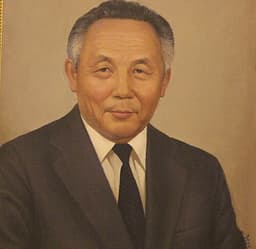
Jambyn Batmonkh
Politician · Modern
49.7Total
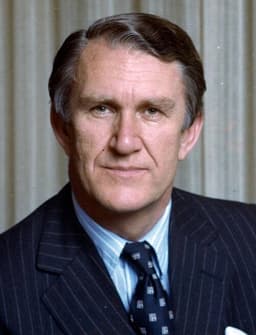
Malcolm Fraser
Politician · Modern
57.4Total
Basic Information
Born
1926
1930
Died
—
—
Era
Modern
Modern
Nationality
Mongolia
Australia
Occupation
Politician
Politician
Civilization
Eastern
Western
Score Comparison
Military (10%)
14.6
48.2
Political (20%)
68.0
72.0
Influence (20%)
52.5
59.0
Legacy (20%)
44.2
48.3
Leadership (15%)
72.0
72.0
Strategy (15%)
30.6
41.3
TOTAL
49.7
57.4
Jambyn Batmonkh — Complete Timeline
1984 AD
Became General Secretary of the Mongolian People's Revolutionary PartyPolitical Action◆ Major
Batmonkh succeeded Yumjaagiin Tsedenbal as General Secretary of the MPRP, becoming the leader of Mongolia. He was seen as a reformist within the communist framework.
LeadershipCommunist Party
Impact: national
1986 AD
Initiated Economic Reforms Under PerestroikaReform◆ Major
Batmonkh introduced limited economic reforms inspired by Gorbachev's perestroika, including decentralization of state enterprises and encouragement of private enterprise. The reforms were modest but signaled a shift from Stalinist economics.
Economic ReformPerestroika
Impact: nationalconstructive
1990 AD
Peacefully Resigned After the 1990 Democratic RevolutionPolitical Action
Following massive pro-democracy protests in 1990, Batmonkh resigned as General Secretary and President, peacefully transferring power to a transitional government. This was a key moment in Mongolia's transition to democracy.
ResignationDemocratic TransitionPeaceful
Impact: nationalconstructive
1992 AD
Oversaw the Adoption of a New ConstitutionPolitical Action◆ Major
As a member of the transitional government, Batmonkh supported the adoption of a new democratic constitution in 1992, which established a multi-party system and protected civil liberties.
ConstitutionDemocracyReform
Impact: nationalconstructive
Malcolm Fraser — Complete Timeline
1975 AD
Appointed Prime Minister After DismissalPolitical Action◆ Major
Fraser was appointed caretaker prime minister by Governor-General Sir John Kerr after the dismissal of Gough Whitlam. He led the Liberal-National coalition to a landslide victory in the subsequent election, winning 91 of 127 seats.
Constitutional CrisisElectionLiberal Party
Impact: national
1977 AD
Opposed Apartheid in South AfricaPolitical Action◆ Major
Fraser's government took a strong stance against apartheid, supporting economic sanctions against South Africa and opposing sporting contacts. He played a key role in the Commonwealth's Gleneagles Agreement, which discouraged sporting ties with South Africa.
ApartheidForeign PolicyCommonwealth
Impact: globalprogressive
1978 AD
Introduced Multiculturalism PolicyReform◆ Major
Fraser's government formally adopted a policy of multiculturalism, establishing the Australian Institute of Multicultural Affairs and funding ethnic community organizations. This marked a shift from the previous assimilationist approach to immigration.
MulticulturalismImmigrationSocial Policy
Impact: nationalprogressive
1979 AD
Accepted Vietnamese RefugeesPolitical Action◆ Major
Fraser's government significantly increased the intake of Vietnamese boat people, resettling over 70,000 refugees. This humanitarian response set a precedent for Australia's refugee program and diversified the nation's cultural makeup.
RefugeesHumanitarianVietnam
Impact: nationalprogressive
1983 AD
Defeated in 1983 ElectionPolitical Action◆ Major
Fraser called a snap election in March 1983, but was defeated by Bob Hawke's Labor Party. The election ended Fraser's seven-year tenure as prime minister and marked the beginning of a long period of Labor government.
ElectionDefeatLabor Party
Impact: national
Expert Analysis
Origins
Jambyn Batmonkh was born in 1926 in Khovd Province, Mongolia, into a herder family. He studied economics at the State University of Mongolia and later at the Higher Party School in Moscow. His early career included teaching and party work, rising through the Mongolian People's Revolutionary Party (MPRP) apparatus. Malcolm Fraser was born in 1930 in Toorak, Victoria, Australia, to a wealthy pastoralist family. He studied at Oxford University (Magdalen College) and entered politics in 1955 as a Liberal MP. His background in farming and law shaped his conservative but pragmatic worldview.
Rise to Power
Batmonkh became General Secretary of the MPRP in 1984, succeeding Yumjaagiin Tsedenbal. He was seen as a reformist within the party, aligning with Gorbachev's perestroika. His rise was marked by a purge of Tsedenbal loyalists and a shift toward limited economic liberalization. Fraser rose to prominence during the 1975 Australian constitutional crisis. After Governor-General Sir John Kerr dismissed Prime Minister Gough Whitlam, Fraser was appointed caretaker PM and led the Liberal-National coalition to a landslide victory in the subsequent election. He secured 91 of 127 seats in the House of Representatives.
Leadership & Governance
Batmonkh's governance was characterized by cautious reform. He decentralized state enterprises, allowed limited private enterprise, and encouraged foreign investment. However, political control remained with the MPRP until 1990. His leadership score of 72.0 reflects his ability to navigate transition without violence. Fraser's governance was more activist. He introduced multiculturalism as official policy, established the Australian Institute of Multicultural Affairs, and resettled over 70,000 Vietnamese refugees. He also opposed apartheid, imposing sanctions on South Africa and boycotting the 1977 Commonwealth Games. His political score of 72.0 matches Batmonkh's leadership score.
Triumph & Tragedy
Batmonkh's greatest triumph was his peaceful resignation in 1990 after pro-democracy protests, allowing a bloodless transition to democracy. He supported the 1992 constitution that established multi-party elections. His tragedy is his relative obscurity; his reforms were overshadowed by Mongolia's rapid post-communist changes. Fraser's triumphs include his humanitarian refugee policy and anti-apartheid stance. He also established the Human Rights Commission. His tragedy was his 1983 election loss to Bob Hawke after calling a snap election, ending his seven-year term. Fraser's military score of 48.2 reflects his defense policies, including increased spending.
Character & Destiny
Batmonkh was pragmatic and consensus-oriented. He chose negotiation over confrontation, a decision that preserved stability but also meant he was sidelined in the new democracy. His legacy score of 44.2 reflects limited lasting personal impact. Fraser was principled and confrontational. He took risks, such as the 1975 dismissal and the 1983 snap election. His influence score of 59.0 is higher, reflecting his impact on Australian identity and international human rights. Fraser's later life included humanitarian work and criticism of his own party.
Legacy
Batmonkh's legacy is tied to Mongolia's peaceful transition. He is remembered as a reformer who avoided bloodshed, but his specific policies were short-lived. Fraser's legacy is more tangible: multiculturalism remains a cornerstone of Australian policy, and his refugee intake set a precedent. His opposition to apartheid contributed to international pressure on South Africa. Fraser's total score of 57.4 exceeds Batmonkh's 49.7 by 7.7 points.
Conclusion
Malcolm Fraser had greater impact due to his lasting policy changes and international influence. His multiculturalism and refugee policies reshaped Australia, while his anti-apartheid stance had global resonance. Batmonkh's peaceful transition was historically significant but less transformative. Fraser's higher scores across most metrics (political 72.0 vs 68.0, influence 59.0 vs 52.5, legacy 48.3 vs 44.2) support this assessment. While both led during transitions, Fraser's active policy agenda left a deeper mark.
Rankings
🥇
Malcolm FraserLeader
Mil: 48.2Pol: 72.0Inf: 59.0
57.4
🥈
Jambyn Batmonkh
Mil: 14.6Pol: 68.0Inf: 52.5
49.7
+7.7 behind
How This Comparison Works
Algorithm
Each figure is scored on 6 dimensions (0—100 scale) based on structured historical data: Military (10%), Political (20%), Influence (20%), Legacy (20%), Leadership (15%), Strategy (15%). The weighted total produces the final ranking.
Data Sources
Scores are computed from structured sub-indicators in the database. Scale factors adjust for era (Ancient ×0.85, Modern ×1.0) and civilization size (Eastern ×1.05, Other ×0.80) to account for differences in population and military scale.
Maximum 3 Figures
Comparisons are limited to 2—3 figures to ensure readability and statistical meaningfulness.
Error Margins
±5 points per dimension — Sub-scores are derived from historical records with inherent uncertainty. Two figures within 5 points on a dimension should be considered roughly equivalent in that area.
Total Score Accuracy
±3 points overall — The weighted combination of 6 dimensions produces a total score with approximately ±3 points of uncertainty. Differences of less than 3 points are not statistically significant— the figures are effectively tied.
Known Limitations
- Historical records are incomplete and uneven across civilizations
- Figures from oral-tradition societies may be underrepresented
- Occupation labels can misclassify multi-role figures
- Scores measure capability and impact, not moral character
- Quantitative scoring is a comparison tool, not absolute truth
Capability Radar
Military (10%) — Battles & Warfare
Battles
13
32
Win Rate
17
32
Expansion
20
35
Political (20%) — Governance & Reform
Reform
50
60
Diplomacy
55
70
Economy
45
55
Influence (20%) — Cultural & Global Reach
Cultural
30
40
Global
25
55
Legacy (20%) — Historical Impact
Historical
35
50
Longevity
30
40
Leadership (15%) — Power & Stability
Tenure
60
65
Stability
65
60
Strategy (15%) — Tactics & Innovation
Strategy
24
36
Tactics
29
40
Reform
27
44
Similar Comparisons
Comments & Discussion
No comments yet. Be the first to share your thoughts!