Loading...
Ioannis Kapodistrias vs Jambyn Batmonkh
Ioannis Kapodistrias leads by 3.8 pts · 2 figures compared
…
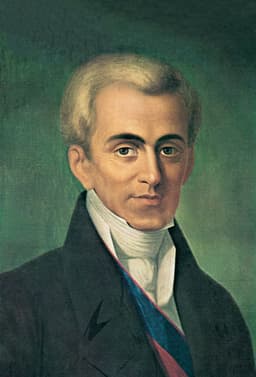
Ioannis Kapodistrias
Politician · Modern
53.5Total
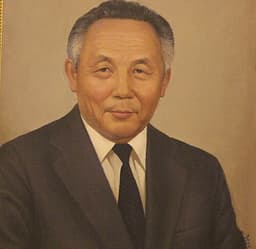
Jambyn Batmonkh
Politician · Modern
49.7Total
Basic Information
Born
1776
1926
Died
1831
—
Era
Modern
Modern
Nationality
Greece
Mongolia
Occupation
Politician
Politician
Civilization
Western
Eastern
Score Comparison
Military (10%)
41.6
14.6
Political (20%)
65.0
68.0
Influence (20%)
55.0
52.5
Legacy (20%)
58.0
44.2
Leadership (15%)
40.0
72.0
Strategy (15%)
53.8
30.6
TOTAL
53.5
49.7
Ioannis Kapodistrias — Complete Timeline
1827 AD
Elected First Governor of GreecePolitical Action◆ Major
The Third National Assembly at Troezen elected Kapodistrias as Governor of Greece for a seven-year term. He arrived in Greece in January 1828 to lead the newly independent state, which was still fighting the Ottoman Empire for full independence.
IndependenceGovernorshipState Building
Impact: nationalconstructive
1828 AD
Established the Hellenic StateReform◆ Major
Kapodistrias organized the first administrative system of independent Greece, creating ministries, a national bank, and a postal service. He also established the Philekpaideutiki Etaireia (Educational Society) to promote education and founded the first orphanage.
AdministrationEducationState Building
Impact: nationalconstructive
1830 AD
Negotiated the London ProtocolPolitical Action◆ Major
Kapodistrias secured the London Protocol of 1830, which recognized Greece as an independent sovereign state under the protection of Great Britain, France, and Russia. This diplomatic achievement ended the Greek War of Independence and established Greece's borders.
DiplomacyIndependenceTreaty
Impact: regionalconstructive
1831 AD
Assassination of KapodistriasPolitical Action◆ Major
Kapodistrias was assassinated on the steps of the Church of Saint Spyridon in Nafplio by members of the Mavromichalis family, a powerful Maniot clan. His death plunged Greece into a period of civil war and instability, leading to the imposition of a monarchy.
AssassinationPolitical CrisisCivil War
Impact: nationaltragic
Jambyn Batmonkh — Complete Timeline
1984 AD
Became General Secretary of the Mongolian People's Revolutionary PartyPolitical Action◆ Major
Batmonkh succeeded Yumjaagiin Tsedenbal as General Secretary of the MPRP, becoming the leader of Mongolia. He was seen as a reformist within the communist framework.
LeadershipCommunist Party
Impact: national
1986 AD
Initiated Economic Reforms Under PerestroikaReform◆ Major
Batmonkh introduced limited economic reforms inspired by Gorbachev's perestroika, including decentralization of state enterprises and encouragement of private enterprise. The reforms were modest but signaled a shift from Stalinist economics.
Economic ReformPerestroika
Impact: nationalconstructive
1990 AD
Peacefully Resigned After the 1990 Democratic RevolutionPolitical Action
Following massive pro-democracy protests in 1990, Batmonkh resigned as General Secretary and President, peacefully transferring power to a transitional government. This was a key moment in Mongolia's transition to democracy.
ResignationDemocratic TransitionPeaceful
Impact: nationalconstructive
1992 AD
Oversaw the Adoption of a New ConstitutionPolitical Action◆ Major
As a member of the transitional government, Batmonkh supported the adoption of a new democratic constitution in 1992, which established a multi-party system and protected civil liberties.
ConstitutionDemocracyReform
Impact: nationalconstructive
Expert Analysis
Origins
Ioannis Kapodistrias was born in 1776 on the island of Corfu, then under Venetian rule, into a noble family with a tradition of public service. He studied medicine and philosophy at the University of Padua, but soon turned to politics, serving as a diplomat for the Russian Empire. His cosmopolitan upbringing and diplomatic career gave him a broad European perspective.
Jambyn Batmonkh was born in 1926 in a poor herding family in Khovd province, Mongolia. He studied at the Mongolian State University and later at the Higher Party School in Moscow. His rise was typical of communist cadres: he joined the Mongolian People's Revolutionary Party (MPRP) in 1948 and climbed the administrative ladder, holding various economic and planning positions.
Rise to Power
Kapodistrias rose to prominence as a diplomat for Russia, serving as foreign minister under Tsar Alexander I. He played a key role in the Congress of Vienna and advocated for Greek independence. In 1827, the Third National Assembly at Troezen elected him as Governor of Greece for a seven-year term. He arrived in Greece in January 1828 to lead the nascent state.
Batmonkh's rise was more gradual. He became a member of the MPRP Central Committee in 1974, then a secretary of the Central Committee in 1983. In 1984, he succeeded Yumjaagiin Tsedenbal as General Secretary of the MPRP and Chairman of the Presidium of the People's Great Khural (head of state). He was seen as a reformist within the communist system.
Leadership & Governance
Kapodistrias faced the monumental task of building a state from scratch. He established ministries, a national bank, a postal service, and a modern army. He also negotiated the London Protocol of 1830, securing Greece's recognition as an independent sovereign state. However, his authoritarian style alienated many factions, leading to conflict with local warlords and political rivals. His political score of 65.0 reflects his administrative achievements but also his inability to build consensus.
Batmonkh governed a stable but stagnant Mongolia. He introduced limited economic reforms inspired by Gorbachev's perestroika, including decentralization of state enterprises and encouragement of private initiative. However, his leadership score of 72.0 indicates his ability to manage the transition to democracy peacefully. In 1990, following massive pro-democracy protests, he resigned as General Secretary and President, peacefully transferring power to a transitional government. This contrasts sharply with Kapodistrias's violent end.
Triumph & Tragedy
Kapodistrias's greatest triumph was establishing the Hellenic State and securing international recognition for Greece. His greatest tragedy was his assassination on the steps of the Church of Saint Spyridon in Nafplio in 1831 by members of the Mavromichalis family, a powerful Maniot clan. His death plunged Greece into chaos and civil war.
Batmonkh's triumph was overseeing a peaceful transition from communism to democracy without bloodshed. He supported the adoption of a new democratic constitution in 1992, which established a multi-party system. His tragedy is that his reforms were modest and he is often forgotten compared to more radical reformers. His legacy score of 44.2 reflects this relative obscurity.
Character & Destiny
Kapodistrias was a determined, principled, but inflexible leader. His diplomatic background made him skilled in international negotiations but less adept at domestic politics. His character—authoritarian and paternalistic—led to his isolation and eventual assassination. He scored 40.0 in leadership, indicating his inability to inspire loyalty.
Batmonkh was pragmatic and cautious. He recognized the inevitability of change and chose to step aside rather than cling to power. His leadership score of 72.0 reflects his ability to navigate a difficult transition. His destiny was to be a transitional figure, remembered more for his exit than his governance.
Legacy
Kapodistrias is revered as the founding father of modern Greece. His administrative structures formed the basis of the Greek state. However, his authoritarian legacy is also criticized. His influence score of 55.0 and legacy score of 58.0 reflect his foundational but contested role.
Batmonkh is remembered as the leader who peacefully ended communist rule in Mongolia. His legacy is more symbolic than substantive; he enabled democracy but did not create it. His influence score of 52.5 and legacy score of 44.2 indicate a less enduring impact.
Conclusion
Ioannis Kapodistrias had a greater impact on history than Jambyn Batmonkh. Despite his lower leadership score (40.0 vs. 72.0), Kapodistrias's foundational role in creating an independent Greek state—scoring 65.0 in politics and 58.0 in legacy—outweighs Batmonkh's peaceful transition. Batmonkh's total score of 49.7 is lower, and his influence was largely limited to a single moment of resignation. Kapodistrias's work shaped a nation for centuries, while Batmonkh's reforms were quickly superseded. The score gap of 3.8 points underscores this difference.
Rankings
🥇
Ioannis KapodistriasLeader
Mil: 41.6Pol: 65.0Inf: 55.0
53.5
🥈
Jambyn Batmonkh
Mil: 14.6Pol: 68.0Inf: 52.5
49.7
+3.8 behind
How This Comparison Works
Algorithm
Each figure is scored on 6 dimensions (0—100 scale) based on structured historical data: Military (10%), Political (20%), Influence (20%), Legacy (20%), Leadership (15%), Strategy (15%). The weighted total produces the final ranking.
Data Sources
Scores are computed from structured sub-indicators in the database. Scale factors adjust for era (Ancient ×0.85, Modern ×1.0) and civilization size (Eastern ×1.05, Other ×0.80) to account for differences in population and military scale.
Maximum 3 Figures
Comparisons are limited to 2—3 figures to ensure readability and statistical meaningfulness.
Error Margins
±5 points per dimension — Sub-scores are derived from historical records with inherent uncertainty. Two figures within 5 points on a dimension should be considered roughly equivalent in that area.
Total Score Accuracy
±3 points overall — The weighted combination of 6 dimensions produces a total score with approximately ±3 points of uncertainty. Differences of less than 3 points are not statistically significant— the figures are effectively tied.
Known Limitations
- Historical records are incomplete and uneven across civilizations
- Figures from oral-tradition societies may be underrepresented
- Occupation labels can misclassify multi-role figures
- Scores measure capability and impact, not moral character
- Quantitative scoring is a comparison tool, not absolute truth
Capability Radar
Military (10%) — Battles & Warfare
Battles
10
13
Win Rate
10
17
Expansion
10
20
Political (20%) — Governance & Reform
Reform
70
50
Diplomacy
75
55
Economy
60
45
Influence (20%) — Cultural & Global Reach
Cultural
55
30
Global
50
25
Legacy (20%) — Historical Impact
Historical
65
35
Longevity
60
30
Leadership (15%) — Power & Stability
Tenure
55
60
Stability
40
65
Strategy (15%) — Tactics & Innovation
Strategy
10
24
Tactics
10
29
Reform
15
27
Similar Comparisons
Comments & Discussion
No comments yet. Be the first to share your thoughts!