Loading...
Ismail Haniyeh vs Jambyn Batmonkh
Jambyn Batmonkh leads by 2.7 pts · 2 figures compared
…

Ismail Haniyeh
Politician · Modern
47.0Total
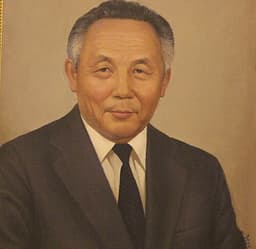
Jambyn Batmonkh
Politician · Modern
49.7Total
Basic Information
Born
1962
1926
Died
—
—
Era
Modern
Modern
Nationality
Palestine
Mongolia
Occupation
Politician
Politician
Civilization
Middle Eastern
Eastern
Score Comparison
Military (10%)
25.4
14.6
Political (20%)
39.4
68.0
Influence (20%)
55.7
52.5
Legacy (20%)
44.2
44.2
Leadership (15%)
62.2
72.0
Strategy (15%)
42.7
30.6
TOTAL
47.0
49.7
Ismail Haniyeh — Complete Timeline
2006 AD
Election as Hamas Political LeaderPolitical Action◆ Major
Ismail Haniyeh became Prime Minister of the Palestinian Authority after Hamas won the 2006 legislative elections. This led to a political crisis and international isolation of the Hamas-led government.
ElectionHamasPalestine
Impact: regional
2007 AD
Hamas Takeover of GazaWar
After clashes with Fatah, Haniyeh's Hamas forces seized control of the Gaza Strip in June 2007. This split the Palestinian territories into two rival governments: Hamas in Gaza and Fatah in the West Bank.
Civil ConflictGazaPalestinian Division
Impact: regionaldestructive
2008 AD
Leadership During Gaza WarsWar◆ Major
Haniyeh led Hamas during multiple Israeli military operations in Gaza, including Operation Cast Lead (2008-2009) and Operation Protective Edge (2014). These wars resulted in heavy Palestinian casualties and destruction.
Gaza WarConflictCasualties
Impact: regionaltragic
2024 AD
Assassination in TehranPolitical Action◆ Major
Haniyeh was assassinated in Tehran on July 31, 2024, by an explosion at his residence. He was in Iran for the inauguration of President Masoud Pezeshkian. Iran and Hamas blamed Israel for the attack.
AssassinationIranIsrael
Impact: globaltragic
Jambyn Batmonkh — Complete Timeline
1984 AD
Became General Secretary of the Mongolian People's Revolutionary PartyPolitical Action◆ Major
Batmonkh succeeded Yumjaagiin Tsedenbal as General Secretary of the MPRP, becoming the leader of Mongolia. He was seen as a reformist within the communist framework.
LeadershipCommunist Party
Impact: national
1986 AD
Initiated Economic Reforms Under PerestroikaReform◆ Major
Batmonkh introduced limited economic reforms inspired by Gorbachev's perestroika, including decentralization of state enterprises and encouragement of private enterprise. The reforms were modest but signaled a shift from Stalinist economics.
Economic ReformPerestroika
Impact: nationalconstructive
1990 AD
Peacefully Resigned After the 1990 Democratic RevolutionPolitical Action
Following massive pro-democracy protests in 1990, Batmonkh resigned as General Secretary and President, peacefully transferring power to a transitional government. This was a key moment in Mongolia's transition to democracy.
ResignationDemocratic TransitionPeaceful
Impact: nationalconstructive
1992 AD
Oversaw the Adoption of a New ConstitutionPolitical Action◆ Major
As a member of the transitional government, Batmonkh supported the adoption of a new democratic constitution in 1992, which established a multi-party system and protected civil liberties.
ConstitutionDemocracyReform
Impact: nationalconstructive
Expert Analysis
Origins
Ismail Haniyeh was born in 1963 in the al-Shati refugee camp in Gaza, into a family displaced from al-Jura during the 1948 Arab-Israeli war. He studied Arabic literature at the Islamic University of Gaza, where he became active in the Muslim Brotherhood. Haniyeh's formative experiences were shaped by the Israeli occupation and the Palestinian struggle. In contrast, Jambyn Batmonkh was born in 1926 in Khovd Province, Mongolia, into a herder family. He studied economics at the Mongolian State University and later in the Soviet Union. Batmonkh's early life was under the communist regime, and he rose through the ranks of the Mongolian People's Revolutionary Party (MPRP).
Rise to Power
Haniyeh rose to prominence as a protégé of Sheikh Ahmed Yassin, founder of Hamas. After Israel assassinated Yassin in 2004, Haniyeh took a leading role. In 2006, Hamas won the Palestinian legislative elections, and Haniyeh became Prime Minister of the Palestinian Authority. This triggered a political crisis with Fatah, culminating in the Hamas takeover of Gaza in June 2007, which solidified his power. Batmonkh rose through the MPRP bureaucracy. He became General Secretary in 1984 after the removal of Yumjaagiin Tsedenbal. Batmonkh was seen as a reformist, initiating limited economic reforms inspired by Gorbachev's perestroika in the late 1980s. His key turning point came in 1990 when massive pro-democracy protests forced the communist government to negotiate. Batmonkh peacefully resigned in March 1990, allowing a peaceful transition to democracy.
Leadership & Governance
Haniyeh's leadership style was characterized by militant resistance and Islamist governance. As head of Hamas in Gaza, he oversaw a regime that combined social services with armed struggle. His governance faced international isolation, blockades, and repeated military conflicts with Israel. Haniyeh scored 62.2 in leadership, reflecting his ability to maintain control under pressure. Batmonkh's leadership was more bureaucratic and reformist. He scored 72.0 in leadership, the highest among his scores. He implemented perestroika-style reforms, decentralizing state enterprises and allowing limited private business. His critical achievement was managing the transition to democracy without violence, resigning peacefully and supporting the adoption of a new democratic constitution in 1992.
Triumph & Tragedy
Haniyeh's greatest success was leading Hamas to electoral victory in 2006 and consolidating power in Gaza, creating a de facto state. He survived multiple Israeli assassination attempts and wars. His greatest failure was the split with Fatah, which weakened the Palestinian cause. He also failed to achieve significant international recognition or lift the blockade. His assassination in Tehran in 2024 was a major blow. Batmonkh's triumph was overseeing Mongolia's peaceful transition to democracy, a rare achievement among communist states. He scored 68.0 in political skill. His tragedy was that his economic reforms were too limited and came too late to prevent the collapse of the communist system. He was criticized for not doing more earlier.
Character & Destiny
Haniyeh was pragmatic within an Islamist framework, often seen as a moderate within Hamas. He was a skilled negotiator but ultimately defined by his resistance to Israel. His character led him to prioritize unity within Hamas over broader Palestinian unity. His destiny was to be a symbol of resistance and a target. Batmonkh was cautious and consensus-oriented. He lacked the charisma of other communist reformers but his willingness to step down peacefully defined his legacy. His character shaped a destiny of peaceful transition, but also relative obscurity compared to more dramatic leaders.
Legacy
Haniyeh's legacy is mixed: he is remembered as a key Hamas leader who brought the group to political power but also deepened the Palestinian schism. His influence scored 55.7, reflecting his role in shaping Palestinian politics. However, his military score is low (25.4), as he was not a military commander. Batmonkh's legacy is that of a peaceful reformer who facilitated Mongolia's democratic transition. His political score (68.0) and leadership score (72.0) reflect this. He is respected in Mongolia for avoiding bloodshed. His influence (52.5) is more regional.
Conclusion
While Haniyeh had a higher profile and influence in the Middle East, Batmonkh's impact on Mongolia's trajectory is more profound and positive. Haniyeh's total score of 47.0 is lower than Batmonkh's 49.7. Batmonkh's peaceful resignation and support for democracy led to a stable, multi-party system, whereas Haniyeh's tenure entrenched division and conflict. Batmonkh's leadership (72.0 vs 62.2) and political (68.0 vs 39.4) scores significantly outpace Haniyeh's. Therefore, Jambyn Batmonkh had a greater impact by facilitating a peaceful political transformation.
Rankings
🥇
Jambyn BatmonkhLeader
Mil: 14.6Pol: 68.0Inf: 52.5
49.7
🥈
Ismail Haniyeh
Mil: 25.4Pol: 39.4Inf: 55.7
47.0
+2.7 behind
How This Comparison Works
Algorithm
Each figure is scored on 6 dimensions (0—100 scale) based on structured historical data: Military (10%), Political (20%), Influence (20%), Legacy (20%), Leadership (15%), Strategy (15%). The weighted total produces the final ranking.
Data Sources
Scores are computed from structured sub-indicators in the database. Scale factors adjust for era (Ancient ×0.85, Modern ×1.0) and civilization size (Eastern ×1.05, Other ×0.80) to account for differences in population and military scale.
Maximum 3 Figures
Comparisons are limited to 2—3 figures to ensure readability and statistical meaningfulness.
Error Margins
±5 points per dimension — Sub-scores are derived from historical records with inherent uncertainty. Two figures within 5 points on a dimension should be considered roughly equivalent in that area.
Total Score Accuracy
±3 points overall — The weighted combination of 6 dimensions produces a total score with approximately ±3 points of uncertainty. Differences of less than 3 points are not statistically significant— the figures are effectively tied.
Known Limitations
- Historical records are incomplete and uneven across civilizations
- Figures from oral-tradition societies may be underrepresented
- Occupation labels can misclassify multi-role figures
- Scores measure capability and impact, not moral character
- Quantitative scoring is a comparison tool, not absolute truth
Capability Radar
Military (10%) — Battles & Warfare
Battles
22
13
Win Rate
23
17
Expansion
25
20
Political (20%) — Governance & Reform
Reform
30
50
Diplomacy
40
55
Economy
20
45
Influence (20%) — Cultural & Global Reach
Cultural
35
30
Global
40
25
Legacy (20%) — Historical Impact
Historical
40
35
Longevity
25
30
Leadership (15%) — Power & Stability
Tenure
45
60
Stability
15
65
Strategy (15%) — Tactics & Innovation
Strategy
29
24
Tactics
36
29
Reform
36
27
Similar Comparisons
Comments & Discussion
No comments yet. Be the first to share your thoughts!