Loading...
Georgy Lvov vs Jambyn Batmonkh
Jambyn Batmonkh leads by 7.7 pts · 2 figures compared
…

Georgy Lvov
Politician · Modern
42.0Total
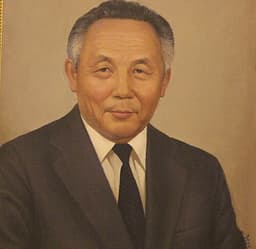
Jambyn Batmonkh
Politician · Modern
49.7Total
Basic Information
Born
1861
1926
Died
1925
—
Era
Modern
Modern
Nationality
Russia
Mongolia
Occupation
Politician
Politician
Civilization
Western
Eastern
Score Comparison
Military (10%)
49.1
14.6
Political (20%)
37.9
68.0
Influence (20%)
50.2
52.5
Legacy (20%)
40.0
44.2
Leadership (15%)
31.2
72.0
Strategy (15%)
42.2
30.6
TOTAL
42.0
49.7
Georgy Lvov — Complete Timeline
1917 AD
Appointment as Prime Minister of the Provisional GovernmentPolitical Action◆ Major
After the February Revolution, Lvov became the first Prime Minister of the Russian Provisional Government. He headed a cabinet of liberal and moderate socialist ministers, but struggled to maintain authority amid growing radicalism and the ongoing war.
Provisional GovernmentPrime MinisterFebruary Revolution
Impact: national
Resignation as Prime MinisterPolitical Action◆ Major
Facing a crisis over the war and land reform, Lvov resigned as Prime Minister in July 1917. He was succeeded by Alexander Kerensky. Lvov's resignation reflected the Provisional Government's inability to address the demands of the Russian people and maintain order.
ResignationProvisional GovernmentKerensky
Impact: national
1918 AD
Arrest by the BolsheviksPolitical Action
After the October Revolution, Lvov was arrested by the Bolsheviks in Tyumen. He was imprisoned in Yekaterinburg but later escaped. His arrest marked the Bolshevik suppression of former Provisional Government officials.
ArrestBolsheviksProvisional Government
tragic
Jambyn Batmonkh — Complete Timeline
1984 AD
Became General Secretary of the Mongolian People's Revolutionary PartyPolitical Action◆ Major
Batmonkh succeeded Yumjaagiin Tsedenbal as General Secretary of the MPRP, becoming the leader of Mongolia. He was seen as a reformist within the communist framework.
LeadershipCommunist Party
Impact: national
1986 AD
Initiated Economic Reforms Under PerestroikaReform◆ Major
Batmonkh introduced limited economic reforms inspired by Gorbachev's perestroika, including decentralization of state enterprises and encouragement of private enterprise. The reforms were modest but signaled a shift from Stalinist economics.
Economic ReformPerestroika
Impact: nationalconstructive
1990 AD
Peacefully Resigned After the 1990 Democratic RevolutionPolitical Action
Following massive pro-democracy protests in 1990, Batmonkh resigned as General Secretary and President, peacefully transferring power to a transitional government. This was a key moment in Mongolia's transition to democracy.
ResignationDemocratic TransitionPeaceful
Impact: nationalconstructive
1992 AD
Oversaw the Adoption of a New ConstitutionPolitical Action◆ Major
As a member of the transitional government, Batmonkh supported the adoption of a new democratic constitution in 1992, which established a multi-party system and protected civil liberties.
ConstitutionDemocracyReform
Impact: nationalconstructive
Expert Analysis
Origins
Georgy Lvov was born into a Russian princely family on November 21, 1861. He studied law at Moscow University but became involved in local governance, serving as a district marshal of nobility. His early career focused on zemstvo (local council) work, which shaped his liberal views. Lvov gained national attention during the Russo-Japanese War and the 1905 Revolution, organizing relief efforts and advocating for constitutional reforms.
Jambyn Batmonkh was born on March 10, 1926, in Khyargas, Mongolia, into a herder family. He studied economics at the Higher Party School in Ulaanbaatar and later at the State University of Mongolia. Batmonkh rose through the ranks of the Mongolian People's Revolutionary Party (MPRP), holding various economic planning positions. He became a deputy chairman of the Council of Ministers in 1974, focusing on economic management.
Rise to Power
Lvov's rise culminated in March 1917 after the February Revolution. As a respected liberal figure with zemstvo experience, he was appointed Prime Minister of the Russian Provisional Government on March 15, 1917. He led a cabinet of Kadets and moderate socialists, but his authority was undermined by the Petrograd Soviet and the ongoing World War I. Lvov's government faced mounting crises over land reform, the war, and economic collapse.
Batmonkh became General Secretary of the MPRP on August 24, 1984, succeeding Yumjaagiin Tsedenbal. He was seen as a reformist within the communist party, influenced by Mikhail Gorbachev's perestroika. Batmonkh initiated limited economic reforms, decentralizing state enterprises and encouraging private agriculture. However, his political rise was gradual, relying on party loyalty and technocratic expertise.
Leadership & Governance
Lvov's leadership style was conciliatory and indecisive. He attempted to balance the demands of the Soviet and the Provisional Government, but failed to assert control. His government continued Russia's involvement in World War I, a deeply unpopular decision. Lvov's governance focused on maintaining legality and order, but he lacked the force to implement land reform or end the war. His political score of 37.9 reflects his inability to navigate the revolutionary turmoil.
Batmonkh governed as a communist reformer. He supported Gorbachev's perestroika, introducing market elements into Mongolia's planned economy. However, his reforms were cautious, and he maintained the MPRP's monopoly on power until 1990. Batmonkh's leadership score of 72.0 indicates his effectiveness in managing the transition, but his political score of 68.0 shows he was a pragmatic rather than visionary leader. He prioritized stability over rapid change.
Triumph & Tragedy
Lvov's greatest success was overseeing the establishment of the Provisional Government, which introduced civil liberties and democratic institutions. However, his failure to address land reform and the war led to his resignation on July 20, 1917, after only four months. He was later arrested by the Bolsheviks but escaped. Lvov died in exile in France in 1925, his government a fleeting interlude before Bolshevik rule.
Batmonkh's triumph was his peaceful resignation in March 1990 after massive pro-democracy protests. He transferred power to a transitional government, avoiding bloodshed. He also supported the adoption of a new democratic constitution in 1992. However, his tragedy is that his economic reforms were too little, too late, and Mongolia's transition brought severe economic hardship. Batmonkh died in 1997, largely forgotten.
Character & Destiny
Lvov was a principled liberal who believed in constitutionalism and gradual reform. His character was marked by a reluctance to use force, which made him ill-suited for Russia's revolutionary crisis. Historians assess him as well-intentioned but weak. His destiny was to be crushed between the autocracy and the Bolsheviks.
Batmonkh was a pragmatic communist who adapted to changing circumstances. He was cautious and risk-averse, preferring negotiation over confrontation. His character allowed him to peacefully exit power, unlike many communist leaders. Historical assessments view him as a transitional figure who enabled Mongolia's democracy without personal ambition.
Legacy
Lvov's legacy is that of a failed liberal democrat. He is remembered as the leader of Russia's only democratic government before the Bolshevik coup. His scores: influence 50.2, legacy 40.0. The Provisional Government's brief existence showed the fragility of democracy in a war-torn society. Lvov's name is little known outside historical circles.
Batmonkh's legacy is more substantial. He is credited with peacefully ending communist rule in Mongolia, setting a precedent for democratic transition. His scores: influence 52.5, legacy 44.2. Mongolia's peaceful revolution of 1990 is often cited as a model. Batmonkh's actions allowed Mongolia to become a stable democracy, though his economic reforms were mixed.
Conclusion
Jambyn Batmonkh had a greater impact than Georgy Lvov. Batmonkh's total score of 49.7 exceeds Lvov's 42.0. While Lvov led a historic government, his tenure was short and ultimately failed. Batmonkh, though less known, successfully navigated Mongolia's transition from communism, preserving stability and enabling democracy. Lvov's failure was rooted in his inability to act decisively; Batmonkh's success came from knowing when to step aside. In terms of lasting influence, Batmonkh's peaceful resignation had a more positive effect on his country's trajectory than Lvov's brief and chaotic rule.
Rankings
🥇
Jambyn BatmonkhLeader
Mil: 14.6Pol: 68.0Inf: 52.5
49.7
🥈
Georgy Lvov
Mil: 49.1Pol: 37.9Inf: 50.2
42.0
+7.7 behind
How This Comparison Works
Algorithm
Each figure is scored on 6 dimensions (0—100 scale) based on structured historical data: Military (10%), Political (20%), Influence (20%), Legacy (20%), Leadership (15%), Strategy (15%). The weighted total produces the final ranking.
Data Sources
Scores are computed from structured sub-indicators in the database. Scale factors adjust for era (Ancient ×0.85, Modern ×1.0) and civilization size (Eastern ×1.05, Other ×0.80) to account for differences in population and military scale.
Maximum 3 Figures
Comparisons are limited to 2—3 figures to ensure readability and statistical meaningfulness.
Error Margins
±5 points per dimension — Sub-scores are derived from historical records with inherent uncertainty. Two figures within 5 points on a dimension should be considered roughly equivalent in that area.
Total Score Accuracy
±3 points overall — The weighted combination of 6 dimensions produces a total score with approximately ±3 points of uncertainty. Differences of less than 3 points are not statistically significant— the figures are effectively tied.
Known Limitations
- Historical records are incomplete and uneven across civilizations
- Figures from oral-tradition societies may be underrepresented
- Occupation labels can misclassify multi-role figures
- Scores measure capability and impact, not moral character
- Quantitative scoring is a comparison tool, not absolute truth
Capability Radar
Military (10%) — Battles & Warfare
Battles
30
13
Win Rate
34
17
Expansion
33
20
Political (20%) — Governance & Reform
Reform
30
50
Diplomacy
25
55
Economy
15
45
Influence (20%) — Cultural & Global Reach
Cultural
15
30
Global
15
25
Legacy (20%) — Historical Impact
Historical
20
35
Longevity
10
30
Leadership (15%) — Power & Stability
Tenure
10
60
Stability
5
65
Strategy (15%) — Tactics & Innovation
Strategy
38
24
Tactics
42
29
Reform
41
27
Similar Comparisons
Comments & Discussion
No comments yet. Be the first to share your thoughts!