Loading...
Malcolm Fraser vs Napoleon Bonaparte
Napoleon Bonaparte leads by 13.5 pts · 2 figures compared
…
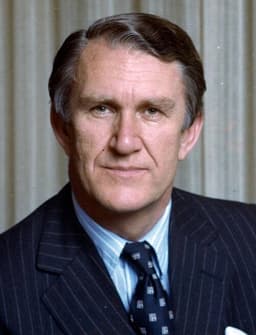
Malcolm Fraser
Politician · Modern
57.4Total

Napoleon Bonaparte
General · Modern
70.9Total
Basic Information
Born
1930
1769
Died
—
1821
Era
Modern
Modern
Nationality
Australia
France
Occupation
Politician
General
Civilization
Western
Western
Score Comparison
Military (10%)
48.2
94.0
Political (20%)
72.0
72.0
Influence (20%)
59.0
40.0
Legacy (20%)
48.3
80.0
Leadership (15%)
72.0
78.0
Strategy (15%)
41.3
90.0
TOTAL
57.4
70.9
Malcolm Fraser — Complete Timeline
1975 AD
Appointed Prime Minister After DismissalPolitical Action◆ Major
Fraser was appointed caretaker prime minister by Governor-General Sir John Kerr after the dismissal of Gough Whitlam. He led the Liberal-National coalition to a landslide victory in the subsequent election, winning 91 of 127 seats.
Constitutional CrisisElectionLiberal Party
Impact: national
1977 AD
Opposed Apartheid in South AfricaPolitical Action◆ Major
Fraser's government took a strong stance against apartheid, supporting economic sanctions against South Africa and opposing sporting contacts. He played a key role in the Commonwealth's Gleneagles Agreement, which discouraged sporting ties with South Africa.
ApartheidForeign PolicyCommonwealth
Impact: globalprogressive
1978 AD
Introduced Multiculturalism PolicyReform◆ Major
Fraser's government formally adopted a policy of multiculturalism, establishing the Australian Institute of Multicultural Affairs and funding ethnic community organizations. This marked a shift from the previous assimilationist approach to immigration.
MulticulturalismImmigrationSocial Policy
Impact: nationalprogressive
1979 AD
Accepted Vietnamese RefugeesPolitical Action◆ Major
Fraser's government significantly increased the intake of Vietnamese boat people, resettling over 70,000 refugees. This humanitarian response set a precedent for Australia's refugee program and diversified the nation's cultural makeup.
RefugeesHumanitarianVietnam
Impact: nationalprogressive
1983 AD
Defeated in 1983 ElectionPolitical Action◆ Major
Fraser called a snap election in March 1983, but was defeated by Bob Hawke's Labor Party. The election ended Fraser's seven-year tenure as prime minister and marked the beginning of a long period of Labor government.
ElectionDefeatLabor Party
Impact: national
Napoleon Bonaparte — Complete Timeline
1799 AD
Coup of 18 BrumaireOther◆ Major
Napoleon Bonaparte, with support from his brother Lucien and key political figures, overthrew the Directory in a bloodless coup. He established the Consulate with himself as First Consul, effectively becoming the ruler of France. This event ended the French Revolution's most unstable period.
French RevolutionCoupRise to Power
Impact: regional
1804 AD
Promulgation of the Napoleonic CodeOther◆ Major
Napoleon enacted the Civil Code of the French, known as the Napoleonic Code, a comprehensive set of laws that replaced the fragmented feudal legal systems. The code established legal equality, protected property rights, and secularized law. It became the basis for legal systems in many European and world countries.
Legal ReformNapoleonic CodeCivil Law
Impact: globalconstructive
1805 AD
Battle of AusterlitzWar◆ Major
Napoleon's Grande Arm
Napoleonic WarsBattleDecisive Victory
Impact: global
1812 AD
Invasion of RussiaWar◆ Major
Napoleon led the Grande Arm
Napoleonic WarsInvasionDisaster
Impact: globaldestructive
1815 AD
Battle of WaterlooWar◆ Major
Napoleon's French army was defeated by the combined forces of the Duke of Wellington's Anglo-Allied army and Gebhard Leberecht von Bl
Napoleonic WarsBattleFinal Defeat
Impact: globaldestructive
Expert Analysis
malcolm-fraser-vs-napoleon-bonaparte
# The Emperor and the Caretaker: Two Paths to Power in the Modern Age
On a June morning in 1815, Napoleon Bonaparte watched his imperial guard—the finest soldiers in Europe—march into a hail of British musket fire at Waterloo. The sun had dried the mud, the cannons roared, and within hours, the man who had crowned himself emperor of a continent would be a prisoner on his way to a remote Atlantic island. One hundred sixty years later, on a November afternoon in 1975, another man stood in the drawing room of Government House in Canberra, Australia, as a governor-general handed him the prime ministership without a single vote being cast. Malcolm Fraser, a wealthy grazier with a stiff manner, had not won an election. He had been appointed in a constitutional crisis that had brought down a government. One man conquered nations; the other inherited a crisis. Both changed history, but in radically different ways.
Origins
Napoleon was born in 1769 on the island of Corsica, a rocky Mediterranean outpost that France had purchased from Genoa just a year earlier. His family were minor nobility, speaking Italian-accented French, and young Napoleone Buonaparte grew up with a chip on his shoulder—provincial, poor, and desperate for recognition. The French Revolution, which erupted when he was twenty, shattered the old order and opened a path for talent over birth. Napoleon seized it with both hands, graduating early from military school and rising through the chaos of revolutionary wars.
Malcolm Fraser was born in 1930 into the Australian squattocracy—the landed gentry who had made fortunes in wool and cattle. His family estate, "Nareen" in Victoria, was a world of horses, servants, and conservative values. He attended the elite Geelong Grammar School and then Oxford University, where he studied philosophy, politics, and economics. Where Napoleon was forged in the fire of revolution, Fraser was polished in the quiet halls of privilege. The difference was not just in wealth but in worldview: Napoleon saw the world as something to be conquered, Fraser as something to be managed.
Rise to Power
Napoleon’s ascent was a series of breathtaking gambles. At twenty-four, he took command of the French army in Italy and turned a starving, mutinous force into a victorious one, marching from victory to victory. By 1799, he was the most famous man in France, and he staged a coup to become First Consul. In 1804, he crowned himself Emperor, taking the crown from the Pope’s hands and placing it on his own head—a gesture that summed up his entire philosophy: power seized, not given.
Fraser’s rise was slower, more bureaucratic. He entered parliament in 1955 at age twenty-five, a backbencher in the Liberal Party. He served as a minister under Prime Minister John Gorton, then resigned dramatically in 1971, accusing Gorton of disloyalty. It was a risky move that paid off. When Gorton fell, Fraser became a kingmaker. In 1975, the Labor government of Gough Whitlam was paralyzed by scandal and a budget crisis. The opposition, led by Fraser, blocked supply in the Senate—a constitutional weapon rarely used. On November 11, Governor-General Sir John Kerr dismissed Whitlam and appointed Fraser as caretaker prime minister. The next day, Fraser called an election and won in a landslide.
Leadership & Governance
Napoleon governed like a storm. He reorganized French law into the Napoleonic Code, a rational, secular system that abolished feudal privileges and became a model for much of Europe. He built roads, canals, and a centralized education system. He made peace with the Catholic Church while keeping it under state control. But his genius for administration was matched by his appetite for war. He fought more than sixty battles, losing only seven, and at his peak controlled territory from Spain to Poland. His military strategy was revolutionary: fast marches, massed artillery, and the use of corps as independent striking forces. Yet his political wisdom faltered. He alienated Spain with a brutal occupation, invaded Russia in 1812 with catastrophic results, and refused any peace that did not leave him supreme.
Fraser governed with a different kind of steel. He inherited an economy in crisis—inflation at 15 percent, unemployment rising—and pursued tight monetary policy, cutting government spending. He was not a charismatic leader; his stiff public manner earned him the nickname "The Prefect." But he was principled. His government formally adopted a policy of multiculturalism in 1978, establishing the Australian Institute of Multicultural Affairs. He took a strong stand against apartheid in South Africa, supporting economic sanctions when many Western leaders hesitated. And in 1979, after the fall of Saigon, Fraser’s government accepted over 70,000 Vietnamese refugees, more per capita than any other nation. It was a humanitarian decision that reshaped Australian society.
Triumph & Tragedy
Napoleon’s greatest moment was Austerlitz in 1805, where he crushed the combined armies of Russia and Austria in a single day. It was the masterpiece of his career—a battle of perfect deception, timing, and courage. His tragedy was the invasion of Russia in 1812. He marched 600,000 men into the vastness of the Russian winter; fewer than 100,000 returned. It broke his army, his mystique, and his empire.
Fraser’s triumph was the 1977 election, where he won with an increased majority, and the refugee resettlement program, which saved tens of thousands of lives. His tragedy came in 1983. Confident of victory, he called a snap election in March, only to be defeated by Bob Hawke, a popular Labor leader. Fraser left politics bitter, his legacy overshadowed by the drama of Whitlam’s dismissal.
Character & Destiny
Napoleon was driven by an insatiable hunger for glory. “I live only for posterity,” he once said, and his decisions—from the Egyptian campaign to the Spanish war—were often gambles for immortal fame. His personality was magnetic, his energy boundless, but his arrogance was fatal. He could not share power, could not accept limits, and could not stop. His destiny was to burn bright and fast.
Fraser was driven by a different force: duty. He was a conservative who believed in order, stability, and moral responsibility. His opposition to apartheid and his welcome of refugees came from a deep, almost religious conviction. But he lacked Napoleon’s vision and charisma. He governed competently, but he did not inspire. His legacy was built on quiet, stubborn principles rather than thunderous victories.
Legacy
Napoleon’s legacy is immense. He reshaped Europe’s borders, spread the ideals of the French Revolution, and created a legal code that still governs millions. He is remembered as a genius of war and a flawed ruler who overreached. His total score of 82.4 reflects a titan of history, brilliant and destructive.
Fraser’s legacy is quieter but real. He is remembered for his humanitarian stands, his acceptance of refugees, and his role in a constitutional crisis that still divides Australians. His total score of 64.0 places him as a competent leader of a middle power, a man of principle in a time of change.
Conclusion
Napoleon and Fraser never met, never could have met. One conquered Europe with cannons; the other opened Australia to the world with policies. Yet both were men who rose to power through crisis, who believed in their own rightness, and who left their nations permanently changed. Napoleon’s story is a tragedy of hubris; Fraser’s is a drama of duty. In the end, history remembers the emperor who fell and the caretaker who chose to do the right thing—even when no one was watching.
Rankings
🥇
Napoleon BonaparteLeader
Mil: 94.0Pol: 72.0Inf: 40.0
70.9
🥈
Malcolm Fraser
Mil: 48.2Pol: 72.0Inf: 59.0
57.4
+13.5 behind
How This Comparison Works
Algorithm
Each figure is scored on 6 dimensions (0—100 scale) based on structured historical data: Military (10%), Political (20%), Influence (20%), Legacy (20%), Leadership (15%), Strategy (15%). The weighted total produces the final ranking.
Data Sources
Scores are computed from structured sub-indicators in the database. Scale factors adjust for era (Ancient ×0.85, Modern ×1.0) and civilization size (Eastern ×1.05, Other ×0.80) to account for differences in population and military scale.
Maximum 3 Figures
Comparisons are limited to 2—3 figures to ensure readability and statistical meaningfulness.
Error Margins
±5 points per dimension — Sub-scores are derived from historical records with inherent uncertainty. Two figures within 5 points on a dimension should be considered roughly equivalent in that area.
Total Score Accuracy
±3 points overall — The weighted combination of 6 dimensions produces a total score with approximately ±3 points of uncertainty. Differences of less than 3 points are not statistically significant— the figures are effectively tied.
Known Limitations
- Historical records are incomplete and uneven across civilizations
- Figures from oral-tradition societies may be underrepresented
- Occupation labels can misclassify multi-role figures
- Scores measure capability and impact, not moral character
- Quantitative scoring is a comparison tool, not absolute truth
Capability Radar
Military (10%) — Battles & Warfare
Battles
32
95
Win Rate
32
90
Expansion
35
95
Political (20%) — Governance & Reform
Reform
60
95
Diplomacy
70
80
Economy
55
85
Influence (20%) — Cultural & Global Reach
Cultural
40
85
Global
55
90
Legacy (20%) — Historical Impact
Historical
50
95
Longevity
40
90
Leadership (15%) — Power & Stability
Tenure
65
85
Stability
60
70
Strategy (15%) — Tactics & Innovation
Strategy
36
95
Tactics
40
98
Reform
44
92
Similar Comparisons
Comments & Discussion
No comments yet. Be the first to share your thoughts!