Loading...
This comparison has not been analyzed yet.
One-time AI generation (~1 minute). Scores and timeline are already available below.
Jambyn Batmonkh vs Jens Stoltenberg
Jens Stoltenberg leads by 9.6 pts · 2 figures compared
…
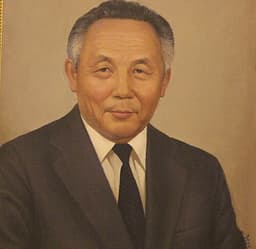
Jambyn Batmonkh
Politician · Modern
49.7Total
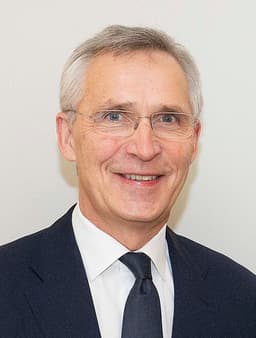
Jens Stoltenberg
Politician · Modern
59.3Total
Basic Information
Born
1926
1959
Died
—
—
Era
Modern
Modern
Nationality
Mongolia
Norway
Occupation
Politician
Politician
Civilization
Eastern
Western
Score Comparison
Military (10%)
14.6
48.4
Political (20%)
68.0
70.0
Influence (20%)
52.5
55.0
Legacy (20%)
44.2
56.0
Leadership (15%)
72.0
78.0
Strategy (15%)
30.6
45.0
TOTAL
49.7
59.3
Jambyn Batmonkh — Complete Timeline
1984 AD
Became General Secretary of the Mongolian People's Revolutionary PartyPolitical Action◆ Major
Batmonkh succeeded Yumjaagiin Tsedenbal as General Secretary of the MPRP, becoming the leader of Mongolia. He was seen as a reformist within the communist framework.
LeadershipCommunist Party
Impact: national
1986 AD
Initiated Economic Reforms Under PerestroikaReform◆ Major
Batmonkh introduced limited economic reforms inspired by Gorbachev's perestroika, including decentralization of state enterprises and encouragement of private enterprise. The reforms were modest but signaled a shift from Stalinist economics.
Economic ReformPerestroika
Impact: nationalconstructive
1990 AD
Peacefully Resigned After the 1990 Democratic RevolutionPolitical Action
Following massive pro-democracy protests in 1990, Batmonkh resigned as General Secretary and President, peacefully transferring power to a transitional government. This was a key moment in Mongolia's transition to democracy.
ResignationDemocratic TransitionPeaceful
Impact: nationalconstructive
1992 AD
Oversaw the Adoption of a New ConstitutionPolitical Action◆ Major
As a member of the transitional government, Batmonkh supported the adoption of a new democratic constitution in 1992, which established a multi-party system and protected civil liberties.
ConstitutionDemocracyReform
Impact: nationalconstructive
Jens Stoltenberg — Complete Timeline
2000 AD
Appointed Prime Minister of NorwayPolitical Action◆ Major
Stoltenberg became Prime Minister of Norway in March 2000, leading a Labour Party minority government. His first term lasted until October 2001.
Norwegian PoliticsGovernment Formation
Impact: national
2005 AD
Second Term as Prime Minister of NorwayPolitical Action◆ Major
Stoltenberg returned as Prime Minister in October 2005, leading a red-green coalition government of Labour, Socialist Left, and Centre parties. He served until 2013.
Norwegian PoliticsCoalition Government
Impact: national
2011 AD
2011 Norway Attacks ResponsePolitical Action◆ Major
Stoltenberg led Norway's response to the 2011 attacks, in which a far-right extremist killed 77 people. He advocated for openness and democracy, stating 'more democracy, more openness'.
TerrorismCrisis Management
Impact: national
2014 AD
Appointed NATO Secretary-GeneralPolitical Action
Stoltenberg became NATO Secretary-General in October 2014, succeeding Anders Fogh Rasmussen. He led the alliance through the Russian annexation of Crimea and increased tensions with Russia.
NATOInternational Security
Impact: global
This comparison has not been analyzed yet.
One-time AI generation (~1 minute). Scores and timeline are already available below.
Rankings
🥇
Jens StoltenbergLeader
Mil: 48.4Pol: 70.0Inf: 55.0
59.3
🥈
Jambyn Batmonkh
Mil: 14.6Pol: 68.0Inf: 52.5
49.7
+9.6 behind
How This Comparison Works
Algorithm
Each figure is scored on 6 dimensions (0—100 scale) based on structured historical data: Military (10%), Political (20%), Influence (20%), Legacy (20%), Leadership (15%), Strategy (15%). The weighted total produces the final ranking.
Data Sources
Scores are computed from structured sub-indicators in the database. Scale factors adjust for era (Ancient ×0.85, Modern ×1.0) and civilization size (Eastern ×1.05, Other ×0.80) to account for differences in population and military scale.
Maximum 3 Figures
Comparisons are limited to 2—3 figures to ensure readability and statistical meaningfulness.
Error Margins
±5 points per dimension — Sub-scores are derived from historical records with inherent uncertainty. Two figures within 5 points on a dimension should be considered roughly equivalent in that area.
Total Score Accuracy
±3 points overall — The weighted combination of 6 dimensions produces a total score with approximately ±3 points of uncertainty. Differences of less than 3 points are not statistically significant— the figures are effectively tied.
Known Limitations
- Historical records are incomplete and uneven across civilizations
- Figures from oral-tradition societies may be underrepresented
- Occupation labels can misclassify multi-role figures
- Scores measure capability and impact, not moral character
- Quantitative scoring is a comparison tool, not absolute truth
Capability Radar
Military (10%) — Battles & Warfare
Battles
13
31
Win Rate
17
33
Expansion
20
34
Political (20%) — Governance & Reform
Reform
50
60
Diplomacy
55
90
Economy
45
65
Influence (20%) — Cultural & Global Reach
Cultural
30
40
Global
25
75
Legacy (20%) — Historical Impact
Historical
35
65
Longevity
30
55
Leadership (15%) — Power & Stability
Tenure
60
85
Stability
65
75
Strategy (15%) — Tactics & Innovation
Strategy
24
36
Tactics
29
39
Reform
27
45
Similar Comparisons
Comments & Discussion
No comments yet. Be the first to share your thoughts!