Loading...
This comparison has not been analyzed yet.
One-time AI generation (~1 minute). Scores and timeline are already available below.
J. R. Jayewardene vs Lord Dalhousie
Lord Dalhousie leads by 5.1 pts · 2 figures compared
…

J. R. Jayewardene
Politician · Modern
53.3Total
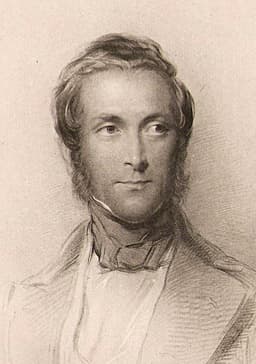
Lord Dalhousie
Politician · Modern
58.4Total
Basic Information
Born
1906
1812
Died
1996
1860
Era
Modern
Modern
Nationality
Sri Lanka
United Kingdom
Occupation
Politician
Politician
Civilization
Indian
Western
Score Comparison
Military (10%)
36.1
40.0
Political (20%)
45.0
60.0
Influence (20%)
56.4
58.3
Legacy (20%)
48.3
55.0
Leadership (15%)
72.0
74.0
Strategy (15%)
60.0
60.0
TOTAL
53.3
58.4
J. R. Jayewardene — Complete Timeline
1971 AD
Suppression of the 1971 JVP InsurrectionWar◆ Major
As Prime Minister, Jayewardene oversaw the suppression of the Janatha Vimukthi Peramuna (JVP) insurrection in 1971. The government used military force to crush the uprising, resulting in thousands of deaths and the imprisonment of JVP leaders.
InsurrectionMilitary SuppressionJVP
Impact: nationaldestructive
1977 AD
Economic LiberalizationReform◆ Major
Jayewardene's government implemented sweeping economic liberalization policies, including opening the economy to foreign investment, reducing state controls, and promoting export-oriented industries. This shifted Sri Lanka from a socialist to a market-oriented economy.
Economic ReformLiberalizationMarket Economy
Impact: nationalconstructive
1978 AD
Introduction of the Executive PresidencyPolitical Action
J. R. Jayewardene, as Prime Minister, introduced a new constitution that established an executive presidency in Sri Lanka. He became the first executive president on February 4, 1978, concentrating significant power in the presidency and replacing the Westminster-style parliamentary system.
Constitutional ReformExecutive PresidencyPower Centralization
Impact: national
1987 AD
Indo-Sri Lanka Peace AccordPolitical Action◆ Major
Jayewardene signed the Indo-Sri Lanka Peace Accord with Indian Prime Minister Rajiv Gandhi, aiming to end the Sri Lankan Civil War. The accord led to the deployment of the Indian Peace Keeping Force (IPKF) in northern Sri Lanka, but failed to achieve lasting peace.
Peace AccordIndian InterventionCivil War
Impact: regional
Lord Dalhousie — Complete Timeline
1848 AD
Second Anglo-Sikh WarWar◆ Major
Dalhousie oversaw the Second Anglo-Sikh War in 1848-1849, which resulted in the British annexation of the Punjab. The Sikh army was defeated at the Battle of Gujrat, and the Treaty of Lahore in 1849 formally annexed the region, ending Sikh sovereignty and extending British rule to the northwest frontier.
Anglo-Sikh WarAnnexationPunjab
Impact: regional
Doctrine of LapsePolitical Action
Lord Dalhousie, as Governor-General of India, implemented the Doctrine of Lapse, a policy that allowed the British to annex any princely state where the ruler died without a natural heir. This policy led to the annexation of states like Satara, Jhansi, and Nagpur, causing widespread resentment among Indian rulers and contributing to the 1857 Rebellion.
AnnexationPolicy1857 Rebellion
Impact: regionaldestructive
1853 AD
Railway and Telegraph ExpansionInvention◆ Major
Dalhousie championed the development of railways and telegraphs in India. The first railway line from Bombay to Thane opened in 1853, and a telegraph network was established connecting major cities. These projects aimed to improve communication, trade, and military control, laying the foundation for India's modern infrastructure.
InfrastructureRailwayTelegraph
Impact: regionalconstructive
1856 AD
Annexation of AwadhPolitical Action◆ Major
Dalhousie annexed the Kingdom of Awadh in 1856 under the pretext of misgovernment. The annexation was highly controversial and deeply resented by the local population and nobility. It became a major cause of the 1857 Indian Rebellion, as Awadh's soldiers and landlords joined the uprising against British rule.
AnnexationAwadh1857 Rebellion
Impact: regionaldestructive
This comparison has not been analyzed yet.
One-time AI generation (~1 minute). Scores and timeline are already available below.
Rankings
🥇
Lord DalhousieLeader
Mil: 40.0Pol: 60.0Inf: 58.3
58.4
🥈
J. R. Jayewardene
Mil: 36.1Pol: 45.0Inf: 56.4
53.3
+5.1 behind
How This Comparison Works
Algorithm
Each figure is scored on 6 dimensions (0—100 scale) based on structured historical data: Military (10%), Political (20%), Influence (20%), Legacy (20%), Leadership (15%), Strategy (15%). The weighted total produces the final ranking.
Data Sources
Scores are computed from structured sub-indicators in the database. Scale factors adjust for era (Ancient ×0.85, Modern ×1.0) and civilization size (Eastern ×1.05, Other ×0.80) to account for differences in population and military scale.
Maximum 3 Figures
Comparisons are limited to 2—3 figures to ensure readability and statistical meaningfulness.
Error Margins
±5 points per dimension — Sub-scores are derived from historical records with inherent uncertainty. Two figures within 5 points on a dimension should be considered roughly equivalent in that area.
Total Score Accuracy
±3 points overall — The weighted combination of 6 dimensions produces a total score with approximately ±3 points of uncertainty. Differences of less than 3 points are not statistically significant— the figures are effectively tied.
Known Limitations
- Historical records are incomplete and uneven across civilizations
- Figures from oral-tradition societies may be underrepresented
- Occupation labels can misclassify multi-role figures
- Scores measure capability and impact, not moral character
- Quantitative scoring is a comparison tool, not absolute truth
Capability Radar
Military (10%) — Battles & Warfare
Battles
45
20
Win Rate
47
30
Expansion
50
85
Political (20%) — Governance & Reform
Reform
65
75
Diplomacy
60
55
Economy
55
65
Influence (20%) — Cultural & Global Reach
Cultural
30
40
Global
40
70
Legacy (20%) — Historical Impact
Historical
50
75
Longevity
40
60
Leadership (15%) — Power & Stability
Tenure
70
70
Stability
40
20
Strategy (15%) — Tactics & Innovation
Strategy
55
60
Tactics
56
15
Reform
58
40
Similar Comparisons
Comments & Discussion
No comments yet. Be the first to share your thoughts!