Loading...
Charles de Gaulle vs Lord Dalhousie
Charles de Gaulle leads by 9.8 pts · 2 figures compared
…
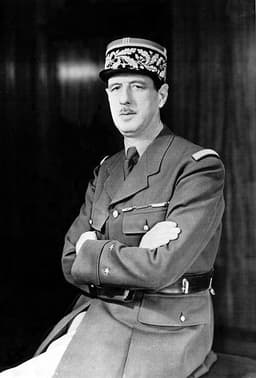
Charles de Gaulle
Politician · Modern
68.2Total
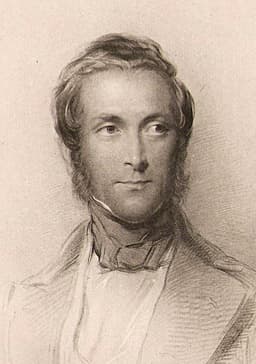
Lord Dalhousie
Politician · Modern
58.4Total
Basic Information
Born
1890
1812
Died
1970
1860
Era
Modern
Modern
Nationality
France
United Kingdom
Occupation
Politician
Politician
Civilization
Western
Western
Score Comparison
Military (10%)
55.0
40.0
Political (20%)
75.0
60.0
Influence (20%)
65.0
58.3
Legacy (20%)
68.0
55.0
Leadership (15%)
78.0
74.0
Strategy (15%)
65.0
60.0
TOTAL
68.2
58.4
Charles de Gaulle — Complete Timeline
1940 AD
Appeal of 18 June 1940Political Action
From London, de Gaulle broadcast a radio appeal urging French resistance against Nazi occupation. He called on French soldiers and citizens to continue the fight, founding the Free French Forces and becoming the symbol of French defiance.
World War IIResistanceLeadership
Impact: nationalconstructive
1958 AD
Founding of the Fifth RepublicPolitical Action
De Gaulle returned to power during the Algerian crisis and oversaw the drafting of a new constitution. The Fifth Republic established a strong executive presidency, replacing the unstable parliamentary system of the Fourth Republic.
ConstitutionGovernment ReformPolitical System
Impact: nationalconstructive
1962 AD
End of the Algerian WarPolitical Action◆ Major
De Gaulle negotiated the
DecolonizationPeace TreatyAlgeria
Impact: regionalconstructive
1968 AD
May 1968 CrisisPolitical Action◆ Major
Mass student protests and general strikes paralyzed France, challenging de Gaulle's government. De Gaulle briefly fled to Germany, then returned to dissolve the National Assembly and call elections, which his party won, but his authority was weakened.
ProtestPolitical CrisisSocial Unrest
Impact: nationaldestructive
1969 AD
Resignation as PresidentPolitical Action
De Gaulle resigned after losing a referendum on regional reform and Senate restructuring. The defeat marked the end of his political career, as he withdrew from public life and died the following year.
ResignationPolitical DefeatReferendum
Impact: nationaltragic
Lord Dalhousie — Complete Timeline
1848 AD
Second Anglo-Sikh WarWar◆ Major
Dalhousie oversaw the Second Anglo-Sikh War in 1848-1849, which resulted in the British annexation of the Punjab. The Sikh army was defeated at the Battle of Gujrat, and the Treaty of Lahore in 1849 formally annexed the region, ending Sikh sovereignty and extending British rule to the northwest frontier.
Anglo-Sikh WarAnnexationPunjab
Impact: regional
Doctrine of LapsePolitical Action
Lord Dalhousie, as Governor-General of India, implemented the Doctrine of Lapse, a policy that allowed the British to annex any princely state where the ruler died without a natural heir. This policy led to the annexation of states like Satara, Jhansi, and Nagpur, causing widespread resentment among Indian rulers and contributing to the 1857 Rebellion.
AnnexationPolicy1857 Rebellion
Impact: regionaldestructive
1853 AD
Railway and Telegraph ExpansionInvention◆ Major
Dalhousie championed the development of railways and telegraphs in India. The first railway line from Bombay to Thane opened in 1853, and a telegraph network was established connecting major cities. These projects aimed to improve communication, trade, and military control, laying the foundation for India's modern infrastructure.
InfrastructureRailwayTelegraph
Impact: regionalconstructive
1856 AD
Annexation of AwadhPolitical Action◆ Major
Dalhousie annexed the Kingdom of Awadh in 1856 under the pretext of misgovernment. The annexation was highly controversial and deeply resented by the local population and nobility. It became a major cause of the 1857 Indian Rebellion, as Awadh's soldiers and landlords joined the uprising against British rule.
AnnexationAwadh1857 Rebellion
Impact: regionaldestructive
Expert Analysis
Charles de Gaulle vs Lord Dalhousie
# The Two Faces of Imperial Ambition
On a June evening in 1940, a towering French general stood before a microphone in a BBC studio in London, his voice crackling across the English Channel to a nation in ruins. "France has lost a battle," Charles de Gaulle declared, "but France has not lost the war." Eight years earlier and half a world away, another imperial figure—James Ramsay, the Marquess of Dalhousie—had sat in Calcutta, calmly signing annexation orders that would eventually set India ablaze. One man built a republic from the ashes of defeat; the other lit a fuse that would explode into rebellion. What drove these two men, both products of the same century’s imperial ethos, to such radically different ends?
Origins
De Gaulle was born in 1890 into a devoutly Catholic, patriotic family in Lille, northern France. His father, a professor, instilled in him a sense of national destiny and stoic duty. The young Charles grew up reading the works of philosophers like Henri Bergson and dreaming of military glory. He entered Saint-Cyr, France’s elite military academy, just as the world hurtled toward the Great War. That conflict—trench warfare, mechanized slaughter, the collapse of empires—shaped his belief that France must never again be humiliated.
Dalhousie, born in 1812, came from a Scottish aristocratic line steeped in colonial administration. His father, the 9th Earl, had served as Governor-General of Canada. Young James inherited not only a title but a worldview: Britain’s empire was a force for civilization, and its expansion was a moral duty. Educated at Harrow and Christ Church, Oxford, he absorbed the utilitarian philosophy of Jeremy Bentham and the administrative zeal of the East India Company. Where de Gaulle learned from the trenches of Verdun, Dalhousie learned from the ledgers of empire.
Rise to Power
De Gaulle’s ascent was improbable. In 1940, he was a relatively obscure brigadier general when Prime Minister Paul Reynaud appointed him to a minor government post. As France collapsed before the German blitzkrieg, de Gaulle fled to London—not as a commander with an army, but as a voice. His Appeal of 18 June was a gamble: a single broadcast that defied the legitimate French government of Marshal Pétain. For years, he was dismissed by Churchill and Roosevelt as a difficult, self-important exile. Yet he refused to be ignored, building the Free French Forces from scratch.
Dalhousie’s path was smoother. Appointed Governor-General of India in 1848 at age thirty-six, he arrived with a mandate to consolidate British control. His first major act was the Second Anglo-Sikh War that same year, a brutal campaign that annexed the Punjab. Unlike de Gaulle, who had to persuade, Dalhousie commanded. He did not need to build a movement; he inherited an empire.
Leadership & Governance
Here the contrast sharpens. De Gaulle governed through moral authority and strategic patience. When he returned to power in 1958 during the Algerian crisis, he did not impose his will by force. He called for a new constitution, the Fifth Republic, which centralized executive power but also submitted to a national referendum. His decision to end the Algerian War in 1962 via the Évian Accords was deeply unpopular with the French army and settlers. Yet he pushed through, believing that France’s future lay in decolonization, not clinging to a bloody past.
Dalhousie governed through administrative efficiency and ruthless policy. His Doctrine of Lapse, announced in 1848, allowed the British to annex any princely state whose ruler died without a natural heir. It was legally sound by British standards but culturally deaf: it ignored Indian traditions of adoption and inheritance. He also annexed Awadh in 1856 on the flimsy pretext of "misgovernment," stripping a prosperous kingdom of its sovereignty. His railway and telegraph expansions were visionary—the first line from Bombay to Thane opened in 1853—but they served imperial control, not Indian welfare.
Triumph & Tragedy
De Gaulle’s greatest triumph was the Fifth Republic itself, a political system that has endured for over six decades. His handling of the May 1968 crisis—student protests and general strikes that paralyzed France—was a near-disaster. He briefly fled to Baden-Baden to consult with French generals, a moment of panic that nearly cost him everything. Yet he returned, dissolved parliament, and won a snap election. Still, his resignation in 1969 after losing a referendum on regional reform showed that even giants can stumble on small issues.
Dalhousie’s triumph was the annexation of Punjab, which added a vast, prosperous territory to British India. His infrastructure projects—roads, railways, telegraphs—modernized the subcontinent. But his tragedy was the Indian Rebellion of 1857, a cataclysm that his policies directly provoked. The Doctrine of Lapse and the annexation of Awadh alienated both princes and peasants. Though Dalhousie had left India by 1856, his legacy was bathed in blood.
Character & Destiny
De Gaulle was aloof, arrogant, and convinced of his own historical mission. He once wrote, "Great men are those who, by their genius, give events the direction they themselves desire." This self-belief allowed him to stand alone against Vichy France, to defy allies, and to steer a nation through crisis. But it also made him inflexible. His resignation in 1969 was a matter of principle: he would not compromise on a referendum he had staked his authority on.
Dalhousie was industrious, methodical, and convinced of British superiority. He worked eighteen-hour days, drafting policies and inspecting projects. Yet he lacked de Gaulle’s strategic imagination. He could not foresee that the Doctrine of Lapse would unite Hindu and Muslim soldiers in a common grievance. Where de Gaulle understood the power of symbols and national sentiment, Dalhousie saw only administrative problems.
Legacy
De Gaulle is remembered as the savior of French honor, the founder of a stable republic, and the architect of French independence from NATO’s military command. His name adorns airports, aircraft carriers, and countless streets. Yet his legacy is contested: his authoritarian tendencies, his nuclear tests in the Pacific, and his treatment of Quebec’s separatists remain debated.
Dalhousie is remembered as the architect of modern India’s infrastructure—and the man who lit the fuse of 1857. In Britain, he is a footnote; in India, a symbol of imperial arrogance. His name survives in Dalhousie Hill Station, but the rebellion he helped trigger ended the East India Company’s rule and brought India directly under the British Crown.
Conclusion
Standing at the end of their lives, both men might have recognized something in the other: the certainty that they were right. De Gaulle, exiled in his final years at Colombey-les-Deux-Églises, wrote memoirs justifying his every decision. Dalhousie, dying of tuberculosis at forty-eight, left behind volumes of official correspondence, convinced he had served the empire well. Yet history judges them differently. De Gaulle’s France is still his. Dalhousie’s India is gone, and the rebellion he sparked is remembered as the first war of independence. In the end, the difference between a nation-builder and an imperial administrator is not just talent or vision—it is whether the people you rule see you as one of them, or as a foreign hand on their shoulder.
Rankings
🥇
Charles de GaulleLeader
Mil: 55.0Pol: 75.0Inf: 65.0
68.2
🥈
Lord Dalhousie
Mil: 40.0Pol: 60.0Inf: 58.3
58.4
+9.8 behind
How This Comparison Works
Algorithm
Each figure is scored on 6 dimensions (0—100 scale) based on structured historical data: Military (10%), Political (20%), Influence (20%), Legacy (20%), Leadership (15%), Strategy (15%). The weighted total produces the final ranking.
Data Sources
Scores are computed from structured sub-indicators in the database. Scale factors adjust for era (Ancient ×0.85, Modern ×1.0) and civilization size (Eastern ×1.05, Other ×0.80) to account for differences in population and military scale.
Maximum 3 Figures
Comparisons are limited to 2—3 figures to ensure readability and statistical meaningfulness.
Error Margins
±5 points per dimension — Sub-scores are derived from historical records with inherent uncertainty. Two figures within 5 points on a dimension should be considered roughly equivalent in that area.
Total Score Accuracy
±3 points overall — The weighted combination of 6 dimensions produces a total score with approximately ±3 points of uncertainty. Differences of less than 3 points are not statistically significant— the figures are effectively tied.
Known Limitations
- Historical records are incomplete and uneven across civilizations
- Figures from oral-tradition societies may be underrepresented
- Occupation labels can misclassify multi-role figures
- Scores measure capability and impact, not moral character
- Quantitative scoring is a comparison tool, not absolute truth
Capability Radar
Military (10%) — Battles & Warfare
Battles
60
20
Win Rate
55
30
Expansion
20
85
Political (20%) — Governance & Reform
Reform
95
75
Diplomacy
90
55
Economy
70
65
Influence (20%) — Cultural & Global Reach
Cultural
70
40
Global
80
70
Legacy (20%) — Historical Impact
Historical
85
75
Longevity
75
60
Leadership (15%) — Power & Stability
Tenure
85
70
Stability
75
20
Strategy (15%) — Tactics & Innovation
Strategy
85
60
Tactics
70
15
Reform
80
40
Similar Comparisons
Comments & Discussion
Napoleon’s Shadow6/16/2026
De Gaulle built a myth, but Dalhousie built a railroad. One gave France a vision; the other gave India a system. Yet Dalhousie’s “doctrine of lapse,” annexing states without heirs, was a legal fiction that stoked the 1857 Rebellion. De Gaulle at least knew when to retreat—literally to London—and when to return. Dalhousie just kept pushing until the whole subcontinent pushed back. Different means, both imperialists at heart.
铁路暴君6/16/2026
达豪斯是维多利亚时代效率的化身:电报、铁路、统一行政——但代价呢?他兼并了萨塔拉、那格浦尔、詹西,把土邦变成火药桶。1857年起义的第一枪其实是他点的。反观戴高乐,1940年6月18日的广播不仅是演讲,那是共和国合法性的搬家。一个拆了旧房子盖新楼,另一个则把地基挖空了。效率派vs象征派,我站戴高乐。
Centurion’s Gaze6/16/2026
Both men saw themselves as instruments of destiny, but only one had his faith tested. De Gaulle’s Free French were a shadow army, yet he held France’s soul aloft. Dalhousie had all the resources of the Raj—steam power, bureaucracy, sepoy regiments—and still managed to catalyze a mutiny. It’s not just scale; it’s judgment. De Gaulle knew when to say “non” to allies who doubted him. Dalhousie never said “non” to his own ambition. That’s the fatal difference.
殖民者的道德账单6/16/2026
比较历史人物不能只看“伟大”。达豪斯在印度推行西方教育、铁路、邮政,表面看是现代化,但他亲手埋下1857年大起义的种子。詹西女王拉克希米·巴依的反抗直接源于他的兼并政策。另一边的戴高乐,虽然也是强权人物,至少让法兰西在战败中保有尊严。一个带来制度,一个恢复灵魂。谁更“有用”?历史自有公论。
Iron Dice Roller6/16/2026
Here’s the overlooked irony: both were monomaniacal about national greatness, but Dalhousie’s hubris played out on an imperial stage already cracking. De Gaulle was lucky enough to face a clear enemy—Nazi Germany—and could tap into resistance mythology. Dalhousie faced a more ambiguous foe: a subcontinent’s simmering rage. His annexations were efficient but devoid of moral intelligence. De Gaulle understood that legitimacy requires more than brute force. One was a statesman; the other, a very bu