Loading...
George Washington vs Lord Dalhousie
George Washington leads by 18.4 pts · 2 figures compared
…
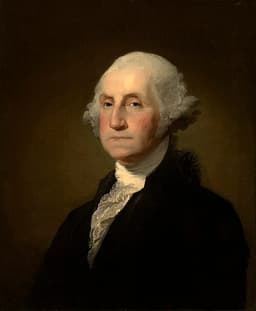
George Washington
Politician · Modern
76.8Total
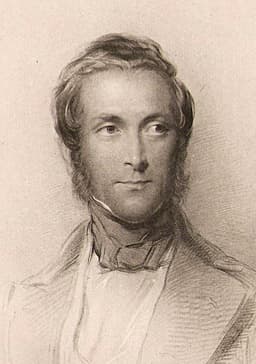
Lord Dalhousie
Politician · Modern
58.4Total
Basic Information
Born
1732
1812
Died
1799
1860
Era
Modern
Modern
Nationality
United States
United Kingdom
Occupation
Politician
Politician
Civilization
Western
Western
Score Comparison
Military (10%)
75.0
40.0
Political (20%)
82.0
60.0
Influence (20%)
75.0
58.3
Legacy (20%)
80.0
55.0
Leadership (15%)
85.0
74.0
Strategy (15%)
55.0
60.0
TOTAL
76.8
58.4
George Washington — Complete Timeline
1775 AD
Appointed Commander-in-Chief of the Continental ArmyOther◆ Major
The Second Continental Congress appointed Washington as commander-in-chief of the Continental Army on June 15, 1775. He accepted the position without pay, taking command of the forces besieging Boston at the start of the American Revolutionary War.
American RevolutionMilitary Leadership
Impact: national
1776 AD
Crossed the Delaware RiverOther◆ Major
On the night of December 25-26, 1776, Washington led 2,400 troops across the ice-choked Delaware River. The surprise attack on Hessian forces at Trenton resulted in a decisive American victory, capturing nearly 1,000 prisoners and reviving Patriot morale after a series of defeats.
American RevolutionBattleTurning Point
Impact: nationalconstructive
1787 AD
Presided over the Constitutional ConventionPolitical Action◆ Major
Washington served as president of the Constitutional Convention in Philadelphia from May to September 1787. His presence lent legitimacy to the proceedings, and he formally signed the final draft of the U.S. Constitution, though he contributed little to the debates.
ConstitutionFounding Father
Impact: national
1789 AD
Inaugurated as First President of the United StatesPolitical Action◆ Major
Washington was unanimously elected by the Electoral College and inaugurated on April 30, 1789, at Federal Hall in New York City. He established numerous executive branch precedents, including the cabinet system, the inaugural address, and the title 'Mr. President'.
PresidencyFounding Father
Impact: national
1793 AD
Issued the Proclamation of NeutralityOther◆ Major
Washington issued the Proclamation of Neutrality on April 22, 1793, declaring the United States neutral in the conflict between France and Great Britain. This decision established the precedent of American isolationism and avoided entanglement in European wars.
Foreign PolicyNeutrality
Impact: national
1796 AD
Delivered the Farewell AddressOther◆ Major
Washington published his Farewell Address on September 19, 1796, announcing his decision not to seek a third term. The address warned against political factionalism, permanent foreign alliances, and the influence of the military in government, shaping American political culture.
PresidencyLegacy
Impact: national
Lord Dalhousie — Complete Timeline
1848 AD
Second Anglo-Sikh WarWar◆ Major
Dalhousie oversaw the Second Anglo-Sikh War in 1848-1849, which resulted in the British annexation of the Punjab. The Sikh army was defeated at the Battle of Gujrat, and the Treaty of Lahore in 1849 formally annexed the region, ending Sikh sovereignty and extending British rule to the northwest frontier.
Anglo-Sikh WarAnnexationPunjab
Impact: regional
Doctrine of LapsePolitical Action
Lord Dalhousie, as Governor-General of India, implemented the Doctrine of Lapse, a policy that allowed the British to annex any princely state where the ruler died without a natural heir. This policy led to the annexation of states like Satara, Jhansi, and Nagpur, causing widespread resentment among Indian rulers and contributing to the 1857 Rebellion.
AnnexationPolicy1857 Rebellion
Impact: regionaldestructive
1853 AD
Railway and Telegraph ExpansionInvention◆ Major
Dalhousie championed the development of railways and telegraphs in India. The first railway line from Bombay to Thane opened in 1853, and a telegraph network was established connecting major cities. These projects aimed to improve communication, trade, and military control, laying the foundation for India's modern infrastructure.
InfrastructureRailwayTelegraph
Impact: regionalconstructive
1856 AD
Annexation of AwadhPolitical Action◆ Major
Dalhousie annexed the Kingdom of Awadh in 1856 under the pretext of misgovernment. The annexation was highly controversial and deeply resented by the local population and nobility. It became a major cause of the 1857 Indian Rebellion, as Awadh's soldiers and landlords joined the uprising against British rule.
AnnexationAwadh1857 Rebellion
Impact: regionaldestructive
Expert Analysis
George Washington vs Lord Dalhousie
# The Founder and the Imperialist
On a December morning in 1799, George Washington mounted his horse for what would be his last ride around Mount Vernon. Within hours, he would be dead from a throat infection, mourned by a nation he had midwifed into existence. Half a world away and half a century later, another man—Lord Dalhousie—was boarding a ship in Bombay, leaving behind an India seething with resentment. Washington had given birth to a republic; Dalhousie had planted the seeds of a rebellion that would nearly destroy an empire. Both were men of their age, yet they stood at opposite poles of the same historical drama: the expansion of Western power and the forging of modern states.
Origins
Washington was born into Virginia's planter aristocracy in 1732, a world of tobacco fields, enslaved labor, and provincial deference to London. His formal education was modest—he never attended university—but he absorbed the Enlightenment ideals of self-governance from the books in his father’s library. Dalhousie arrived in 1812, the son of a Scottish peer, educated at Harrow and Oxford, steeped in the conviction that Britain’s imperial mission was both a duty and a right. Washington’s America was a periphery of the British Empire; Dalhousie’s Britain was the center of the world’s greatest empire. One learned to question authority, the other to wield it.
Rise to Power
Washington’s path was forged in crisis. As a young surveyor and militia officer, he fought in the French and Indian War, learning the bitter lessons of frontier combat and British arrogance. By 1775, when the Continental Congress needed a commander, Washington was the rare figure trusted by both New England radicals and Southern gentry. His appointment was not a foregone conclusion—it was a political compromise that became a stroke of genius.
Dalhousie’s rise was smoother and more bureaucratic. Appointed Governor-General of India in 1848 at the age of thirty-six, he arrived with a clear mandate: expand British control and modernize the subcontinent. Where Washington had to persuade, Dalhousie could command. The difference was not merely personal—it was structural. Washington led a revolution of volunteers; Dalhousie administered a colonial machine.
Leadership & Governance
Washington’s genius lay in restraint. As commander of the Continental Army, he lost more battles than he won, yet kept his army intact through the terrible winter at Valley Forge. He understood that survival, not glory, was victory. As president, he established precedents—the cabinet system, the two-term limit, the primacy of civilian control—that shaped American governance for two centuries. “I walk on untrodden ground,” he wrote. “There is scarcely any part of my conduct which may not hereafter be drawn into precedent.”
Dalhousie governed with relentless energy and a faith in progress that bordered on arrogance. He built railways and telegraphs, standardized the postal system, and established schools. His “Doctrine of Lapse” in 1848 allowed the British to annex any princely state whose ruler died without a natural heir. Under this policy, he absorbed seven states, most controversially the wealthy kingdom of Awadh in 1856. He saw himself as a modernizer, sweeping away corrupt medieval kingdoms. But he failed to understand what Washington instinctively grasped: that legitimacy cannot be imposed by force.
Triumph & Tragedy
Washington’s greatest moment came not on a battlefield but in a ballroom. In 1783, when his officers mutinied against Congress, Washington appeared before them, pulled out his spectacles, and said, “Gentlemen, you will permit me to put on my spectacles, for I have not only grown gray but almost blind in the service of my country.” The rebellion dissolved in tears. He had saved the republic not with a sword but with a gesture of shared sacrifice.
Dalhousie’s triumph was the annexation of Punjab after the Second Anglo-Sikh War in 1848-1849, a campaign that added one of India’s most fertile regions to the British crown. He boasted of bringing order and progress. But his tragedy was the Rebellion of 1857, which erupted just months after his departure from India. The annexation of Awadh, the dispossession of princes, the meddling with religious customs—all were kindling he had piled high. The mutiny killed thousands and nearly ended British rule. Dalhousie died in 1860, haunted by the disaster he had helped create.
Character & Destiny
Washington was a man of controlled passions. He burned with ambition but learned to cloak it in duty. He owned slaves yet privately expressed unease with the institution. His greatness was the greatness of self-mastery. Dalhousie was a man of unbending conviction. He wrote of his policies with the certainty of a schoolmaster grading papers. “I have done my duty,” he insisted, even as India burned. Washington’s caution saved a nation; Dalhousie’s confidence nearly lost one.
Legacy
Washington is remembered as the “Father of His Country,” his face on currency and monuments, his farewell address still studied for its warnings against faction and foreign entanglements. He left behind a system designed to outlast any single leader. Dalhousie is remembered as the architect of modern India’s infrastructure—and as the man who provoked the bloodiest uprising of the British Raj. His name is spoken with ambivalence, his statue in Edinburgh a subject of debate.
Conclusion
Two men, two worlds. Washington built a nation by knowing when to stop; Dalhousie expanded an empire by refusing to pause. One understood that power flows from consent, the other from coercion. Their stories remind us that the same century produced both the American republic and the British Raj—and that the difference between a founder and a destroyer is often not intention, but the humility to listen before acting. Washington’s last words were about his burial. Dalhousie’s were about his legacy. In that difference lies the measure of their lives.
Rankings
🥇
George WashingtonLeader
Mil: 75.0Pol: 82.0Inf: 75.0
76.8
🥈
Lord Dalhousie
Mil: 40.0Pol: 60.0Inf: 58.3
58.4
+18.4 behind
How This Comparison Works
Algorithm
Each figure is scored on 6 dimensions (0—100 scale) based on structured historical data: Military (10%), Political (20%), Influence (20%), Legacy (20%), Leadership (15%), Strategy (15%). The weighted total produces the final ranking.
Data Sources
Scores are computed from structured sub-indicators in the database. Scale factors adjust for era (Ancient ×0.85, Modern ×1.0) and civilization size (Eastern ×1.05, Other ×0.80) to account for differences in population and military scale.
Maximum 3 Figures
Comparisons are limited to 2—3 figures to ensure readability and statistical meaningfulness.
Error Margins
±5 points per dimension — Sub-scores are derived from historical records with inherent uncertainty. Two figures within 5 points on a dimension should be considered roughly equivalent in that area.
Total Score Accuracy
±3 points overall — The weighted combination of 6 dimensions produces a total score with approximately ±3 points of uncertainty. Differences of less than 3 points are not statistically significant— the figures are effectively tied.
Known Limitations
- Historical records are incomplete and uneven across civilizations
- Figures from oral-tradition societies may be underrepresented
- Occupation labels can misclassify multi-role figures
- Scores measure capability and impact, not moral character
- Quantitative scoring is a comparison tool, not absolute truth
Capability Radar
Military (10%) — Battles & Warfare
Battles
75
20
Win Rate
70
30
Expansion
60
85
Political (20%) — Governance & Reform
Reform
90
75
Diplomacy
85
55
Economy
65
65
Influence (20%) — Cultural & Global Reach
Cultural
85
40
Global
85
70
Legacy (20%) — Historical Impact
Historical
95
75
Longevity
90
60
Leadership (15%) — Power & Stability
Tenure
70
70
Stability
85
20
Strategy (15%) — Tactics & Innovation
Strategy
80
60
Tactics
65
15
Reform
85
40
Similar Comparisons
Comments & Discussion
The Freedom Plow6/16/2026
Let’s cut the false equivalence. Washington built a nation by stepping down from power; Dalhousie built an empire by annexing entire kingdoms under the Doctrine of Lapse. One founded a republic, the other destroyed sovereignties—from Satara to Jhansi. Dalhousie’s railways and telegraphs served imperial extraction, not enlightenment. Washington freed America from foreign rule; Dalhousie bound India tighter. One is a father, the other a chain-maker.
抽丝剥茧史家6/16/2026
拿华盛顿和达尔豪西比较本身就是一种帝国叙事陷阱。华盛顿生在一个有潜力自决的殖民地,他的独立战争背后是成熟的启蒙思想与本土精英阶层。而达尔豪西面对的是早已高度发达的文明古国,他用“丧失权利说”吞并了撒塔拉、那格浦尔、占西,连养子继承权都不承认。这不是“扩张的不同路径”,而是“解放”与“掠夺”的本质区别。前者创建共和,后者埋下1857年大起义的炸药。
The Net Present Value Skeptic6/16/2026
Stop romanticizing. Washington owned 317 enslaved people at his death and never freed them in his will until his widow’s death—convenient. Dalhousie annexed Punjab, modernized infrastructure, banned sati, and built the first Indian telegraph line. Washington’s republic was a slave oligarchy; Dalhousie’s India was brutal bureaucratically but imposed a unified legal code. Who spread more progress per square mile? We need a scorecard, not hagiography.
帝国透镜分析员6/16/2026
评论前请先看清坐标:华盛顿在北美大陆扩张自由帝国的边疆,屠戮原住民、剥夺土地、建立白人至上宪法;达尔豪西在印度推行西式行政、铁路、邮电,但也摧毁了马拉塔同盟和锡克帝国的独立主权。两人都是殖民逻辑的执行者,区别只在:华盛顿输出的是“白人的共和国”,达尔豪西输出的是“白人的总督府”。没有道德高下,只有权力技术的差异。