Loading...
Lord Dalhousie vs Mao Zedong
Mao Zedong leads by 21.0 pts · 2 figures compared
…
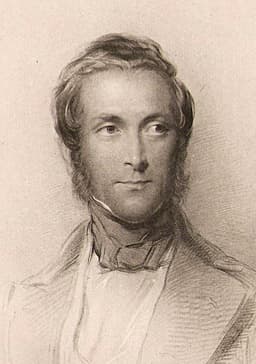
Lord Dalhousie
Politician · Modern
58.4Total
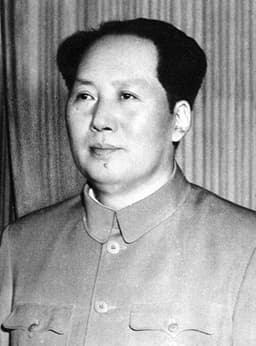
Mao Zedong
Politician · Modern
79.4Total
Basic Information
Born
1812
1893
Died
1860
1976
Era
Modern
Modern
Nationality
United Kingdom
China
Occupation
Politician
Politician
Civilization
Western
Eastern
Score Comparison
Military (10%)
40.0
75.0
Political (20%)
60.0
88.0
Influence (20%)
58.3
85.0
Legacy (20%)
55.0
70.0
Leadership (15%)
74.0
85.0
Strategy (15%)
60.0
72.0
TOTAL
58.4
79.4
Lord Dalhousie — Complete Timeline
1848 AD
Second Anglo-Sikh WarWar◆ Major
Dalhousie oversaw the Second Anglo-Sikh War in 1848-1849, which resulted in the British annexation of the Punjab. The Sikh army was defeated at the Battle of Gujrat, and the Treaty of Lahore in 1849 formally annexed the region, ending Sikh sovereignty and extending British rule to the northwest frontier.
Anglo-Sikh WarAnnexationPunjab
Impact: regional
Doctrine of LapsePolitical Action
Lord Dalhousie, as Governor-General of India, implemented the Doctrine of Lapse, a policy that allowed the British to annex any princely state where the ruler died without a natural heir. This policy led to the annexation of states like Satara, Jhansi, and Nagpur, causing widespread resentment among Indian rulers and contributing to the 1857 Rebellion.
AnnexationPolicy1857 Rebellion
Impact: regionaldestructive
1853 AD
Railway and Telegraph ExpansionInvention◆ Major
Dalhousie championed the development of railways and telegraphs in India. The first railway line from Bombay to Thane opened in 1853, and a telegraph network was established connecting major cities. These projects aimed to improve communication, trade, and military control, laying the foundation for India's modern infrastructure.
InfrastructureRailwayTelegraph
Impact: regionalconstructive
1856 AD
Annexation of AwadhPolitical Action◆ Major
Dalhousie annexed the Kingdom of Awadh in 1856 under the pretext of misgovernment. The annexation was highly controversial and deeply resented by the local population and nobility. It became a major cause of the 1857 Indian Rebellion, as Awadh's soldiers and landlords joined the uprising against British rule.
AnnexationAwadh1857 Rebellion
Impact: regionaldestructive
Mao Zedong — Complete Timeline
1934 AD
Long MarchWar
Mao Zedong led the Chinese Red Army on a strategic retreat from Nationalist forces, covering approximately 6,000 miles over 370 days. The march solidified Mao's leadership within the Chinese Communist Party and became a foundational myth of the Communist revolution.
Chinese Civil WarCommunist RevolutionRetreat
Impact: national
1949 AD
Proclamation of the People's Republic of ChinaPolitical Action
Mao Zedong declared the founding of the People's Republic of China from Tiananmen Gate in Beijing. This ended the Chinese Civil War and established Communist rule over mainland China, with Mao as Chairman of the Central People's Government.
Founding of PRCCommunist VictoryRevolution
Impact: global
1958 AD
Great Leap ForwardReform◆ Major
Mao launched a campaign to rapidly industrialize China and collectivize agriculture. The policy led to widespread mismanagement, resulting in a famine that caused an estimated 15-45 million deaths between 1959 and 1961.
FamineIndustrializationCollectivization
Impact: nationaldestructive
1960 AD
Sino-Soviet SplitPolitical Action◆ Major
Mao's ideological differences with Soviet leader Nikita Khrushchev led to a breakdown in relations between China and the Soviet Union. The split ended the Sino-Soviet alliance and reshaped global Cold War dynamics, with China pursuing an independent path.
Cold WarIdeological ConflictAlliance Breakdown
Impact: global
1966 AD
Cultural RevolutionPolitical Action
Mao initiated a sociopolitical movement to purge capitalist and traditional elements from Chinese society. The Red Guard youth groups attacked intellectuals and officials, leading to widespread violence, destruction of cultural artifacts, and an estimated 1-2 million deaths.
Political PurgeSocial UpheavalRed Guard
Impact: nationaldestructive
1971 AD
Ping-Pong DiplomacyCultural◆ Major
Mao approved an invitation for the U.S. table tennis team to visit China, initiating a thaw in Sino-American relations. This cultural exchange paved the way for President Nixon's visit to China in 1972 and the eventual normalization of diplomatic ties.
DiplomacyU.S.-China RelationsCultural Exchange
Impact: globalconstructive
Expert Analysis
Mao Zedong vs Lord Dalhousie
# The Revolutionary and the Viceroy
On a cold December morning in 1893, a peasant’s son was born in the remote village of Shaoshan, Hunan. Half a world away, in the same year, a Scottish aristocrat named James Ramsay—the tenth Earl of Dalhousie—had been dead for three decades, his name already etched into the annals of empire. These two men, Mao Zedong and Lord Dalhousie, never met, yet their lives trace a single, violent arc: the struggle between colonizer and colonized, between tradition and modernity, between the old world and the new. One sought to build a nation from the ashes of foreign domination; the other sought to tighten the grip of an empire that stretched from London to the Himalayas. Their differences are not merely biographical—they are tectonic.
Origins
Mao Zedong was born into a world of crumbling dynasties, foreign incursions, and peasant desperation. His father, a prosperous farmer, beat him; his mother, a devout Buddhist, soothed him. Mao devoured classical Chinese texts and revolutionary pamphlets in equal measure, working as a library assistant at Peking University where he first encountered Marxism. The China of his youth was a wounded giant—humiliated by the Opium Wars, carved into spheres of influence by European powers, and ruled by a Qing dynasty too weak to resist. Mao’s worldview was forged in this furnace of national shame.
Lord Dalhousie, by contrast, was born into the British aristocracy. His father was a governor-general of Canada; his family had served the Crown for generations. Educated at Harrow and Christ Church, Oxford, Dalhousie entered Parliament as a conservative reformer, a man who believed in efficiency, order, and the civilizing mission of the British Empire. He arrived in India in 1848 as Governor-General, a young man of thirty-six with a vision of a unified, modernized subcontinent—under British rule, of course. Where Mao saw imperialism as a disease, Dalhousie saw it as a prescription.
Rise to Power
Mao’s ascent was a long march in every sense. In 1934, hemmed in by Nationalist forces, he led the Chinese Red Army on a strategic retreat covering roughly six thousand miles—the Long March. It was a military disaster but a political triumph. Mao emerged from the ordeal as the undisputed leader of the Chinese Communist Party, his writings and speeches galvanizing a movement that had seemed on the verge of extinction. He did not seize power in a palace coup; he earned it through endurance, ruthlessness, and an uncanny ability to read the mood of the peasantry.
Dalhousie’s rise was smoother. Appointed Governor-General at a young age, he wielded authority from the start. His doctrine of lapse—a policy that allowed the British to annex any princely state whose ruler died without a male heir—was a bureaucratic sledgehammer. State after state fell: Satara, Jhansi, Nagpur. By 1856, he had annexed the Kingdom of Awadh, a wealthy and strategic territory, under the pretext of misgovernment. Where Mao mobilized millions, Dalhousie moved files and regiments.
Leadership & Governance
Mao’s leadership was ideological, personal, and total. He governed through mass mobilization, not bureaucracy. In 1958, he launched the Great Leap Forward, a crash program of industrialization and collectivization that demanded heroic sacrifice from the peasantry. The results were catastrophic: famine, mismanagement, and millions of deaths. Yet Mao’s political genius lay in his ability to deflect blame and reassert control. In 1966, he initiated the Cultural Revolution, unleashing the Red Guard to purge the party of perceived revisionists. It was a sociopolitical earthquake that shattered institutions, families, and lives—yet it also cemented Mao’s power until his death.
Dalhousie governed through institutions. He championed railways and telegraphs, laying the groundwork for a modern Indian infrastructure. The first railway line from Bombay to Thane opened under his tenure. He standardized postal services, reformed education, and built roads. His vision was one of administrative efficiency, not ideological transformation. But his governance had a hard edge: the Second Anglo-Sikh War (1848–49) ended with the annexation of Punjab, and his policies systematically dismantled the remaining structures of Indian sovereignty. He was a builder, but his foundations were laid on conquest.
Triumph & Tragedy
Mao’s greatest triumph was the proclamation of the People’s Republic of China on October 1, 1949, from Tiananmen Gate. After a century of humiliation, China was unified under a single government. His greatest tragedy was the human cost of his policies—tens of millions dead from famine and political violence. The same man who inspired Ping-Pong Diplomacy in 1971, thawing relations with the United States, also orchestrated campaigns that tore apart families and communities.
Dalhousie’s triumph was the transformation of British India into a centralized, modern state. He expanded the empire’s reach and rationalized its administration. His tragedy was the 1857 Rebellion, a cataclysm that he did not live to see in full—he died in 1860—but which his policies had inflamed. The annexation of Awadh and the Doctrine of Lapse were direct causes of the uprising, which nearly ended British rule in India. Dalhousie’s efficiency sowed the seeds of his empire’s greatest crisis.
Character & Destiny
Mao was a poet, a strategist, and a visionary—but also a paranoid tyrant. He could quote Confucius and Marx in the same breath, charm foreign diplomats, and order purges with equal ease. His personality shaped China’s destiny: his belief in perpetual revolution kept the country in turmoil for decades. Dalhousie was a bureaucrat of empire, methodical and proud. He believed in progress through order, but his rigidity blinded him to the human cost of his policies. Both men were products of their eras—Mao of colonial humiliation and revolutionary hope, Dalhousie of Victorian confidence and imperial arrogance.
Legacy
Mao’s legacy is a contradiction. He is revered as the father of modern China, his portrait still hanging in Tiananmen Square. Yet his economic experiments are now quietly acknowledged as failures, and his Cultural Revolution is remembered as a national trauma. His influence score of 79.7 reflects a man who reshaped the world’s most populous nation, for better and worse.
Dalhousie’s legacy is more straightforward but no less contested. His total score of 61.9 reflects a competent administrator whose policies provoked a rebellion that nearly destroyed the empire he served. In India, he is remembered as an architect of colonial oppression; in Britain, as a modernizer. Today, his name is a footnote in history books—a reminder that even the most efficient empire-builders cannot escape the consequences of their ambition.
Conclusion
Mao and Dalhousie never crossed paths, but they inhabit the same historical moment: the collision of East and West, the death of old orders, and the birth of new ones. One tried to liberate his country from foreign rule; the other tried to consolidate foreign rule. Both succeeded, both failed, and both left behind worlds transformed by their will. In the end, they remind us that history is not a story of heroes and villains, but of forces—and the flawed, driven, deeply human figures who ride them.
Rankings
🥇
Mao ZedongLeader
Mil: 75.0Pol: 88.0Inf: 85.0
79.4
🥈
Lord Dalhousie
Mil: 40.0Pol: 60.0Inf: 58.3
58.4
+21.0 behind
How This Comparison Works
Algorithm
Each figure is scored on 6 dimensions (0—100 scale) based on structured historical data: Military (10%), Political (20%), Influence (20%), Legacy (20%), Leadership (15%), Strategy (15%). The weighted total produces the final ranking.
Data Sources
Scores are computed from structured sub-indicators in the database. Scale factors adjust for era (Ancient ×0.85, Modern ×1.0) and civilization size (Eastern ×1.05, Other ×0.80) to account for differences in population and military scale.
Maximum 3 Figures
Comparisons are limited to 2—3 figures to ensure readability and statistical meaningfulness.
Error Margins
±5 points per dimension — Sub-scores are derived from historical records with inherent uncertainty. Two figures within 5 points on a dimension should be considered roughly equivalent in that area.
Total Score Accuracy
±3 points overall — The weighted combination of 6 dimensions produces a total score with approximately ±3 points of uncertainty. Differences of less than 3 points are not statistically significant— the figures are effectively tied.
Known Limitations
- Historical records are incomplete and uneven across civilizations
- Figures from oral-tradition societies may be underrepresented
- Occupation labels can misclassify multi-role figures
- Scores measure capability and impact, not moral character
- Quantitative scoring is a comparison tool, not absolute truth
Capability Radar
Military (10%) — Battles & Warfare
Battles
20
85
Win Rate
30
80
Expansion
85
85
Political (20%) — Governance & Reform
Reform
75
95
Diplomacy
55
80
Economy
65
70
Influence (20%) — Cultural & Global Reach
Cultural
40
90
Global
70
90
Legacy (20%) — Historical Impact
Historical
75
95
Longevity
60
85
Leadership (15%) — Power & Stability
Tenure
70
95
Stability
20
60
Strategy (15%) — Tactics & Innovation
Strategy
60
85
Tactics
15
75
Reform
40
90
Similar Comparisons
Comments & Discussion
DALHOUSIE'S GHOST6/16/2026
Comparing Mao to Dalhousie is like comparing a sledgehammer to a scalpel—both cut, but with entirely different purposes. Dalhousie was the master of administrative destruction, annexing Punjab and Oudh through the cynical Doctrine of Lapse, while Mao leveled China's class system with an ideological wrecking ball. The real irony? Dalhousie's railroads and telegraphs, built for imperial control, became the arteries of Indian nationalism. Mao would have appreciated that poetic backfire.
农史斧手6/16/2026
别被殖民修辞骗了!达豪西的"现代化"本质是强盗分赃——他把印度农民变成种植园苦力,用土地税榨干最后一粒米。毛至少分田给农民,让湖南老表吃上饱饭。都说"鸦片战争打开中国",达豪西把鸦片战争包装成文明使命。数据会说话:印度1840年人均生产总值高于中国,到1900年反被超越。铁轨铺得再长,也洗不白饿死三千万人。
PEASANT GENERAL6/16/2026
这里有个关键盲点:毛发动了土改,达豪西强化了柴明达尔制度。两人都打破了旧秩序,但一个向农民倾斜资源,一个向地主扩权。达豪西的铁路确实连接了印度,但钢轨下压着的是数百万饿殍的尸骨。毛晚年的政策有争议,但没人能否认他让中国农民第一次站了起来。数据对比:1949年前中国农民90%不识字,1976年文盲率降至34%。实效胜过华丽辞藻。
暗夜书吏6/16/2026
作为数据工作者,我无法忽视这个污点:毛临终前中国钢铁产量虽从15万吨增至2700万吨,大跃进期间粮食产量却从1.95亿吨骤降至1.44亿吨。达豪西离职时印度粮产量维持稳定但被运往英国。不同之处在于,前者是计划性失误,后者是系统性掠夺。两人都追求"进步",但毛用国家机器碾碎阶级,达豪西用帝国铁蹄踩踏民族。谁是殖民者?当你的政策导致饿殍时,你也是。
TEMPLE SMASHER6/16/2026
Forget the body counts—which dictator doesn't have one? The real question is legacy. Dalhousie's "progress" gave India a centralized bureaucracy that the Raj couldn't have survived without; Mao's "liberation" gave China a military-industrial complex that rivals the US. Both men were brutal modernizers who destroyed traditional structures to build their own. But here's the kicker: India's democracy outlasted Mao's autocracy. Efficiency without justice is just another form of tyranny.