Loading...
Ivan VI vs Umberto II of Italy
Ivan VI leads by 16.7 pts · 2 figures compared
…
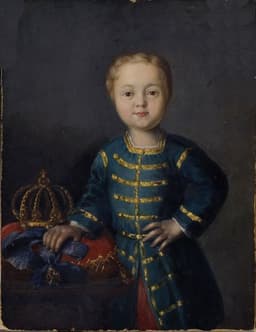
Ivan VI
Emperor · Modern
57.9Total
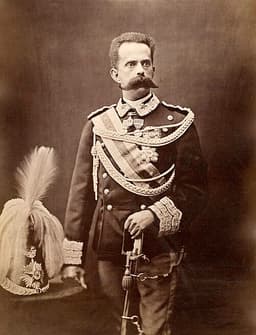
Umberto II of Italy
Emperor · Modern
41.2Total
Basic Information
Born
1740
1904
Died
1764
1983
Era
Modern
Modern
Nationality
Russia
Italy
Occupation
Emperor
Emperor
Civilization
Western
Western
Score Comparison
Military (10%)
20.5
46.1
Political (20%)
57.3
45.1
Influence (20%)
68.0
45.5
Legacy (20%)
52.0
35.8
Leadership (15%)
76.8
33.6
Strategy (15%)
57.2
45.0
TOTAL
57.9
41.2
Ivan VI — Complete Timeline
1740 AD
Accession as Emperor of RussiaPolitical Action◆ Major
Ivan VI was proclaimed emperor at the age of two months after the death of Anna of Russia, with Ernst Johann von Biron as regent. His accession was part of Anna's plan to secure the succession for her family line, but it immediately triggered a power struggle.
SuccessionInfant TsarRegency
Impact: national
1741 AD
Overthrow and ImprisonmentPolitical Action◆ Major
Ivan VI was deposed in a coup led by Elizabeth of Russia, who seized the throne. He was imprisoned in the Shlisselburg Fortress, where he spent the rest of his life in solitary confinement. His name was erased from official records, and he was referred to as the 'nameless prisoner'.
CoupImprisonmentElizabeth
Impact: nationaltragic
1764 AD
Murder in Shlisselburg FortressOther◆ Major
Ivan VI was killed by his guards during an attempted rescue by Lieutenant Vasily Mirovich. The rescue attempt aimed to restore him to the throne, but the guards followed orders to kill him if any escape was attempted. His death ended any possibility of a restoration.
AssassinationRescue AttemptShlisselburg
Impact: nationaltragic
Umberto II of Italy — Complete Timeline
1946 AD
Accession to the ThronePolitical Action◆ Major
Umberto II became King of Italy upon his father Victor Emmanuel III's abdication. His reign lasted only 34 days, from May 9 to June 12, 1946, during the constitutional referendum on the monarchy.
MonarchySuccession
Impact: national
1946 Italian Institutional ReferendumPolitical Action
Umberto II accepted the results of the referendum that abolished the monarchy in favor of a republic. He went into exile in Portugal, never returning to Italy, ending the Savoy dynasty's rule.
ReferendumRepublicExile
Impact: national
Exile in CascaisPolitical Action
Umberto II settled in Cascais, Portugal, after the monarchy was abolished. He lived there for the rest of his life, never abdicating his claim to the throne, and became a symbolic figure for Italian monarchists.
ExileMonarchy
Impact: national
Expert Analysis
Origins
Ivan VI was born on August 23, 1740, in Saint Petersburg, the son of Prince Anton Ulrich of Brunswick-Lüneburg and Duchess Anna Leopoldovna of Mecklenburg-Schwerin. His great-aunt was Empress Anna of Russia, who designated him as her successor. Ivan's early life was defined by his status as a pawn in imperial politics; he was only two months old when he was proclaimed emperor. Umberto II was born on September 15, 1904, in Racconigi, Italy, the third child of King Victor Emmanuel III and Queen Elena of Montenegro. He received a military education, attending the Royal Academy of Turin and later the Military Academy of Modena. Unlike Ivan, Umberto was raised in a stable monarchy, but his father's collaboration with Mussolini tainted the crown.
Rise to Power
Ivan VI became Emperor of Russia on October 28, 1740, after the death of Empress Anna. His regent was Ernst Johann von Biron, but Biron was soon overthrown by Ivan's mother, Anna Leopoldovna, who became regent. Ivan's reign lasted only 13 months; on December 6, 1741, a coup led by Elizabeth, daughter of Peter the Great, overthrew him. Elizabeth imprisoned Ivan and his family, beginning his 23-year isolation. Umberto II rose to power through inheritance. He was appointed Lieutenant General of the Realm in 1944, effectively ruling Italy for his father after Victor Emmanuel III's unpopularity peaked. On May 9, 1946, Victor Emmanuel abdicated, making Umberto king. His reign lasted until June 12, 1946, when a referendum abolished the monarchy. Umberto accepted the result and went into exile.
Leadership & Governance
Ivan VI never governed; his entire life was spent in captivity. He was held in the Shlisselburg Fortress from age 16, kept in solitary confinement, and his identity was hidden even from his guards. His only act of leadership was his existence as a symbol for potential restoration. Umberto II, by contrast, had 34 days to govern. He faced a country devastated by war and a deeply divided populace. He attempted to negotiate a compromise with the republicans but ultimately accepted the referendum outcome. His political score of 45.1 reflects his brief tenure and lack of decisive action. Ivan's political score is 57.3, but this reflects his symbolic threat rather than actual leadership.
Triumph & Tragedy
Ivan VI's greatest triumph was surviving for 23 years in isolation, though his murder at age 23 in 1764 was tragic. He was killed during a rescue attempt by Lieutenant Vasily Mirovich, who sought to restore him to the throne. The tragedy is that Ivan never had a chance to rule or shape his destiny. Umberto II's triumph was his peaceful acceptance of the referendum, averting civil war. His tragedy is that he reigned for only 34 days and spent the next 37 years in exile in Cascais, Portugal, never abdicating his claim. His legacy score of 35.8 reflects his negligible impact on Italy.
Character & Destiny
Ivan VI's character was shaped by isolation; historical accounts describe him as emotionally stunted but intelligent. His destiny was determined by the threat he posed to Elizabeth and later Catherine the Great. Umberto II was seen as a dutiful but uninspiring figure. His decision to accept the referendum was honorable but doomed his dynasty. Both were victims of historical forces beyond their control: Ivan of the Russian succession struggles, Umberto of the post-war republican tide.
Legacy
Ivan VI's legacy is as a tragic footnote in Russian history. His brief reign and long imprisonment symbolize the cruelty of autocratic power. He scored 52.0 in legacy. Umberto II's legacy is as the 'May King' whose brief reign marked the end of the Italian monarchy. He is remembered primarily for his dignified exile. His influence score is 45.5. Neither had enduring impact on their nations' development.
Conclusion
Ivan VI and Umberto II were both monarchs whose reigns were ephemeral and tragic. However, Ivan's story—an infant emperor imprisoned for life—is more historically resonant and has greater symbolic weight. His total score of 57.9 versus Umberto's 41.2 reflects this. Ivan's impact, though indirect, shaped Russian narratives of tyranny and victimhood. Umberto's brief reign was a mere coda to a discredited monarchy. Therefore, Ivan VI had greater historical impact.
Rankings
🥇
Ivan VILeader
Mil: 20.5Pol: 57.3Inf: 68.0
57.9
🥈
Umberto II of Italy
Mil: 46.1Pol: 45.1Inf: 45.5
41.2
+16.7 behind
How This Comparison Works
Algorithm
Each figure is scored on 6 dimensions (0—100 scale) based on structured historical data: Military (10%), Political (20%), Influence (20%), Legacy (20%), Leadership (15%), Strategy (15%). The weighted total produces the final ranking.
Data Sources
Scores are computed from structured sub-indicators in the database. Scale factors adjust for era (Ancient ×0.85, Modern ×1.0) and civilization size (Eastern ×1.05, Other ×0.80) to account for differences in population and military scale.
Maximum 3 Figures
Comparisons are limited to 2—3 figures to ensure readability and statistical meaningfulness.
Error Margins
±5 points per dimension — Sub-scores are derived from historical records with inherent uncertainty. Two figures within 5 points on a dimension should be considered roughly equivalent in that area.
Total Score Accuracy
±3 points overall — The weighted combination of 6 dimensions produces a total score with approximately ±3 points of uncertainty. Differences of less than 3 points are not statistically significant— the figures are effectively tied.
Known Limitations
- Historical records are incomplete and uneven across civilizations
- Figures from oral-tradition societies may be underrepresented
- Occupation labels can misclassify multi-role figures
- Scores measure capability and impact, not moral character
- Quantitative scoring is a comparison tool, not absolute truth
Capability Radar
Military (10%) — Battles & Warfare
Battles
35
23
Win Rate
37
28
Expansion
45
33
Political (20%) — Governance & Reform
Reform
58
0
Diplomacy
61
10
Economy
64
0
Influence (20%) — Cultural & Global Reach
Cultural
65
5
Global
78
5
Legacy (20%) — Historical Impact
Historical
69
10
Longevity
74
5
Leadership (15%) — Power & Stability
Tenure
58
5
Stability
71
5
Strategy (15%) — Tactics & Innovation
Strategy
44
32
Tactics
51
34
Reform
50
36
Similar Comparisons
Comments & Discussion
No comments yet. Be the first to share your thoughts!