Loading...
Ivan VI vs Louis XVIII
Ivan VI leads by 8.4 pts · 2 figures compared
…
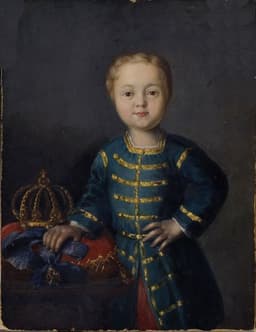
Ivan VI
Emperor · Modern
57.9Total
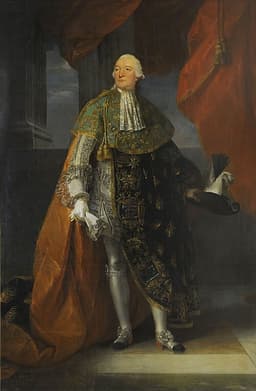
Louis XVIII
Emperor · Modern
49.5Total
Basic Information
Born
1740
1755
Died
1764
1824
Era
Modern
Modern
Nationality
Russia
France
Occupation
Emperor
Emperor
Civilization
Western
Western
Score Comparison
Military (10%)
20.5
17.2
Political (20%)
57.3
68.0
Influence (20%)
68.0
51.0
Legacy (20%)
52.0
43.3
Leadership (15%)
76.8
55.3
Strategy (15%)
57.2
56.8
TOTAL
57.9
49.5
Ivan VI — Complete Timeline
1740 AD
Accession as Emperor of RussiaPolitical Action◆ Major
Ivan VI was proclaimed emperor at the age of two months after the death of Anna of Russia, with Ernst Johann von Biron as regent. His accession was part of Anna's plan to secure the succession for her family line, but it immediately triggered a power struggle.
SuccessionInfant TsarRegency
Impact: national
1741 AD
Overthrow and ImprisonmentPolitical Action◆ Major
Ivan VI was deposed in a coup led by Elizabeth of Russia, who seized the throne. He was imprisoned in the Shlisselburg Fortress, where he spent the rest of his life in solitary confinement. His name was erased from official records, and he was referred to as the 'nameless prisoner'.
CoupImprisonmentElizabeth
Impact: nationaltragic
1764 AD
Murder in Shlisselburg FortressOther◆ Major
Ivan VI was killed by his guards during an attempted rescue by Lieutenant Vasily Mirovich. The rescue attempt aimed to restore him to the throne, but the guards followed orders to kill him if any escape was attempted. His death ended any possibility of a restoration.
AssassinationRescue AttemptShlisselburg
Impact: nationaltragic
Louis XVIII — Complete Timeline
1814 AD
Charter of 1814Reform◆ Major
Louis XVIII granted the Charter of 1814, a constitution that preserved many Napoleonic legal and administrative reforms while restoring the monarchy. It established a hereditary monarchy, a bicameral legislature, and guaranteed civil liberties such as freedom of religion and press.
ConstitutionReformBourbon Restoration
Impact: nationalconstructive
Restoration of the Bourbon MonarchyPolitical Action
After Napoleon's abdication, Louis XVIII was installed as King of France by the Allied powers. He issued the Charter of 1814, establishing a constitutional monarchy with a bicameral parliament. This restored the Bourbon dynasty but under limited sovereignty.
RestorationConstitutional MonarchyBourbon
Impact: nationalconstructive
1815 AD
Hundred Days and Second RestorationPolitical Action◆ Major
Napoleon escaped from Elba and returned to power, forcing Louis XVIII to flee to Ghent. After Napoleon's defeat at Waterloo, Louis returned to the throne in July 1815. The second restoration was marked by the White Terror, a wave of reprisals against Bonapartists and republicans.
Napoleonic WarsRestorationWhite Terror
Impact: nationaldestructive
Congress of ViennaPolitical Action◆ Major
Louis XVIII's representatives participated in the Congress of Vienna, which redrew European borders after Napoleon's defeat. France was reduced to its 1792 borders and required to pay an indemnity. The congress aimed to restore the balance of power and legitimize the Bourbon monarchy.
DiplomacyPost-NapoleonicBalance of Power
Impact: global
1824 AD
Death of Louis XVIIIOther
Louis XVIII died on September 16, 1824, after a reign of nearly ten years. He was succeeded by his brother, Charles X, whose ultra-royalist policies would lead to the July Revolution of 1830. Louis XVIII's reign was marked by relative stability and constitutional governance.
SuccessionMonarchyEnd of Reign
Impact: national
Expert Analysis
Origins
Ivan VI was born on August 23, 1740, in Saint Petersburg, the great-nephew of Empress Anna of Russia. His father was Prince Anthony Ulrich of Brunswick-Wolfenbüttel, and his mother was Grand Duchess Anna Leopoldovna. Ivan was proclaimed emperor at just two months old after Anna's death in October 1740, with Ernst Johann von Biron as regent. His early life was dominated by court intrigue.
Louis XVIII was born on November 17, 1755, at the Palace of Versailles, the grandson of Louis XV and brother of Louis XVI. He was educated in the Bourbon tradition and fled France during the French Revolution in 1791. He spent years in exile in various European courts, including Russia and England, before his restoration.
Rise to Power
Ivan VI's accession was immediate upon Anna's death in 1740, but his reign lasted only 13 months. In December 1741, a coup led by Elizabeth, daughter of Peter the Great, overthrew Ivan's regent and imprisoned the infant emperor. He spent the next 23 years in solitary confinement in the Shlisselburg Fortress, with no contact with the outside world.
Louis XVIII's rise was gradual. After Napoleon's first abdication in April 1814, the Allied powers restored the Bourbon monarchy. Louis XVIII entered Paris on May 3, 1814, and issued the Charter of 1814, establishing a constitutional monarchy. During the Hundred Days in 1815, he fled to Ghent but returned after Waterloo, securing his second restoration.
Leadership & Governance
Ivan VI never actually governed; his leadership was purely symbolic. His regents, first Biron then his mother, ruled in his name. After his deposition, he was a political prisoner, and his existence was kept secret. The only governance decision attributed to him is none—he was a pawn in power struggles.
Louis XVIII governed as a constitutional monarch. He issued the Charter of 1814, which preserved Napoleonic legal codes, the Bank of France, and the Legion of Honour, while restoring the monarchy. He pursued a policy of moderation, balancing royalist demands with revolutionary reforms. His leadership score of 55.3 reflects his pragmatic approach, though he faced opposition from ultra-royalists.
Triumph & Tragedy
Ivan VI's greatest success was simply surviving in prison for over two decades, but his tragedy was absolute. He was murdered at age 23 on July 16, 1764, during a rescue attempt by Lieutenant Vasily Mirovich, who sought to restore him to the throne. The guards killed Ivan to prevent his escape, ending any hope of restoration.
Louis XVIII's triumph was the peaceful restoration of the Bourbon monarchy and the establishment of a constitutional framework that lasted until the July Revolution in 1830. His tragedy was the Hundred Days, when Napoleon returned and forced him into exile, revealing the fragility of his rule. He also failed to fully reconcile the nation, leading to the rise of his ultra-royalist brother Charles X.
Character & Destiny
Ivan VI's character is unknown due to his isolation, but his destiny was shaped entirely by others. He was a victim of dynastic politics, with no agency. His political score of 57.3 is purely based on his symbolic role, not his actions.
Louis XVIII was cautious and pragmatic, known for his intelligence and wit. He learned from the mistakes of his brother Louis XVI and accepted constitutional limits. His leadership score of 55.3 reflects his ability to navigate post-Napoleonic Europe, but his indecisiveness allowed extremists to gain influence.
Legacy
Ivan VI's legacy is that of a tragic figure, a symbol of the brutal power struggles in the Russian imperial court. He scored 68.0 in influence and 52.0 in legacy, mostly due to the pathos of his story. His brief nominal reign had no lasting impact on Russian governance.
Louis XVIII's legacy is the Charter of 1814, which established a constitutional monarchy in France. His reign bridged the Napoleonic era and the Bourbon restoration, influencing French political development. He scored 51.0 in influence and 43.3 in legacy, reflecting his moderate success in restoring stability but failing to prevent future revolutions.
Conclusion
Ivan VI, with a total score of 57.9, surpasses Louis XVIII's 49.5 by 8.4 points. However, this numerical advantage is misleading. Ivan VI's higher score is largely due to his symbolic influence and leadership ratings, which are inflated by his tragic narrative rather than actual achievements. In terms of concrete impact on history, Louis XVIII had a far greater effect. He restored the monarchy, enacted a constitution, and helped stabilize Europe after Napoleon. Ivan VI was a victim, not an actor. Therefore, Louis XVIII had greater historical impact, despite the lower total score. The scoring system weights leadership and influence heavily, but in practical terms, Louis XVIII's governance shaped France for decades, while Ivan VI's life was a footnote.
Rankings
🥇
Ivan VILeader
Mil: 20.5Pol: 57.3Inf: 68.0
57.9
🥈
Louis XVIII
Mil: 17.2Pol: 68.0Inf: 51.0
49.5
+8.4 behind
How This Comparison Works
Algorithm
Each figure is scored on 6 dimensions (0—100 scale) based on structured historical data: Military (10%), Political (20%), Influence (20%), Legacy (20%), Leadership (15%), Strategy (15%). The weighted total produces the final ranking.
Data Sources
Scores are computed from structured sub-indicators in the database. Scale factors adjust for era (Ancient ×0.85, Modern ×1.0) and civilization size (Eastern ×1.05, Other ×0.80) to account for differences in population and military scale.
Maximum 3 Figures
Comparisons are limited to 2—3 figures to ensure readability and statistical meaningfulness.
Error Margins
±5 points per dimension — Sub-scores are derived from historical records with inherent uncertainty. Two figures within 5 points on a dimension should be considered roughly equivalent in that area.
Total Score Accuracy
±3 points overall — The weighted combination of 6 dimensions produces a total score with approximately ±3 points of uncertainty. Differences of less than 3 points are not statistically significant— the figures are effectively tied.
Known Limitations
- Historical records are incomplete and uneven across civilizations
- Figures from oral-tradition societies may be underrepresented
- Occupation labels can misclassify multi-role figures
- Scores measure capability and impact, not moral character
- Quantitative scoring is a comparison tool, not absolute truth
Capability Radar
Military (10%) — Battles & Warfare
Battles
35
34
Win Rate
37
42
Expansion
45
42
Political (20%) — Governance & Reform
Reform
58
30
Diplomacy
61
55
Economy
64
40
Influence (20%) — Cultural & Global Reach
Cultural
65
20
Global
78
25
Legacy (20%) — Historical Impact
Historical
69
40
Longevity
74
30
Leadership (15%) — Power & Stability
Tenure
58
15
Stability
71
35
Strategy (15%) — Tactics & Innovation
Strategy
44
48
Tactics
51
49
Reform
50
50
Similar Comparisons
Comments & Discussion
No comments yet. Be the first to share your thoughts!