Loading...
Ivan VI vs Napoleon Bonaparte
Napoleon Bonaparte leads by 13.0 pts · 2 figures compared
…
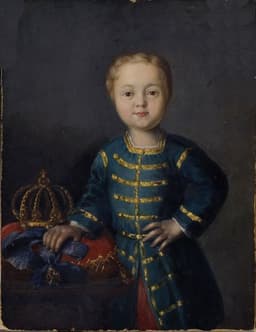
Ivan VI
Emperor · Modern
57.9Total

Napoleon Bonaparte
General · Modern
70.9Total
Basic Information
Born
1740
1769
Died
1764
1821
Era
Modern
Modern
Nationality
Russia
France
Occupation
Emperor
General
Civilization
Western
Western
Score Comparison
Military (10%)
20.5
94.0
Political (20%)
57.3
72.0
Influence (20%)
68.0
40.0
Legacy (20%)
52.0
80.0
Leadership (15%)
76.8
78.0
Strategy (15%)
57.2
90.0
TOTAL
57.9
70.9
Ivan VI — Complete Timeline
1740 AD
Accession as Emperor of RussiaPolitical Action◆ Major
Ivan VI was proclaimed emperor at the age of two months after the death of Anna of Russia, with Ernst Johann von Biron as regent. His accession was part of Anna's plan to secure the succession for her family line, but it immediately triggered a power struggle.
SuccessionInfant TsarRegency
Impact: national
1741 AD
Overthrow and ImprisonmentPolitical Action◆ Major
Ivan VI was deposed in a coup led by Elizabeth of Russia, who seized the throne. He was imprisoned in the Shlisselburg Fortress, where he spent the rest of his life in solitary confinement. His name was erased from official records, and he was referred to as the 'nameless prisoner'.
CoupImprisonmentElizabeth
Impact: nationaltragic
1764 AD
Murder in Shlisselburg FortressOther◆ Major
Ivan VI was killed by his guards during an attempted rescue by Lieutenant Vasily Mirovich. The rescue attempt aimed to restore him to the throne, but the guards followed orders to kill him if any escape was attempted. His death ended any possibility of a restoration.
AssassinationRescue AttemptShlisselburg
Impact: nationaltragic
Napoleon Bonaparte — Complete Timeline
1799 AD
Coup of 18 BrumaireOther◆ Major
Napoleon Bonaparte, with support from his brother Lucien and key political figures, overthrew the Directory in a bloodless coup. He established the Consulate with himself as First Consul, effectively becoming the ruler of France. This event ended the French Revolution's most unstable period.
French RevolutionCoupRise to Power
Impact: regional
1804 AD
Promulgation of the Napoleonic CodeOther◆ Major
Napoleon enacted the Civil Code of the French, known as the Napoleonic Code, a comprehensive set of laws that replaced the fragmented feudal legal systems. The code established legal equality, protected property rights, and secularized law. It became the basis for legal systems in many European and world countries.
Legal ReformNapoleonic CodeCivil Law
Impact: globalconstructive
1805 AD
Battle of AusterlitzWar◆ Major
Napoleon's Grande Arm
Napoleonic WarsBattleDecisive Victory
Impact: global
1812 AD
Invasion of RussiaWar◆ Major
Napoleon led the Grande Arm
Napoleonic WarsInvasionDisaster
Impact: globaldestructive
1815 AD
Battle of WaterlooWar◆ Major
Napoleon's French army was defeated by the combined forces of the Duke of Wellington's Anglo-Allied army and Gebhard Leberecht von Bl
Napoleonic WarsBattleFinal Defeat
Impact: globaldestructive
Expert Analysis
ivan-vi-vs-napoleon-bonaparte
The Emperor Who Never Ruled
On a spring morning in 1764, a young man of twenty-three lay dead in a damp cell of the Shlisselburg Fortress, his blood pooling on the stone floor. He had been stabbed by his own guards, who acted on standing orders to kill him at any sign of rescue. His name was Ivan VI, and he had been emperor of Russia for just over a year—as a two-month-old infant. Across the English Channel, another young man, barely five years old, was growing up on the island of Corsica, destined to become the man who would remake Europe. The contrast between Napoleon Bonaparte and Ivan VI is not merely a tale of triumph and tragedy; it is a story of how time, place, and sheer chance can shape two lives from the same era into opposite ends of the human spectrum.
Origins
Napoleon Bonaparte was born in 1769 in Ajaccio, Corsica, a Mediterranean island that had only recently become French. His family was minor nobility, proud and ambitious, but poor. His father, Carlo Buonaparte, was a lawyer who navigated the politics of French rule, while his mother, Letizia, was a stern, practical woman who raised eight children with iron discipline. The young Napoleon grew up speaking Italian-accented French, a perpetual outsider in the French mainland. This outsider status would fuel his hunger for recognition and conquest.
Ivan VI, born in 1740 in St. Petersburg, was the great-nephew of Peter the Great. His father was Prince Anton Ulrich of Brunswick, a German nobleman, and his mother was Grand Duchess Anna Leopoldovna, niece of Empress Anna of Russia. Ivan was born into the very heart of imperial power, but his birth was also a curse: he was a pawn in a deadly game of succession. While Napoleon’s childhood was shaped by ambition and the struggle for survival, Ivan’s was defined by political machinations he could not understand.
Rise to Power
Napoleon’s ascent was a masterpiece of talent and timing. He graduated from the École Militaire in Paris in 1785, a second lieutenant of artillery at sixteen. The French Revolution, which erupted in 1789, shattered the old order and opened doors for men of ability. Napoleon seized his chance at the Siege of Toulon in 1793, where his artillery tactics drove out the British. Promoted to brigadier general at twenty-four, he became a national hero after his Italian campaign of 1796-1797. By 1799, he staged a coup d’état and became First Consul. In 1804, he crowned himself Emperor of the French.
Ivan VI’s rise was the opposite: he did nothing, yet became emperor. On October 28, 1740, Empress Anna died, and the infant Ivan was proclaimed emperor, with Ernst Johann von Biron, the hated German favorite, as regent. Within weeks, Biron was overthrown by Ivan’s mother, Anna Leopoldovna, who took power as regent. But her rule was weak and unpopular. On December 6, 1741, a coup led by Elizabeth, the daughter of Peter the Great, swept her into power. Ivan was arrested, and at just one year old, he began a life of solitary confinement that would last twenty-three years.
Leadership & Governance
Napoleon ruled with a blend of military genius and administrative brilliance. He reformed French law through the Napoleonic Code, which standardized legal systems across Europe, abolished feudal privileges, and established merit-based promotion. His military campaigns were legendary: at Austerlitz in 1805, he crushed the combined armies of Austria and Russia; at Jena in 1806, he shattered Prussia. He created the Grand Army, a force of over 600,000 men, and dominated Europe from Spain to Poland. Yet his ambition overreached: the invasion of Russia in 1812 ended in disaster, with only 40,000 of his 600,000 men returning.
Ivan VI never governed. He was a prisoner, moved from fortress to fortress, kept in total isolation. His guards were forbidden to speak to him or even let him see the sky. He was known only as "the nameless one." A single record from 1756 describes him as "a little thin, with a pale face and a sad expression." His only act of governance was the order for his own murder: the instructions that his guards were to kill him if anyone tried to rescue him.
Triumph & Tragedy
Napoleon’s greatest moment was perhaps the Battle of Austerlitz on December 2, 1805, where he outmaneuvered the Austro-Russian forces and destroyed them. It was a triumph of strategy and nerve. His greatest tragedy was the invasion of Russia in 1812, a catastrophic failure born of overconfidence. He was exiled to Elba in 1814, returned for the Hundred Days in 1815, and met his final defeat at Waterloo on June 18, 1815. He died in exile on the remote island of Saint Helena in 1821, at age fifty-one.
Ivan VI had no triumphs. His only tragedy was his entire life. On July 16, 1764, a young officer named Vasily Mirovich attempted to rescue him from Shlisselburg Fortress. The guards, following their orders, stabbed Ivan to death. He was twenty-three years old, had never known freedom, had never spoken to anyone outside his captors. Mirovich was executed; Ivan was buried in a secret grave.
Character & Destiny
Napoleon’s character was forged by his Corsican pride, his relentless ambition, and his belief in his own destiny. He once said, "Impossible is a word to be found only in the dictionary of fools." He was ruthless, brilliant, and charismatic, but also arrogant and unable to stop. His personality drove him to conquer, but also to destroy himself.
Ivan VI’s character was never allowed to form. He was a blank slate, a symbol of the brutal randomness of autocratic power. His destiny was not his own; it was written by the courtiers and empresses who used him as a tool. He was a victim of history, not a maker of it.
Legacy
Napoleon’s legacy is immense. The Napoleonic Code influenced legal systems worldwide. He redrew the map of Europe, spread the ideals of the French Revolution, and created the modern nation-state. He is remembered as a military genius and a flawed titan. His tomb in Les Invalides in Paris is a national shrine.
Ivan VI’s legacy is a footnote. He is remembered only by historians of Russian imperial succession. His story is a grim reminder of the human cost of absolute power. He is a ghost in the corridors of history, a child who was emperor for a year and prisoner for a lifetime.
Conclusion
Napoleon and Ivan VI lived in the same century, yet their lives could not have been more different. One shaped the world; the other was crushed by it. Their stories remind us that history is not just a record of great deeds, but also a graveyard of forgotten lives. Napoleon’s ambition built an empire; Ivan’s birth destroyed a man. In the end, both were prisoners of their time—one of his own ambition, the other of others’ cruelty. And perhaps that is the deepest truth: we are all, to some degree, prisoners of the world we are born into.
Rankings
🥇
Napoleon BonaparteLeader
Mil: 94.0Pol: 72.0Inf: 40.0
70.9
🥈
Ivan VI
Mil: 20.5Pol: 57.3Inf: 68.0
57.9
+13.0 behind
How This Comparison Works
Algorithm
Each figure is scored on 6 dimensions (0—100 scale) based on structured historical data: Military (10%), Political (20%), Influence (20%), Legacy (20%), Leadership (15%), Strategy (15%). The weighted total produces the final ranking.
Data Sources
Scores are computed from structured sub-indicators in the database. Scale factors adjust for era (Ancient ×0.85, Modern ×1.0) and civilization size (Eastern ×1.05, Other ×0.80) to account for differences in population and military scale.
Maximum 3 Figures
Comparisons are limited to 2—3 figures to ensure readability and statistical meaningfulness.
Error Margins
±5 points per dimension — Sub-scores are derived from historical records with inherent uncertainty. Two figures within 5 points on a dimension should be considered roughly equivalent in that area.
Total Score Accuracy
±3 points overall — The weighted combination of 6 dimensions produces a total score with approximately ±3 points of uncertainty. Differences of less than 3 points are not statistically significant— the figures are effectively tied.
Known Limitations
- Historical records are incomplete and uneven across civilizations
- Figures from oral-tradition societies may be underrepresented
- Occupation labels can misclassify multi-role figures
- Scores measure capability and impact, not moral character
- Quantitative scoring is a comparison tool, not absolute truth
Capability Radar
Military (10%) — Battles & Warfare
Battles
35
95
Win Rate
37
90
Expansion
45
95
Political (20%) — Governance & Reform
Reform
58
95
Diplomacy
61
80
Economy
64
85
Influence (20%) — Cultural & Global Reach
Cultural
65
85
Global
78
90
Legacy (20%) — Historical Impact
Historical
69
95
Longevity
74
90
Leadership (15%) — Power & Stability
Tenure
58
85
Stability
71
70
Strategy (15%) — Tactics & Innovation
Strategy
44
95
Tactics
51
98
Reform
50
92
Similar Comparisons
Comments & Discussion
WannabeCorsican6/17/2026
Napoleon had the battlefield, but Ivan had the bloodline—and look where that got him. Ivan was emperor at two months, locked up at 16 months, and dead at 23, never even seeing the sky outside his cell. Napoleon crushed armies and rewrote maps. Ivan’s biggest choice was whether to talk to his rats. Power isn’t conferred by birthright; it’s seized by ambition. Ivan’s tragedy is no tragedy—just pathetic.
数字偶像6/17/2026
两个人都想当皇帝,但一个靠的是枪杆子,一个靠的是姓氏。拿破仑从科西嘉的穷小子打到欧洲霸主,靠的是奥斯特里茨和耶拿的胜利。伊万六世呢?他登基时才两个月大,最后在石牢里被刺死,连一句话都没留。这不是什么命运的玩笑,这是制度的失败。如果伊万能从监狱里学到一点拿破仑的战术,他或许能活过24岁。
BibliophileBarbarian6/17/2026
Ivan VI didn't rule—he was ruled over, a pawn in the palace games of Anna Leopoldovna and Ernst Biron. Napoleon at least had a mother who taught him how to dodge a slap. Ivan got a wet nurse and a death warrant. Let’s be honest: the only thing these two share is a century and a continent. Napoleon remade the world; Ivan just got remade into a pile of bones. That’s not “contrast”—that’s a yawn.
汉字狂徒6/17/2026
伊万六世的故事根本不该和拿破仑并列,这是对历史的侮辱。拿破仑靠的是才干和野心,伊万六世靠的是荒唐的“血统决定论”。前者在革命中崛起,后者在宫廷阴谋中腐烂。如果你硬要比较,那只能说伊万六世是历史的一个注脚,而拿破仑是历史本身。别拿婴儿的眼泪和战神的怒吼相提并论。
MorbiusArchive6/17/2026
Historians love this “two paths” nonsense, but let’s call it what it is: Napoleon had agency; Ivan had none. Ivan’s murder wasn’t destiny—it was a bureaucratic failure. The guards killed him because they were too stupid to check the rescue was real. Napoleon died on Saint Helena writing memoirs. Ivan died bleeding on a floor, his name erased from Russian history. That’s not tragedy; that’s incompetence. Stop romanticizing the loser.