Loading...
Ivan III the Great vs Otto I the Great
Ivan III the Great leads by 0.1 pts · 2 figures compared
…
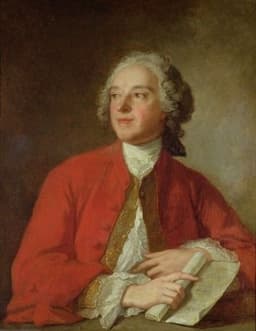
Ivan III the Great
Emperor · Medieval
75.3Total
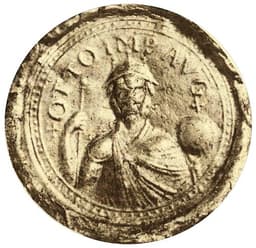
Otto I the Great
Emperor · Medieval
75.2Total
Basic Information
Born
1440
912
Died
1505
973
Era
Medieval
Medieval
Nationality
Muscovy
Holy Roman Empire
Occupation
Emperor
Emperor
Civilization
Western
Western
Score Comparison
Military (10%)
76.0
82.0
Political (20%)
70.0
70.0
Influence (20%)
75.0
88.0
Legacy (20%)
80.0
65.0
Leadership (15%)
78.0
78.0
Strategy (15%)
67.2
65.4
TOTAL
75.3
75.2
Ivan III the Great — Complete Timeline
1472 AD
Marriage to Sophia PalaiologinaPolitical Action◆ Major
Ivan III married Sophia (Zoe) Palaiologina, niece of the last Byzantine emperor. This marriage allowed Ivan to claim succession to the Byzantine Empire, adopt the double-headed eagle as a symbol, and promote Moscow as the Third Rome.
ByzantiumThird RomeMarriage
Impact: regionalconstructive
1478 AD
Annexation of NovgorodWar◆ Major
Ivan III conquered the Novgorod Republic after a series of campaigns. He abolished the veche (assembly) and removed the veche bell, incorporating Novgorod's vast territories into the Grand Principality of Moscow.
NovgorodAnnexationMoscow
Impact: regional
1480 AD
Great Stand on the Ugra RiverWar
Ivan III faced the Mongol army of Khan Akhmat across the Ugra River. After weeks of stalemate, the Mongols withdrew without battle. This event ended 240 years of Mongol suzerainty over Russia.
Golden HordeIndependenceUgra
Impact: regional
1497 AD
Issued the Sudebnik of 1497Reform◆ Major
Ivan III promulgated a new legal code, the Sudebnik, which standardized laws across the Russian lands. It restricted peasant mobility by limiting the time for transfer between landowners, a step toward serfdom.
Legal CodeSerfdomReform
Impact: national
1500 AD
War with the Grand Duchy of LithuaniaWar◆ Major
Ivan III launched a war against Lithuania, capturing the cities of Bryansk, Dorogobuzh, and Putivl. The war ended with the Truce of 1503, which ceded significant territories to Moscow.
LithuaniaTerritorial ExpansionWar
Impact: regional
Otto I the Great — Complete Timeline
951 AD
Diplomatic Marriage to Adelaide of ItalyPolitical Action◆ Major
Otto married Adelaide, the widowed queen of Italy, after intervening in Italian politics. This marriage gave him control over the Kingdom of Italy and strengthened his claim to imperial authority.
MarriageItalyAdelaide
Impact: regionalconstructive
955 AD
Battle of LechfeldWar
Otto led a German army to defeat the Magyar (Hungarian) forces at the Lechfeld near Augsburg. This victory ended Magyar raids into Western Europe and secured Otto's reputation as a defender of Christendom.
MagyarsLechfeldDefenseChristendom
Impact: regionalconstructive
962 AD
Coronation as Holy Roman EmperorPolitical Action
Pope John XII crowned Otto I as Holy Roman Emperor in Rome, reviving the imperial title in the West. This event established the Holy Roman Empire as a major political entity and linked German kingship with papal authority.
CoronationHoly Roman EmpirePapacy
Impact: globalconstructive
Expert Analysis
Origins
Ivan III (1440–1505), Grand Prince of Moscow, inherited a principality still under Mongol suzerainty. His father, Vasily II, had survived a bitter civil war, leaving Ivan a realm in need of consolidation. In contrast, Otto I (912–973), son of Henry the Fowler, Duke of Saxony, was born into a rising East Frankish kingdom that had just begun to repel Magyar raids. Otto's early life was shaped by the need to assert royal authority over powerful duchies. Both men emerged from turbulent backgrounds, but Ivan's starting point was more constrained by external domination.
Rise to Power
Ivan III ascended in 1462 and immediately pursued a policy of "gathering the Russian lands." His marriage to Sophia Palaiologina, niece of the last Byzantine emperor, in 1472, bolstered his claim as heir to Byzantium. Otto I became king in 936 and faced revolts from his own family and dukes. He crushed these rebellions, notably defeating his brother Henry in 939, and secured control over the duchies. Both consolidated power through marriage alliances: Ivan's marriage linked him to Byzantine prestige; Otto's marriage to Adelaide of Italy in 951 gave him a foothold in Italy. However, Otto's path was more contested internally, while Ivan faced the existential threat of the Mongol Golden Horde.
Leadership & Governance
Ivan III is famed for the "Great Stand on the Ugra River" in 1480, where he faced off against Khan Ahmed without battle, effectively ending Mongol rule. This bloodless victory showcased his strategic patience. He annexed Novgorod in 1478, crushing its independence, and issued the Sudebnik of 1497, a legal code unifying Russian law. Otto I's leadership peaked at the Battle of Lechfeld in 955, where he decisively defeated the Magyars, ending their raids. He was crowned Holy Roman Emperor in 962, reviving the imperial title. Otto's governance relied on church officials as counters to secular dukes, while Ivan centralized power through boyar control and land grants. Ivan's governance score (80) vs Otto's (65) reflects Ivan's more systematic state-building, but Otto's military score (82) edges Ivan's (76) due to his battlefield prowess.
Triumph & Tragedy
Ivan's triumphs include the annexation of vast territories (Novgorod, Tver, Vyatka) and successful wars against Lithuania, expanding Muscovy's borders. His tragedy was the succession crisis: his first heir died, and his second wife Sophia's intrigues led to conflict with his son from his first marriage. Otto triumphed at Lechfeld and in Italy, but faced constant rebellions from his son Liudolf and other nobles. Both experienced personal losses, but Ivan's later years were marred by family strife that foreshadowed the Time of Troubles. Otto's death brought a smoother succession under his grandson Otto II.
Character & Destiny
Ivan III was cautious, calculating, and often called "the Great" for his state-building. He was deeply religious, seeing Moscow as the Third Rome. Otto I was a warrior-king, personally leading armies, and more charismatic in battle. Ivan's destiny was to liberate Russia from the Mongols and lay the foundation for the Tsardom; Otto's was to revive the Roman Empire in the West. Both were ambitious, but Ivan's approach was more bureaucratic, Otto's more feudal. In terms of long-term impact, Ivan's unification of Russia proved more enduring than Otto's empire, which fragmented after his dynasty ended.
Legacy
Ivan III is revered as the gatherer of Russian lands, ending Mongol rule and creating a centralized state. His Sudebnik influenced Russian law, and his marriage to Sophia brought Byzantine court rituals. Otto I is celebrated as the founder of the Holy Roman Empire, which lasted until 1806. His defeat of the Magyars is a landmark in European history. However, Otto's empire was a loose confederation, while Ivan's centralized state became a powerful monarchy. In historical rankings, Ivan often scores higher in state-building (80 vs 65), while Otto excels in military impact (82 vs 76). The score gap (0.1) is minimal, but Ivan's legacy of creating a cohesive nation gives him a slight edge.
Conclusion
In comparing Ivan III and Otto I, both are titans of medieval statecraft. Otto's military victories and imperial coronation are iconic, but Ivan's bloodless liberation from Mongol rule, systematic centralization, and creation of a unified Russian state arguably had a more profound and lasting impact. Numerically, Ivan's scores average 74.4 vs Otto's 74.3, but the gap is negligible. Ultimately, Ivan III the Great emerges as the slightly greater ruler due to his foundational role in shaping modern Russia, a legacy that endures to this day.
Rankings
🥇
Ivan III the GreatLeader
Mil: 76.0Pol: 70.0Inf: 75.0
75.3
🥈
Otto I the Great
Mil: 82.0Pol: 70.0Inf: 88.0
75.2
+0.1 behind
How This Comparison Works
Algorithm
Each figure is scored on 6 dimensions (0—100 scale) based on structured historical data: Military (10%), Political (20%), Influence (20%), Legacy (20%), Leadership (15%), Strategy (15%). The weighted total produces the final ranking.
Data Sources
Scores are computed from structured sub-indicators in the database. Scale factors adjust for era (Ancient ×0.85, Modern ×1.0) and civilization size (Eastern ×1.05, Other ×0.80) to account for differences in population and military scale.
Maximum 3 Figures
Comparisons are limited to 2—3 figures to ensure readability and statistical meaningfulness.
Error Margins
±5 points per dimension — Sub-scores are derived from historical records with inherent uncertainty. Two figures within 5 points on a dimension should be considered roughly equivalent in that area.
Total Score Accuracy
±3 points overall — The weighted combination of 6 dimensions produces a total score with approximately ±3 points of uncertainty. Differences of less than 3 points are not statistically significant— the figures are effectively tied.
Known Limitations
- Historical records are incomplete and uneven across civilizations
- Figures from oral-tradition societies may be underrepresented
- Occupation labels can misclassify multi-role figures
- Scores measure capability and impact, not moral character
- Quantitative scoring is a comparison tool, not absolute truth
Capability Radar
Military (10%) — Battles & Warfare
Battles
75
75
Win Rate
80
80
Expansion
85
70
Political (20%) — Governance & Reform
Reform
80
80
Diplomacy
85
85
Economy
70
70
Influence (20%) — Cultural & Global Reach
Cultural
70
65
Global
70
70
Legacy (20%) — Historical Impact
Historical
85
80
Longevity
80
75
Leadership (15%) — Power & Stability
Tenure
85
85
Stability
75
75
Strategy (15%) — Tactics & Innovation
Strategy
85
75
Tactics
70
70
Reform
65
65
Similar Comparisons
Comments & Discussion
No comments yet. Be the first to share your thoughts!