Loading...
This comparison has not been analyzed yet.
One-time AI generation (~1 minute). Scores and timeline are already available below.
Ivan Asen II vs Tervel of Bulgaria
Ivan Asen II leads by 16.7 pts · 2 figures compared
…
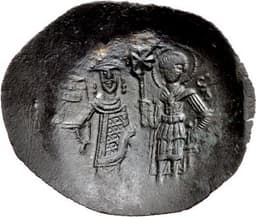
Ivan Asen II
Emperor · Medieval
63.3Total

Tervel of Bulgaria
Emperor · Medieval
46.6Total
Basic Information
Born
1190
675
Died
1241
721
Era
Medieval
Medieval
Nationality
Bulgaria
Bulgaria
Occupation
Emperor
Emperor
Civilization
Western
Western
Score Comparison
Military (10%)
78.0
20.0
Political (20%)
72.0
40.8
Influence (20%)
61.0
53.3
Legacy (20%)
52.0
45.8
Leadership (15%)
66.0
62.2
Strategy (15%)
65.4
43.3
TOTAL
63.3
46.6
Ivan Asen II — Complete Timeline
1218 AD
Expansion of the Second Bulgarian EmpireWar◆ Major
Ivan Asen II expanded Bulgarian territory through campaigns against the Latin Empire and the Kingdom of Thessalonica. He captured Adrianople and extended Bulgarian influence into the Peloponnese.
ExpansionLatin EmpireThessalonica
Impact: regional
1230 AD
Battle of KlokotnitsaWar
Ivan Asen II defeated the Despotate of Epirus at Klokotnitsa. The victory restored Bulgarian control over Thrace, Macedonia, and Albania, making Bulgaria the dominant power in the Balkans.
BattleBalkan DominanceEpirus
Impact: regional
Construction of the Church of the Holy Forty MartyrsCultural
Ivan Asen II built the Church of the Holy Forty Martyrs in Veliko Tarnovo to commemorate his victory at Klokotnitsa. The church became a major cultural and religious monument.
ArchitectureChurchMonument
Impact: nationalconstructive
1235 AD
Restoration of the Bulgarian PatriarchatePolitical Action◆ Major
Ivan Asen II secured recognition of the Bulgarian Patriarchate from the Ecumenical Patriarch of Constantinople. This restored the autocephalous status of the Bulgarian Church, enhancing national prestige.
ChurchPatriarchateReligious Independence
Impact: regionalconstructive
Tervel of Bulgaria — Complete Timeline
705 AD
Assistance to Emperor Justinian II in regaining the thronePolitical Action◆ Major
Tervel provided military support to the exiled Byzantine Emperor Justinian II, helping him regain the throne. In return, Tervel was awarded the title of Caesar and received territorial concessions.
AllianceByzantine PoliticsBulgarian-Byzantine Relations
Impact: regional
716 AD
Treaty with the Byzantine Empire (716)Political Action
Tervel signed a treaty with the Byzantine Emperor Theodosius III that established borders, regulated trade, and included a clause for mutual defense. This treaty strengthened Bulgarian-Byzantine relations.
TreatyDiplomacyBulgarian-Byzantine Relations
Impact: regionalconstructive
718 AD
Relief of Constantinople from the Arab Siege (717-718)War◆ Major
Tervel, Khan of Bulgaria, sent a Bulgarian army to aid the Byzantine Empire during the Second Arab Siege of Constantinople. The Bulgarian forces attacked the Arab rear, contributing to the lifting of the siege and saving the city.
SiegeArab-Byzantine WarsBulgarian-Byzantine Alliance
Impact: regionalconstructive
This comparison has not been analyzed yet.
One-time AI generation (~1 minute). Scores and timeline are already available below.
Rankings
🥇
Ivan Asen IILeader
Mil: 78.0Pol: 72.0Inf: 61.0
63.3
🥈
Tervel of Bulgaria
Mil: 20.0Pol: 40.8Inf: 53.3
46.6
+16.7 behind
How This Comparison Works
Algorithm
Each figure is scored on 6 dimensions (0—100 scale) based on structured historical data: Military (10%), Political (20%), Influence (20%), Legacy (20%), Leadership (15%), Strategy (15%). The weighted total produces the final ranking.
Data Sources
Scores are computed from structured sub-indicators in the database. Scale factors adjust for era (Ancient ×0.85, Modern ×1.0) and civilization size (Eastern ×1.05, Other ×0.80) to account for differences in population and military scale.
Maximum 3 Figures
Comparisons are limited to 2—3 figures to ensure readability and statistical meaningfulness.
Error Margins
±5 points per dimension — Sub-scores are derived from historical records with inherent uncertainty. Two figures within 5 points on a dimension should be considered roughly equivalent in that area.
Total Score Accuracy
±3 points overall — The weighted combination of 6 dimensions produces a total score with approximately ±3 points of uncertainty. Differences of less than 3 points are not statistically significant— the figures are effectively tied.
Known Limitations
- Historical records are incomplete and uneven across civilizations
- Figures from oral-tradition societies may be underrepresented
- Occupation labels can misclassify multi-role figures
- Scores measure capability and impact, not moral character
- Quantitative scoring is a comparison tool, not absolute truth
Capability Radar
Military (10%) — Battles & Warfare
Battles
75
45
Win Rate
85
50
Expansion
75
30
Political (20%) — Governance & Reform
Reform
65
25
Diplomacy
75
55
Economy
60
30
Influence (20%) — Cultural & Global Reach
Cultural
55
25
Global
40
35
Legacy (20%) — Historical Impact
Historical
60
45
Longevity
50
30
Leadership (15%) — Power & Stability
Tenure
70
40
Stability
65
40
Strategy (15%) — Tactics & Innovation
Strategy
80
45
Tactics
70
40
Reform
60
20
Similar Comparisons
Comments & Discussion
No comments yet. Be the first to share your thoughts!