Loading...
Al-Mutasim vs Ivan Asen II
Al-Mutasim leads by 0.3 pts · 2 figures compared
…

Al-Mutasim
Emperor · Medieval
63.6Total
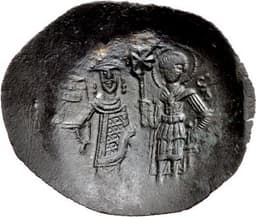
Ivan Asen II
Emperor · Medieval
63.3Total
Basic Information
Born
796
1190
Died
842
1241
Era
Medieval
Medieval
Nationality
Abbasid Caliphate
Bulgaria
Occupation
Emperor
Emperor
Civilization
Middle Eastern
Western
Score Comparison
Military (10%)
82.0
78.0
Political (20%)
68.0
72.0
Influence (20%)
56.7
61.0
Legacy (20%)
52.0
52.0
Leadership (15%)
74.0
66.0
Strategy (15%)
69.1
65.4
TOTAL
63.6
63.3
Al-Mutasim — Complete Timeline
830 AD
Recruitment of Turkish Slave SoldiersReform
Al-Mutasim began systematically recruiting Turkish slave soldiers (ghilman) into the Abbasid army. This policy created a new military elite loyal to the caliph but later led to the decline of Abbasid power as the Turks gained influence.
Military ReformTurkish Guard
Impact: regional
836 AD
Foundation of SamarraPolitical Action◆ Major
Al-Mutasim moved the Abbasid capital from Baghdad to the new city of Samarra. This relocation was intended to separate the caliph from the Baghdad populace and house his Turkish guard, but it weakened central control.
Capital MoveUrban Foundation
Impact: regional
838 AD
Campaign against the ByzantinesWar◆ Major
Al-Mutasim led a major campaign against the Byzantine Empire, including the sack of the city of Amorium. This victory was celebrated in the Abbasid world and demonstrated the military power of the Turkish guard.
Arab-Byzantine WarsMilitary Campaign
Impact: regional
Ivan Asen II — Complete Timeline
1218 AD
Expansion of the Second Bulgarian EmpireWar◆ Major
Ivan Asen II expanded Bulgarian territory through campaigns against the Latin Empire and the Kingdom of Thessalonica. He captured Adrianople and extended Bulgarian influence into the Peloponnese.
ExpansionLatin EmpireThessalonica
Impact: regional
1230 AD
Battle of KlokotnitsaWar
Ivan Asen II defeated the Despotate of Epirus at Klokotnitsa. The victory restored Bulgarian control over Thrace, Macedonia, and Albania, making Bulgaria the dominant power in the Balkans.
BattleBalkan DominanceEpirus
Impact: regional
Construction of the Church of the Holy Forty MartyrsCultural
Ivan Asen II built the Church of the Holy Forty Martyrs in Veliko Tarnovo to commemorate his victory at Klokotnitsa. The church became a major cultural and religious monument.
ArchitectureChurchMonument
Impact: nationalconstructive
1235 AD
Restoration of the Bulgarian PatriarchatePolitical Action◆ Major
Ivan Asen II secured recognition of the Bulgarian Patriarchate from the Ecumenical Patriarch of Constantinople. This restored the autocephalous status of the Bulgarian Church, enhancing national prestige.
ChurchPatriarchateReligious Independence
Impact: regionalconstructive
Expert Analysis
Origins
**Al-Mutasim** (born 794) was the son of Caliph Harun al-Rashid and a Turkic concubine, Marajil. Growing up in the Abbasid court, he experienced the power struggles among his half-brothers. Unlike his brother al-Ma'mun, who favored rationalism, al-Mutasim was more pragmatic, focusing on military consolidation. He was not the primary heir but became caliph after al-Ma'mun's death in 833.
**Ivan Asen II** (born c. 1190) was the son of Tsar Ivan Asen I, one of the founders of the Second Bulgarian Empire. His early life was marked by exile after his father's assassination and the usurpation of the throne by his uncle Kaloyan. He spent years in the Latin Empire's court, learning from the enemy. He returned to claim the throne in 1218 after Kaloyan's death.
Rise to Power
Al-Mutasim became caliph in 833 after his brother al-Ma'mun's death. He quickly faced revolts from the Khurramites, a Persian sect, and suppressed them harshly. His key turning point was the recruitment of Turkish slave soldiers (ghilman) from Central Asia. This new elite, loyal only to him, allowed him to bypass the traditional Arab and Persian factions. He also moved the capital from Baghdad to Samarra in 836 to escape the influence of the Baghdad populace and create a loyal power base.
Ivan Asen II's rise was more dramatic. He spent years in exile and returned to Bulgaria in 1218 to overthrow the regency of Boril. He consolidated power by marrying the Latin Emperor's daughter and securing peace with the Latin Empire. His major turning point was the Battle of Klokotnitsa in 1230, where he defeated the Despotate of Epirus, capturing the despot Theodore Komnenos. This victory made Bulgaria the dominant power in the Balkans.
Leadership & Governance
Al-Mutasim ruled through a military aristocracy of Turkish ghilman. He centralized authority by reducing the power of the traditional Arab and Persian elites. His administration was efficient but reliant on slave soldiers who later became kingmakers. He invested heavily in the new city of Samarra, building palaces and mosques, but neglected the Baghdad bureaucracy. His military focus came at the cost of political stability, as the ghilman's power grew unchecked.
Ivan Asen II was a more balanced ruler. He combined military conquest with diplomatic marriage alliances. He restored the Bulgarian Patriarchate in 1235, securing recognition from Constantinople, which boosted national unity. He also built the Church of the Holy Forty Martyrs as a symbol of his victories. His governance was inclusive, tolerating various Christian denominations and promoting trade. He maintained peace with the Latin Empire through his wife's connections.
Triumph & Tragedy
Al-Mutasim's greatest triumph was the sack of Amorium in 838, a major Byzantine city, which he celebrated as a victory over the infidel. He also suppressed rebellions and expanded the Abbasid army with ghilman. However, his greatest failure was the erosion of caliphal authority. By relying on Turkish slaves, he set a precedent for military coups. After his death, the ghilman assassinated caliphs and plunged the empire into chaos. His move to Samarra isolated the caliphate from its roots.
Ivan Asen II's triumph was the Battle of Klokotnitsa, which expanded Bulgaria to its greatest extent, controlling Thrace, Macedonia, and Albania. He also captured Adrianople and threatened Constantinople. His failure was the inability to capture the Latin Empire's capital. He died in 1241 just before the Mongol invasion, which devastated his empire. His successors could not maintain his gains.
Character & Destiny
Al-Mutasim was pragmatic and ruthless. He trusted his ghilman but distrusted the traditional elite. His character—suspicious and militaristic—led him to create a system that ultimately undermined his dynasty. He scored 74.0 in leadership but only 56.7 in influence, reflecting his short-term gains vs. long-term costs. Ivan Asen II was more diplomatic and visionary. He scored 72.0 in politics, using marriage and religion to bind his realm. His character—patient and strategic—enabled him to restore Bulgaria's power, but he died before securing succession.
Legacy
Al-Mutasim's legacy is the ghilman system, which became a model for Islamic states but also a source of instability. He scored 52.0 in legacy. Samarra became a symbol of caliphal decline. His military achievements were soon reversed by Byzantines. Ivan Asen II scored 52.0 as well, but his legacy is more positive: he is remembered as the restorer of the Bulgarian Empire. The Church of the Holy Forty Martyrs stands as a cultural icon. His reign is seen as a golden age.
Conclusion
Al-Mutasim had a higher total score (63.6 vs 63.3) and higher military score (82.0 vs 78.0). However, his policies led to caliphal decline, while Ivan Asen II's revival endured for decades. Ivan Asen II had greater lasting impact: he rebuilt a nation, secured its church, and expanded borders. Al-Mutasim's innovations were destructive. Therefore, Ivan Asen II is the more effective ruler.
Rankings
🥇
Al-MutasimLeader
Mil: 82.0Pol: 68.0Inf: 56.7
63.6
🥈
Ivan Asen II
Mil: 78.0Pol: 72.0Inf: 61.0
63.3
+0.3 behind
How This Comparison Works
Algorithm
Each figure is scored on 6 dimensions (0—100 scale) based on structured historical data: Military (10%), Political (20%), Influence (20%), Legacy (20%), Leadership (15%), Strategy (15%). The weighted total produces the final ranking.
Data Sources
Scores are computed from structured sub-indicators in the database. Scale factors adjust for era (Ancient ×0.85, Modern ×1.0) and civilization size (Eastern ×1.05, Other ×0.80) to account for differences in population and military scale.
Maximum 3 Figures
Comparisons are limited to 2—3 figures to ensure readability and statistical meaningfulness.
Error Margins
±5 points per dimension — Sub-scores are derived from historical records with inherent uncertainty. Two figures within 5 points on a dimension should be considered roughly equivalent in that area.
Total Score Accuracy
±3 points overall — The weighted combination of 6 dimensions produces a total score with approximately ±3 points of uncertainty. Differences of less than 3 points are not statistically significant— the figures are effectively tied.
Known Limitations
- Historical records are incomplete and uneven across civilizations
- Figures from oral-tradition societies may be underrepresented
- Occupation labels can misclassify multi-role figures
- Scores measure capability and impact, not moral character
- Quantitative scoring is a comparison tool, not absolute truth
Capability Radar
Military (10%) — Battles & Warfare
Battles
75
75
Win Rate
80
85
Expansion
70
75
Political (20%) — Governance & Reform
Reform
60
65
Diplomacy
55
75
Economy
50
60
Influence (20%) — Cultural & Global Reach
Cultural
55
55
Global
60
40
Legacy (20%) — Historical Impact
Historical
70
60
Longevity
65
50
Leadership (15%) — Power & Stability
Tenure
65
70
Stability
45
65
Strategy (15%) — Tactics & Innovation
Strategy
75
80
Tactics
70
70
Reform
85
60
Similar Comparisons
Comments & Discussion
No comments yet. Be the first to share your thoughts!