Loading...
Ivan Asen II vs Vladislaus II of Hungary
Ivan Asen II leads by 14.5 pts · 2 figures compared
…
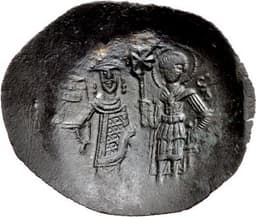
Ivan Asen II
Emperor · Medieval
63.3Total
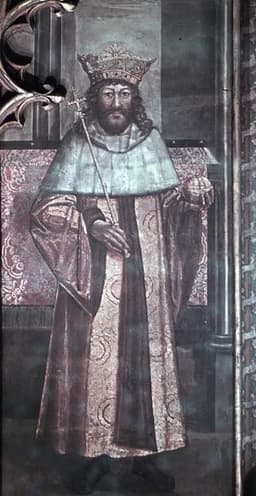
Vladislaus II of Hungary
Emperor · Medieval
48.8Total
Basic Information
Born
1190
1456
Died
1241
1516
Era
Medieval
Medieval
Nationality
Bulgaria
Bohemia
Occupation
Emperor
Emperor
Civilization
Western
Western
Score Comparison
Military (10%)
78.0
50.0
Political (20%)
72.0
43.7
Influence (20%)
61.0
51.8
Legacy (20%)
52.0
43.3
Leadership (15%)
66.0
65.7
Strategy (15%)
65.4
35.7
TOTAL
63.3
48.8
Ivan Asen II — Complete Timeline
1218 AD
Expansion of the Second Bulgarian EmpireWar◆ Major
Ivan Asen II expanded Bulgarian territory through campaigns against the Latin Empire and the Kingdom of Thessalonica. He captured Adrianople and extended Bulgarian influence into the Peloponnese.
ExpansionLatin EmpireThessalonica
Impact: regional
1230 AD
Battle of KlokotnitsaWar
Ivan Asen II defeated the Despotate of Epirus at Klokotnitsa. The victory restored Bulgarian control over Thrace, Macedonia, and Albania, making Bulgaria the dominant power in the Balkans.
BattleBalkan DominanceEpirus
Impact: regional
Construction of the Church of the Holy Forty MartyrsCultural
Ivan Asen II built the Church of the Holy Forty Martyrs in Veliko Tarnovo to commemorate his victory at Klokotnitsa. The church became a major cultural and religious monument.
ArchitectureChurchMonument
Impact: nationalconstructive
1235 AD
Restoration of the Bulgarian PatriarchatePolitical Action◆ Major
Ivan Asen II secured recognition of the Bulgarian Patriarchate from the Ecumenical Patriarch of Constantinople. This restored the autocephalous status of the Bulgarian Church, enhancing national prestige.
ChurchPatriarchateReligious Independence
Impact: regionalconstructive
Vladislaus II of Hungary — Complete Timeline
1479 AD
Peace of OlomoucPolitical Action◆ Major
Vladislaus II signed the Peace of Olomouc with Matthias Corvinus, dividing the Bohemian crown lands. Vladislaus retained Bohemia while Matthias held Moravia, Silesia, and Lusatia, ending a period of conflict between the two kings.
TreatyTerritorial DivisionConflict Resolution
Impact: regional
1490 AD
Vladislaus BenePolitical Action◆ Major
Vladislaus II was elected King of Hungary after the death of Matthias Corvinus. His reign was marked by weak governance, earning him the nickname 'Vladislaus Bene' for his tendency to agree with all petitioners, leading to administrative decay.
ElectionWeak RuleHungary
Impact: regional
Expert Analysis
Origins
Ivan Asen II (born c. 1190) was the son of Tsar Ivan Asen I, co-founder of the Second Bulgarian Empire. He grew up in exile after the fall of the Asen dynasty, spending his early years in the Principality of Galicia-Volhynia. His father's assassination in 1196 left a power vacuum, and Ivan Asen II returned to Bulgaria only after the death of his cousin Boril in 1218, claiming the throne. His early life was shaped by the struggle to restore Bulgarian sovereignty after centuries of Byzantine domination.
Vladislaus II (born 1456) was the son of Casimir IV, King of Poland and Grand Duke of Lithuania, and Elizabeth of Austria. He was raised in the Jagiellonian court, receiving a thorough education in governance. His family connections made him a candidate for multiple thrones. He was elected King of Bohemia in 1471 and later King of Hungary in 1490, following the death of Matthias Corvinus. His background as a foreign ruler in both kingdoms defined his reign.
Rise to Power
Ivan Asen II seized power in 1218 after overthrowing his cousin Boril, who had usurped the throne. His early reign focused on consolidating control and rebuilding the Bulgarian state. The turning point came in 1230 at the Battle of Klokotnitsa, where he decisively defeated Theodore Komnenos Doukas, ruler of the Despotate of Epirus. This victory allowed Ivan Asen II to reclaim Thrace, Macedonia, and Albania, making Bulgaria the dominant power in the Balkans. He scored 78.0 in military, reflecting this achievement.
Vladislaus II became King of Bohemia in 1471 after the Hussite Wars, but his authority was limited by the powerful nobility. In 1490, he was elected King of Hungary, succeeding Matthias Corvinus. His reign was marked by weak governance, earning him the nickname 'Vladislaus Bene' for his habit of saying 'Bene' (Latin for 'good') to all requests. He scored 43.7 in political, indicating his inability to control the nobles or centralize power.
Leadership & Governance
Ivan Asen II ruled with a combination of military might and diplomatic skill. He secured recognition of the Bulgarian Patriarchate from the Ecumenical Patriarch of Constantinople in 1235, restoring the autocephalous status of the Bulgarian Church. This strengthened national unity and legitimized his rule. He also expanded Bulgarian territory through campaigns against the Latin Empire and the Kingdom of Thessalonica, capturing Adrianople and extending his influence deep into Byzantine lands. His leadership score is 66.0.
Vladislaus II's governance was characterized by concessions to the nobility. In Hungary, he signed the Diet of 1492, which reduced royal revenues by granting exemptions to nobles. He failed to address the growing Ottoman threat, and his son Louis II later died at the Battle of Mohács in 1526, leading to the partition of Hungary. Vladislaus II scored 65.7 in leadership, but his political score of 43.7 reflects his inability to implement effective policies.
Triumph & Tragedy
Ivan Asen II's greatest triumph was the Battle of Klokotnitsa, which restored Bulgarian hegemony in the Balkans. He also built the Church of the Holy Forty Martyrs in Veliko Tarnovo to commemorate the victory, a lasting cultural monument. However, his later years saw setbacks: his alliance with the Nicaean Empire collapsed, and he failed to capture Constantinople. He died in 1241, and his empire soon fragmented due to internal strife and Mongol invasions. His legacy score of 52.0 reflects this limited duration.
Vladislaus II's reign avoided major wars, but this was a tragedy of missed opportunities. He signed the Peace of Olomouc in 1479, dividing Bohemian lands with Matthias Corvinus, which weakened the kingdom. His failure to reform the military or finances left Hungary vulnerable. The Battle of Mohács in 1526 was a direct consequence of his neglect. His influence score of 51.8 is modest.
Character & Destiny
Ivan Asen II was a pragmatic and ambitious ruler, known for his strategic acumen and ability to rally national sentiment. His decision to restore the Patriarchate showed his understanding of the importance of religious legitimacy. However, his overreliance on personal leadership meant that his achievements did not outlast him. His strategy score is 65.4.
Vladislaus II was indecisive and conflict-averse, preferring to appease rather than confront. His nickname 'Bene' encapsulates his passive approach. This character flaw led to the decline of both Bohemia and Hungary, as nobles gained power at the expense of the crown. His total score of 48.8 is significantly lower than Ivan Asen II's 63.3.
Legacy
Ivan Asen II is remembered as the restorer of the Second Bulgarian Empire. His victories at Klokotnitsa and his patronage of the Church of the Holy Forty Martyrs cemented his place in Bulgarian national history. However, his empire collapsed within decades of his death, limiting his long-term impact. His influence score of 61.0 reflects his importance in Bulgarian history but not globally.
Vladislaus II's legacy is largely negative. He is seen as a weak king whose reign set the stage for the Ottoman conquest of Hungary. The Jagiellonian dynasty lost its strongest kingdoms after his death. His influence score of 51.8 is lower than Ivan Asen II's, and his military score of 50.0 reflects his lack of martial achievement.
Conclusion
Ivan Asen II had a greater impact than Vladislaus II. His military score of 78.0 versus Vladislaus's 50.0, and political score of 72.0 versus 43.7, demonstrate his superior ability to restore and expand his realm. While Vladislaus II's leadership score of 65.7 is comparable, his overall total of 48.8 is 14.5 points lower. Ivan Asen II's achievements at Klokotnitsa and his restoration of the Bulgarian Patriarchate were transformative for his nation, even if temporary. Vladislaus II's weak governance led to the decline of two kingdoms. Therefore, Ivan Asen II is the more significant historical figure.
Rankings
🥇
Ivan Asen IILeader
Mil: 78.0Pol: 72.0Inf: 61.0
63.3
🥈
Vladislaus II of Hungary
Mil: 50.0Pol: 43.7Inf: 51.8
48.8
+14.5 behind
How This Comparison Works
Algorithm
Each figure is scored on 6 dimensions (0—100 scale) based on structured historical data: Military (10%), Political (20%), Influence (20%), Legacy (20%), Leadership (15%), Strategy (15%). The weighted total produces the final ranking.
Data Sources
Scores are computed from structured sub-indicators in the database. Scale factors adjust for era (Ancient ×0.85, Modern ×1.0) and civilization size (Eastern ×1.05, Other ×0.80) to account for differences in population and military scale.
Maximum 3 Figures
Comparisons are limited to 2—3 figures to ensure readability and statistical meaningfulness.
Error Margins
±5 points per dimension — Sub-scores are derived from historical records with inherent uncertainty. Two figures within 5 points on a dimension should be considered roughly equivalent in that area.
Total Score Accuracy
±3 points overall — The weighted combination of 6 dimensions produces a total score with approximately ±3 points of uncertainty. Differences of less than 3 points are not statistically significant— the figures are effectively tied.
Known Limitations
- Historical records are incomplete and uneven across civilizations
- Figures from oral-tradition societies may be underrepresented
- Occupation labels can misclassify multi-role figures
- Scores measure capability and impact, not moral character
- Quantitative scoring is a comparison tool, not absolute truth
Capability Radar
Military (10%) — Battles & Warfare
Battles
75
20
Win Rate
85
25
Expansion
75
10
Political (20%) — Governance & Reform
Reform
65
30
Diplomacy
75
55
Economy
60
35
Influence (20%) — Cultural & Global Reach
Cultural
55
30
Global
40
20
Legacy (20%) — Historical Impact
Historical
60
35
Longevity
50
25
Leadership (15%) — Power & Stability
Tenure
70
60
Stability
65
25
Strategy (15%) — Tactics & Innovation
Strategy
80
20
Tactics
70
15
Reform
60
10
Similar Comparisons
Comments & Discussion
No comments yet. Be the first to share your thoughts!