Loading...
Itzcoatl vs Vlad III Dracula
Itzcoatl leads by 8.6 pts · 2 figures compared
…
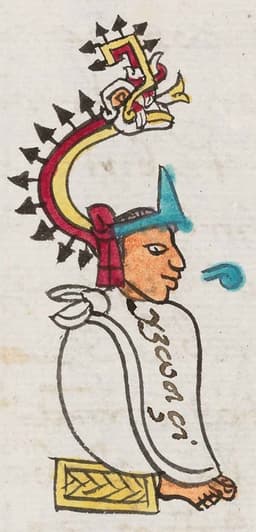
Itzcoatl
Emperor · Medieval
58.1Total
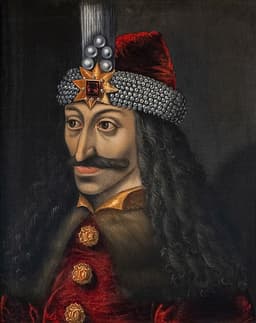
Vlad III Dracula
Emperor · Medieval
49.5Total
Basic Information
Born
1380
1431
Died
1440
1476
Era
Medieval
Medieval
Nationality
Aztec Empire
Wallachia
Occupation
Emperor
Emperor
Civilization
Other
Western
Score Comparison
Military (10%)
61.7
55.0
Political (20%)
55.0
30.8
Influence (20%)
61.0
56.7
Legacy (20%)
52.0
55.0
Leadership (15%)
66.0
41.5
Strategy (15%)
55.0
52.5
TOTAL
58.1
49.5
Vlad III Dracula — Complete Timeline
1448 AD
First reign as Voivode of WallachiaPolitical Action
Vlad III Dracula became Voivode of Wallachia for the first time, ruling for only two months before being deposed. This brief reign was part of the ongoing power struggle between Wallachian nobles and the Ottoman Empire.
ReignPower Struggle
Impact: national
1462 AD
Second reign and the Night Attack at TârgovișteWar◆ Major
Vlad III launched a surprise night attack on the Ottoman camp near T
BattleOttoman WarsGuerrilla Warfare
Impact: regional
Impalement of Ottoman prisonersWar◆ Major
Vlad III ordered the impalement of thousands of Ottoman prisoners and civilians near T
AtrocityPsychological Warfare
Impact: regionaldestructive
Imprisonment by Matthias CorvinusPolitical Action◆ Major
Vlad III was captured and imprisoned by King Matthias Corvinus of Hungary for alleged treason. He spent approximately 12 years in captivity in Hungary, during which time Wallachia fell under Ottoman suzerainty.
ImprisonmentBetrayal
Impact: nationaltragic
1476 AD
Third reign and death in battleWar◆ Major
Vlad III regained the Wallachian throne with Hungarian support but was killed in battle against the Ottomans near Bucharest. His head was reportedly sent to Constantinople as a trophy, ending his final attempt to resist Ottoman domination.
DeathBattleOttoman Wars
Impact: nationaltragic
Expert Analysis
Origins
Itzcoatl was born around 1380, the son of Acamapichtli, the first tlatoani of Tenochtitlan. His mother was a slave, which initially limited his prospects. He rose through military ranks, becoming a commander under his predecessor Chimalpopoca. His early life was shaped by the growing power of the Mexica and the dominance of the Tepanec empire centered at Azcapotzalco.
Vlad III Dracula was born in 1431 in Sighișoara, Transylvania, as the second son of Vlad II Dracul, Voivode of Wallachia. His father was a member of the Order of the Dragon, hence the name Dracula. Vlad spent his early years as a hostage of the Ottoman Empire (from age 12 to 17), an experience that influenced his later hatred of the Ottomans. He was educated in logic, philosophy, and military tactics under Ottoman supervision.
Rise to Power
Itzcoatl was elected tlatoani in 1427 after the assassination of Chimalpopoca by the Tepanec ruler Maxtla. He immediately allied with Nezahualcoyotl of Texcoco and Totoquihuaztli of Tlacopan to form the Triple Alliance. In 1428, they defeated Maxtla at the Battle of Azcapotzalco, dismantling the Tepanec empire. Itzcoatl then led campaigns to conquer Cuernavaca, Coyoacán, and Xochimilco, expanding Aztec control.
Vlad III first ruled Wallachia in 1448, with Ottoman support, but was deposed after two months. He regained the throne in 1456 with Hungarian backing, after killing the pro-Ottoman Vladislav II. His second reign (1456-1462) was marked by conflict with the Ottomans. In 1459, he ceased paying tribute to the Sultan, leading to war. In 1462, he launched the Night Attack at Târgoviște, attempting to assassinate Sultan Mehmed II, but failed.
Leadership & Governance
Itzcoatl centralized power in Tenochtitlan, reformed the Aztec government, and began the construction of the Templo Mayor. He instituted a system of tribute from conquered states, which funded the capital's growth. He also ordered the burning of historical codices to rewrite Aztec history as a chosen people, creating a unified identity. His political score of 55.0 reflects effective but ruthless consolidation.
Vlad III ruled through terror, using impalement to enforce order. He executed boyars (nobles) who threatened his power, and his methods reduced crime. He also standardized weights and measures and promoted trade, but his cruelty alienated allies. His leadership score of 41.5 indicates instability; he was deposed twice. His strategy score of 52.5 shows tactical skill but poor long-term planning.
Triumph & Tragedy
Itzcoatl's greatest success was forming the Triple Alliance and defeating the Tepanecs, making Tenochtitlan the dominant power in central Mexico. He expanded the empire from a city-state to a regional hegemony. His failure was the destruction of historical records, which erased pre-Aztec culture and created a biased narrative. His legacy score of 52.0 reflects this mixed impact.
Vlad III's greatest success was his defense of Wallachia against the Ottomans, particularly the Night Attack and the impalement of prisoners near Târgoviște, which terrified the Ottoman army. His greatest failure was his imprisonment by Matthias Corvinus (1462-1474), which ended his effective rule. He died in battle around 1476 near Bucharest, his head sent to Istanbul. His influence score of 56.7 owes much to his posthumous myth.
Character & Destiny
Itzcoatl was pragmatic and strategic, using religion and history to legitimize his rule. He was not a charismatic warrior but a political architect. His character shaped a stable, expansionist state. His total score of 58.1 reflects balanced abilities.
Vlad III was vengeful and cruel, shaped by his captivity. His decision to impale thousands was both tactical and psychological. His character led to short-term success but long-term isolation and downfall. His total score of 49.5 is lower due to poor political and leadership scores.
Legacy
Itzcoatl's Triple Alliance lasted until the Spanish conquest in 1521. His reforms created the Aztec empire that amazed Cortés. He is remembered as a founding father of the Aztec state, with a legacy score of 52.0.
Vlad III's legacy is the Dracula legend. His brutal tactics inspired Bram Stoker's novel, making him a cultural icon. Historically, he is seen as a fierce defender of Christianity against Islam. His influence score of 56.7 is higher than his other scores due to this cultural impact.
Conclusion
Itzcoatl had a greater historical impact, with a total score of 58.1 versus Vlad's 49.5. He built an empire that dominated Mesoamerica and shaped the course of history until the Spanish arrival. Vlad's influence is more cultural than political; his actual reign was short and unstable. Itzcoatl's reforms and alliances created a lasting structure, while Vlad's terror tactics failed to secure his throne. Thus, Itzcoatl is the more significant historical figure.
Rankings
🥇
ItzcoatlLeader
Mil: 61.7Pol: 55.0Inf: 61.0
58.1
🥈
Vlad III Dracula
Mil: 55.0Pol: 30.8Inf: 56.7
49.5
+8.6 behind
How This Comparison Works
Algorithm
Each figure is scored on 6 dimensions (0—100 scale) based on structured historical data: Military (10%), Political (20%), Influence (20%), Legacy (20%), Leadership (15%), Strategy (15%). The weighted total produces the final ranking.
Data Sources
Scores are computed from structured sub-indicators in the database. Scale factors adjust for era (Ancient ×0.85, Modern ×1.0) and civilization size (Eastern ×1.05, Other ×0.80) to account for differences in population and military scale.
Maximum 3 Figures
Comparisons are limited to 2—3 figures to ensure readability and statistical meaningfulness.
Error Margins
±5 points per dimension — Sub-scores are derived from historical records with inherent uncertainty. Two figures within 5 points on a dimension should be considered roughly equivalent in that area.
Total Score Accuracy
±3 points overall — The weighted combination of 6 dimensions produces a total score with approximately ±3 points of uncertainty. Differences of less than 3 points are not statistically significant— the figures are effectively tied.
Known Limitations
- Historical records are incomplete and uneven across civilizations
- Figures from oral-tradition societies may be underrepresented
- Occupation labels can misclassify multi-role figures
- Scores measure capability and impact, not moral character
- Quantitative scoring is a comparison tool, not absolute truth
Capability Radar
Military (10%) — Battles & Warfare
Battles
65
45
Win Rate
70
40
Expansion
70
20
Political (20%) — Governance & Reform
Reform
80
25
Diplomacy
75
30
Economy
60
20
Influence (20%) — Cultural & Global Reach
Cultural
55
65
Global
50
60
Legacy (20%) — Historical Impact
Historical
70
70
Longevity
60
75
Leadership (15%) — Power & Stability
Tenure
65
35
Stability
70
15
Strategy (15%) — Tactics & Innovation
Strategy
75
55
Tactics
60
70
Reform
55
30
Similar Comparisons
Comments & Discussion
No comments yet. Be the first to share your thoughts!