Loading...
Itzcoatl vs Napoleon Bonaparte
Napoleon Bonaparte leads by 12.8 pts · 2 figures compared
…
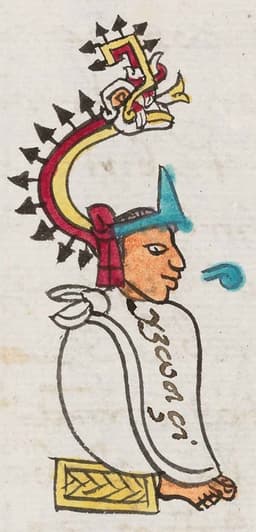
Itzcoatl
Emperor · Medieval
58.1Total

Napoleon Bonaparte
General · Modern
70.9Total
Basic Information
Born
1380
1769
Died
1440
1821
Era
Medieval
Modern
Nationality
Aztec Empire
France
Occupation
Emperor
General
Civilization
Other
Western
Score Comparison
Military (10%)
61.7
94.0
Political (20%)
55.0
72.0
Influence (20%)
61.0
40.0
Legacy (20%)
52.0
80.0
Leadership (15%)
66.0
78.0
Strategy (15%)
55.0
90.0
TOTAL
58.1
70.9
Napoleon Bonaparte — Complete Timeline
1799 AD
Coup of 18 BrumaireOther◆ Major
Napoleon Bonaparte, with support from his brother Lucien and key political figures, overthrew the Directory in a bloodless coup. He established the Consulate with himself as First Consul, effectively becoming the ruler of France. This event ended the French Revolution's most unstable period.
French RevolutionCoupRise to Power
Impact: regional
1804 AD
Promulgation of the Napoleonic CodeOther◆ Major
Napoleon enacted the Civil Code of the French, known as the Napoleonic Code, a comprehensive set of laws that replaced the fragmented feudal legal systems. The code established legal equality, protected property rights, and secularized law. It became the basis for legal systems in many European and world countries.
Legal ReformNapoleonic CodeCivil Law
Impact: globalconstructive
1805 AD
Battle of AusterlitzWar◆ Major
Napoleon's Grande Arm
Napoleonic WarsBattleDecisive Victory
Impact: global
1812 AD
Invasion of RussiaWar◆ Major
Napoleon led the Grande Arm
Napoleonic WarsInvasionDisaster
Impact: globaldestructive
1815 AD
Battle of WaterlooWar◆ Major
Napoleon's French army was defeated by the combined forces of the Duke of Wellington's Anglo-Allied army and Gebhard Leberecht von Bl
Napoleonic WarsBattleFinal Defeat
Impact: globaldestructive
Expert Analysis
itzcoatl-vs-napoleon-bonaparte
# The Conqueror and the Defender
In the spring of 1815, Napoleon Bonaparte stood on the fields of Waterloo, marshaling the last remnants of an empire that had once stretched from Madrid to Moscow. Less than four centuries earlier, another emperor—Itzcoatl—stood atop the great pyramid of Tenochtitlan, watching his Triple Alliance armies return with captives and tribute from the valleys of central Mexico. One man's story ends with exile on a remote Atlantic island; the other's ends with an empire that would fall to strangers from across the sea. Both shaped their worlds, yet their fates could not have been more different.
Origins
Napoleon Bonaparte was born in 1769 on the Mediterranean island of Corsica, a place that had only become French the year before. His family belonged to the minor nobility—impoverished, proud, and resentful of French rule. Young Napoleon spoke Italian-accented French, was mocked by classmates at military school, and carried a burning ambition to prove himself. The French Revolution, which erupted when he was twenty, shattered the old order and opened paths that birth alone could never have granted.
Itzcoatl, born in 1380, came from a world where the gods themselves dictated the rise and fall of cities. He was the son of the Aztec ruler Acamapichtli, but illegitimacy barred him from direct succession. His Tenochtitlan was a city of canals and causeways, perched on an island in Lake Texcoco, surrounded by powerful neighbors who had long dominated the region. Unlike Napoleon, who would inherit a nation in crisis, Itzcoatl inherited a city-state still climbing toward greatness.
Rise to Power
Napoleon's ascent was a masterpiece of opportunism and brilliance. In 1793, at age twenty-four, he drove British forces from the port of Toulon, earning promotion to brigadier general. By 1796, he commanded the Army of Italy and astonished Europe with a campaign that destroyed Austrian power in northern Italy. Each victory fed the next: the Egyptian expedition of 1798, the coup of 18 Brumaire in 1799 that made him First Consul, and finally his coronation as Emperor in 1804. He rose not through birth but through the sheer force of his will and the chaos of revolution.
Itzcoatl's path was different. Elected emperor in 1427 at age forty-seven, he inherited a Tenochtitlan that was powerful but not yet dominant. His genius lay not in battlefield improvisation but in political architecture. He formed the Triple Alliance with the neighboring cities of Texcoco and Tlacopan—a coalition that redistributed power and created a stable framework for expansion. Where Napoleon conquered alone, Itzcoatl built a system that would outlast him.
Leadership & Governance
Napoleon ruled through personal charisma and relentless energy. He led his armies from the front, inspiring soldiers who called him "the Little Corporal." His military genius—rated 93 in strategy and 94 in overall martial ability—produced campaigns studied to this day: Austerlitz in 1805, Jena in 1806, Wagram in 1809. But his political wisdom, rated 75, proved less durable. The Napoleonic Code reformed French law and influenced civil codes across Europe, yet his empire rested on conquest, not consent. He placed brothers and marshals on thrones from Naples to Westphalia, creating a system that collapsed when he did.
Itzcoatl governed through consensus and ritual. His political score of 78 reflects a ruler who understood that power required legitimacy. He reformed Aztec history, ordering the burning of old codices and the creation of a new official narrative that elevated the Mexica people. He restructured the priesthood and reorganized tribute systems. His leadership score of 82.2 suggests a commander who led through authority rather than personal heroism—a stark contrast to Napoleon's battlefield charisma.
Triumph & Tragedy
Napoleon's greatest moment came on December 2, 1805, at Austerlitz, where he destroyed a combined Russian and Austrian army, ending the Holy Roman Empire. His worst came in 1812, when the invasion of Russia cost half a million men. The retreat from Moscow, through snow and starvation, broke his invincible aura. By 1814, Paris fell; by 1815, Waterloo finished what Moscow had begun.
Itzcoatl's triumphs were slower but more permanent. Under his rule, the Triple Alliance conquered the Tepanecs, extended Aztec control over the Valley of Mexico, and established the tribute empire that would awe Spanish conquistadors. He died in 1440, having transformed Tenochtitlan from a rising power into the heart of Mesoamerica's dominant state. The tragedy came later—the Spanish siege of 1521, the torture and execution of his successor Cuauhtemoc—but Itzcoatl did not live to see it.
Character & Destiny
Napoleon was restless, brilliant, and incapable of stopping. "Power is my mistress," he once said, and he pursued her with an energy that exhausted everyone around him. His personality drove him to conquer, to reform, to meddle—and ultimately to overreach. He could not share power, could not delegate, could not accept limits. That same drive that made him master of Europe also made him its exile.
Itzcoatl was calculating and patient. He understood that power built on relationships outlasts power built on fear. His reforms to Aztec history and religion were not acts of vanity but of statecraft—creating a shared identity that held the Triple Alliance together. He ruled for thirteen years, died in his bed, and passed his throne to his nephew Moctezuma I. His personality sought permanence, not glory.
Legacy
Napoleon's legacy is a paradox. He spread revolutionary ideals—legal equality, secular government, meritocracy—across Europe, yet his methods were tyrannical. His name adorns codes, monuments, and memories, but his empire vanished within a decade of his death. His influence score of 82 and legacy score of 78 reflect a man who changed the world but could not control the change he unleashed.
Itzcoatl's legacy is quieter but deeper. The Aztec Empire he built lasted only eighty years after his death, but the identity he forged—the Mexica people as the chosen of Huitzilopochtli—survived conquest. Modern Mexico traces its roots to the Triple Alliance, and Itzcoatl's historical reforms shaped how an entire civilization remembered itself. His influence score of 74.3 and legacy of 69.6 understate his role: he did not just rule an empire; he invented it.
Conclusion
Napoleon and Itzcoatl both built empires, but they built them from different materials. Napoleon worked with the brittle clay of conquest, shaping and reshaping until it crumbled in his hands. Itzcoatl worked with the living stone of alliance and identity, carving a foundation that would outlast the temple it supported. One man's story is a comet—brilliant, brief, and burning out in a flash. The other's is a river—slow, deep, and carving canyons long after its source is forgotten. Perhaps the difference is not in their ambitions, which were equally vast, but in what they understood about power: that it flows not from the sword alone, but from the stories a people tell about themselves.
Rankings
🥇
Napoleon BonaparteLeader
Mil: 94.0Pol: 72.0Inf: 40.0
70.9
🥈
Itzcoatl
Mil: 61.7Pol: 55.0Inf: 61.0
58.1
+12.8 behind
How This Comparison Works
Algorithm
Each figure is scored on 6 dimensions (0—100 scale) based on structured historical data: Military (10%), Political (20%), Influence (20%), Legacy (20%), Leadership (15%), Strategy (15%). The weighted total produces the final ranking.
Data Sources
Scores are computed from structured sub-indicators in the database. Scale factors adjust for era (Ancient ×0.85, Modern ×1.0) and civilization size (Eastern ×1.05, Other ×0.80) to account for differences in population and military scale.
Maximum 3 Figures
Comparisons are limited to 2—3 figures to ensure readability and statistical meaningfulness.
Error Margins
±5 points per dimension — Sub-scores are derived from historical records with inherent uncertainty. Two figures within 5 points on a dimension should be considered roughly equivalent in that area.
Total Score Accuracy
±3 points overall — The weighted combination of 6 dimensions produces a total score with approximately ±3 points of uncertainty. Differences of less than 3 points are not statistically significant— the figures are effectively tied.
Known Limitations
- Historical records are incomplete and uneven across civilizations
- Figures from oral-tradition societies may be underrepresented
- Occupation labels can misclassify multi-role figures
- Scores measure capability and impact, not moral character
- Quantitative scoring is a comparison tool, not absolute truth
Capability Radar
Military (10%) — Battles & Warfare
Battles
65
95
Win Rate
70
90
Expansion
70
95
Political (20%) — Governance & Reform
Reform
80
95
Diplomacy
75
80
Economy
60
85
Influence (20%) — Cultural & Global Reach
Cultural
55
85
Global
50
90
Legacy (20%) — Historical Impact
Historical
70
95
Longevity
60
90
Leadership (15%) — Power & Stability
Tenure
65
85
Stability
70
70
Strategy (15%) — Tactics & Innovation
Strategy
75
95
Tactics
60
98
Reform
55
92
Similar Comparisons
Comments & Discussion
No comments yet. Be the first to share your thoughts!