Loading...
Itzcoatl vs Li Siyuan
Itzcoatl leads by 3.2 pts · 2 figures compared
…
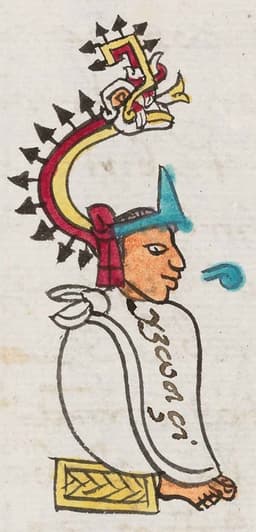
Itzcoatl
Emperor · Medieval
58.1Total
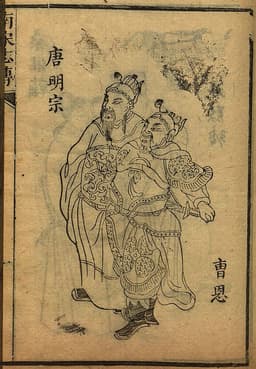
Li Siyuan
Emperor · Medieval
54.9Total
Basic Information
Born
1380
867
Died
1440
933
Era
Medieval
Medieval
Nationality
Aztec Empire
China
Occupation
Emperor
Emperor
Civilization
Other
Eastern
Score Comparison
Military (10%)
61.7
70.0
Political (20%)
55.0
68.0
Influence (20%)
61.0
51.8
Legacy (20%)
52.0
45.0
Leadership (15%)
66.0
53.2
Strategy (15%)
55.0
55.0
TOTAL
58.1
54.9
Li Siyuan — Complete Timeline
926 AD
Seized Power in a CoupPolitical Action
Li Siyuan, a general of Shatuo origin, led a mutiny against Emperor Li Cunxu (Zhuangzong) after the emperor's excessive cruelty and mismanagement. The mutiny succeeded, and Li Siyuan was proclaimed emperor of the Later Tang dynasty, restoring order.
CoupLater TangShatuo
Impact: national
927 AD
Implemented Frugal and Benevolent ReformsReform◆ Major
Despite being illiterate, Li Siyuan reduced taxes, curbed corruption, and promoted capable officials. He cut court expenses and distributed grain during famines, earning a reputation as a wise and just ruler who stabilized the Later Tang state.
ReformsGood GovernanceFrugality
Impact: nationalconstructive
Expert Analysis
Origins
Itzcoatl (1380-1440) was born into the ruling family of Tenochtitlan, the son of Acamapichtli, the first tlatoani (ruler) of the Aztecs. His mother was a slave, which initially limited his prospects. He rose through military ranks, earning respect as a warrior and strategist. His early experiences included participating in campaigns against rival city-states, which shaped his understanding of regional power dynamics.
Li Siyuan (867-933) was born into a Shatuo Turkic family in northern China. His father was a minor military officer in the late Tang dynasty. Illiterate from birth, Li Siyuan began his career as a soldier in the Shatuo-led armies. He demonstrated exceptional martial skill, eventually becoming a general under Li Cunxu, the founder of the Later Tang dynasty. His early life was marked by the chaos of the Five Dynasties period, where military prowess determined survival.
Rise to Power
Itzcoatl's rise culminated in 1427 when he was elected tlatoani of Tenochtitlan. His key turning point came in 1428 when he formed the Triple Alliance with Texcoco and Tlacopan, creating a military coalition that defeated the Tepanecs. This alliance became the foundation of the Aztec Empire. Itzcoatl also implemented a historical revision, burning earlier codices to rewrite Aztec history, thereby legitimizing his rule and the empire's divine mandate.
Li Siyuan seized power in 926 through a military coup after Emperor Li Cunxu was killed in a mutiny. Li Siyuan, then a general, led his troops to the capital Luoyang and claimed the throne. He was initially reluctant but accepted after being proclaimed emperor by the army. His rise was marked by the assassination of his predecessor, but he quickly sought to stabilize the realm through moderate policies.
Leadership & Governance
Itzcoatl led through military expansion and political consolidation. He conquered territories such as Cuernavaca and Chalco, expanding the tributary system. He centralized power by eliminating rival elites and establishing a state religion centered on Huitzilopochtli. His governance score of 55.0 reflects his effective but ruthless methods. He also constructed infrastructure like causeways and aqueducts in Tenochtitlan.
Li Siyuan governed with frugality and benevolence, despite his illiteracy. He reduced taxes, curbed corruption, and promoted competent officials regardless of background. He cut court expenses and distributed grain during famines. His political score of 68.0 indicates his adept management of a fragile dynasty. He also maintained peace with neighboring kingdoms, avoiding costly wars.
Triumph & Tragedy
Itzcoatl's greatest triumph was founding the Aztec Empire through the Triple Alliance, which dominated Mesoamerica for nearly a century. His military score of 61.7 reflects successful campaigns. However, his tragedy was his historical revisionism, which erased the achievements of previous peoples and created a false narrative. Additionally, his expansionist policies sowed resentment among conquered groups, contributing to later instability.
Li Siyuan's triumph was his successful reforms that brought stability to the Later Tang. He is remembered as a wise emperor who cared for his people. His tragedy was his inability to secure a stable succession; his son Li Conghou was overthrown shortly after his death. The Later Tang fell into civil war, and Li Siyuan's legacy was overshadowed by the dynasty's collapse.
Character & Destiny
Itzcoatl was pragmatic and ambitious, willing to rewrite history to consolidate power. His decisions were calculated to strengthen the Aztec state. His leadership score of 66.0 reflects his ability to inspire loyalty and execute plans. However, his rigid ideology and militarism set a precedent that ultimately led to the empire's vulnerability.
Li Siyuan was modest and hardworking, known for his personal integrity. Despite his illiteracy, he surrounded himself with learned advisors. His leadership score of 53.2 is lower due to his reliance on others. His destiny was tied to the volatile Five Dynasties period, where even wise rulers could not prevent dynastic turnover.
Legacy
Itzcoatl's legacy is the Aztec Empire itself. He transformed Tenochtitlan from a city-state into the capital of a vast empire. His political and religious reforms shaped Aztec society until the Spanish conquest. His influence score of 61.0 reflects his lasting impact on Mesoamerican history. However, his legacy is also tainted by historical distortion.
Li Siyuan's legacy is more modest. He is remembered as a capable ruler in a chaotic era, but his dynasty fell soon after his death. His reforms had limited long-term impact as the Later Tang collapsed. His legacy score of 45.0 indicates that his contributions were not enduring. Nevertheless, he is often cited as a model of benevolent governance in Chinese historiography.
Conclusion
Itzcoatl had a greater impact than Li Siyuan. His total score of 58.1 vs 54.9 reflects this, but the gap is wider in influence and legacy. Itzcoatl founded an empire that dominated Mesoamerica for a century and shaped the course of Aztec civilization. Li Siyuan, while competent, ruled a short-lived dynasty with limited lasting effects. Itzcoatl's creation of the Triple Alliance was a transformative event, whereas Li Siyuan's reforms, though admirable, did not prevent the Later Tang's demise. Therefore, Itzcoatl's impact on history is more significant.
Rankings
🥇
ItzcoatlLeader
Mil: 61.7Pol: 55.0Inf: 61.0
58.1
🥈
Li Siyuan
Mil: 70.0Pol: 68.0Inf: 51.8
54.9
+3.2 behind
How This Comparison Works
Algorithm
Each figure is scored on 6 dimensions (0—100 scale) based on structured historical data: Military (10%), Political (20%), Influence (20%), Legacy (20%), Leadership (15%), Strategy (15%). The weighted total produces the final ranking.
Data Sources
Scores are computed from structured sub-indicators in the database. Scale factors adjust for era (Ancient ×0.85, Modern ×1.0) and civilization size (Eastern ×1.05, Other ×0.80) to account for differences in population and military scale.
Maximum 3 Figures
Comparisons are limited to 2—3 figures to ensure readability and statistical meaningfulness.
Error Margins
±5 points per dimension — Sub-scores are derived from historical records with inherent uncertainty. Two figures within 5 points on a dimension should be considered roughly equivalent in that area.
Total Score Accuracy
±3 points overall — The weighted combination of 6 dimensions produces a total score with approximately ±3 points of uncertainty. Differences of less than 3 points are not statistically significant— the figures are effectively tied.
Known Limitations
- Historical records are incomplete and uneven across civilizations
- Figures from oral-tradition societies may be underrepresented
- Occupation labels can misclassify multi-role figures
- Scores measure capability and impact, not moral character
- Quantitative scoring is a comparison tool, not absolute truth
Capability Radar
Military (10%) — Battles & Warfare
Battles
65
65
Win Rate
70
70
Expansion
70
50
Political (20%) — Governance & Reform
Reform
80
65
Diplomacy
75
60
Economy
60
55
Influence (20%) — Cultural & Global Reach
Cultural
55
30
Global
50
20
Legacy (20%) — Historical Impact
Historical
70
40
Longevity
60
30
Leadership (15%) — Power & Stability
Tenure
65
70
Stability
70
50
Strategy (15%) — Tactics & Innovation
Strategy
75
75
Tactics
60
60
Reform
55
55
Similar Comparisons
Comments & Discussion
No comments yet. Be the first to share your thoughts!