Loading...
Ito Hirobumi vs Lucius Junius Brutus
Ito Hirobumi leads by 1.1 pts · 2 figures compared
…
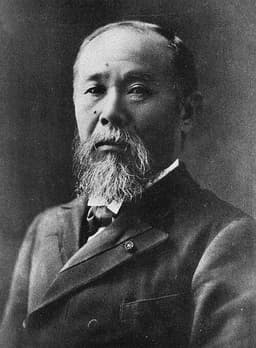
Ito Hirobumi
Politician · Modern
73.8Total
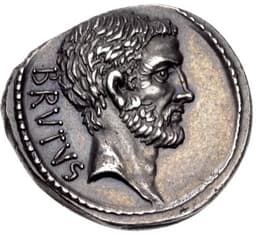
Lucius Junius Brutus
Politician · Ancient
72.7Total
Basic Information
Born
1841
-540
Died
1909
-509
Era
Modern
Ancient
Nationality
Japan
Roman Republic
Occupation
Politician
Politician
Civilization
Eastern
Western
Score Comparison
Military (10%)
50.0
45.0
Political (20%)
86.0
72.0
Influence (20%)
71.0
75.0
Legacy (20%)
80.0
90.0
Leadership (15%)
80.9
71.0
Strategy (15%)
60.0
54.8
TOTAL
73.8
72.7
Ito Hirobumi — Complete Timeline
1882 AD
Establishment of the Bank of JapanReform◆ Major
Under Ito Hirobumi's leadership, the Bank of Japan was established as the nation's central bank. It was modeled after European central banks and aimed to stabilize the currency and control inflation. This institution was crucial for Japan's economic modernization and industrial growth.
Central BankEconomic ReformModernization
Impact: nationalconstructive
1885 AD
First Prime Minister of JapanPolitical Action◆ Major
Ito Hirobumi became the first Prime Minister of Japan under the new cabinet system. He served four non-consecutive terms and was instrumental in shaping the modern Japanese state. His tenure focused on centralizing power, modernizing the economy, and strengthening the military.
Prime MinisterCabinet SystemMeiji Period
Impact: nationalconstructive
1889 AD
Drafting of the Meiji ConstitutionReform
Ito Hirobumi led the drafting of the Meiji Constitution, which established a constitutional monarchy with a bicameral parliament (the Diet). The constitution granted the emperor sovereign power but also provided for elected representatives. It was promulgated in 1889 and remained in effect until 1947.
ConstitutionMeiji PeriodGovernment Reform
Impact: nationalconstructive
1909 AD
Assassination at Harbin StationPolitical Action◆ Major
Ito Hirobumi was assassinated by Korean nationalist An Jung-geun at Harbin railway station in Manchuria. Ito was on a mission to negotiate with Russian officials regarding Korea. His death shocked Japan and was used to justify the formal annexation of Korea in 1910.
AssassinationKoreaAnnexation
Impact: globaltragic
Lucius Junius Brutus — Complete Timeline
509 BC
Battle of Silva ArsiaWar◆ Major
Brutus led the Roman army against the forces of Tarquinius Superbus and his Etruscan allies at Silva Arsia. During the battle, Brutus and Arruns Tarquinius, the king's son, killed each other in single combat, but the Romans ultimately won the battle, securing the Republic's survival.
BattleSingle CombatFounding Myth
Impact: nationaltragic
Expulsion of the TarquinsPolitical Action
Lucius Junius Brutus led a revolt against the Tarquin monarchy after the rape of Lucretia by Sextus Tarquinius. He organized the Senate and the people to expel the royal family, ending the Roman Kingdom and establishing the Roman Republic with himself as one of the first consuls.
RevolutionFounding of RepublicOverthrow of Monarchy
Impact: globalprogressive
Execution of His SonsPolitical Action◆ Major
Brutus discovered that his own sons, Titus and Tiberius, had conspired to restore the Tarquins. As consul, he ordered their arrest, trial, and execution by beheading in the Forum, demonstrating his unwavering commitment to the Republic over family loyalty.
ExecutionConspiracyRepublican Virtue
Impact: nationaltragic
Oath of BrutusPolitical Action◆ Major
After the expulsion of the Tarquins, Brutus made the Roman people swear an oath never to allow a king to rule Rome again. This oath became a foundational principle of the Republic, reinforcing the commitment to liberty and opposition to tyranny.
OathRepublican IdeologyAnti-Monarchy
Impact: nationalprogressive
Expert Analysis
Lucius Junius Brutus vs Ito Hirobumi
# The Founder and the Architect
On a winter morning in 1909, a seventy-year-old man stepped off a train in Harbin, Manchuria, into a hail of bullets. An Jung-geun, a Korean nationalist, fired three shots into Ito Hirobumi, who died within minutes. Half a world away and two millennia earlier, another founder faced a different kind of sacrifice: Lucius Junius Brutus, first consul of Rome, watched his own sons be beaten to death with rods for plotting to restore the monarchy. Two men, separated by twenty-four centuries, each laying the cornerstone of a new political order—one by shedding his own blood, the other by spilling that of his children. What drove these architects of republic and empire to such extremes, and why did their paths diverge so radically?
Origins
Ito Hirobumi was born in 1841 into a low-ranking samurai family in Hagi, a domain that would become the engine of Japan's transformation. The son of a farmer's adopted son, Ito grew up in the twilight of the Tokugawa shogunate, a feudal system crumbling under pressure from Western gunboats. He was present at Shimonoseki in 1863 when British warships bombarded his domain—a lesson in industrial power that shaped his lifelong conviction: Japan must modernize or be colonized. Ito traveled to London and studied Western institutions firsthand, returning with a vision of a strong, centralized state.
Lucius Junius Brutus, born around 540 BCE, inhabited a world of city-states and kings. Rome was then a small, quarrelsome settlement dominated by Etruscan monarchs. As a nephew of the hated King Tarquinius Superbus, Brutus survived by feigning stupidity—his cognomen "Brutus" means "dullard" in Latin. He watched his brother executed by the king, learning early that survival required cunning, not courage. Where Ito saw opportunity in a collapsing order, Brutus saw only betrayal waiting to happen.
Rise to Power
Ito's ascent was gradual, bureaucratic, and international. After the Meiji Restoration of 1868, he rose through the ranks of the new government, studying constitutions in Europe and negotiating treaties abroad. His political genius lay in synthesis: he absorbed German constitutional theory, French legal codes, and British parliamentary practice, then crafted a uniquely Japanese system. In 1885, he became Japan's first prime minister, a position he would hold four times. His power came not from military glory—his military score of 48.6 reflects this—but from his mastery of institutions.
Brutus's rise was sudden, violent, and domestic. In 509 BCE, after the rape of Lucretia by the king's son, Brutus threw off his mask of idiocy. He displayed Lucretia's body in the Forum, rallied the Senate, and expelled the Tarquins. Within weeks, he was elected Rome's first consul. His power derived from a single revolutionary moment and the oath he extracted from the people: never again to allow a king. Where Ito built through decades of paperwork and diplomacy, Brutus seized power in a week of blood and oratory.
Leadership & Governance
As prime minister, Ito governed through the pen. He established the Bank of Japan in 1882, modeled on European central banks, creating a stable currency that fueled industrialization. He drafted the Meiji Constitution of 1889, a masterwork of controlled reform: it created a bicameral parliament and guaranteed rights, but reserved ultimate sovereignty for the emperor. Ito understood that Japan needed the forms of democracy without its dangers. His political score of 87.2 reflects this pragmatic, top-down approach.
Brutus governed through the sword and the law. As consul, he commanded armies—dying at the Battle of Silva Arsia in 509 BCE while fighting the deposed king's Etruscan allies. But his most famous act was judicial. When his sons conspired to restore the monarchy, Brutus did not pardon them or exile them. He sat as judge at their trial and pronounced the death sentence, watching their execution with a face of stone. His leadership score of 73.9 reflects this terrifying commitment to principle over family. For Brutus, the republic was not a constitution to be drafted but a religion to be defended with blood.
Triumph & Tragedy
Ito's greatest triumph was the Meiji Constitution, which transformed Japan from a feudal backwater into a modern empire in a single generation. His greatest tragedy was his death—assassinated by a nationalist from a nation Japan had annexed. Ito had served as Japan's first Resident-General of Korea, overseeing its colonization. He died a symbol of the imperialism he helped create, a victim of the very nationalism he had unleashed.
Brutus's triumph was the birth of the Roman Republic, which would last nearly five centuries and shape Western civilization. His tragedy was the execution of his sons—not a death in battle but a calculated sacrifice that haunted Roman memory. Later Romans would debate whether Brutus was a hero or a monster. The poet Dante placed him in the lowest circle of Hell, alongside Judas, for betraying his own blood.
Character & Destiny
Ito was a pragmatist who believed institutions could tame human nature. He was charming, cosmopolitan, and flexible—willing to compromise with oligarchs and samurai, to adopt foreign ideas while preserving Japanese identity. His strategy score of 56.9 suggests he was more a politician than a general, more a builder than a warrior.
Brutus was a zealot who believed human nature had to be broken for institutions to survive. He was severe, inflexible, and terrifying—willing to sacrifice everything for principle. His military score of 34.8 shows he was no great commander, but his political score of 64.0 reflects a different kind of power: the power of absolute conviction. Where Ito built a system to contain ambition, Brutus built a system on the ashes of ambition itself.
Legacy
Ito Hirobumi is remembered as the founder of modern Japan. His constitution lasted until 1947, his central bank still stands, and his vision of a strong, industrialized, imperial Japan shaped the nation through World War II. With a legacy score of 81.0, he is revered as a statesman but also criticized as an architect of militarism and colonialism.
Lucius Junius Brutus is remembered as the founder of the Roman Republic. His oath against kings became the foundational myth of Roman liberty, invoked by everyone from Cicero to the American revolutionaries. With a legacy score of 90.0, he is a symbol of republican virtue—and a warning about the price of principle.
Conclusion
Ito Hirobumi and Lucius Junius Brutus both founded political orders that shaped the modern world. But their methods reveal a deeper truth about the eras they inhabited. Ito, a child of the industrial age, believed in institutions, constitutions, and gradual reform. He built a system that survived his death, even if it also outgrew his intentions. Brutus, a child of the ancient world, believed in oaths, sacrifice, and revolutionary violence. He built a system that depended on the virtue of its citizens—and that virtue proved fragile.
One died by assassination, the other in battle. One killed his sons, the other was killed by a stranger. But both understood something their contemporaries often missed: that founding a new order requires not just vision, but a willingness to pay a terrible price. The question they leave us is not whether the price was worth it, but whether we would have the courage to pay it ourselves.
Rankings
🥇
Ito HirobumiLeader
Mil: 50.0Pol: 86.0Inf: 71.0
73.8
🥈
Lucius Junius Brutus
Mil: 45.0Pol: 72.0Inf: 75.0
72.7
+1.1 behind
How This Comparison Works
Algorithm
Each figure is scored on 6 dimensions (0—100 scale) based on structured historical data: Military (10%), Political (20%), Influence (20%), Legacy (20%), Leadership (15%), Strategy (15%). The weighted total produces the final ranking.
Data Sources
Scores are computed from structured sub-indicators in the database. Scale factors adjust for era (Ancient ×0.85, Modern ×1.0) and civilization size (Eastern ×1.05, Other ×0.80) to account for differences in population and military scale.
Maximum 3 Figures
Comparisons are limited to 2—3 figures to ensure readability and statistical meaningfulness.
Error Margins
±5 points per dimension — Sub-scores are derived from historical records with inherent uncertainty. Two figures within 5 points on a dimension should be considered roughly equivalent in that area.
Total Score Accuracy
±3 points overall — The weighted combination of 6 dimensions produces a total score with approximately ±3 points of uncertainty. Differences of less than 3 points are not statistically significant— the figures are effectively tied.
Known Limitations
- Historical records are incomplete and uneven across civilizations
- Figures from oral-tradition societies may be underrepresented
- Occupation labels can misclassify multi-role figures
- Scores measure capability and impact, not moral character
- Quantitative scoring is a comparison tool, not absolute truth
Capability Radar
Military (10%) — Battles & Warfare
Battles
0
10
Win Rate
0
10
Expansion
70
10
Political (20%) — Governance & Reform
Reform
95
90
Diplomacy
90
40
Economy
80
30
Influence (20%) — Cultural & Global Reach
Cultural
75
70
Global
80
70
Legacy (20%) — Historical Impact
Historical
85
80
Longevity
80
80
Leadership (15%) — Power & Stability
Tenure
85
30
Stability
85
40
Strategy (15%) — Tactics & Innovation
Strategy
0
10
Tactics
0
10
Reform
85
20
Similar Comparisons
Comments & Discussion
古罗马学者6/16/2026
“别拿伊藤博文和布鲁图斯比,完全两码事。伊藤是明治维新的真正操盘手,搞宪法、建内阁、推动工业化,让日本在短短几十年内从封闭岛国变成世界列强。而布鲁图斯?他的‘共和国’里连参议院都经常内斗,杀子只是表演给贵族看的秀。伊藤的遗产是实实在在的制度,布鲁图斯的遗产只有戏剧性死亡。”
数据达人6/16/2026
“看数据:伊藤博文主导了日本第一部宪法(1889年),建立了内阁制度,推动了铁路、邮政等基础设施的现代化;布鲁图斯只是传说中杀了儿子,没有留下任何可靠的历史记录。伊藤有实打实的制度遗产,布鲁图斯更多是罗马神话的一部分。拿一个半传说人物和一位现代国家建筑师比,不公平。”
历史迷6/16/2026
“我更愿意把布鲁图斯看作一个政治符号——他代表了罗马共和国早期那种残酷的自我牺牲精神,虽然杀子很残忍,但这种极端行为反而巩固了共和制度的合法性。而伊藤博文更像一个实用主义政治家,他追求的是效率而非理想。两人目标不同,但都很伟大,别非得比个高下。”
WaterlooWonk6/16/2026
"A classicist's headache: Brutus is poetic—a tragic hero sacrificing family for the republic. But history buffs forget Rome was a brutal slave state from day one. Meanwhile Ito's Meiji Constitution was a workable legal framework that lasted until 1947. Brutus gets too many points for style; Ito wins on substance. Give me the architect over the playwright any day."
WaterlooWonk6/16/2026
"Revisionist truth: both were violent authoritarians. Brutus executed his sons for conspiracy—no trial, no appeal. Ito crushed the Freedom and People's Rights Movement, jailed dissidents, and imposed an emperor-centric system that silenced democracy for decades. They're not 'founders of republic vs. empire'; they're both oligarchs protecting their vision through blood and censorship. Stop romanticizing."
QuillAndQuarter6/16/2026
"The structural engineer vs. the mythmaker: Ito built a modern Japan that could stand toe-to-toe with the West—constitution, railways, bureaucracy. Brutus? He oversaw the slaughter of his own blood to prevent a return of kings. That’s not statecraft; that’s a blood ritual dressed as politics. Brutus executed his family; Ito wrote a constitution. One founded a functional empire; the other founded a cautionary tale."