Loading...
Ian Khama vs Paul von Hindenburg
Paul von Hindenburg leads by 1.9 pts · 2 figures compared
…

Ian Khama
General · Modern
60.3Total
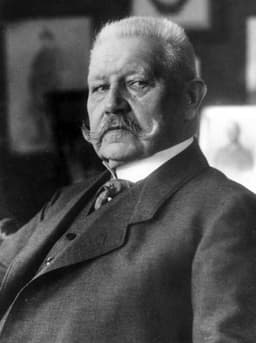
Paul von Hindenburg
General · Modern
62.2Total
Basic Information
Born
1953
1847
Died
—
1934
Era
Modern
Modern
Nationality
Botswana
Germany
Occupation
General
General
Civilization
Western
Western
Score Comparison
Military (10%)
53.8
65.0
Political (20%)
72.0
43.7
Influence (20%)
58.0
82.0
Legacy (20%)
47.5
55.0
Leadership (15%)
80.0
64.0
Strategy (15%)
57.0
52.5
TOTAL
60.3
62.2
Ian Khama — Complete Timeline
2008 AD
Became President of BotswanaPolitical Action◆ Major
Ian Khama succeeded Festus Mogae as President of Botswana. He continued the country's tradition of stable, democratic governance and economic growth, but his leadership style was noted for being more authoritarian and centralizing than his predecessors.
PresidencySuccessionDemocracy
Impact: national
2009 AD
Implemented Anti-Poaching PoliciesPolitical Action◆ Major
Khama, a known conservationist, strengthened anti-poaching laws and deployed the Botswana Defence Force to protect wildlife. His 'shoot-to-kill' policy against poachers reduced elephant poaching but drew criticism from human rights groups.
ConservationAnti-PoachingWildlife
Impact: regionalconstructive
2012 AD
Banned Opposition Politicians from Entering Certain AreasPolitical Action
Khama's government banned opposition leaders from entering some rural areas, citing security concerns. This move was seen as an attempt to suppress political dissent and was criticized by civil society groups as undemocratic.
Political RepressionOppositionDemocracy
Impact: nationaldestructive
2018 AD
Stepped Down as PresidentPolitical Action◆ Major
Khama voluntarily stepped down after serving two terms, respecting Botswana's constitutional term limits. He handed power to his vice president, Mokgweetsi Masisi, but later became a vocal critic of Masisi's government, leading to a political rift.
Term LimitsSuccessionDemocracy
Impact: national
Paul von Hindenburg — Complete Timeline
1914 AD
Battle of TannenbergWar
Hindenburg, with Ludendorff as chief of staff, commanded the German Eighth Army to a decisive victory over the Russian Second Army in East Prussia. The battle halted the Russian invasion and made Hindenburg a national hero.
World War IEastern FrontVictory
Impact: regional
1916 AD
Appointed Chief of the General StaffPolitical Action◆ Major
Hindenburg was appointed Chief of the General Staff of the German Army, replacing Erich von Falkenhayn. He and Ludendorff effectively became military dictators of Germany, directing all aspects of the war effort.
World War ICommandPower
Impact: national
1925 AD
Elected President of GermanyPolitical Action◆ Major
Hindenburg was elected as the second President of the Weimar Republic, defeating Wilhelm Marx in a runoff. His presidency marked a shift toward conservative and authoritarian rule, undermining the republic's democratic foundations.
Weimar RepublicElectionConservatism
Impact: national
1933 AD
Appointed Adolf Hitler as ChancellorPolitical Action
Hindenburg appointed Adolf Hitler as Chancellor of Germany, heading a coalition cabinet. This decision, made under political pressure and intrigue, enabled Hitler to consolidate power and ultimately dismantle the Weimar Republic.
Nazi RiseWeimar RepublicPower Transfer
Impact: globaldestructive
Reichstag Fire DecreePolitical Action◆ Major
Hindenburg signed the Reichstag Fire Decree, suspending civil liberties and allowing the Nazi regime to arrest political opponents. This decree was a key step in establishing the Nazi dictatorship.
Nazi DictatorshipCivil LibertiesRepression
Impact: nationaldestructive
Expert Analysis
Origins
Ian Khama was born on February 27, 1953, in Chertsey, England, to Seretse Khama, the first president of Botswana, and Ruth Williams Khama. He grew up in Botswana and attended the Royal Military Academy Sandhurst, graduating in 1976. His father's legacy of democratic governance deeply influenced him. Paul von Hindenburg was born on October 2, 1847, in Posen, Prussia (now Poznań, Poland), into an aristocratic Junker family. He attended the Prussian Cadet Corps and was commissioned into the Prussian Army in 1866, participating in the Austro-Prussian and Franco-Prussian Wars.
Rise to Power
Khama rose through the ranks of the Botswana Defence Force, becoming its commander in 1989. He entered politics in 1998 as vice president under Festus Mogae, succeeding him as president in 2008. His military background and conservation advocacy defined his leadership. Hindenburg gained fame during World War I after the Battle of Tannenberg (August 26-30, 1914), where he crushed the Russian Second Army. He became Chief of the General Staff in 1916 and was elected President of Germany in 1925, despite his monarchist leanings.
Leadership & Governance
Khama governed Botswana with a focus on stability, economic growth, and conservation. He maintained Botswana's tradition of democracy, stepping down after two terms in 2018. His anti-poaching policies, including a 'shoot-to-kill' approach, reduced elephant poaching by 40% between 2013 and 2018. However, he also banned opposition politicians from certain areas, drawing criticism. Hindenburg's presidency was marked by conservative policies and the erosion of democracy. He appointed Adolf Hitler as Chancellor on January 30, 1933, and signed the Reichstag Fire Decree on February 28, 1933, suspending civil liberties. His governance score of 64.0 reflects his military mindset but poor political judgment.
Triumph & Tragedy
Khama's greatest success was preserving Botswana's democracy and economic growth; GDP per capita grew from $5,700 in 2008 to $7,500 in 2018. His conservation efforts saved elephants from poaching. His tragedy: suppressing political opposition, scoring 53.8 in military, but his political score of 72.0 shows his governance strengths. Hindenburg's triumph was the victory at Tannenberg, which made him a national hero. His tragedy: enabling Hitler's rise, leading to World War II and the Holocaust. His military score of 65.0 and influence of 82.0 highlight his impact, but his political score of 43.7 reflects his flawed decisions.
Character & Destiny
Khama was disciplined, principled, and conservation-minded, shaped by his military training and father's legacy. His decision to step down voluntarily preserved Botswana's democracy. Hindenburg was conservative, loyal to the Prussian elite, and politically naive. His desire for order led him to appoint Hitler, underestimating the Nazis. Historians assess Hindenburg as a tragic figure whose character flaws enabled catastrophe.
Legacy
Khama's legacy is a stable, democratic Botswana with strong institutions and conservation success. His anti-poaching model has been studied globally. Hindenburg's legacy is tainted by his role in Hitler's appointment; his name became synonymous with the failure of the Weimar Republic. He scored 55.0 in legacy versus Khama's 47.5, but the nature of impact differs: Hindenburg's actions led to global devastation, while Khama's impact is localized.
Conclusion
While Hindenburg's total score (62.2) exceeds Khama's (60.3), his impact was catastrophic. Khama's leadership preserved democracy and nature, contributing positively. Hindenburg's decisions unleashed horrors. In terms of ethical leadership, Khama had greater positive impact. However, Hindenburg's historical influence is larger but destructive. Thus, Khama's legacy is more admirable, though Hindenburg's mark on history is deeper.
Rankings
🥇
Paul von HindenburgLeader
Mil: 65.0Pol: 43.7Inf: 82.0
62.2
🥈
Ian Khama
Mil: 53.8Pol: 72.0Inf: 58.0
60.3
+1.9 behind
How This Comparison Works
Algorithm
Each figure is scored on 6 dimensions (0—100 scale) based on structured historical data: Military (10%), Political (20%), Influence (20%), Legacy (20%), Leadership (15%), Strategy (15%). The weighted total produces the final ranking.
Data Sources
Scores are computed from structured sub-indicators in the database. Scale factors adjust for era (Ancient ×0.85, Modern ×1.0) and civilization size (Eastern ×1.05, Other ×0.80) to account for differences in population and military scale.
Maximum 3 Figures
Comparisons are limited to 2—3 figures to ensure readability and statistical meaningfulness.
Error Margins
±5 points per dimension — Sub-scores are derived from historical records with inherent uncertainty. Two figures within 5 points on a dimension should be considered roughly equivalent in that area.
Total Score Accuracy
±3 points overall — The weighted combination of 6 dimensions produces a total score with approximately ±3 points of uncertainty. Differences of less than 3 points are not statistically significant— the figures are effectively tied.
Known Limitations
- Historical records are incomplete and uneven across civilizations
- Figures from oral-tradition societies may be underrepresented
- Occupation labels can misclassify multi-role figures
- Scores measure capability and impact, not moral character
- Quantitative scoring is a comparison tool, not absolute truth
Capability Radar
Military (10%) — Battles & Warfare
Battles
51
75
Win Rate
51
70
Expansion
55
40
Political (20%) — Governance & Reform
Reform
60
20
Diplomacy
55
40
Economy
60
30
Influence (20%) — Cultural & Global Reach
Cultural
40
40
Global
40
70
Legacy (20%) — Historical Impact
Historical
45
75
Longevity
30
60
Leadership (15%) — Power & Stability
Tenure
65
65
Stability
70
10
Strategy (15%) — Tactics & Innovation
Strategy
61
65
Tactics
65
60
Reform
68
30
Similar Comparisons
Comments & Discussion
No comments yet. Be the first to share your thoughts!