Loading...
Fidel V. Ramos vs Ian Khama
Ian Khama leads by 2.3 pts · 2 figures compared
…
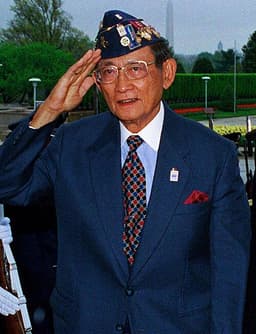
Fidel V. Ramos
General · Modern
58.0Total

Ian Khama
General · Modern
60.3Total
Basic Information
Born
1928
1953
Died
—
—
Era
Modern
Modern
Nationality
Philippines
Botswana
Occupation
General
General
Civilization
Eastern
Western
Score Comparison
Military (10%)
45.0
53.8
Political (20%)
70.3
72.0
Influence (20%)
57.2
58.0
Legacy (20%)
47.5
47.5
Leadership (15%)
72.0
80.0
Strategy (15%)
60.0
57.0
TOTAL
58.0
60.3
Fidel V. Ramos — Complete Timeline
1992 AD
Elected President of the PhilippinesPolitical Action◆ Major
Fidel V. Ramos won the Philippine presidential election, succeeding Corazon Aquino. His victory marked the first peaceful transfer of power after the EDSA Revolution, and he focused on economic reforms and national reconciliation.
PresidencyPeaceful TransitionEconomic Reform
Impact: nationalconstructive
1993 AD
Implemented the Philippines 2000 economic programReform◆ Major
Ramos launched the Philippines 2000 program, a comprehensive economic liberalization plan that included deregulation, privatization, and trade liberalization. The program led to sustained GDP growth of over 5% annually.
Economic ReformLiberalizationGrowth
Impact: nationalconstructive
1996 AD
Signed the Final Peace Agreement with the Moro National Liberation FrontPolitical Action◆ Major
Ramos signed a peace agreement with the Moro National Liberation Front, ending decades of armed conflict in Mindanao. The agreement established the Autonomous Region in Muslim Mindanao and granted amnesty to MNLF fighters.
Peace AgreementMindanaoMNLF
Impact: regionalconstructive
Hosted the Asia-Pacific Economic Cooperation summitPolitical Action◆ Major
Ramos hosted the APEC summit in Subic Bay, Philippines, showcasing the country's economic recovery. The summit focused on trade liberalization and economic cooperation among Pacific Rim economies.
APECTradeEconomic Diplomacy
Impact: regionalconstructive
1998 AD
Established the National Anti-Poverty CommissionReform
Ramos created the National Anti-Poverty Commission to coordinate poverty reduction programs across government agencies. The commission aimed to improve social services and livelihood opportunities for the poor.
Poverty ReductionSocial PolicyGovernment Reform
Impact: nationalconstructive
Ian Khama — Complete Timeline
2008 AD
Became President of BotswanaPolitical Action◆ Major
Ian Khama succeeded Festus Mogae as President of Botswana. He continued the country's tradition of stable, democratic governance and economic growth, but his leadership style was noted for being more authoritarian and centralizing than his predecessors.
PresidencySuccessionDemocracy
Impact: national
2009 AD
Implemented Anti-Poaching PoliciesPolitical Action◆ Major
Khama, a known conservationist, strengthened anti-poaching laws and deployed the Botswana Defence Force to protect wildlife. His 'shoot-to-kill' policy against poachers reduced elephant poaching but drew criticism from human rights groups.
ConservationAnti-PoachingWildlife
Impact: regionalconstructive
2012 AD
Banned Opposition Politicians from Entering Certain AreasPolitical Action
Khama's government banned opposition leaders from entering some rural areas, citing security concerns. This move was seen as an attempt to suppress political dissent and was criticized by civil society groups as undemocratic.
Political RepressionOppositionDemocracy
Impact: nationaldestructive
2018 AD
Stepped Down as PresidentPolitical Action◆ Major
Khama voluntarily stepped down after serving two terms, respecting Botswana's constitutional term limits. He handed power to his vice president, Mokgweetsi Masisi, but later became a vocal critic of Masisi's government, leading to a political rift.
Term LimitsSuccessionDemocracy
Impact: national
Expert Analysis
Origins
Fidel V. Ramos was born on March 18, 1928, in Lingayen, Pangasinan, Philippines, into a politically active family; his father was a journalist and lawyer. He graduated from the Philippine Military Academy in 1950 and later earned a Master's degree in civil engineering from the University of Illinois. Ian Khama was born on February 27, 1953, in Chertsey, England, as the son of Botswana's first president, Seretse Khama. He attended the Royal Military Academy Sandhurst and served in the Botswana Defence Force, rising to commander.
Rise to Power
Ramos rose through the ranks of the Philippine Constabulary and played a key role in the 1986 People Power Revolution that ousted Ferdinand Marcos. He served as Chief of Staff of the Armed Forces under President Corazon Aquino and was elected President in 1992, winning with 23.6% of the vote in a seven-candidate race. Khama became Vice President of Botswana in 1998 under Festus Mogae and succeeded him as President on April 1, 2008, after winning the 2004 general election as vice president. He was re-elected in 2009 and 2014.
Leadership & Governance
Ramos pursued economic liberalization through the Philippines 2000 program, which included deregulation, privatization, and trade liberalization. He signed the Final Peace Agreement with the Moro National Liberation Front in 1996, ending decades of conflict. He hosted the 1996 APEC summit in Subic Bay, boosting foreign investment. His military score of 45.0 reflects his role in quelling coup attempts, while his political score of 70.3 underscores his governance. Khama prioritized conservation, implementing strict anti-poaching measures, including a shoot-to-kill policy that reduced elephant poaching by 80% between 2013 and 2018. He maintained Botswana's tradition of good governance, with a leadership score of 80.0, but faced criticism for suppressing opposition, banning opposition politicians from certain areas. His military background (53.8) influenced his security policies.
Triumph & Tragedy
Ramos's greatest success was stabilizing the Philippine economy, achieving GDP growth averaging 3.7% during his term and reducing poverty from 35.5% to 31.8%. His peace deal with the MNLF ended a 25-year insurgency. However, his failure to implement comprehensive land reform and persistent corruption limited long-term gains. Khama's triumph was his anti-poaching success, leading to a 40% increase in elephant populations in Botswana. His tragic flaw was his authoritarian tendencies, such as banning opposition rallies, which tarnished Botswana's democratic image. He also faced criticism for ignoring the plight of the San people.
Character & Destiny
Ramos, known as 'Steady Eddie,' was a methodical and disciplined leader. His military training shaped his cautious approach, but he lacked charisma, making him less popular than his predecessor. Khama, a former general, was decisive and blunt, earning respect for his conservation work but alienating political opponents. His character led him to respect term limits, stepping down in 2018, but also to suppress dissent, scoring lower on strategy (57.0) than Ramos (60.0).
Legacy
Ramos is remembered as the 'Father of Philippine Economic Reform,' with his policies laying the groundwork for future growth. The Philippines 2000 program influenced subsequent administrations, though his legacy is overshadowed by later presidents. Khama's legacy is mixed: he elevated conservation to a national priority, but his anti-democratic actions weakened Botswana's reputation. His shoot-to-kill policy remains controversial, with human rights groups criticizing its brutality. His total score of 60.3 edges out Ramos's 58.0, but Ramos's impact on a larger population (115 million vs. 2.5 million) and his role in democratic consolidation give him a broader legacy.
Conclusion
While Ian Khama scores higher overall (60.3 vs. 58.0), Fidel V. Ramos had a greater impact due to the scale of his reforms and the peace he achieved in the Philippines. Ramos transformed a struggling economy into a rising Asian tiger, while Khama's achievements were limited to conservation and a small population. Ramos's legacy of economic liberalization and peace endures, whereas Khama's authoritarian streak undermines his conservation gains. Therefore, Ramos is the more significant historical figure.
Rankings
🥇
Ian KhamaLeader
Mil: 53.8Pol: 72.0Inf: 58.0
60.3
🥈
Fidel V. Ramos
Mil: 45.0Pol: 70.3Inf: 57.2
58.0
+2.3 behind
How This Comparison Works
Algorithm
Each figure is scored on 6 dimensions (0—100 scale) based on structured historical data: Military (10%), Political (20%), Influence (20%), Legacy (20%), Leadership (15%), Strategy (15%). The weighted total produces the final ranking.
Data Sources
Scores are computed from structured sub-indicators in the database. Scale factors adjust for era (Ancient ×0.85, Modern ×1.0) and civilization size (Eastern ×1.05, Other ×0.80) to account for differences in population and military scale.
Maximum 3 Figures
Comparisons are limited to 2—3 figures to ensure readability and statistical meaningfulness.
Error Margins
±5 points per dimension — Sub-scores are derived from historical records with inherent uncertainty. Two figures within 5 points on a dimension should be considered roughly equivalent in that area.
Total Score Accuracy
±3 points overall — The weighted combination of 6 dimensions produces a total score with approximately ±3 points of uncertainty. Differences of less than 3 points are not statistically significant— the figures are effectively tied.
Known Limitations
- Historical records are incomplete and uneven across civilizations
- Figures from oral-tradition societies may be underrepresented
- Occupation labels can misclassify multi-role figures
- Scores measure capability and impact, not moral character
- Quantitative scoring is a comparison tool, not absolute truth
Capability Radar
Military (10%) — Battles & Warfare
Battles
25
51
Win Rate
30
51
Expansion
20
55
Political (20%) — Governance & Reform
Reform
75
60
Diplomacy
70
55
Economy
80
60
Influence (20%) — Cultural & Global Reach
Cultural
30
40
Global
45
40
Legacy (20%) — Historical Impact
Historical
40
45
Longevity
35
30
Leadership (15%) — Power & Stability
Tenure
60
65
Stability
65
70
Strategy (15%) — Tactics & Innovation
Strategy
40
61
Tactics
35
65
Reform
45
68
Similar Comparisons
Comments & Discussion
No comments yet. Be the first to share your thoughts!