Loading...
Juan Vicente Gomez vs Paul von Hindenburg
Paul von Hindenburg leads by 9.5 pts · 2 figures compared
…
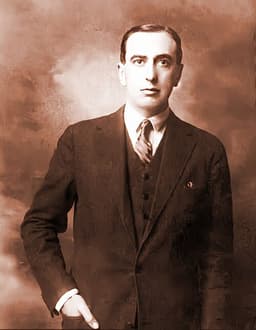
Juan Vicente Gomez
General · Modern
52.7Total
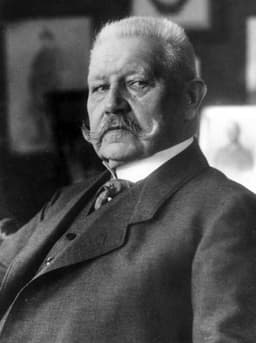
Paul von Hindenburg
General · Modern
62.2Total
Basic Information
Born
1857
1847
Died
1935
1934
Era
Modern
Modern
Nationality
Venezuela
Germany
Occupation
General
General
Civilization
Western
Western
Score Comparison
Military (10%)
38.3
65.0
Political (20%)
48.0
43.7
Influence (20%)
54.9
82.0
Legacy (20%)
47.5
55.0
Leadership (15%)
77.2
64.0
Strategy (15%)
45.0
52.5
TOTAL
52.7
62.2
Juan Vicente Gomez — Complete Timeline
1908 AD
Coup of 1908Political Action
Gomez seized power in a coup while President Cipriano Castro was abroad for medical treatment. Gomez assumed the presidency and began a 27-year dictatorship, consolidating control over Venezuela's military and political institutions.
CoupDictatorshipVenezuela
Impact: nationaldestructive
1914 AD
Oil nationalization and concession systemReform◆ Major
Gomez granted extensive oil concessions to foreign companies, particularly Royal Dutch Shell and Standard Oil, under favorable terms. This established Venezuela as a major oil exporter but created a rentier economy dependent on foreign capital.
OilEconomyForeign Investment
Impact: national
1919 AD
Suppression of the 1919 student protestsPolitical Action
Gomez violently suppressed student-led protests against his regime in Caracas. Hundreds were arrested, and the government closed universities, using secret police and military force to eliminate dissent.
RepressionProtestsEducation
Impact: nationaldestructive
1935 AD
Death of Juan Vicente GomezOther
Gomez died in office on December 17, 1935, ending his 27-year dictatorship. His death triggered a power vacuum and led to a transition toward democratic governance under Eleazar L
DeathEnd of DictatorshipTransition
Impact: national
Paul von Hindenburg — Complete Timeline
1914 AD
Battle of TannenbergWar
Hindenburg, with Ludendorff as chief of staff, commanded the German Eighth Army to a decisive victory over the Russian Second Army in East Prussia. The battle halted the Russian invasion and made Hindenburg a national hero.
World War IEastern FrontVictory
Impact: regional
1916 AD
Appointed Chief of the General StaffPolitical Action◆ Major
Hindenburg was appointed Chief of the General Staff of the German Army, replacing Erich von Falkenhayn. He and Ludendorff effectively became military dictators of Germany, directing all aspects of the war effort.
World War ICommandPower
Impact: national
1925 AD
Elected President of GermanyPolitical Action◆ Major
Hindenburg was elected as the second President of the Weimar Republic, defeating Wilhelm Marx in a runoff. His presidency marked a shift toward conservative and authoritarian rule, undermining the republic's democratic foundations.
Weimar RepublicElectionConservatism
Impact: national
1933 AD
Appointed Adolf Hitler as ChancellorPolitical Action
Hindenburg appointed Adolf Hitler as Chancellor of Germany, heading a coalition cabinet. This decision, made under political pressure and intrigue, enabled Hitler to consolidate power and ultimately dismantle the Weimar Republic.
Nazi RiseWeimar RepublicPower Transfer
Impact: globaldestructive
Reichstag Fire DecreePolitical Action◆ Major
Hindenburg signed the Reichstag Fire Decree, suspending civil liberties and allowing the Nazi regime to arrest political opponents. This decree was a key step in establishing the Nazi dictatorship.
Nazi DictatorshipCivil LibertiesRepression
Impact: nationaldestructive
Expert Analysis
Origins
Juan Vicente Gomez was born on July 24, 1857, in La Mulera, Táchira, Venezuela, into a modest farming family. He had little formal education, learning to read and write only as an adult. His early life was spent managing his family's cattle ranch, which taught him practical skills in administration and loyalty. In contrast, Paul von Hindenburg was born on October 2, 1847, in Posen, Prussia (now Poland), into an aristocratic Junker family. He attended military academies and was commissioned as a lieutenant in the Prussian Army in 1866. Hindenburg's upbringing was steeped in military tradition and conservative values, preparing him for a career of service to the Prussian monarchy.
Rise to Power
Gomez rose to power through a coup in 1908. While President Cipriano Castro was abroad for medical treatment, Gomez, then Vice President, seized control and assumed the presidency. He consolidated power by eliminating rivals and creating a loyal network of family members and cronies. His rise was marked by political maneuvering rather than military conquest, reflected in his low military score of 38.3. Hindenburg's rise came through military success. After retiring in 1911, he was recalled in 1914 at age 66 to command German forces in the east. His victory at the Battle of Tannenberg in August 1914 made him a national hero. He was appointed Chief of the General Staff in 1916, and after the war, he was elected President of the Weimar Republic in 1925, defeating Wilhelm Marx. His political score of 43.7 indicates a less adept political operator than Gomez's 48.0.
Leadership & Governance
Gomez ruled Venezuela as a personal dictatorship from 1908 to 1935. He modernized the country's infrastructure using oil revenue but suppressed all opposition. His governance was based on a patronage system, with family members in key positions. He granted extensive oil concessions to foreign companies like Royal Dutch Shell and Standard Oil, which enriched him personally and created a rentier state. Hindenburg, as president, governed within the Weimar constitution but was increasingly authoritarian. He used Article 48 emergency decrees to bypass parliament. In 1933, he appointed Adolf Hitler as Chancellor and signed the Reichstag Fire Decree, which suspended civil liberties. Hindenburg's leadership score of 64.0 is lower than Gomez's 77.2, reflecting his inability to prevent the rise of Nazism.
Triumph & Tragedy
Gomez's greatest success was the transformation of Venezuela into a major oil exporter, which brought wealth and modernization. However, his regime was marked by severe repression: the 1919 student protests were violently crushed, with hundreds arrested and universities closed. His death in 1935 triggered a power vacuum, and his legacy is that of a ruthless dictator who enriched himself at the nation's expense. Hindenburg's triumph was his military victory at Tannenberg, which saved East Prussia and made him a symbol of German resistance. His tragedy was his political misjudgment: by appointing Hitler and signing the Reichstag Fire Decree, he enabled the Nazi seizure of power. His influence score of 82.0 reflects the enormous impact of his decisions, even if negative.
Character & Destiny
Gomez was pragmatic, cunning, and ruthless. He avoided direct confrontation, preferring to manipulate and co-opt. His character shaped Venezuela's destiny as an oil-dependent autocracy. Hindenburg was honorable but politically naive, bound by loyalty to the army and monarchy. His destiny was to be a figurehead whose actions led to the destruction of the Weimar Republic. Historians often view him as a tragic figure who lacked the foresight to counter Hitler's ambitions.
Legacy
Gomez's legacy is mixed: he modernized Venezuela but entrenched a system of corruption and authoritarianism. His oil concessions set the pattern for decades of dependency. Hindenburg's legacy is dominated by his role in Hitler's rise. The Reichstag Fire Decree and his appointment of Hitler are seen as pivotal failures. His name is often invoked in discussions of democratic backsliding. In terms of total score, Hindenburg leads with 62.2 against Gomez's 52.7, but his legacy is more controversial.
Conclusion
While Hindenburg had a higher total score (62.2 vs. 52.7), his impact was catastrophic for Germany and the world. Gomez's longer rule (27 years) and direct control over Venezuela's oil wealth had a profound but more localized effect. Hindenburg's decisions led to World War II and the Holocaust, making his influence more significant in global history. Therefore, Paul von Hindenburg had greater historical impact, albeit a negative one.
Rankings
🥇
Paul von HindenburgLeader
Mil: 65.0Pol: 43.7Inf: 82.0
62.2
🥈
Juan Vicente Gomez
Mil: 38.3Pol: 48.0Inf: 54.9
52.7
+9.5 behind
How This Comparison Works
Algorithm
Each figure is scored on 6 dimensions (0—100 scale) based on structured historical data: Military (10%), Political (20%), Influence (20%), Legacy (20%), Leadership (15%), Strategy (15%). The weighted total produces the final ranking.
Data Sources
Scores are computed from structured sub-indicators in the database. Scale factors adjust for era (Ancient ×0.85, Modern ×1.0) and civilization size (Eastern ×1.05, Other ×0.80) to account for differences in population and military scale.
Maximum 3 Figures
Comparisons are limited to 2—3 figures to ensure readability and statistical meaningfulness.
Error Margins
±5 points per dimension — Sub-scores are derived from historical records with inherent uncertainty. Two figures within 5 points on a dimension should be considered roughly equivalent in that area.
Total Score Accuracy
±3 points overall — The weighted combination of 6 dimensions produces a total score with approximately ±3 points of uncertainty. Differences of less than 3 points are not statistically significant— the figures are effectively tied.
Known Limitations
- Historical records are incomplete and uneven across civilizations
- Figures from oral-tradition societies may be underrepresented
- Occupation labels can misclassify multi-role figures
- Scores measure capability and impact, not moral character
- Quantitative scoring is a comparison tool, not absolute truth
Capability Radar
Military (10%) — Battles & Warfare
Battles
25
75
Win Rate
30
70
Expansion
35
40
Political (20%) — Governance & Reform
Reform
30
20
Diplomacy
40
40
Economy
35
30
Influence (20%) — Cultural & Global Reach
Cultural
30
40
Global
30
70
Legacy (20%) — Historical Impact
Historical
45
75
Longevity
40
60
Leadership (15%) — Power & Stability
Tenure
85
65
Stability
50
10
Strategy (15%) — Tactics & Innovation
Strategy
25
65
Tactics
20
60
Reform
40
30
Similar Comparisons
Comments & Discussion
No comments yet. Be the first to share your thoughts!