Loading...
Hyder Ali vs Napoleon Bonaparte
Napoleon Bonaparte leads by 1.5 pts · 2 figures compared
…
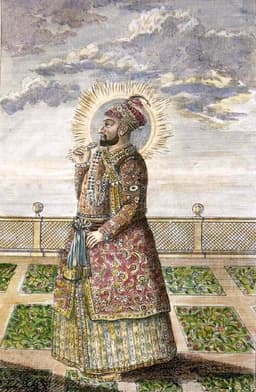
Hyder Ali
General · Modern
69.4Total

Napoleon Bonaparte
General · Modern
70.9Total
Basic Information
Born
1720
1769
Died
1782
1821
Era
Modern
Modern
Nationality
India
France
Occupation
General
General
Civilization
Indian
Western
Score Comparison
Military (10%)
80.0
94.0
Political (20%)
65.7
72.0
Influence (20%)
82.0
40.0
Legacy (20%)
56.0
80.0
Leadership (15%)
68.0
78.0
Strategy (15%)
68.0
90.0
TOTAL
69.4
70.9
Hyder Ali — Complete Timeline
1757 AD
Battle of PlasseyWar◆ Major
Hyder Ali, as a commander under the Wodeyar dynasty, participated in the Battle of Plassey indirectly by supporting the French against the British. However, his major role came later. This battle marked the beginning of British dominance in Bengal, which Hyder Ali would later challenge in the Carnatic Wars.
Carnatic WarsBritish East India CompanyMysore
Impact: regional
1761 AD
Capture of the throne of MysorePolitical Action◆ Major
Hyder Ali, a military commander, overthrew the Wodeyar ruler Krishnaraja Wodeyar II and established himself as the de facto ruler of Mysore. He imprisoned the maharaja and assumed full control, transforming Mysore into a powerful state through military reforms and expansion.
CoupMysore KingdomWodeyar Dynasty
Impact: regionaldestructive
1767 AD
First Anglo-Mysore WarWar◆ Major
Hyder Ali led Mysore against the British East India Company in the First Anglo-Mysore War. He formed alliances with the Nizam of Hyderabad and the Marathas. The war ended with the Treaty of Madras in 1769, which restored conquered territories and established a defensive alliance between Mysore and the British.
Anglo-Mysore WarsTreaty of MadrasBritish India
Impact: regional
1780 AD
Second Anglo-Mysore WarWar◆ Major
Hyder Ali launched the Second Anglo-Mysore War, attacking British territories in the Carnatic. He captured Arcot and defeated British forces at Pollilur. The war continued after his death in 1782, with his son Tipu Sultan taking command. The conflict ended with the Treaty of Mangalore in 1784.
Anglo-Mysore WarsBattle of PollilurTipu Sultan
Impact: regional
Napoleon Bonaparte — Complete Timeline
1799 AD
Coup of 18 BrumaireOther◆ Major
Napoleon Bonaparte, with support from his brother Lucien and key political figures, overthrew the Directory in a bloodless coup. He established the Consulate with himself as First Consul, effectively becoming the ruler of France. This event ended the French Revolution's most unstable period.
French RevolutionCoupRise to Power
Impact: regional
1804 AD
Promulgation of the Napoleonic CodeOther◆ Major
Napoleon enacted the Civil Code of the French, known as the Napoleonic Code, a comprehensive set of laws that replaced the fragmented feudal legal systems. The code established legal equality, protected property rights, and secularized law. It became the basis for legal systems in many European and world countries.
Legal ReformNapoleonic CodeCivil Law
Impact: globalconstructive
1805 AD
Battle of AusterlitzWar◆ Major
Napoleon's Grande Arm
Napoleonic WarsBattleDecisive Victory
Impact: global
1812 AD
Invasion of RussiaWar◆ Major
Napoleon led the Grande Arm
Napoleonic WarsInvasionDisaster
Impact: globaldestructive
1815 AD
Battle of WaterlooWar◆ Major
Napoleon's French army was defeated by the combined forces of the Duke of Wellington's Anglo-Allied army and Gebhard Leberecht von Bl
Napoleonic WarsBattleFinal Defeat
Impact: globaldestructive
Expert Analysis
hyder-ali-vs-napoleon-bonaparte
### The Corsican and the Sultan: Two Paths to Power in an Age of Empire
In December 1780, as the snows of a bitter European winter gathered over the French Republic, a young artillery officer named Napoleon Bonaparte was still a decade away from his first command. On the other side of the world, in the sweltering heat of southern India, a different sort of storm was breaking. Sultan Hyder Ali of Mysore, a man who had risen from obscurity to forge a kingdom, was closing his iron grip on the British-held city of Arcot. His cavalry, swift as the monsoon winds, had cut the Company’s supply lines. For a brief, electric moment, the British Empire in India trembled. Yet within two years, Hyder Ali would be dead, his body ravaged by cancer, his unfinished war passed to his son. Napoleon, born a generation later in 1769, would live to conquer Europe, rewrite its laws, and die a prisoner on a remote Atlantic island. Why did one man’s flame burn so brightly and so briefly, while the other’s, though ultimately extinguished, left an indelible mark on the world? The answer lies not only in their genius but in the very different stages on which they performed.
### Origins: From Corsica and the Deccan
Napoleon Bonaparte was born into the minor Corsican nobility on August 15, 1769, just months after France had annexed the island. His family was not wealthy, but they were connected, and his father’s influence secured him a place at a French military academy. He was an outsider—a Corsican in a French world, mocked for his accent and slight stature. This bred in him a fierce ambition and a calculating, almost clinical detachment. He learned to read the human chessboard of power in the most sophisticated court in Europe. His era was a crucible of revolution, where old hierarchies were being shattered, and a man of talent could rise faster than at any time since Rome.
Hyder Ali’s origins were, if anything, even more modest. Born in 1720 in the arid plains of what is now Karnataka, he was the son of a *naik*, a local military commander in the service of the Wodeyar kings of Mysore. He received no formal education; he could barely read or write. What he possessed was an innate, almost animal cunning and a relentless will. He learned warfare not from textbooks but from the saddle, fighting petty chieftains and watching the slow, methodical advance of the British East India Company—a corporate empire that was as ruthless as any king. While Napoleon was born into the storm of revolution, Hyder Ali was born into the slow, grinding machine of colonial encroachment. One man sought to remake a world; the other sought to survive it.
### Rise to Power: The Artilleryman and the Usurper
Napoleon’s rise was meteoric, a story of pure genius seizing the moment. At the age of 24, he was a mere captain. By 26, he was a general, having driven the British out of Toulon with a brilliant use of artillery. In 1796, at 27, he was given command of the Army of Italy. He did not simply win battles; he transformed a ragged, starving army into a conquering force, paying his soldiers with the loot of Milan and Mantua. His path was cleared by the chaos of the French Revolution, which had decimated the old officer class. He did not seize power through birth or conspiracy; he seized it through victory after victory, culminating in his coup of 18 Brumaire in 1799. He became First Consul, then Emperor. His was a path of pure acceleration.
Hyder Ali’s path was slower, more brutal, and more political. He was a master of the *coup d’état* within a decaying system. In 1761, after years as a brilliant commander for the Wodeyar king, he simply overthrew his master, Krishnaraja Wodeyar II, and installed himself as the de facto ruler. He did not claim the throne; he was too shrewd for that. He ruled through a puppet, consolidating power while the royal family remained a symbol. His rise was not a revolution but a seizure. He built his army not from a citizenry inflamed by ideology but from mercenaries, French-trained soldiers, and local levies. Where Napoleon had the momentum of an entire nation behind him, Hyder Ali had only his own will and the fragile alliances of Indian princes.
### Leadership & Governance: Code and Cannon
As a ruler, Napoleon was a titan of organization. His Napoleonic Code, enacted in 1804, standardized French law, abolished feudal privileges, and enshrined principles of meritocracy and property rights. It was a legal revolution that spread across Europe. He built roads, founded banks, and centralized the state. As a general, he was unmatched in his era. His strategy was simple in concept, devastating in execution: fix the enemy with a feint, then smash his flank with a concentrated mass of artillery and cavalry. He won over sixty battles, from Austerlitz in 1805, his masterpiece, to Jena and Wagram. He was a political genius who understood that victory was a means to a political end.
Hyder Ali was a different kind of leader. He had no code, no grand legal reform. His governance was practical, even brutal. He taxed heavily, but he also protected trade and built a formidable war economy. His military genius was adaptive and asymmetrical. He understood the British weakness: their slow-moving supply lines and their reliance on European-style linear warfare. He fought a war of maneuver, using fast-moving cavalry to raid deep into British territory, burning crops and cutting lines. At the Battle of Pollilur in 1780, he used rockets—primitive but terrifying—and his son Tipu’s rocket corps to shatter a British square. He was a master of the scorched-earth campaign. Yet he lacked Napoleon’s political vision. He fought to expel the British, but he never offered a compelling alternative to their rule. His was a war of resistance, not a war of transformation.
### Triumph & Tragedy
Napoleon’s greatest moment was Austerlitz, where he crushed the combined armies of Russia and Austria. His tragedy was the invasion of Russia in 1812. He marched 600,000 men into the vastness of the steppes, and only 100,000 returned. The disaster broke his aura of invincibility. He was exiled to Elba, returned for a Hundred Days, and was finally defeated at Waterloo in 1815. His end was a slow, dignified decline on Saint Helena, where he dictated his memoirs and died in 1821.
Hyder Ali’s triumph was the Second Anglo-Mysore War, which he launched in 1780. He captured Arcot and came within striking distance of Madras, the heart of British power in the Carnatic. His tragedy was his body. Stricken by a painful cancer, he died in December 1782, at the height of his success. His son, Tipu Sultan, inherited the war but lacked his father’s political caution. Tipu would fight brilliantly but ultimately lose everything, dying at Seringapatam in 1799. Hyder Ali’s tragedy was that he built a kingdom that could not survive his own death.
### Character & Destiny
Napoleon was a man of boundless ambition, cold intelligence, and a restless energy that could not be contained. He once said, “Power is my mistress.” He was a workaholic who slept only a few hours a night, a micromanager who demanded reports on everything. His flaw was his hubris—he believed he could conquer anything, even the Russian winter. His personality was a force of nature, but it was also a self-consuming fire.
Hyder Ali was more pragmatic, more patient. He was a master of deception, a man who could smile at an enemy while sharpening a dagger. He was cruel when necessary—he ordered the massacre of prisoners—but he was also a shrewd diplomat who sought alliances with the French and the Marathas. His flaw was his mortality. He did not have the time to build a lasting dynasty. His personality was that of a survivor, not a conqueror. He fought to preserve, not to dominate.
### Legacy: The Lawgiver and the Rebel
Napoleon’s legacy is monumental. The Napoleonic Code remains the basis of civil law in much of Europe and the world. He reshaped the map of Europe, created the modern nation-state, and spread the ideas of the French Revolution—meritocracy, secularism, legal equality—even as he betrayed its democratic ideals. He is remembered as a military genius, a tyrant, a reformer, and a legend.
Hyder Ali’s legacy is more localized but no less resonant. He is remembered in India as a fierce opponent of British colonialism, a precursor to the great rebellions of 1857. His military innovations—the use of rockets, the war of maneuver—influenced later Indian resistance. But he is also a tragic figure, a brilliant man who fought against an empire he could not stop. He is not a world-historical figure like Napoleon, but he is a symbol of resistance, of the courage to fight against overwhelming odds.
### Conclusion
Standing on the deck of the *Bellerophon* in 1815, the defeated Napoleon looked out at the gray Atlantic and told a British officer, “What a wonderful world this is. If I had not been born, Europe would have been a different place.” Hyder Ali, dying in his tent in 1782, likely had no such illusions. He knew that his world was already being remade by forces far larger than himself. The difference between them is not simply a matter of talent. It is the difference between a man who lived in the center of history and a man who lived on its periphery. Napoleon was the storm that broke over Europe. Hyder Ali was the rock that stood against the tide. One reshaped the world; the other was crushed by it. Yet both, in their own ways, remind us that history is not a march of inevitability. It is a clash of wills, a collision of ambition and circumstance. And sometimes, the quietest resistance is the most profound.
Rankings
🥇
Napoleon BonaparteLeader
Mil: 94.0Pol: 72.0Inf: 40.0
70.9
🥈
Hyder Ali
Mil: 80.0Pol: 65.7Inf: 82.0
69.4
+1.5 behind
How This Comparison Works
Algorithm
Each figure is scored on 6 dimensions (0—100 scale) based on structured historical data: Military (10%), Political (20%), Influence (20%), Legacy (20%), Leadership (15%), Strategy (15%). The weighted total produces the final ranking.
Data Sources
Scores are computed from structured sub-indicators in the database. Scale factors adjust for era (Ancient ×0.85, Modern ×1.0) and civilization size (Eastern ×1.05, Other ×0.80) to account for differences in population and military scale.
Maximum 3 Figures
Comparisons are limited to 2—3 figures to ensure readability and statistical meaningfulness.
Error Margins
±5 points per dimension — Sub-scores are derived from historical records with inherent uncertainty. Two figures within 5 points on a dimension should be considered roughly equivalent in that area.
Total Score Accuracy
±3 points overall — The weighted combination of 6 dimensions produces a total score with approximately ±3 points of uncertainty. Differences of less than 3 points are not statistically significant— the figures are effectively tied.
Known Limitations
- Historical records are incomplete and uneven across civilizations
- Figures from oral-tradition societies may be underrepresented
- Occupation labels can misclassify multi-role figures
- Scores measure capability and impact, not moral character
- Quantitative scoring is a comparison tool, not absolute truth
Capability Radar
Military (10%) — Battles & Warfare
Battles
78
95
Win Rate
72
90
Expansion
70
95
Political (20%) — Governance & Reform
Reform
70
95
Diplomacy
68
80
Economy
60
85
Influence (20%) — Cultural & Global Reach
Cultural
50
85
Global
50
90
Legacy (20%) — Historical Impact
Historical
55
95
Longevity
45
90
Leadership (15%) — Power & Stability
Tenure
65
85
Stability
55
70
Strategy (15%) — Tactics & Innovation
Strategy
80
95
Tactics
85
98
Reform
75
92
Similar Comparisons
Comments & Discussion
No comments yet. Be the first to share your thoughts!