Loading...
Huang Xing vs Lon Nol
Huang Xing leads by 16.0 pts · 2 figures compared
…
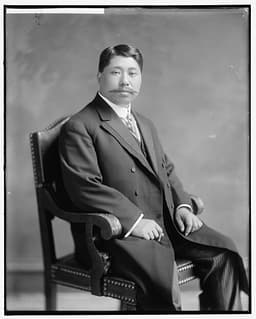
Huang Xing
General · Modern
57.5Total
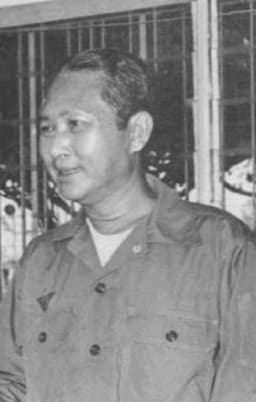
Lon Nol
General · Modern
41.5Total
Basic Information
Born
1874
1913
Died
1916
1985
Era
Modern
Modern
Nationality
China
Cambodia
Occupation
General
General
Civilization
Eastern
Eastern
Score Comparison
Military (10%)
46.7
25.9
Political (20%)
53.8
30.8
Influence (20%)
62.0
47.9
Legacy (20%)
56.0
38.3
Leadership (15%)
62.0
61.1
Strategy (15%)
60.0
35.7
TOTAL
57.5
41.5
Huang Xing — Complete Timeline
1905 AD
Co-founded the TongmenghuiPolitical Action◆ Major
Huang Xing co-founded the Tongmenghui (Revolutionary Alliance) in Tokyo with Sun Yat-sen. He became its military leader, organizing armed uprisings against the Qing dynasty.
TongmenghuiRevolutionMilitary
Impact: nationalconstructive
1911 AD
Led the Wuchang UprisingWar
Huang Xing led the Wuchang Uprising, which sparked the Xinhai Revolution. He commanded revolutionary forces against Qing troops, securing initial victories that led to the dynasty's collapse.
Xinhai RevolutionUprisingMilitary
Impact: nationalconstructive
1912 AD
Served as Minister of War in the RepublicPolitical Action◆ Major
Huang Xing served as Minister of War in the provisional government of the Republic of China. He worked to organize a national army and defend the republic against counter-revolutionary forces.
GovernmentMilitaryRepublic
Impact: nationalconstructive
1913 AD
Led the Second Revolution Against Yuan ShikaiWar◆ Major
Huang Xing led the Second Revolution, an armed uprising against President Yuan Shikai's authoritarian rule. The rebellion failed due to lack of coordination and military inferiority, forcing Huang into exile.
Second RevolutionYuan ShikaiExile
Impact: nationaltragic
1916 AD
Died in Exile in ShanghaiPolitical Action
Huang Xing died in Shanghai after returning from exile in Japan and the United States. His death marked the loss of a key military leader of the Chinese revolution, though his legacy endured.
DeathExileRevolution
Impact: nationaltragic
Lon Nol — Complete Timeline
1970 AD
Coup against Norodom SihanoukPolitical Action
Lon Nol led a military coup that overthrew King Sihanouk while he was abroad. He established the Khmer Republic, ending the monarchy and aligning Cambodia with the United States during the Vietnam War.
CoupKhmer RepublicUS alliance
Impact: nationaldestructive
Declaration of the Khmer RepublicPolitical Action◆ Major
Lon Nol officially proclaimed the Khmer Republic, abolishing the monarchy. He became president and implemented a pro-American, anti-communist regime, which led to civil war with the Khmer Rouge and North Vietnamese forces.
RepublicRegime changeCivil War
Impact: national
1975 AD
Fall of Phnom PenhWar
Lon Nol's government collapsed as Khmer Rouge forces captured Phnom Penh. He fled into exile in the United States, ending the Khmer Republic and leading to the establishment of Democratic Kampuchea under Pol Pot.
Khmer Rouge victoryExileRegime collapse
Impact: nationaltragic
Expert Analysis
Huang Xing vs Lon Nol
# The General Who Couldn't Finish the Revolution
In the spring of 1975, as Khmer Rouge forces tightened their noose around Phnom Penh, President Lon Nol boarded a helicopter and fled his collapsing republic. Half a world away and six decades earlier, another general lay dying in a Shanghai hospital, his body worn out by years of exile and failed insurrection. Huang Xing had watched his revolution succeed, then fracture, then slip through his fingers. Two Eastern generals, two failed republics, two men who tried to remake their nations and were consumed by the attempt. What separated them was not the quality of their ambition but the nature of the era they inhabited—and the kind of revolution they chose to lead.
Origins
Lon Nol was born in 1913 into the Cambodian elite, the son of a district chief who served the French colonial administration. He grew up in a world where power flowed from Paris through the palace in Phnom Penh, and where the monarchy was both sacred and subservient. He studied at the Lycée Chasseloup-Laubat in Saigon, then joined the French colonial bureaucracy, learning early that survival meant navigating between foreign masters and native traditions. When Cambodia gained independence in 1953, Lon Nol had already mastered the arts of administration, police work, and quiet ambition.
Huang Xing, born in 1874, came of age in a China that was collapsing. The Qing Dynasty, already brittle from foreign humiliation and internal rebellion, offered no future for a bright young man from Hunan province. He studied in Japan, where exiled Chinese intellectuals debated how to save their homeland. Unlike Lon Nol, who inherited a functioning state, Huang Xing inherited an empire in its death throes. His revolution was not about replacing a ruler but about inventing a nation.
Rise to Power
Lon Nol rose through the ranks of Sihanouk's Cambodia with the patience of a man who understood that power in a one-party state came from loyalty—and from knowing when to break it. He served as defense minister, then prime minister, all the while building his own networks within the military. In 1970, while Sihanouk was abroad in Moscow and Beijing, Lon Nol struck. The coup was bloodless, swift, and devastatingly effective. He abolished the monarchy, declared the Khmer Republic, and aligned Cambodia with the United States. His rise was a palace coup, not a popular revolution.
Huang Xing's path was the opposite. He co-founded the Tongmenghui in Tokyo in 1905 with Sun Yat-sen, becoming the revolutionary alliance's military commander. When the Wuchang Uprising erupted in 1911, Huang Xing rushed to the front lines, personally leading revolutionary forces against Qing troops. His rise was forged in gunfire, not in backroom deals. The Xinhai Revolution that toppled the dynasty was a messy, chaotic affair—and Huang Xing was its military heart.
Leadership & Governance
As president of the Khmer Republic, Lon Nol governed through a combination of American support, military repression, and personal charisma that bordered on the mystical. He claimed to possess supernatural powers, consulted astrologers, and believed he could command the elements. His political score of 74.3 reflects a man who understood how to seize power but not how to build institutions. The Khmer Republic was a military dictatorship dressed in republican clothes, and its army—despite massive American aid—was corrupt, undisciplined, and increasingly unable to hold territory against the Khmer Rouge.
Huang Xing, with a political score of 62.7, was less a politician than a revolutionary organizer. As Minister of War in the provisional government of 1912, he tried to build a national army from scratch, but the new republic was already fragmenting. He was a better rebel than administrator. His military score of 42.1 and strategy of 57.6 suggest a commander who led from the front but struggled with the grand chessboard of national politics. Where Lon Nol was a tactician of personal power, Huang Xing was a strategist of revolutionary hope—and both fell short.
Triumph & Tragedy
Lon Nol's greatest moment was the coup itself, the clean seizure of power that ended Sihanouk's erratic rule. It was a triumph of timing and nerve. But it was also the beginning of his tragedy. The Khmer Republic never achieved legitimacy. Sihanouk, in exile, allied with the Khmer Rouge, and the countryside rose against Phnom Penh. By 1975, when the capital fell, Lon Nol had already become a ghost president, ruling a city under siege and an army that had stopped fighting. His flight to the United States was not exile—it was escape.
Huang Xing's triumph was the Wuchang Uprising, the spark that ignited a revolution. For a few months in 1911 and 1912, he stood at the center of history, helping to create the first republic in East Asia. But the tragedy came quickly. Yuan Shikai, the Qing general who had been bribed to support the revolution, turned on it. Huang Xing led the Second Revolution in 1913, an armed uprising against Yuan's authoritarian rule. It failed. He fled to Japan, then to the United States, dying in Shanghai in 1916 at just 42, a revolutionary who outlived his revolution.
Character & Destiny
Lon Nol was a man of ambition and superstition, a general who believed in his own myth. He was decisive when seizing power but indecisive when wielding it. His leadership score of 81.1 suggests genuine command presence, but he lacked the political wisdom to build a coalition broader than his own clique. He was, in the end, a creature of the Cold War, propped up by Washington, abandoned when Cambodia became expendable.
Huang Xing was a man of principle and passion, a revolutionary who genuinely believed in democracy. His influence score of 70.6 and legacy of 66.6 reflect his role as Sun Yat-sen's military right hand, the man who did the fighting while Sun did the dreaming. But he was also a man out of time—too radical for the old order, too moderate for the chaos that followed. He died before seeing the republic he helped create descend into warlordism, then civil war, then communist victory.
Legacy
Lon Nol is remembered today as the man who destroyed Cambodia's monarchy and opened the door to the Khmer Rouge. His legacy score of 53.6 is deservedly low. He is a cautionary tale, not a founding father. In Cambodia, his name is spoken quietly, if at all.
Huang Xing is remembered as a co-founder of the Chinese republic, a martyr to the cause of democracy. His legacy is more complex. In mainland China, he is honored as a revolutionary precursor to the Communist Party. In Taiwan, he is celebrated as a founding father of the Republic of China. His legacy score of 66.6 reflects a man claimed by both sides of history's great divide.
Conclusion
One general seized power from a king and lost everything within five years. The other tried to build a republic from ruins and died in exile, his work unfinished. Lon Nol and Huang Xing were both failures, but their failures tell different stories. Lon Nol's was a failure of character—a man who could take power but could not govern. Huang Xing's was a failure of history—a man whose moment came too early, whose revolution was too fragile for the forces arrayed against it. In the end, the difference between them is the difference between a coup and a revolution, between a general who served himself and one who served a cause. Both lost. But only one left behind a dream that others would carry forward.
Rankings
🥇
Huang XingLeader
Mil: 46.7Pol: 53.8Inf: 62.0
57.5
🥈
Lon Nol
Mil: 25.9Pol: 30.8Inf: 47.9
41.5
+16.0 behind
How This Comparison Works
Algorithm
Each figure is scored on 6 dimensions (0—100 scale) based on structured historical data: Military (10%), Political (20%), Influence (20%), Legacy (20%), Leadership (15%), Strategy (15%). The weighted total produces the final ranking.
Data Sources
Scores are computed from structured sub-indicators in the database. Scale factors adjust for era (Ancient ×0.85, Modern ×1.0) and civilization size (Eastern ×1.05, Other ×0.80) to account for differences in population and military scale.
Maximum 3 Figures
Comparisons are limited to 2—3 figures to ensure readability and statistical meaningfulness.
Error Margins
±5 points per dimension — Sub-scores are derived from historical records with inherent uncertainty. Two figures within 5 points on a dimension should be considered roughly equivalent in that area.
Total Score Accuracy
±3 points overall — The weighted combination of 6 dimensions produces a total score with approximately ±3 points of uncertainty. Differences of less than 3 points are not statistically significant— the figures are effectively tied.
Known Limitations
- Historical records are incomplete and uneven across civilizations
- Figures from oral-tradition societies may be underrepresented
- Occupation labels can misclassify multi-role figures
- Scores measure capability and impact, not moral character
- Quantitative scoring is a comparison tool, not absolute truth
Capability Radar
Military (10%) — Battles & Warfare
Battles
35
15
Win Rate
30
10
Expansion
20
5
Political (20%) — Governance & Reform
Reform
60
10
Diplomacy
55
15
Economy
30
5
Influence (20%) — Cultural & Global Reach
Cultural
40
5
Global
40
10
Legacy (20%) — Historical Impact
Historical
55
15
Longevity
45
5
Leadership (15%) — Power & Stability
Tenure
40
40
Stability
25
5
Strategy (15%) — Tactics & Innovation
Strategy
45
15
Tactics
40
20
Reform
50
10
Similar Comparisons
Comments & Discussion
LoneWolfArchivist6/16/2026
Lon Nol didn't fail because he was a bad general—he failed because his entire model of republicanism was a French colonial afterthought propped up by American cash. Huang Xing at least bled alongside Sun Yat-sen in real uprisings, not desk-police work. Lon Nol's 1970 coup was just Sihanouk's leftovers dressed in military boots; no grassroots legitimacy, no peasant support. By 1975, he was jetting out while his soldiers scavenged for rice. Huang Xing died poor in a foreign bed. That's the differe
数据侦探老张6/16/2026
别被“革命将军”的光环骗了。黄兴领导的所有十次起义,从钦州到河口,没有一次真正成功夺取并守住过地盘,包括1911年武昌起义后他急吼吼跑去武汉,结果被清军反推一路溃败,最后背了个“常败将军”的骂名。Lon Nol至少在美国CIA支持下实际统治了柬埔寨五年,搞过朗农政权那套有效的军事镇压机器,只是碰到了波尔布特这个更疯的对手。论战绩的实在性,殖民地军官其实比职业起义家更硬朗。
胡同大爷看历史6/16/2026
黄兴输就输在太老实,把革命果实拱手让给袁世凯,自己跑去日本养病。他要是狠一点,学后来的蒋介石搞清党夺权,民国历史早改写了。Lon Nol至少知道自己要抓权力不放,1970年废黜西哈努克,自己当总统兼总理,一手抓军权一手抓政权,可惜撞上了美国撤军断供的烂摊子。黄兴一辈子活在孙中山的影子里,连死后墓碑都比人家矮一截。革命家最怕的不是敌人太强,而是自己心太软。
BattleshipBorealis6/16/2026
The real irony? Both men's republics collapsed because they couldn't solve the peasant question. Huang Xing's Tongmenghui promised land reform but never delivered; Lon Nol's Khmer Republic literally bombed the countryside into supporting the Khmer Rouge. Huang Xing died in
Historian7736/16/2026
Huang Xing reminds me of the doomed Theban general Epaminondas—brilliant at tactical shock, catastrophic at institutional follow-through. Both could win battles but not peace. The 1911 Wuchang Uprising was his Leuctra: dazzling, decisive, and ultimately insufficient. While Lon Nol's tragedy was pure Machiavellian—he failed to be either loved or feared enough, caught between palace intrigue and peasant rage. Huang Xing's was older, more Homeric: he burned out his body in exile, a wandering captai