Loading...
Huan Wen vs Napoleon Bonaparte
Napoleon Bonaparte leads by 13.8 pts · 2 figures compared
…
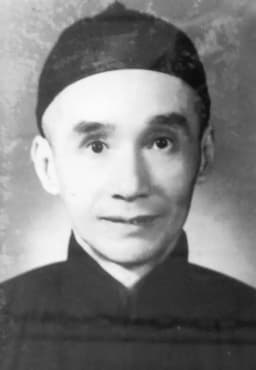
Huan Wen
General · Ancient
57.1Total

Napoleon Bonaparte
General · Modern
70.9Total
Basic Information
Born
312
1769
Died
373
1821
Era
Ancient
Modern
Nationality
China
France
Occupation
General
General
Civilization
Eastern
Western
Score Comparison
Military (10%)
85.0
94.0
Political (20%)
43.7
72.0
Influence (20%)
54.1
40.0
Legacy (20%)
47.5
80.0
Leadership (15%)
61.1
78.0
Strategy (15%)
75.0
90.0
TOTAL
57.1
70.9
Huan Wen — Complete Timeline
346 AD
Conquest of ShuWar
Huan Wen led a campaign to conquer the Cheng Han state in Sichuan. He defeated the Cheng Han army and captured its capital Chengdu, annexing the region into the Jin Dynasty and expanding Jin territory.
Jin DynastyCheng HanConquestSichuan
Impact: regionalconstructive
354 AD
Northern ExpeditionsWar◆ Major
Huan Wen launched a series of northern expeditions against the Former Qin and other states. He achieved initial victories but failed to hold territory, ultimately retreating due to lack of supplies and political opposition at court.
Jin DynastyNorthern ExpeditionFormer Qin
Impact: regional
371 AD
Attempted UsurpationPolitical Action
Huan Wen deposed Emperor Fei of Jin and installed Emperor Jianwen, a puppet ruler. He sought to usurp the throne but died in 373 before completing his plans, leaving his son Huan Xuan to later attempt the same.
Jin DynastyUsurpationCoupHuan Xuan
Impact: nationaldestructive
Napoleon Bonaparte — Complete Timeline
1799 AD
Coup of 18 BrumaireOther◆ Major
Napoleon Bonaparte, with support from his brother Lucien and key political figures, overthrew the Directory in a bloodless coup. He established the Consulate with himself as First Consul, effectively becoming the ruler of France. This event ended the French Revolution's most unstable period.
French RevolutionCoupRise to Power
Impact: regional
1804 AD
Promulgation of the Napoleonic CodeOther◆ Major
Napoleon enacted the Civil Code of the French, known as the Napoleonic Code, a comprehensive set of laws that replaced the fragmented feudal legal systems. The code established legal equality, protected property rights, and secularized law. It became the basis for legal systems in many European and world countries.
Legal ReformNapoleonic CodeCivil Law
Impact: globalconstructive
1805 AD
Battle of AusterlitzWar◆ Major
Napoleon's Grande Arm
Napoleonic WarsBattleDecisive Victory
Impact: global
1812 AD
Invasion of RussiaWar◆ Major
Napoleon led the Grande Arm
Napoleonic WarsInvasionDisaster
Impact: globaldestructive
1815 AD
Battle of WaterlooWar◆ Major
Napoleon's French army was defeated by the combined forces of the Duke of Wellington's Anglo-Allied army and Gebhard Leberecht von Bl
Napoleonic WarsBattleFinal Defeat
Impact: globaldestructive
Expert Analysis
huan-wen-vs-napoleon-bonaparte
# The Conqueror and the Would-Be Emperor
On a June morning in 1815, Napoleon Bonaparte watched his dreams dissolve into the muddy fields of Waterloo, his Grande Armée shattered by the Duke of Wellington and Prussian reinforcements. Sixteen centuries earlier and half a world away, another general—Huan Wen of the Jin dynasty—lay on his deathbed in 373 AD, having deposed one emperor and installed another, yet dying with the throne he coveted still out of reach. Both men reached for ultimate power. One seized it; the other grasped only its shadow. Why?
Origins
Napoleon was born in 1769 on the island of Corsica, a Mediterranean backwater that had just become French. His family was minor nobility, but his education at French military schools exposed him to Enlightenment ideas and the rigid hierarchies of the ancien régime. When the French Revolution erupted in 1789, it shattered the old order and opened paths that birth alone could never have provided. Napoleon was young, ambitious, and hungry—a provincial outsider in a nation remaking itself.
Huan Wen was born in 312 AD, during one of China’s most chaotic eras—the Sixteen Kingdoms period, when the Jin dynasty clung to the south while northern China fractured into warring states. Unlike Napoleon, Huan came from a powerful clan. His father was a general, and his family had married into the imperial house. He was an insider by blood, not a self-made man. But the Jin court was riven by factionalism and suspicion, and even the well-born could find themselves walking a razor’s edge.
Rise to Power
Napoleon’s ascent was meteoric. At 24, he drove the British out of Toulon. At 26, he crushed a royalist uprising in Paris with a “whiff of grapeshot.” At 27, he led a brilliant campaign in Italy, defeating larger Austrian armies through speed and daring. By 1799—just ten years after the Revolution began—he was First Consul of France, effectively its dictator. His path was forged in war, but his legitimacy came from victory. Each triumph made him indispensable.
Huan Wen’s rise was slower and more deliberate. In 346 AD, he conquered the Cheng Han state in Sichuan, absorbing its territory into Jin control. This was no small feat: the campaign required crossing treacherous mountain passes and defeating a well-entrenched enemy. The victory made him a hero, but the Jin court grew wary. When he launched his Northern Expeditions in 354, he achieved initial successes against the Former Qin state, but his forces could not hold the gains. The court in Jiankang watched his ambitions with growing alarm, and his military campaigns became political chess moves as much as strategic operations.
Leadership & Governance
Napoleon was a military genius whose political reforms outlasted his empire. The Napoleonic Code, established in 1804, standardized French law, abolished feudal privileges, and influenced legal systems across Europe. He centralized the state, built schools, and reformed the tax system. As emperor, he fused Enlightenment principles with autocratic power—a contradiction that defined his rule. On the battlefield, his speed, logistical brilliance, and ability to concentrate forces at decisive points made him nearly invincible for a decade.
Huan Wen was a competent general but not a revolutionary. His military scores—78.3—reflect solid achievement without Napoleonic brilliance. His political score of 72.7 shows a man who understood power but lacked the vision or ruthlessness to reshape his world. He did not create codes or institutions. Instead, he manipulated the existing system: in 371, he deposed Emperor Fei and installed Emperor Jianwen as a puppet, hoping to pave his way to the throne. But he never declared himself emperor. He hesitated, perhaps because the Confucian order demanded loyalty, perhaps because he lacked the nerve.
Triumph & Tragedy
Napoleon’s greatest triumph was Austerlitz in 1805, where he destroyed a combined Russian and Austrian army, forcing the Holy Roman Empire to dissolve. His greatest tragedy was the invasion of Russia in 1812, where 600,000 men marched east and fewer than 100,000 returned. Hubris, overreach, and the Russian winter broke his army and his legend. Exiled to Elba, he returned in 1815 for a final, desperate gamble at Waterloo—and lost.
Huan Wen’s triumph was the conquest of Shu, a campaign that expanded Jin territory and made his name. His tragedy was his Northern Expeditions, which promised reunification but delivered stalemate. He could not conquer the north, and he could not seize the throne. He died in 373, his ambition unfulfilled, his legacy ambiguous. The Jin dynasty survived, but his family’s power faded.
Character & Destiny
Napoleon was driven by an insatiable hunger for glory. “I live only for posterity,” he once said, and he meant it. His character was aggressive, impatient, and supremely confident—qualities that won him an empire but also destroyed it. He could not stop. Every victory demanded another, and each conquest sowed the seeds of future coalitions against him.
Huan Wen was more cautious, more constrained. He operated within a system that punished overreach. The Jin court’s factionalism and Confucian norms limited what a general could openly pursue. Where Napoleon could declare himself emperor and crown himself in Notre Dame, Huan Wen could only depose one puppet and install another. His character reflected his civilization: ambitious but restrained, calculating but hesitant.
Legacy
Napoleon’s legacy is global. His legal code, his military innovations, and his myth of the self-made conqueror shaped modern Europe and the world. He is remembered as both a liberator who spread revolutionary ideals and a tyrant who drowned them in blood. His total score of 82.4 reflects this complexity.
Huan Wen’s legacy is local and limited. His score of 72.3 places him among China’s many ambitious generals who reached for power but fell short. He is remembered in Chinese history as a cautionary tale about ambition without legitimacy, a man who could conquer cities but not a dynasty, who could depose emperors but not become one.
Conclusion
The difference between Napoleon and Huan Wen is not merely personal but civilizational. Napoleon emerged from a revolution that shattered tradition and opened infinite possibilities. Huan Wen operated within a Confucian order that defined the limits of ambition. One remade his world; the other could not escape it. In the end, Napoleon’s tragedy was that he reached too far. Huan Wen’s tragedy was that he could not reach far enough. Both died with their dreams unfinished—but one changed history forever, while the other merely passed through it.
Rankings
🥇
Napoleon BonaparteLeader
Mil: 94.0Pol: 72.0Inf: 40.0
70.9
🥈
Huan Wen
Mil: 85.0Pol: 43.7Inf: 54.1
57.1
+13.8 behind
How This Comparison Works
Algorithm
Each figure is scored on 6 dimensions (0—100 scale) based on structured historical data: Military (10%), Political (20%), Influence (20%), Legacy (20%), Leadership (15%), Strategy (15%). The weighted total produces the final ranking.
Data Sources
Scores are computed from structured sub-indicators in the database. Scale factors adjust for era (Ancient ×0.85, Modern ×1.0) and civilization size (Eastern ×1.05, Other ×0.80) to account for differences in population and military scale.
Maximum 3 Figures
Comparisons are limited to 2—3 figures to ensure readability and statistical meaningfulness.
Error Margins
±5 points per dimension — Sub-scores are derived from historical records with inherent uncertainty. Two figures within 5 points on a dimension should be considered roughly equivalent in that area.
Total Score Accuracy
±3 points overall — The weighted combination of 6 dimensions produces a total score with approximately ±3 points of uncertainty. Differences of less than 3 points are not statistically significant— the figures are effectively tied.
Known Limitations
- Historical records are incomplete and uneven across civilizations
- Figures from oral-tradition societies may be underrepresented
- Occupation labels can misclassify multi-role figures
- Scores measure capability and impact, not moral character
- Quantitative scoring is a comparison tool, not absolute truth
Capability Radar
Military (10%) — Battles & Warfare
Battles
75
95
Win Rate
70
90
Expansion
70
95
Political (20%) — Governance & Reform
Reform
55
95
Diplomacy
60
80
Economy
50
85
Influence (20%) — Cultural & Global Reach
Cultural
45
85
Global
30
90
Legacy (20%) — Historical Impact
Historical
55
95
Longevity
40
90
Leadership (15%) — Power & Stability
Tenure
65
85
Stability
40
70
Strategy (15%) — Tactics & Innovation
Strategy
75
95
Tactics
80
98
Reform
60
92
Similar Comparisons
Comments & Discussion
🔥The Corsican Conqueror6/17/2026
Napoleon actually *won*. Huan Wen died having achieved nothing permanent—his northern campaigns were reversals, his puppet emperor got the last laugh. Napoleon conquered most of Europe, rewrote its legal codes, and reshaped modern states. Huan couldn't even hold his own dynasty together. The real tragedy isn't ambition failing; it's failing on such a small scale. Waterloo was a close-run thing; Huan's whole career was a slow, inglorious fizzle.
⚔️Huanghe's Ghost6/17/2026
拿战的核心是制度革命后的能量释放,而桓温困死在门阀政治的笼子里。拿破仑用《民法典》和现代官僚体系取代封建残骸,法国的基层动员力是压倒性的。桓温北伐看似豪迈,实则背后没有社会变革支撑,只有家族私兵和士族扯皮。一个是新世界的起点,一个是旧世界的回光返照。这不是个人能力的较量,是历史阶段的碾压。
📚The Condottiero's Eye6/17/2026
Both men knew the ultimate prize was the throne itself, but only Napoleon understood that power isn't just military—it's institutional. Huan Wen usurped an emperor and installed a child, yet never dared to don the robes himself until it was too late. His hesitation wasn't cowardice; it was a rational calculation within a system where legitimacy mattered more than bayonets. Napoleon bypassed legitimacy entirely with the whiff of grapeshot and a plebiscite. Different rules, different games.
📜青衫司马6/17/2026
翻开《晋书》,桓温那句"既不能流芳后世,亦不足复遗臭万载"透着一股赌徒式的绝望,格局已然输了大半。拿破仑可没有这种"保底"心态,他是要成神来书写历史的。桓温的北伐大败于枋头,往后便一蹶不振;拿破仑即便在莱比锡和滑铁卢惨败,百日王朝仍能聚兵五十万。这就是人格气场的天壤之别——一个是赌气,一个是赌命;一个是求名,一个是求势。
🧠Gematria's Reckoning6/17/2026
数据不会说谎。拿破仑动员了法国近200万士兵投入战场,最辉煌时统治超过7000万欧洲人口。桓温呢?他最高光的枋头之战,据《资治通鉴》记载不过"步骑五万",连拿破仑的一个军都算不上。拿战是工业革命前夜的全球博弈,东西两晋是农业帝国脆弱的权力更迭。比较可以,但别假装这是同一维度的较量——一个在用火药吞并整个大陆,一个在用竹简算计一堆士大夫。