Loading...
Hong Xiuquan vs Pushpa Kamal Dahal
Hong Xiuquan leads by 6.6 pts · 2 figures compared
…

Hong Xiuquan
Revolutionary · Modern
56.6Total
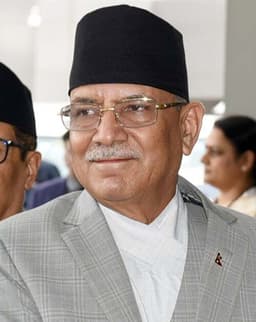
Pushpa Kamal Dahal
Revolutionary · Modern
50.0Total
Basic Information
Born
1814
1954
Died
1864
—
Era
Modern
Modern
Nationality
China
Nepal
Occupation
Revolutionary
Revolutionary
Civilization
Eastern
Indian
Score Comparison
Military (10%)
67.5
35.0
Political (20%)
54.7
54.7
Influence (20%)
57.2
51.0
Legacy (20%)
50.0
40.8
Leadership (15%)
65.7
62.0
Strategy (15%)
50.0
60.0
TOTAL
56.6
50.0
Hong Xiuquan — Complete Timeline
1851 AD
Proclamation of the Taiping Heavenly KingdomPolitical Action
Hong Xiuquan proclaimed the establishment of the Taiping Heavenly Kingdom in Jintian, Guangxi. He declared himself the Heavenly King and younger brother of Jesus Christ, initiating a rebellion that would become the deadliest civil war in history.
Taiping RebellionState FormationReligion
Impact: global
1853 AD
Capture of NanjingWar◆ Major
Taiping forces under Hong Xiuquan captured Nanjing, making it the capital of the Taiping Heavenly Kingdom. The city was renamed Tianjing (Heavenly Capital) and became the center of Taiping rule for over a decade.
Taiping RebellionConquestCapital
Impact: regional
Implementation of the Land System of the Heavenly DynastyReform◆ Major
Hong Xiuquan promulgated the Land System of the Heavenly Dynasty, which aimed to redistribute land equally among peasants and establish communal ownership. The reform was partially implemented but disrupted by war and internal conflicts.
Taiping RebellionLand ReformSocial Policy
Impact: regionalconstructive
1864 AD
Death in NanjingOther◆ Major
Hong Xiuquan died in Nanjing during the final Qing siege of the city. His death, from illness or suicide, occurred just before the fall of the Taiping capital, leading to the collapse of the rebellion.
Taiping RebellionDeathEnd of Rebellion
Impact: nationaltragic
Pushpa Kamal Dahal — Complete Timeline
1996 AD
Launch of People's WarWar
Prachanda, as leader of the Communist Party of Nepal (Maoist), initiated a armed insurgency against the Nepalese state. The People's War began with attacks on police posts and government offices, escalating into a decade-long civil war.
InsurgencyCivil WarMaoist
Impact: nationaldestructive
2006 AD
Signing of Comprehensive Peace AccordPolitical Action◆ Major
Prachanda signed the Comprehensive Peace Accord with Prime Minister Girija Prasad Koirala, ending the civil war. The agreement committed the Maoists to lay down arms and join mainstream politics in exchange for integration into state institutions.
Peace TreatyCivil WarNepal
Impact: nationalconstructive
2008 AD
Election as Prime MinisterPolitical Action◆ Major
Following the Maoist victory in the Constituent Assembly elections, Prachanda became the first prime minister of the Federal Democratic Republic of Nepal. His tenure focused on integrating former Maoist combatants into the national army.
ElectionGovernmentRepublic
Impact: national
2009 AD
Resignation as Prime MinisterPolitical Action
Prachanda resigned as prime minister after a dispute with President Ram Baran Yadav over the dismissal of the army chief. The crisis highlighted tensions between the Maoists and the established political order.
ResignationPoliticsCrisis
Impact: national
Expert Analysis
Origins
Hong Xiuquan (1814-1864) was born in Guangdong, China, to a Hakka family of modest means. He studied Confucian classics for civil service exams but failed repeatedly, leading to disillusionment. After a nervous breakdown in 1837, he experienced visions that he later interpreted as a divine calling. Influenced by Christian tracts, he declared himself the younger brother of Jesus Christ, tasked with establishing a Heavenly Kingdom on Earth.
Pushpa Kamal Dahal (born 1954), known as Prachanda, grew up in a poor peasant family in Nepal. He studied agriculture but turned to politics, joining the Communist Party of Nepal. Inspired by Maoist ideology, he became a key figure in the party's radical wing, leading an armed insurgency against the Nepalese monarchy.
Rise to Power
Hong Xiuquan's rise began in 1851 when he proclaimed the Taiping Heavenly Kingdom in Jintian, Guangxi. His movement attracted disaffected peasants and ethnic minorities, swelling into a massive army. By 1853, Taiping forces captured Nanjing, making it their capital. Hong declared himself Heavenly King, establishing a theocratic regime that controlled much of southern China.
Prachanda launched the People's War in 1996 with a series of attacks on police posts. The insurgency escalated over a decade, spreading across rural Nepal. Using guerrilla tactics, the Maoists gained control of large areas. After the 2001 royal massacre and subsequent political instability, the government opened negotiations. In 2006, Prachanda signed the Comprehensive Peace Accord, ending the civil war. He then led his party into mainstream politics, becoming Prime Minister in 2008 after winning elections.
Leadership & Governance
Hong Xiuquan's governance was deeply religious. He implemented radical reforms: communal ownership of land, equality of sexes, prohibition of foot-binding and slavery, and a strict moral code. However, his leadership was authoritarian, with power concentrated in his hands. He rarely left his palace, relying on visions and divine guidance. Internal purges and infighting weakened the regime. His military strategy, while initially successful, became static after capturing Nanjing.
Prachanda's leadership style evolved from revolutionary to pragmatic. As Prime Minister, he pursued integration of Maoist fighters into the national army and drafted a new constitution. However, his tenure was marked by conflict: he resigned in 2009 after a dispute with the president over dismissing the army chief. He later returned as Prime Minister from 2016-2017, focusing on economic development and post-conflict reconstruction. His governance score of 62.0 reflects his ability to transition from rebel to statesman, though political instability limited his effectiveness.
Triumph & Tragedy
Hong Xiuquan's greatest triumph was the Taiping Rebellion itself, which at its peak controlled a population of about 30 million. The Land System of the Heavenly Dynasty promised radical equality. However, his greatest tragedy was the rebellion's collapse. The Qing dynasty, with help from Western powers, crushed the Taiping. Hong died in 1864 as Nanjing fell. The war caused an estimated 20 million deaths, one of the deadliest conflicts in history. His legacy score of 50.0 reflects this destructive outcome.
Prachanda's triumph was successful peace negotiations, ending a decade-long civil war that killed over 13,000. He transformed a Maoist insurgency into a political force, becoming Prime Minister. His tragedy lies in unfulfilled promises: the peace process stalled, many ex-combatants remain marginalized, and Nepal's political instability persisted. His military score of 35.0 is low because his guerrilla war did not achieve a decisive military victory; rather, it forced a negotiated settlement.
Character & Destiny
Hong Xiuquan was fanatical and inflexible. His belief in his divine mission drove him to reject compromise, leading to isolation and poor decision-making. He surrounded himself with sycophants and ignored military realities. His character contributed directly to the Taiping's downfall. In contrast, Prachanda is pragmatic and adaptable. He shifted from armed struggle to democratic politics, showing strategic flexibility. However, his willingness to compromise sometimes alienated hardliners. His strategy score of 60.0 reflects this adaptability, while his political score of 54.7 indicates mixed results in institutionalizing power.
Legacy
Hong Xiuquan's legacy is complex. He inspired later Chinese revolutionaries, including Mao Zedong, who saw the Taiping as a precursor. The rebellion weakened the Qing dynasty, accelerating its fall. However, the immense death toll and destruction overshadow his reforms. His influence score of 57.2 reflects his impact on Chinese history, but his methods are largely condemned.
Prachanda's legacy is more immediate. He ended a civil war and brought former rebels into government, a rare achievement. Nepal's federal constitution and secularism owe much to his efforts. However, his inability to ensure lasting stability and economic growth limits his legacy. His overall score of 50.0 is lower than Hong's 56.6, but his impact in Nepal is significant, albeit less globally.
Conclusion
Hong Xiuquan had a greater impact on world history due to the scale of his rebellion and its role in weakening imperial China. His total score of 56.6 surpasses Prachanda's 50.0, driven by higher military (67.5 vs 35.0) and legacy (50.0 vs 40.8) scores. While Prachanda's peaceful transition is notable, Hong's rebellion altered the course of Chinese history. Thus, Hong Xiuquan is the more consequential figure.
Rankings
🥇
Hong XiuquanLeader
Mil: 67.5Pol: 54.7Inf: 57.2
56.6
🥈
Pushpa Kamal Dahal
Mil: 35.0Pol: 54.7Inf: 51.0
50.0
+6.6 behind
How This Comparison Works
Algorithm
Each figure is scored on 6 dimensions (0—100 scale) based on structured historical data: Military (10%), Political (20%), Influence (20%), Legacy (20%), Leadership (15%), Strategy (15%). The weighted total produces the final ranking.
Data Sources
Scores are computed from structured sub-indicators in the database. Scale factors adjust for era (Ancient ×0.85, Modern ×1.0) and civilization size (Eastern ×1.05, Other ×0.80) to account for differences in population and military scale.
Maximum 3 Figures
Comparisons are limited to 2—3 figures to ensure readability and statistical meaningfulness.
Error Margins
±5 points per dimension — Sub-scores are derived from historical records with inherent uncertainty. Two figures within 5 points on a dimension should be considered roughly equivalent in that area.
Total Score Accuracy
±3 points overall — The weighted combination of 6 dimensions produces a total score with approximately ±3 points of uncertainty. Differences of less than 3 points are not statistically significant— the figures are effectively tied.
Known Limitations
- Historical records are incomplete and uneven across civilizations
- Figures from oral-tradition societies may be underrepresented
- Occupation labels can misclassify multi-role figures
- Scores measure capability and impact, not moral character
- Quantitative scoring is a comparison tool, not absolute truth
Capability Radar
Military (10%) — Battles & Warfare
Battles
70
35
Win Rate
60
40
Expansion
80
25
Political (20%) — Governance & Reform
Reform
85
40
Diplomacy
30
50
Economy
40
35
Influence (20%) — Cultural & Global Reach
Cultural
60
40
Global
55
35
Legacy (20%) — Historical Impact
Historical
70
45
Longevity
50
30
Leadership (15%) — Power & Stability
Tenure
65
55
Stability
20
30
Strategy (15%) — Tactics & Innovation
Strategy
65
50
Tactics
55
45
Reform
75
30
Similar Comparisons
Comments & Discussion
No comments yet. Be the first to share your thoughts!