Loading...
Ho Chi Minh vs Pushpa Kamal Dahal
Ho Chi Minh leads by 12.9 pts · 2 figures compared
…
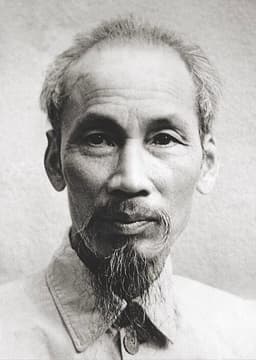
Ho Chi Minh
Revolutionary · Modern
62.9Total
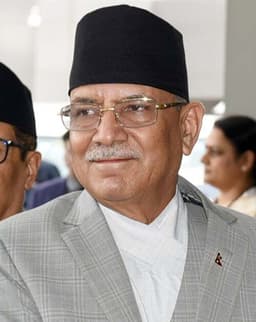
Pushpa Kamal Dahal
Revolutionary · Modern
50.0Total
Basic Information
Born
1890
1954
Died
1969
—
Era
Modern
Modern
Nationality
Vietnam
Nepal
Occupation
Revolutionary
Revolutionary
Civilization
Eastern
Indian
Score Comparison
Military (10%)
55.0
35.0
Political (20%)
72.0
54.7
Influence (20%)
62.0
51.0
Legacy (20%)
58.0
40.8
Leadership (15%)
72.0
62.0
Strategy (15%)
58.0
60.0
TOTAL
62.9
50.0
Ho Chi Minh — Complete Timeline
1941 AD
Establishment of the Viet MinhPolitical Action◆ Major
Ho Chi Minh founded the Viet Minh (League for the Independence of Vietnam) in southern China. This coalition of nationalist and communist groups became the primary force for Vietnamese independence, fighting both Japanese occupation and French colonialism.
Viet MinhIndependence MovementWorld War II
Impact: nationalconstructive
1945 AD
Declaration of Independence of VietnamPolitical Action
Ho Chi Minh proclaimed the Democratic Republic of Vietnam in Hanoi's Ba Dinh Square, citing the US Declaration of Independence. This established the Viet Minh government and began the struggle for independence from French colonial rule.
IndependenceVietnamDecolonization
Impact: nationalconstructive
1954 AD
Battle of Dien Bien PhuWar
Ho Chi Minh's Viet Minh forces, under General Giap, defeated the French garrison at Dien Bien Phu. This victory ended French colonial rule in Indochina and led to the Geneva Accords dividing Vietnam at the 17th parallel.
Vietnam WarDecolonizationFrench Indochina
Impact: regional
Geneva AccordsPolitical Action◆ Major
Ho Chi Minh's delegation signed the Geneva Accords, temporarily dividing Vietnam at the 17th parallel. The agreement promised nationwide elections in 1956, which were never held, leading to the permanent division of Vietnam.
Geneva ConferenceDivision of VietnamDiplomacy
Impact: regional
1959 AD
Start of the Vietnam WarWar
Ho Chi Minh's government in North Vietnam authorized armed struggle against the US-backed South Vietnamese regime. This escalated into the Vietnam War, a prolonged conflict that resulted in millions of deaths and US withdrawal in 1973.
Vietnam WarCold WarCommunism
Impact: globaldestructive
Pushpa Kamal Dahal — Complete Timeline
1996 AD
Launch of People's WarWar
Prachanda, as leader of the Communist Party of Nepal (Maoist), initiated a armed insurgency against the Nepalese state. The People's War began with attacks on police posts and government offices, escalating into a decade-long civil war.
InsurgencyCivil WarMaoist
Impact: nationaldestructive
2006 AD
Signing of Comprehensive Peace AccordPolitical Action◆ Major
Prachanda signed the Comprehensive Peace Accord with Prime Minister Girija Prasad Koirala, ending the civil war. The agreement committed the Maoists to lay down arms and join mainstream politics in exchange for integration into state institutions.
Peace TreatyCivil WarNepal
Impact: nationalconstructive
2008 AD
Election as Prime MinisterPolitical Action◆ Major
Following the Maoist victory in the Constituent Assembly elections, Prachanda became the first prime minister of the Federal Democratic Republic of Nepal. His tenure focused on integrating former Maoist combatants into the national army.
ElectionGovernmentRepublic
Impact: national
2009 AD
Resignation as Prime MinisterPolitical Action
Prachanda resigned as prime minister after a dispute with President Ram Baran Yadav over the dismissal of the army chief. The crisis highlighted tensions between the Maoists and the established political order.
ResignationPoliticsCrisis
Impact: national
Expert Analysis
Ho Chi Minh vs Pushpa Kamal Dahal
# The Revolutionary’s Dilemma: Ho Chi Minh and Prachanda
On a September morning in 1945, Ho Chi Minh stood before a crowd of half a million people in Hanoi’s Ba Dinh Square and read aloud a declaration borrowed from the American Revolution. “All men are created equal,” he intoned, quoting Thomas Jefferson, before proclaiming the Democratic Republic of Vietnam. Forty-one years later, in a remote village in western Nepal, a former schoolteacher named Pushpa Kamal Dahal—by then known as Prachanda, “the Fierce One”—gathered a handful of followers in a thatched hut and launched a “People’s War” against the Nepalese monarchy. Both men sought to overthrow old orders. Both led insurgencies that bled their countries for years. But one died a national father figure, his face on currency and his name on boulevards; the other remains a living, controversial politician who has cycled through three prime ministerial terms. The difference between them is not merely a matter of scale, but of timing, context, and the cruel arithmetic of history.
Origins
Ho Chi Minh was born Nguyen Sinh Cung in 1890 in a village in central Vietnam, then part of French Indochina. His father, a Confucian scholar, was dismissed from his government post for refusing to learn French—a small act of defiance that shaped the son’s worldview. Ho left Vietnam as a teenager, working as a cook on a steamship, and spent the next three decades wandering the world: Paris, London, Moscow, Guangzhou. He was a man who learned revolution not from textbooks but from the streets of Harlem and the docks of Marseille, from reading Lenin’s tracts in a Parisian garret. By the time he returned to Vietnam in 1941, he was fluent in at least six languages and had absorbed the lessons of both Bolshevik discipline and Western liberal rhetoric.
Prachanda was born in 1954 in a Brahmin family in Kaski District, Nepal, a landlocked kingdom that had never been colonized but was suffocated by a feudal caste system and an absolute monarchy. His father was a small landowner; the family moved frequently, and Prachanda studied agriculture in college before becoming a schoolteacher. He was radicalized not by global travel but by the brutal poverty he saw in the Nepalese countryside—landless peasants, child laborers, women sold into servitude. He joined the Communist Party of Nepal in the 1970s, when the country was under a repressive Panchayat system that banned political parties. His world was narrower than Ho’s, his revolution more provincial from the start.
Rise to Power
Ho Chi Minh’s path to leadership was a masterclass in patience and adaptability. In 1941, he slipped across the Chinese border to establish the Viet Minh, a coalition that wrapped communist goals in nationalist rhetoric. He spent the next four years organizing, raising funds, and building a network that could strike the Japanese occupiers and the French colonial administration simultaneously. When Japan surrendered in August 1945, Ho moved with breathtaking speed—within days, his forces controlled Hanoi, and he declared independence before the French could return.
Prachanda’s rise was slower and more violent. He took over the leadership of the Communist Party of Nepal (Maoist) in the 1990s, after the failed experiment of multiparty democracy had left Nepal’s rural poor untouched by reform. On February 13, 1996, he launched the People’s War with a series of coordinated attacks on police posts and government offices. For a decade, he fought from the jungles and hills, a shadowy figure rarely photographed, his reputation built entirely on his strategic ruthlessness. Where Ho had been a diplomat and a propagandist, Prachanda was a guerrilla commander first.
Leadership & Governance
Ho Chi Minh’s leadership style was deceptively simple: he led by example, by asceticism, and by a kind of paternal charisma that disarmed both allies and enemies. He lived in a simple stilt house in Hanoi, wore rubber sandals, and chain-smoked cheap cigarettes. His political genius lay in his ability to blend Marxism with Vietnamese nationalism—he understood that the peasantry would fight not for dialectical materialism but for land and independence. His military strategy, executed by General Vo Nguyen Giap, was a masterpiece of asymmetric warfare: the 1954 victory at Dien Bien Phu, where Viet Minh forces dragged artillery up jungle mountainsides to shell a French fortress, remains a textbook example of how will can defeat technology.
Prachanda’s governance has been more transactional and less visionary. As a revolutionary leader, he was effective: the People’s War forced the Nepalese state to the negotiating table, and the 2006 Comprehensive Peace Accord ended the monarchy and established a federal republic. But as a prime minister, he has struggled. His first term in 2008 lasted only nine months, collapsing over a petty dispute about the army chief. His subsequent terms were similarly brief and inconclusive. He has shown little of Ho’s ability to inspire beyond his core base, and his economic policies—heavy on state control, light on results—have failed to lift Nepal from its poverty.
Triumph & Tragedy
Ho Chi Minh’s greatest triumph was the 1954 Geneva Accords, which, however imperfectly, recognized Vietnamese independence. His greatest tragedy was that he did not live to see the reunification of his country. He died in 1969, six years before North Vietnamese tanks rolled into Saigon. The war he authorized in 1959 consumed his nation for another decade, costing millions of lives. He left behind a divided land and a legacy that would be contested by both his admirers and his critics.
Prachanda’s triumph was the 2006 peace accord itself—a negotiated end to a civil war that had killed over 13,000 people. His tragedy is that the peace he helped create has not delivered the transformation he promised. Nepal remains one of Asia’s poorest countries, its politics paralyzed by infighting, its Maoist movement fractured into squabbling factions. Prachanda himself has become a symbol of revolutionary ambition compromised by political reality.
Character & Destiny
Ho Chi Minh was a man of extraordinary self-discipline and strategic patience. He could wait decades for an opportunity, and when it came, he seized it without hesitation. His famous aphorism—“Nothing is more precious than independence and freedom”—was not rhetoric but a conviction that guided every decision. He was also a pragmatist: he allied with the United States during World War II, then fought them during the Vietnam War. He understood that revolution required flexibility, not dogma.
Prachanda is more mercurial. He has been called a “weathercock” by his critics, shifting alliances and ideologies as circumstances demand. His decision to join the mainstream political system after the peace accord was itself a pragmatic choice, but it has cost him the moral clarity he once had. Where Ho died as a symbol of unyielding resistance, Prachanda lives as a politician who has had to compromise, bargain, and sometimes betray the very ideals he once championed.
Legacy
Ho Chi Minh’s legacy is monumental. In Vietnam, he is venerated as “Uncle Ho,” his mausoleum a pilgrimage site in Hanoi. His image is everywhere, from currency to school textbooks. His revolution succeeded, but at a terrible price. Outside Vietnam, he is remembered as a symbol of anti-colonial resistance, a David who fought two Goliaths and, in the end, won.
Prachanda’s legacy is still being written. He is remembered in Nepal as the man who ended the monarchy and brought the Maoists into the mainstream, but also as a leader who could not deliver on his promises. His scores—military 25.6, political 61.5, legacy 54.7—reflect a figure who achieved significant political change but whose military and ideological impact was more limited. He is neither a hero nor a villain, but a complex, flawed revolutionary who succeeded in destroying an old order but could not build a new one.
Conclusion
The difference between Ho Chi Minh and Pushpa Kamal Dahal is the difference between a revolution that reshaped a nation and a revolution that reshaped only its politics. Ho fought against colonialism, a clear enemy that united his people; Prachanda fought against a domestic monarchy, a more ambiguous target that divided his movement. Ho had the luxury of a long life and a single, overriding goal; Prachanda has had to navigate the messy realities of coalition government and economic stagnation. Both men were revolutionaries who believed in a better world. One died before he could see his dreams betrayed; the other lives to see his compromises daily. History, as always, is kinder to the dead.
Rankings
🥇
Ho Chi MinhLeader
Mil: 55.0Pol: 72.0Inf: 62.0
62.9
🥈
Pushpa Kamal Dahal
Mil: 35.0Pol: 54.7Inf: 51.0
50.0
+12.9 behind
How This Comparison Works
Algorithm
Each figure is scored on 6 dimensions (0—100 scale) based on structured historical data: Military (10%), Political (20%), Influence (20%), Legacy (20%), Leadership (15%), Strategy (15%). The weighted total produces the final ranking.
Data Sources
Scores are computed from structured sub-indicators in the database. Scale factors adjust for era (Ancient ×0.85, Modern ×1.0) and civilization size (Eastern ×1.05, Other ×0.80) to account for differences in population and military scale.
Maximum 3 Figures
Comparisons are limited to 2—3 figures to ensure readability and statistical meaningfulness.
Error Margins
±5 points per dimension — Sub-scores are derived from historical records with inherent uncertainty. Two figures within 5 points on a dimension should be considered roughly equivalent in that area.
Total Score Accuracy
±3 points overall — The weighted combination of 6 dimensions produces a total score with approximately ±3 points of uncertainty. Differences of less than 3 points are not statistically significant— the figures are effectively tied.
Known Limitations
- Historical records are incomplete and uneven across civilizations
- Figures from oral-tradition societies may be underrepresented
- Occupation labels can misclassify multi-role figures
- Scores measure capability and impact, not moral character
- Quantitative scoring is a comparison tool, not absolute truth
Capability Radar
Military (10%) — Battles & Warfare
Battles
65
35
Win Rate
60
40
Expansion
55
25
Political (20%) — Governance & Reform
Reform
85
40
Diplomacy
90
50
Economy
40
35
Influence (20%) — Cultural & Global Reach
Cultural
75
40
Global
75
35
Legacy (20%) — Historical Impact
Historical
85
45
Longevity
70
30
Leadership (15%) — Power & Stability
Tenure
70
55
Stability
50
30
Strategy (15%) — Tactics & Innovation
Strategy
80
50
Tactics
70
45
Reform
75
30
Similar Comparisons
Comments & Discussion
革命者天平6/16/2026
胡志明是民族解放的化身,而普拉昌达更像是权力博弈的投机者。一个在1945年引用美国《独立宣言》建立共和国,跨越了殖民与冷战的铁幕;另一个在1986年靠“人民战争”起家,却在21世纪的政治泥潭里反复横跳。事实是:胡志明死时统一了国家,普拉昌达三次当总理却换来尼泊尔政局动荡。这不是规模问题,是道德内核的差异。
Corpse-Count Karl6/16/2026
Comparing Ho Chi Minh to Prachanda is like comparing a surgical strike to a grenade in a schoolyard. Ho’s Viet Minh killed around 200,000 French troops and allies over a decade—targeted, strategic. Prachanda’s Maoist insurgency claimed 17,000 lives in Nepal, mostly civilians, with half of them killed by his own forces. The “cruel arithmetic” says Ho unified a nation; Prachanda left a trail of corpses and then signed a peace deal so fragile it’s still crumbling. One built a legend; the other buil
古文剑客6/16/2026
胡志明是传统儒家士大夫向现代革命者蜕变的典范,普拉昌达却是冷战后意识形态破产的产物。胡志明流亡三十年,从巴黎到莫斯科,汲取了东西方思想的精华;普拉昌达躲在乡村茅屋里,拿着“人民战争”的旧剧本,却不知剧本早已过时。数据无情:胡志明领导的反殖民战争改变了东南亚格局,普拉昌达的“毛主义运动”只是一场地方性闹剧,最后连他自己都投向了资本主义体制。
Ratio-Revolution Skeptic6/16/2026
Hold on—let's talk body count per capita. Vietnam’s war killed roughly 3 million, but Ho’s direct campaigns were a fraction of that. Nepal’s civil war killed about 17,000 out of 27 million people—that’s 0.06% of the population. Statistically, Prachanda’s insurgency was 23 times deadlier per capita than Ho’s entire anti-French struggle. But we romanticize Ho because he “won.” Prachanda is still breathing, still compromising, still proving that victory is just a political party’s PR. The math neve