Loading...
This comparison has not been analyzed yet.
One-time AI generation (~1 minute). Scores and timeline are already available below.
Henry IV of France vs Thibaw Min
Henry IV of France leads by 13.5 pts · 2 figures compared
…
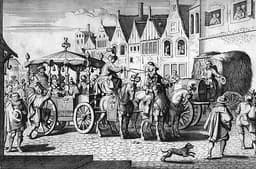
Henry IV of France
Emperor · Modern
63.7Total

Thibaw Min
Emperor · Modern
50.2Total
Basic Information
Born
1553
1859
Died
1610
1916
Era
Modern
Modern
Nationality
France
Myanmar
Occupation
Emperor
Emperor
Civilization
Western
Eastern
Score Comparison
Military (10%)
70.0
53.0
Political (20%)
75.0
48.0
Influence (20%)
56.7
50.2
Legacy (20%)
55.0
39.2
Leadership (15%)
80.0
58.8
Strategy (15%)
55.0
64.9
TOTAL
63.7
50.2
Henry IV of France — Complete Timeline
1590 AD
Battle of IvryWar◆ Major
Henry IV led his forces to a decisive victory over the Catholic League at Ivry. This battle solidified his military reputation and paved the way for his eventual capture of Paris and the throne.
BattleCatholic LeagueWars of Religion
Impact: national
1593 AD
Conversion to CatholicismPolitical Action◆ Major
Henry IV converted from Protestantism to Catholicism, reportedly stating 'Paris is worth a mass.' This act secured his acceptance by the Catholic majority and enabled his coronation, ending the religious civil wars.
ConversionPolitical PragmatismCatholicism
Impact: national
1598 AD
Edict of NantesReform
Henry IV issued the Edict of Nantes, granting substantial religious tolerance to French Protestants (Huguenots). It allowed them freedom of worship in specified areas and access to public office, ending the French Wars of Religion.
Religious ToleranceHuguenotsWars of Religion
Impact: nationalprogressive
Sully's Economic ReformsReform◆ Major
Henry IV, with his minister Sully, implemented economic reforms including tax reduction, infrastructure projects (roads, canals), and agricultural improvements. These measures stabilized the French economy after decades of war.
Economic ReformInfrastructureSully
Impact: nationalconstructive
1610 AD
Assassination by François RavaillacPolitical Action◆ Major
Henry IV was stabbed to death in Paris by Catholic fanatic Fran
AssassinationRegencyReligious Conflict
Impact: nationaltragic
Thibaw Min — Complete Timeline
1878 AD
Accession to the ThronePolitical Action◆ Major
Thibaw Min ascended the throne after the death of his father Mindon Min. His accession was marred by a palace massacre orchestrated by his queen Supayalat and her mother, in which dozens of royal princes were executed to eliminate rivals.
SuccessionMassacreBurma
Impact: nationaldestructive
1879 AD
Palace Massacre of 1879Political Action◆ Major
Thibaw Min and Queen Supayalat ordered the massacre of nearly 100 royal princes and princesses, including children, to secure the throne. This brutal act horrified the British and other foreign powers, further isolating the Burmese court.
MassacreRoyal FamilyBurma
Impact: nationaldestructive
1885 AD
Third Anglo-Burmese WarWar
The British East India Company declared war on Thibaw Min, citing Burmese threats to British interests and the mistreatment of a British company. The war lasted only two weeks, as British forces quickly advanced up the Irrawaddy River to Mandalay.
Anglo-Burmese WarInvasionBurma
Impact: regionaltragic
Exile to IndiaPolitical Action
After the British capture of Mandalay, Thibaw Min was deposed and exiled to Ratnagiri, India, along with his family. This ended the Konbaung dynasty and the Burmese monarchy, leading to the complete annexation of Burma into British India.
ExileEnd of DynastyBritish Annexation
Impact: nationaltragic
This comparison has not been analyzed yet.
One-time AI generation (~1 minute). Scores and timeline are already available below.
Rankings
🥇
Henry IV of FranceLeader
Mil: 70.0Pol: 75.0Inf: 56.7
63.7
🥈
Thibaw Min
Mil: 53.0Pol: 48.0Inf: 50.2
50.2
+13.5 behind
How This Comparison Works
Algorithm
Each figure is scored on 6 dimensions (0—100 scale) based on structured historical data: Military (10%), Political (20%), Influence (20%), Legacy (20%), Leadership (15%), Strategy (15%). The weighted total produces the final ranking.
Data Sources
Scores are computed from structured sub-indicators in the database. Scale factors adjust for era (Ancient ×0.85, Modern ×1.0) and civilization size (Eastern ×1.05, Other ×0.80) to account for differences in population and military scale.
Maximum 3 Figures
Comparisons are limited to 2—3 figures to ensure readability and statistical meaningfulness.
Error Margins
±5 points per dimension — Sub-scores are derived from historical records with inherent uncertainty. Two figures within 5 points on a dimension should be considered roughly equivalent in that area.
Total Score Accuracy
±3 points overall — The weighted combination of 6 dimensions produces a total score with approximately ±3 points of uncertainty. Differences of less than 3 points are not statistically significant— the figures are effectively tied.
Known Limitations
- Historical records are incomplete and uneven across civilizations
- Figures from oral-tradition societies may be underrepresented
- Occupation labels can misclassify multi-role figures
- Scores measure capability and impact, not moral character
- Quantitative scoring is a comparison tool, not absolute truth
Capability Radar
Military (10%) — Battles & Warfare
Battles
65
50
Win Rate
70
57
Expansion
50
59
Political (20%) — Governance & Reform
Reform
85
0
Diplomacy
80
5
Economy
75
0
Influence (20%) — Cultural & Global Reach
Cultural
65
10
Global
60
10
Legacy (20%) — Historical Impact
Historical
75
15
Longevity
70
10
Leadership (15%) — Power & Stability
Tenure
70
5
Stability
65
0
Strategy (15%) — Tactics & Innovation
Strategy
75
58
Tactics
60
63
Reform
55
70
Similar Comparisons
Comments & Discussion
No comments yet. Be the first to share your thoughts!