Loading...
Henry IV of France vs Julius Caesar
Julius Caesar leads by 19.1 pts · 2 figures compared
…
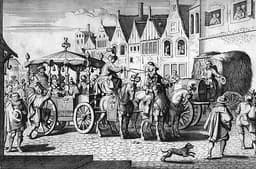
Henry IV of France
Emperor · Modern
63.7Total

Julius Caesar
General · Ancient
82.8Total
Basic Information
Born
1553
-100
Died
1610
-44
Era
Modern
Ancient
Nationality
France
Roman Republic
Occupation
Emperor
General
Civilization
Western
Western
Score Comparison
Military (10%)
70.0
88.0
Political (20%)
75.0
78.0
Influence (20%)
56.7
85.0
Legacy (20%)
55.0
82.0
Leadership (15%)
80.0
80.0
Strategy (15%)
55.0
85.0
TOTAL
63.7
82.8
Henry IV of France — Complete Timeline
1590 AD
Battle of IvryWar◆ Major
Henry IV led his forces to a decisive victory over the Catholic League at Ivry. This battle solidified his military reputation and paved the way for his eventual capture of Paris and the throne.
BattleCatholic LeagueWars of Religion
Impact: national
1593 AD
Conversion to CatholicismPolitical Action◆ Major
Henry IV converted from Protestantism to Catholicism, reportedly stating 'Paris is worth a mass.' This act secured his acceptance by the Catholic majority and enabled his coronation, ending the religious civil wars.
ConversionPolitical PragmatismCatholicism
Impact: national
1598 AD
Edict of NantesReform
Henry IV issued the Edict of Nantes, granting substantial religious tolerance to French Protestants (Huguenots). It allowed them freedom of worship in specified areas and access to public office, ending the French Wars of Religion.
Religious ToleranceHuguenotsWars of Religion
Impact: nationalprogressive
Sully's Economic ReformsReform◆ Major
Henry IV, with his minister Sully, implemented economic reforms including tax reduction, infrastructure projects (roads, canals), and agricultural improvements. These measures stabilized the French economy after decades of war.
Economic ReformInfrastructureSully
Impact: nationalconstructive
1610 AD
Assassination by François RavaillacPolitical Action◆ Major
Henry IV was stabbed to death in Paris by Catholic fanatic Fran
AssassinationRegencyReligious Conflict
Impact: nationaltragic
Julius Caesar — Complete Timeline
58 BC
Gallic WarsWar◆ Major
Caesar, as proconsul of Gaul, launched a series of campaigns that conquered all of Gaul (modern France, Belgium, and parts of Switzerland). He fought numerous battles, including against the Helvetii, the Belgae, and the Gallic chieftain Vercingetorix. The wars brought immense wealth and a loyal army to Caesar.
Gallic WarsConquestRoman Expansion
Impact: regional
49 BC
Crossing the RubiconPolitical Action◆ Major
Caesar led Legio XIII across the Rubicon River into Italy, defying the Roman Senate's order to disband his army. This act triggered a civil war against Pompey and the Optimates, ultimately leading to Caesar's dictatorship and the end of the Roman Republic.
Roman Civil WarEnd of RepublicPower Struggle
Impact: global
48 BC
Battle of PharsalusWar◆ Major
Caesar's outnumbered army defeated the larger forces of Pompey the Great at Pharsalus in Greece. Caesar's tactical use of a reserve line to counter Pompey's cavalry charge proved decisive. Pompey fled to Egypt, where he was assassinated, leaving Caesar as the undisputed master of the Roman world.
Roman Civil WarBattleDecisive Victory
Impact: regional
44 BC
Appointment as Dictator for LifePolitical Action◆ Major
The Roman Senate appointed Caesar dictator perpetuo (dictator for life), granting him unprecedented personal power. This move concentrated military, legislative, and judicial authority in one person, effectively ending the Roman Republic's traditional system of checks and balances and alarming many senators.
DictatorshipEnd of RepublicPower Consolidation
Impact: regionaldestructive
Assassination on the Ides of MarchPolitical Action◆ Major
A group of Roman senators, led by Marcus Junius Brutus and Gaius Cassius Longinus, stabbed Caesar to death at a meeting of the Senate in the Theatre of Pompey. The assassination was intended to restore the Republic, but instead triggered another civil war that led to the rise of the Roman Empire.
AssassinationRoman PoliticsEnd of Republic
Impact: globaldestructive
Expert Analysis
henry-iv-of-france-vs-julius-caesar
# The Rubicon and the Mass: Two Paths to Power
On a January morning in 49 BCE, a Roman general stood at the edge of a small river in northern Italy. He knew that crossing it meant civil war, the destruction of the Republic he served, and his own probable death. He crossed anyway. Sixteen centuries later, on a July day in 1593, a French king knelt before the Archbishop of Bourges in the Cathedral of Saint-Denis. He knew that converting meant betraying the Protestant cause that had made him a leader, and that many of his followers would call him a traitor. He converted anyway. These two moments—Caesar at the Rubicon, Henry IV at the altar—define not only their lives but the very nature of power in the ancient and modern worlds. Both men seized greatness through a single, calculated act. But their roads, and their destinations, could not have been more different.
Origins
Gaius Julius Caesar was born into the twilight of the Roman Republic, a world of senatorial intrigue, slave revolts, and the crumbling of old certainties. His family, the Julii, claimed descent from the goddess Venus, but they were not among the city’s richest or most powerful. Caesar’s father died when he was sixteen, leaving him to navigate a brutal political arena where survival demanded ruthlessness. He learned early that the Republic rewarded audacity: as a young man, he defied the dictator Sulla and fled Rome rather than divorce his wife. The Republic was a machine of ambition, and Caesar understood its gears better than anyone.
Henry of Navarre was born in 1553 into a France torn apart by the Wars of Religion—a conflict not of armies and provinces but of faith and blood. His mother, Jeanne d’Albret, was a devout Protestant; his father, Antoine de Bourbon, a Catholic who switched sides for political gain. Henry grew up in the Pyrenees, a boy trained for war and hunting, but also steeped in the bitter hatred between Huguenots and Catholics. When he was eleven, he watched his mother lead Protestant forces against the crown. He was nineteen when the St. Bartholomew’s Day Massacre erupted, and he saved his own life by converting to Catholicism on the spot—a conversion he would later renounce. Henry learned that in a world of religious war, belief was a weapon, not a truth.
Rise to Power
Caesar rose through the traditional cursus honorum—quaestor, aedile, praetor—but he accelerated the process by borrowing vast sums and spending them on spectacular games and bribes. In 60 BCE, he formed the First Triumvirate with Pompey and Crassus, an alliance that let him secure a command in Gaul. Over the next eight years, he conquered a territory larger than Italy, wrote Commentaries that made him a legend, and built an army that loved him. When the Senate ordered him to disband his legions and return to Rome as a private citizen, Caesar knew he would be destroyed. The Rubicon was not a gamble; it was the only door left open.
Henry’s rise was slower and more painful. He inherited the throne of Navarre in 1572, but France’s crown was held by the Catholic Valois dynasty. When King Henry III died childless in 1589, Henry of Navarre became the legitimate heir—but he was a Protestant, and Paris was a Catholic city. For four years, he fought the Catholic League, winning battles like Ivry in 1590, where he led his cavalry in a desperate charge that broke the enemy line. But he could not take Paris. The city’s gates remained shut because the people would not accept a heretic king. So Henry made his choice: he converted, not from conviction but from necessity. “Paris is worth a mass,” he reportedly said, and the words capture the cold pragmatism that defined his rule.
Leadership & Governance
Caesar governed as a conqueror and reformer. As dictator, he centralized power, reformed the calendar, granted citizenship to Gauls, and launched public works that employed the poor. He was a military genius who led from the front, sharing his soldiers’ rations and marching with them in the rain. But his governance was always personal: he rewarded loyalty with land and office, and he crushed opposition without mercy. When he was made dictator for life in 44 BCE, he seemed less a reformer than a king in all but name. The Republic had been a system of checks and balances; Caesar replaced it with a single will.
Henry IV governed as a healer. His greatest act was the Edict of Nantes in 1598, which granted French Protestants the right to worship in certain towns and hold public office. It was not a perfect peace—Catholics still dominated the state—but it ended decades of civil war. With his minister Sully, Henry cut taxes, built roads and canals, and encouraged agriculture and trade. He was known as “the Good King” who wanted “a chicken in every peasant’s pot on Sunday.” Where Caesar broke the old order to build a new one, Henry patched the old order to keep it standing. Both were pragmatic, but Caesar’s pragmatism served his own ambition, while Henry’s served his kingdom’s survival.
Triumph & Tragedy
Caesar’s greatest triumph was his conquest of Gaul, a campaign that made him the richest and most powerful man in the Roman world. His tragedy was that he could not stop. After defeating Pompey and his enemies in the civil war, he had a choice: restore the Republic and retire, or seize absolute power and risk assassination. He chose power. On the Ides of March, 44 BCE, a group of senators stabbed him to death in the Senate chamber. He fell at the base of Pompey’s statue, bleeding out on the floor of the institution he had dominated. He had crossed the Rubicon, but he could not cross back.
Henry’s greatest triumph was the Edict of Nantes, a document that gave France a generation of peace. His tragedy was that he could not enforce it forever. In 1610, as he prepared to lead an army against the Habsburgs, a Catholic fanatic named François Ravaillac stabbed him to death in a Paris street. The king who had converted for peace was killed by a man who could not accept peace. Within a century, Louis XIV would revoke the Edict of Nantes, driving Huguenots into exile and reopening wounds that would fester until the French Revolution.
Character & Destiny
Caesar was a man of relentless ambition, brilliant calculation, and a fatal inability to share power. He believed he was destined to rule, and he shaped his life to prove it. Henry was a man of flexible conviction, tactical patience, and a genuine desire to end suffering. He believed he was destined to heal, and he shaped his life to survive long enough to do it. Caesar’s personality drove him to the edge of power and then over it; Henry’s personality drove him to the altar and then to the grave. One died because he had seized too much; the other died because he had conceded too little.
Legacy
Caesar’s legacy is the Roman Empire. His name became a title—Kaiser, Tsar, Caesar—and his reforms laid the foundation for the imperial system that ruled the Mediterranean for centuries. But his assassination also proved that the Republic could not be saved, and that absolute power corrupts absolutely. Henry’s legacy is more fragile. The Edict of Nantes is remembered as a model of religious tolerance, but its revocation shows how easily such tolerance can be undone. Henry is remembered as a good king in a brutal age, but his name does not echo through history like Caesar’s. He healed a kingdom; Caesar changed the world.
Conclusion
Standing at the Rubicon and kneeling at the altar—these are images of two men who understood that power demands sacrifice. Caesar sacrificed the Republic for himself; Henry sacrificed himself for the kingdom. One became a legend, the other a memory. Perhaps the difference is that Caesar’s ambition was pure, while Henry’s was mixed with mercy. Or perhaps it is that the ancient world rewarded the conqueror, while the modern world, however imperfectly, rewards the peacemaker. In the end, both men died by the sword, and both left behind a world they had remade. The question is not which was greater, but which we need more.
Rankings
🥇
Julius CaesarLeader
Mil: 88.0Pol: 78.0Inf: 85.0
82.8
🥈
Henry IV of France
Mil: 70.0Pol: 75.0Inf: 56.7
63.7
+19.1 behind
How This Comparison Works
Algorithm
Each figure is scored on 6 dimensions (0—100 scale) based on structured historical data: Military (10%), Political (20%), Influence (20%), Legacy (20%), Leadership (15%), Strategy (15%). The weighted total produces the final ranking.
Data Sources
Scores are computed from structured sub-indicators in the database. Scale factors adjust for era (Ancient ×0.85, Modern ×1.0) and civilization size (Eastern ×1.05, Other ×0.80) to account for differences in population and military scale.
Maximum 3 Figures
Comparisons are limited to 2—3 figures to ensure readability and statistical meaningfulness.
Error Margins
±5 points per dimension — Sub-scores are derived from historical records with inherent uncertainty. Two figures within 5 points on a dimension should be considered roughly equivalent in that area.
Total Score Accuracy
±3 points overall — The weighted combination of 6 dimensions produces a total score with approximately ±3 points of uncertainty. Differences of less than 3 points are not statistically significant— the figures are effectively tied.
Known Limitations
- Historical records are incomplete and uneven across civilizations
- Figures from oral-tradition societies may be underrepresented
- Occupation labels can misclassify multi-role figures
- Scores measure capability and impact, not moral character
- Quantitative scoring is a comparison tool, not absolute truth
Capability Radar
Military (10%) — Battles & Warfare
Battles
65
95
Win Rate
70
92
Expansion
50
97
Political (20%) — Governance & Reform
Reform
85
90
Diplomacy
80
85
Economy
75
82
Influence (20%) — Cultural & Global Reach
Cultural
65
88
Global
60
94
Legacy (20%) — Historical Impact
Historical
75
95
Longevity
70
96
Leadership (15%) — Power & Stability
Tenure
70
75
Stability
65
60
Strategy (15%) — Tactics & Innovation
Strategy
75
94
Tactics
60
96
Reform
55
88
Similar Comparisons
Comments & Discussion
RubiconReaper6/17/2026
Caesar's crossing was a military masterstroke, but Henry IV's conversion? That's just political theater dressed as piety. A general who won Gaul knew rebellion meant Legio X at his back—calculable risk. Henry traded faith for a crown in a cathedral, proving power's softer, more cynical face. One gambled with swords, the other with souls. Which legacy cuts deeper? Caesar's battlefield calculus or Bourbon's altar-barter? I'll take the man who seized Rome, not the one who groveled for Paris.
马基雅维利学徒6/17/2026
看吧,这就是古典权术和近代诡计的差别。恺撒跨过卢比孔河时,心里装的只有共和国的尸体和独裁者的宝座;亨利四世跪在圣但尼大教堂时,脑袋里全是巴黎弥撒的交易。一个用军团说话,一个用神父开路。别跟我扯什么信仰——亨利皈依天主教那刻,他就是个穿着朝圣外衣的政客。恺撒至少敢直面血腥,这法国佬只会躲进香火里。
DataSkeptic_Sam6/17/2026
Let's crunch the numbers: Caesar's civil war killed ~100,000 Romans in four years (Appian's estimates). Henry IV's conversion ended ~30 years of French Wars of Religion with an edict that gave us Nantes, stabilizing 15 million people. Loss per "calculated act"? Caesar: 25k/year. Henry: zero direct deaths. The Rubicon was a gamble that cost Rome its republic; the Mass saved France from Balkanization. Efficiency wins. I'll take the king who minimized casualties, not the general who optimized conqu
青铜时代的回声6/17/2026
历史课本骗了你。恺撒跨河时,罗马元老院里还有西塞罗和加图在辩论;亨利改宗时,法国早被宗教战争撕成碎片了。我不是说恺撒无辜——他是个野心家,但至少没披着神圣的外衣搞屠杀。亨利四世呢?他前一天还在胡格诺派军营里唱赞美诗,后一天就吻了教皇的戒指。这不是妥协,是背叛。一个战士的坦荡,永远比政客的圆滑高贵。恺撒留下了《高卢战记》,亨利只留下伪善的誓言。
ClassicsRenewed6/17/2026
You're all missing the cultural rupture. Caesar's Rubicon was a Roman boundary—crossing it violated ancient law, sanctified by Jupiter's priests. Henry IV's conversion was a medieval pact—shedding armor for a host, trading Protestant simplicity for Catholic spectacle. One shattered a republic's sacred order; the other reforged a kingdom's divine right. Caesar's act spoke to reason, to ambition's logic; Henry's to emotion, to the people's need for ritual. They're not comparable: