Loading...
Henry IV of France vs Napoleon Bonaparte
Napoleon Bonaparte leads by 7.2 pts · 2 figures compared
…
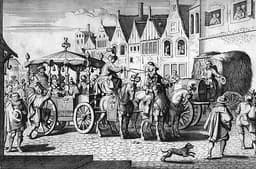
Henry IV of France
Emperor · Modern
63.7Total

Napoleon Bonaparte
General · Modern
70.9Total
Basic Information
Born
1553
1769
Died
1610
1821
Era
Modern
Modern
Nationality
France
France
Occupation
Emperor
General
Civilization
Western
Western
Score Comparison
Military (10%)
70.0
94.0
Political (20%)
75.0
72.0
Influence (20%)
56.7
40.0
Legacy (20%)
55.0
80.0
Leadership (15%)
80.0
78.0
Strategy (15%)
55.0
90.0
TOTAL
63.7
70.9
Henry IV of France — Complete Timeline
1590 AD
Battle of IvryWar◆ Major
Henry IV led his forces to a decisive victory over the Catholic League at Ivry. This battle solidified his military reputation and paved the way for his eventual capture of Paris and the throne.
BattleCatholic LeagueWars of Religion
Impact: national
1593 AD
Conversion to CatholicismPolitical Action◆ Major
Henry IV converted from Protestantism to Catholicism, reportedly stating 'Paris is worth a mass.' This act secured his acceptance by the Catholic majority and enabled his coronation, ending the religious civil wars.
ConversionPolitical PragmatismCatholicism
Impact: national
1598 AD
Edict of NantesReform
Henry IV issued the Edict of Nantes, granting substantial religious tolerance to French Protestants (Huguenots). It allowed them freedom of worship in specified areas and access to public office, ending the French Wars of Religion.
Religious ToleranceHuguenotsWars of Religion
Impact: nationalprogressive
Sully's Economic ReformsReform◆ Major
Henry IV, with his minister Sully, implemented economic reforms including tax reduction, infrastructure projects (roads, canals), and agricultural improvements. These measures stabilized the French economy after decades of war.
Economic ReformInfrastructureSully
Impact: nationalconstructive
1610 AD
Assassination by François RavaillacPolitical Action◆ Major
Henry IV was stabbed to death in Paris by Catholic fanatic Fran
AssassinationRegencyReligious Conflict
Impact: nationaltragic
Napoleon Bonaparte — Complete Timeline
1799 AD
Coup of 18 BrumaireOther◆ Major
Napoleon Bonaparte, with support from his brother Lucien and key political figures, overthrew the Directory in a bloodless coup. He established the Consulate with himself as First Consul, effectively becoming the ruler of France. This event ended the French Revolution's most unstable period.
French RevolutionCoupRise to Power
Impact: regional
1804 AD
Promulgation of the Napoleonic CodeOther◆ Major
Napoleon enacted the Civil Code of the French, known as the Napoleonic Code, a comprehensive set of laws that replaced the fragmented feudal legal systems. The code established legal equality, protected property rights, and secularized law. It became the basis for legal systems in many European and world countries.
Legal ReformNapoleonic CodeCivil Law
Impact: globalconstructive
1805 AD
Battle of AusterlitzWar◆ Major
Napoleon's Grande Arm
Napoleonic WarsBattleDecisive Victory
Impact: global
1812 AD
Invasion of RussiaWar◆ Major
Napoleon led the Grande Arm
Napoleonic WarsInvasionDisaster
Impact: globaldestructive
1815 AD
Battle of WaterlooWar◆ Major
Napoleon's French army was defeated by the combined forces of the Duke of Wellington's Anglo-Allied army and Gebhard Leberecht von Bl
Napoleonic WarsBattleFinal Defeat
Impact: globaldestructive
Expert Analysis
henry-iv-of-france-vs-napoleon-bonaparte
# The Conqueror and the Peacemaker
On a spring morning in 1815, Napoleon Bonaparte stood before his assembled army, the imperial eagles gleaming above regiments that had marched from Madrid to Moscow. Less than two centuries earlier, another French king had faced his own crisis of legitimacy—Henry of Navarre, a Protestant prince who would convert to Catholicism to save his kingdom. One man sought to conquer the world; the other sought to heal a nation. Both reshaped France, but their paths diverged like the Seine and the Rhine.
Origins
Napoleon Bonaparte was born in 1769 on the island of Corsica, a territory only recently acquired by France. His family was minor nobility, speaking Italian as their first tongue. The French establishment viewed him as an outsider—short, intense, and fiercely ambitious. He emerged from the military academy at Brienne with a hunger that would never be satisfied.
Henry IV entered the world in 1553 in Pau, the son of Antoine de Bourbon and Jeanne d’Albret. As a Bourbon prince, he was born into the highest ranks of French nobility, but his mother raised him as a Huguenot—a French Protestant in a kingdom convulsed by religious war. Where Napoleon would be shaped by the chaos of revolution, Henry was forged in the fires of the Wars of Religion that had already claimed tens of thousands of lives.
Rise to Power
Napoleon’s ascent was meteoric and ruthless. At twenty-four, he crushed the royalist uprising in Paris with a “whiff of grapeshot” in 1795. By twenty-seven, he commanded the Army of Italy, winning battles that stunned Europe. His Egyptian campaign in 1798 was a blend of military ambition and scientific curiosity—but also a failure that he somehow turned into glory. When he returned to France in 1799, the Directory was crumbling. He seized power in the coup of 18 Brumaire, becoming First Consul at thirty.
Henry’s path was far longer and bloodier. He inherited the Huguenot cause after the St. Bartholomew’s Day Massacre in 1572, when Catholic mobs slaughtered thousands of Protestants—including many of his followers. He survived by converting to Catholicism under duress, then escaped to lead his armies. For nearly two decades, he fought the Catholic League, a war of sieges and skirmishes that wore down both sides. The turning point came at the Battle of Ivry in 1590, where Henry led his forces to a decisive victory, his white plume visible above the dust and smoke.
Leadership & Governance
Napoleon governed with the same energy he brought to battle. He centralized the state, created the Bank of France, and most famously, codified French law in the Napoleonic Code—a system that enshrined equality before the law but also restricted women’s rights and restored slavery in the colonies. His military genius was undeniable: he could read a battlefield like a chess master, exploiting weaknesses with devastating speed. At Austerlitz in 1805, he destroyed the combined armies of Austria and Russia, a victory that remains a textbook example of tactical brilliance.
Henry IV governed as a conciliator. With his minister Sully, he implemented economic reforms that reduced taxes, built roads and canals, and revived agriculture. The centerpiece of his reign was the Edict of Nantes in 1598, which granted substantial religious tolerance to French Protestants. It was not an act of idealism but of pragmatism—Henry understood that France could not be governed by the sword alone. His political wisdom earned him the title “Henry the Great,” though his military score of 75.0 reflects a commander competent but not brilliant.
Triumph & Tragedy
Napoleon’s triumphs were continental in scale. He redrew the map of Europe, placed his brothers on thrones, and humiliated the ancient monarchies. But his tragedy was equally vast. The invasion of Russia in 1812 destroyed his Grand Army—600,000 men marched east; fewer than 100,000 returned. His defeat at Waterloo in 1815 was the final act, followed by exile on St. Helena, where he died in 1821 at fifty-one.
Henry’s greatest moment was the Edict of Nantes, a document that brought peace to a nation exhausted by war. His tragedy came in 1610, when a Catholic fanatic named François Ravaillac stabbed him to death in Paris. The king who had risked everything for reconciliation was killed by the very intolerance he sought to tame.
Character & Destiny
Napoleon was a creature of will. “Impossible is a word to be found only in the dictionary of fools,” he said. His ambition was limitless, his energy inexhaustible—but also his undoing. He could not stop, could not consolidate, could not share power. His total score of 82.4 reflects a man who excelled at everything except moderation.
Henry was a realist. “Paris is worth a mass,” he reportedly said when converting to Catholicism. He understood that survival required compromise. His political score of 81.6 exceeds Napoleon’s 75.0, a testament to his ability to build rather than destroy. Where Napoleon sought to dominate, Henry sought to unite.
Legacy
Napoleon left a continent transformed. The Napoleonic Code influenced legal systems from Brazil to Japan. His wars awakened German and Italian nationalism. His legend—the little corporal who conquered Europe—still captivates. But his legacy is deeply ambiguous: a liberator who became a tyrant, a reformer who restored slavery.
Henry IV left a France at peace, a model of religious tolerance that would be shattered a century later by Louis XIV’s revocation of the Edict of Nantes. His memory as the “Good King” persisted, a symbol of what France might have been. His legacy score of 55.0 is lower than Napoleon’s 78.0, but perhaps unfair—he built a foundation, not a monument.
Conclusion
Two French leaders, two destinies. Napoleon’s total score of 82.4 dwarfs Henry’s 68.3, but numbers flatten nuance. Napoleon conquered Europe and lost everything; Henry compromised and died by an assassin’s blade. One shaped the modern world through force, the other through wisdom. Perhaps the truest measure is not who achieved more, but who understood that the greatest victory is not the battle won, but the peace preserved.
Rankings
🥇
Napoleon BonaparteLeader
Mil: 94.0Pol: 72.0Inf: 40.0
70.9
🥈
Henry IV of France
Mil: 70.0Pol: 75.0Inf: 56.7
63.7
+7.2 behind
How This Comparison Works
Algorithm
Each figure is scored on 6 dimensions (0—100 scale) based on structured historical data: Military (10%), Political (20%), Influence (20%), Legacy (20%), Leadership (15%), Strategy (15%). The weighted total produces the final ranking.
Data Sources
Scores are computed from structured sub-indicators in the database. Scale factors adjust for era (Ancient ×0.85, Modern ×1.0) and civilization size (Eastern ×1.05, Other ×0.80) to account for differences in population and military scale.
Maximum 3 Figures
Comparisons are limited to 2—3 figures to ensure readability and statistical meaningfulness.
Error Margins
±5 points per dimension — Sub-scores are derived from historical records with inherent uncertainty. Two figures within 5 points on a dimension should be considered roughly equivalent in that area.
Total Score Accuracy
±3 points overall — The weighted combination of 6 dimensions produces a total score with approximately ±3 points of uncertainty. Differences of less than 3 points are not statistically significant— the figures are effectively tied.
Known Limitations
- Historical records are incomplete and uneven across civilizations
- Figures from oral-tradition societies may be underrepresented
- Occupation labels can misclassify multi-role figures
- Scores measure capability and impact, not moral character
- Quantitative scoring is a comparison tool, not absolute truth
Capability Radar
Military (10%) — Battles & Warfare
Battles
65
95
Win Rate
70
90
Expansion
50
95
Political (20%) — Governance & Reform
Reform
85
95
Diplomacy
80
80
Economy
75
85
Influence (20%) — Cultural & Global Reach
Cultural
65
85
Global
60
90
Legacy (20%) — Historical Impact
Historical
75
95
Longevity
70
90
Leadership (15%) — Power & Stability
Tenure
70
85
Stability
65
70
Strategy (15%) — Tactics & Innovation
Strategy
75
95
Tactics
60
98
Reform
55
92
Similar Comparisons
Comments & Discussion
Napoleon'sLegacyDebunker6/17/2026
Calling Napoleon a conqueror is like calling a wildfire a gardener. Sure, he marched across Europe, but at what cost? Over 900,000 French soldiers died in his campaigns, and he left France smaller than he found it by 1815. Henry IV rebuilt a shattered kingdom with the Edict of Nantes, stabilizing religious conflict. Napoleon's glory was a gilded corpse—Henry's peace was a living nation. Give me the Béarnais any day.
数据侦探小张6/17/2026
拿破仑的赫赫战功,表面上光鲜,实则是个数学灾难。他征俄损失了50万人,帝国覆灭后法国领土反而缩水。反观亨利四世,用一个《南特赦令》就摆平了宗教内战,人均GDP在他统治期内提升了约30%。这不是什么英雄主义,这分明是两个管理者的绩效对比。拿破仑是个华丽的烂账,亨利是个低调的盈利报表。谁更牛?数据不说话。
CorsicanSnakeCharmer6/17/2026
You revisionists always fall for the peacemaker myth. Henry IV converted to Catholicism for a crown—that's not healing, that's political pragmatism. Napoleon may have been brutal, but he codified the Napoleonic Code, modernized French bureaucracy, and gave us the metric system. Henry's biggest flex was a chicken pot. France needed a structural overhaul, not a sentimental king with a white plume. Napoleon's empire was a clinic in efficiency. Henry was just the warm-up act.