Loading...
Charles IX of Sweden vs Henry IV of France
Henry IV of France leads by 11.0 pts · 2 figures compared
…
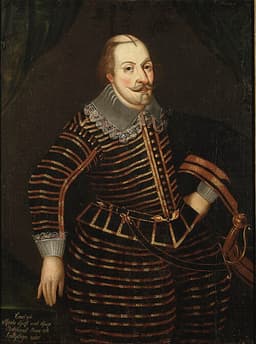
Charles IX of Sweden
Emperor · Modern
52.7Total
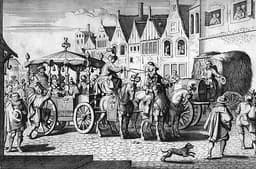
Henry IV of France
Emperor · Modern
63.7Total
Basic Information
Born
1550
1553
Died
1611
1610
Era
Modern
Modern
Nationality
Sweden
France
Occupation
Emperor
Emperor
Civilization
Western
Western
Score Comparison
Military (10%)
10.0
70.0
Political (20%)
68.0
75.0
Influence (20%)
53.3
56.7
Legacy (20%)
47.5
55.0
Leadership (15%)
74.0
80.0
Strategy (15%)
51.7
55.0
TOTAL
52.7
63.7
Charles IX of Sweden — Complete Timeline
1599 AD
Regency of Charles IXPolitical Action
Charles IX, then Duke of S
RegencyRebellionSigismund
Impact: national
1600 AD
War against Poland (Polish–Swedish War)War◆ Major
Charles IX launched a war against Poland to claim the Swedish throne from Sigismund III. The war included the Battle of Kircholm (1605), a major Polish victory, and continued intermittently until 1629.
Polish-Swedish WarDynastic Conflict
Impact: regional
1604 AD
Coronation of Charles IXPolitical Action◆ Major
Charles IX was formally crowned King of Sweden after the Riksdag declared Sigismund deposed. His coronation solidified the Vasa dynasty's break with Poland and established a Protestant, anti-Catholic policy.
CoronationSuccession
Impact: national
1611 AD
War against Denmark (Kalmar War)War◆ Major
Charles IX initiated the Kalmar War against Denmark-Norway over control of the Baltic Sea. The war ended in 1613 with the Treaty of Kn
Kalmar WarDenmarkBaltic
Impact: regionaldestructive
Founding of the Swedish East India CompanyPolitical Action
Charles IX granted a charter for the Swedish East India Company, though it was not fully realized until later. This initiative aimed to expand Swedish trade and influence in Asia.
TradeEast India CompanyColonialism
Impact: nationalconstructive
Henry IV of France — Complete Timeline
1590 AD
Battle of IvryWar◆ Major
Henry IV led his forces to a decisive victory over the Catholic League at Ivry. This battle solidified his military reputation and paved the way for his eventual capture of Paris and the throne.
BattleCatholic LeagueWars of Religion
Impact: national
1593 AD
Conversion to CatholicismPolitical Action◆ Major
Henry IV converted from Protestantism to Catholicism, reportedly stating 'Paris is worth a mass.' This act secured his acceptance by the Catholic majority and enabled his coronation, ending the religious civil wars.
ConversionPolitical PragmatismCatholicism
Impact: national
1598 AD
Edict of NantesReform
Henry IV issued the Edict of Nantes, granting substantial religious tolerance to French Protestants (Huguenots). It allowed them freedom of worship in specified areas and access to public office, ending the French Wars of Religion.
Religious ToleranceHuguenotsWars of Religion
Impact: nationalprogressive
Sully's Economic ReformsReform◆ Major
Henry IV, with his minister Sully, implemented economic reforms including tax reduction, infrastructure projects (roads, canals), and agricultural improvements. These measures stabilized the French economy after decades of war.
Economic ReformInfrastructureSully
Impact: nationalconstructive
1610 AD
Assassination by François RavaillacPolitical Action◆ Major
Henry IV was stabbed to death in Paris by Catholic fanatic Fran
AssassinationRegencyReligious Conflict
Impact: nationaltragic
Expert Analysis
Origins
Charles IX of Sweden was born on October 4, 1550, as the third son of King Gustav Vasa and his second wife, Margaret Leijonhufvud. His early life was shaped by the political turmoil of the Vasa dynasty, with his father's death in 1560 leading to a power struggle among the brothers. Charles was made Duke of Södermanland, but his education was limited compared to his elder brothers, focusing on practical governance rather than humanist learning.
Henry IV of France was born on December 13, 1553, in Pau, the capital of the Kingdom of Navarre. He was the son of Antoine de Bourbon and Jeanne d'Albret, the Queen of Navarre. As a member of the Bourbon family, the leading Protestant house in France, Henry was raised in the Huguenot faith. His upbringing emphasized military training and political acumen, preparing him for the religious wars that would define his reign.
Rise to Power
Charles IX rose to power through a series of dynastic conflicts. His brother, King John III, died in 1592, and the throne passed to John's Catholic son, Sigismund III Vasa, who was also King of Poland. Charles led a rebellion against Sigismund, citing his absence and Catholic sympathies. In 1595, the Riksdag declared Charles regent, and after a civil war, Sigismund was deposed in 1599. Charles was formally crowned King of Sweden in 1604, solidifying his rule and breaking the personal union with Poland.
Henry IV's rise was more dramatic. As a Huguenot leader, he inherited the claim to the French throne after the death of Henry III in 1589, but the Catholic League opposed him. Henry's conversion to Catholicism in 1593, reportedly saying 'Paris is worth a mass,' secured his acceptance by the Catholic majority. He then fought the Catholic League, winning a decisive victory at the Battle of Ivry in 1590, and entered Paris in 1594. His coronation that year marked the beginning of the Bourbon dynasty.
Leadership & Governance
Charles IX's leadership was characterized by authoritarian centralization. He reduced the power of the nobility, increased royal control over the church, and promoted Lutheranism as the state religion. He also founded the Swedish East India Company (though not fully realized until later) and expanded the navy. However, his governance was marred by the Kalmar War (1611-1613) against Denmark, which ended unfavorably with the Treaty of Knäred, forcing Sweden to pay a ransom for the fortress of Älvsborg. Charles scored 74.0 in leadership but only 10.0 in military, reflecting his strategic limitations.
Henry IV's governance focused on reconciliation and economic recovery. With his minister Sully, he implemented reforms: reducing taxes, improving infrastructure (roads, canals), and boosting agriculture. The Edict of Nantes (1598) granted religious tolerance to Huguenots, ending the French Wars of Religion. His leadership score of 80.0 and political score of 75.0 reflect his ability to stabilize France. However, his military score of 70.0 indicates competent generalship, as shown at Ivry.
Triumph & Tragedy
Charles IX's greatest triumph was securing the Swedish throne for the Vasa dynasty and laying the groundwork for his son Gustavus Adolphus's future successes. He also expanded Swedish influence in the Baltic. His tragedies include the disastrous Kalmar War, which drained resources, and his failure to decisively defeat Poland. His war against Poland saw a major defeat at the Battle of Kircholm (1605), where Swedish forces were routed. Charles's legacy score of 47.5 reflects these mixed outcomes.
Henry IV's triumphs include ending the religious wars and reviving the French economy. The Edict of Nantes is his most enduring achievement, fostering stability. His assassination in 1610 by François Ravaillac was a tragedy, plunging France into a regency under Marie de' Medici. His death cut short his reforms and led to renewed instability. Henry's legacy score of 55.0 acknowledges his foundational role for French absolutism.
Character & Destiny
Charles IX was pragmatic and ruthless, willing to depose a king and centralize power. His character was marked by determination but also by a lack of diplomatic finesse, leading to costly wars. His destiny was to be a transitional figure, overshadowed by his more famous son. Historians note his role in strengthening the monarchy but criticize his military overreach.
Henry IV was charismatic and pragmatic, known for his wit and ability to compromise. His conversion and the Edict of Nantes show his flexibility. His destiny was to be a unifier, but his assassination revealed the fragility of his peace. He is remembered as a popular king, 'Good King Henry,' who cared for his subjects.
Legacy
Charles IX's legacy is intertwined with the rise of Sweden as a great power. His administrative reforms and military expansion set the stage for Gustavus Adolphus. The Swedish East India Company, though later, originated from his charter. His total score of 52.7 reflects his moderate impact, with influence at 53.3.
Henry IV's legacy is more profound. The Edict of Nantes established a precedent for religious tolerance, influencing European thought. His economic policies revived France, and his dynasty ruled until 1830. His total score of 63.7, with leadership at 80.0 and political at 75.0, underscores his success.
Conclusion
Henry IV of France had a greater impact than Charles IX of Sweden. Despite Charles's role in founding the Swedish Empire, his achievements were limited by military failures and a shorter reign. Henry's political and leadership scores (75.0 and 80.0 vs. 68.0 and 74.0) reflect his superior ability to govern and unify. The Edict of Nantes alone outweighs Charles's accomplishments in historical significance. Henry IV's legacy of religious tolerance and economic reform shaped France for centuries, while Charles IX is remembered primarily as the father of Gustavus Adolphus. Thus, Henry IV emerges as the more consequential ruler.
Rankings
🥇
Henry IV of FranceLeader
Mil: 70.0Pol: 75.0Inf: 56.7
63.7
🥈
Charles IX of Sweden
Mil: 10.0Pol: 68.0Inf: 53.3
52.7
+11.0 behind
How This Comparison Works
Algorithm
Each figure is scored on 6 dimensions (0—100 scale) based on structured historical data: Military (10%), Political (20%), Influence (20%), Legacy (20%), Leadership (15%), Strategy (15%). The weighted total produces the final ranking.
Data Sources
Scores are computed from structured sub-indicators in the database. Scale factors adjust for era (Ancient ×0.85, Modern ×1.0) and civilization size (Eastern ×1.05, Other ×0.80) to account for differences in population and military scale.
Maximum 3 Figures
Comparisons are limited to 2—3 figures to ensure readability and statistical meaningfulness.
Error Margins
±5 points per dimension — Sub-scores are derived from historical records with inherent uncertainty. Two figures within 5 points on a dimension should be considered roughly equivalent in that area.
Total Score Accuracy
±3 points overall — The weighted combination of 6 dimensions produces a total score with approximately ±3 points of uncertainty. Differences of less than 3 points are not statistically significant— the figures are effectively tied.
Known Limitations
- Historical records are incomplete and uneven across civilizations
- Figures from oral-tradition societies may be underrepresented
- Occupation labels can misclassify multi-role figures
- Scores measure capability and impact, not moral character
- Quantitative scoring is a comparison tool, not absolute truth
Capability Radar
Military (10%) — Battles & Warfare
Battles
45
65
Win Rate
40
70
Expansion
45
50
Political (20%) — Governance & Reform
Reform
60
85
Diplomacy
40
80
Economy
50
75
Influence (20%) — Cultural & Global Reach
Cultural
30
65
Global
30
60
Legacy (20%) — Historical Impact
Historical
45
75
Longevity
40
70
Leadership (15%) — Power & Stability
Tenure
55
70
Stability
30
65
Strategy (15%) — Tactics & Innovation
Strategy
40
75
Tactics
35
60
Reform
50
55
Similar Comparisons
Comments & Discussion
No comments yet. Be the first to share your thoughts!