Loading...
Henry IV of France vs Takht Singh of Jodhpur
Henry IV of France leads by 18.4 pts · 2 figures compared
…
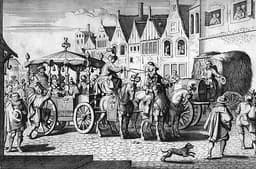
Henry IV of France
Emperor · Modern
63.7Total
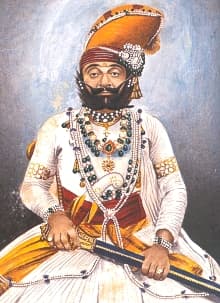
Takht Singh of Jodhpur
Emperor · Modern
45.3Total
Basic Information
Born
1553
1819
Died
1610
1873
Era
Modern
Modern
Nationality
France
India
Occupation
Emperor
Emperor
Civilization
Western
Indian
Score Comparison
Military (10%)
70.0
21.2
Political (20%)
75.0
45.1
Influence (20%)
56.7
48.6
Legacy (20%)
55.0
40.0
Leadership (15%)
80.0
65.0
Strategy (15%)
55.0
45.0
TOTAL
63.7
45.3
Henry IV of France — Complete Timeline
1590 AD
Battle of IvryWar◆ Major
Henry IV led his forces to a decisive victory over the Catholic League at Ivry. This battle solidified his military reputation and paved the way for his eventual capture of Paris and the throne.
BattleCatholic LeagueWars of Religion
Impact: national
1593 AD
Conversion to CatholicismPolitical Action◆ Major
Henry IV converted from Protestantism to Catholicism, reportedly stating 'Paris is worth a mass.' This act secured his acceptance by the Catholic majority and enabled his coronation, ending the religious civil wars.
ConversionPolitical PragmatismCatholicism
Impact: national
1598 AD
Edict of NantesReform
Henry IV issued the Edict of Nantes, granting substantial religious tolerance to French Protestants (Huguenots). It allowed them freedom of worship in specified areas and access to public office, ending the French Wars of Religion.
Religious ToleranceHuguenotsWars of Religion
Impact: nationalprogressive
Sully's Economic ReformsReform◆ Major
Henry IV, with his minister Sully, implemented economic reforms including tax reduction, infrastructure projects (roads, canals), and agricultural improvements. These measures stabilized the French economy after decades of war.
Economic ReformInfrastructureSully
Impact: nationalconstructive
1610 AD
Assassination by François RavaillacPolitical Action◆ Major
Henry IV was stabbed to death in Paris by Catholic fanatic Fran
AssassinationRegencyReligious Conflict
Impact: nationaltragic
Takht Singh of Jodhpur — Complete Timeline
1843 AD
Accession to the Throne of JodhpurPolitical Action◆ Major
Takht Singh became Maharaja of Jodhpur after the death of his predecessor, Maharaja Man Singh. His accession was supported by the British, who sought a ruler favorable to their interests in the region.
SuccessionJodhpurBritish Influence
Impact: regional
Alignment with the British East India CompanyPolitical Action◆ Major
Takht Singh signed a treaty with the British East India Company, aligning Jodhpur with British interests. He agreed to provide military support and accept British suzerainty in exchange for protection and recognition of his rule.
TreatyBritish AlliancePrincely State
Impact: regional
1850 AD
Suppression of the Thakur RebellionWar
Takht Singh suppressed a rebellion by Thakurs (nobles) who opposed his rule and British influence. With British military assistance, he defeated the rebels and consolidated his authority, though the rebellion highlighted tensions within the state.
RebellionNobilityBritish Support
Impact: regional
Expert Analysis
Origins
Henry IV of France was born on December 13, 1553, in Pau, Kingdom of Navarre, to Antoine de Bourbon and Jeanne d'Albret. As a member of the House of Bourbon, a cadet branch of the Capetian dynasty, he was raised as a Protestant (Huguenot) by his mother, a staunch Calvinist. His upbringing in the Pyrenees instilled in him a hardy, pragmatic disposition. He received military training from a young age and was immersed in the violent religious conflicts of 16th-century France.
Takht Singh was born in 1819 in Jodhpur, India, into the Rathore dynasty, the ruling clan of the Kingdom of Marwar. His father was Maharaja Man Singh, but Takht Singh was not the eldest son; he ascended the throne only after a succession dispute. Educated in traditional Rajput courtly arts—horsemanship, sword fighting, and statecraft—he was groomed for leadership in a period of waning Rajput autonomy under British paramountcy. Unlike Henry, his early life was marked by subordination to external powers.
Rise to Power
Henry IV's rise began with his leadership of the Huguenot forces during the French Wars of Religion. His military acumen was displayed at the Battle of Coutras (1587), where he defeated royal forces. After the assassination of King Henry III in 1589, Henry became the legitimate heir to the throne, but the Catholic League contested his claim, igniting a war of succession. The turning point came at the Battle of Ivry (March 14, 1590), where Henry decisively defeated the League's army, securing his path to Paris. However, he could not take the city until he converted to Catholicism in 1593, famously quipping, 'Paris is worth a mass.' He was crowned at Chartres in 1594, and his entry into Paris in March 1594 effectively ended the civil war.
Takht Singh's rise was less dramatic. After the death of Maharaja Man Singh in 1843, a succession crisis erupted. The British East India Company, seeking a stable ally, backed Takht Singh over rival claimants. He was installed as Maharaja on August 25, 1843, with British military support. His accession marked a shift from Marwari independence to subservience; he immediately signed a treaty recognizing British suzerainty and agreeing to provide troops and tribute. His power derived not from battlefield victories but from British patronage.
Leadership & Governance
Henry IV's governance was transformative. With his minister Maximilien de Béthune, Duke of Sully, he implemented sweeping economic reforms: reducing the taille (land tax), promoting agriculture, building roads and canals (including the Briare Canal), and reforming the treasury. The Edict of Nantes (April 13, 1598) granted Huguenots substantial religious liberties, effectively ending the Wars of Religion. Henry's leadership style was hands-on, pragmatic, and conciliatory—he famously wished every peasant to have a chicken in the pot every Sunday. He scored 80.0 in leadership, reflecting his ability to unite a fractured nation.
Takht Singh ruled as a vassal. His governance focused on maintaining British favor and suppressing internal dissent. He cooperated with the British administration, enforcing their policies in Marwar. He suppressed the Thakur Rebellion in 1844, using British troops to crush noble opposition. His economic policies were largely reactive, aiming to maintain revenue and order. He scored 65.0 in leadership, but his political score of 45.1 indicates limited autonomy. Unlike Henry, he did not initiate major reforms; his reign was defined by compliance.
Triumph & Tragedy
Henry IV's greatest triumph was the Edict of Nantes, which established a model of religious tolerance in an era of sectarian violence and contributed to France's recovery. His economic policies revitalized the kingdom, and his popularity was immense. However, his tragedy was his assassination on May 14, 1610, by François Ravaillac, a Catholic fanatic who believed Henry was planning to invade the Papal States. This event plunged France into a regency under Marie de' Medici, leading to renewed instability.
Takht Singh's triumph was securing Jodhpur's survival under British protection, avoiding annexation like other princely states. He maintained his throne for 30 years (until his death in 1873) and preserved the Rathore dynasty. However, his tragedy was the loss of sovereignty. By aligning with the British, he undermined Rajput traditions of independence and martial pride. His suppression of the Thakur rebellion alienated his own nobility, and his legacy is one of collaboration with colonial rule.
Character & Destiny
Henry IV was pragmatic, resilient, and charismatic. His willingness to convert to Catholicism for political gain showed strategic flexibility. He was known for his wit, bravery, and compassion. His character shaped a destiny of unification and reform, but his tolerance also made enemies among extremists, leading to his death. Historians often view him as a 'good king' who prioritized peace over dogma.
Takht Singh was cautious, diplomatic, and conservative. He chose security over glory, aligning with the British to preserve his position. His character suited a time of declining Rajput power, but it also cemented Jodhpur's subordination. He is remembered as a loyal ally of the British, but not as a strong independent ruler.
Legacy
Henry IV's legacy endures in France's religious tolerance, the Bourbon dynasty's consolidation, and the economic foundations laid by Sully. The Edict of Nantes lasted until 1685 (revoked by Louis XIV), but its principles influenced later European ideas of toleration. Henry scored 56.7 in influence and 55.0 in legacy, but his political and leadership scores (75.0 and 80.0) reflect his immediate impact.
Takht Singh's legacy is more limited. He kept Jodhpur independent in name but integrated it into the British Raj. His alignment set a precedent for other Rajput states. He scored 48.6 in influence and 40.0 in legacy. His rule is often seen as a period of stability but at the cost of autonomy. The Thakur rebellion's suppression weakened the traditional power structure, paving the way for British dominance.
Conclusion
Henry IV of France had a far greater impact than Takht Singh of Jodhpur. With a total score of 63.7 vs. 45.3, Henry's achievements in ending religious wars, reforming the economy, and unifying France were transformative on a national and European scale. Takht Singh, while effective as a British client, did not shape history beyond his region. Henry's military (70.0), political (75.0), and leadership (80.0) scores vastly exceed Takht Singh's 21.2, 45.1, and 65.0. The Edict of Nantes alone had consequences that echoed through centuries, whereas Takht Singh's treaty with the British was a local accommodation. Henry IV is a key figure in early modern European history; Takht Singh is a footnote in the colonial history of India. The data supports a clear verdict: Henry IV's influence and legacy dwarf those of Takht Singh.
Rankings
🥇
Henry IV of FranceLeader
Mil: 70.0Pol: 75.0Inf: 56.7
63.7
🥈
Takht Singh of Jodhpur
Mil: 21.2Pol: 45.1Inf: 48.6
45.3
+18.4 behind
How This Comparison Works
Algorithm
Each figure is scored on 6 dimensions (0—100 scale) based on structured historical data: Military (10%), Political (20%), Influence (20%), Legacy (20%), Leadership (15%), Strategy (15%). The weighted total produces the final ranking.
Data Sources
Scores are computed from structured sub-indicators in the database. Scale factors adjust for era (Ancient ×0.85, Modern ×1.0) and civilization size (Eastern ×1.05, Other ×0.80) to account for differences in population and military scale.
Maximum 3 Figures
Comparisons are limited to 2—3 figures to ensure readability and statistical meaningfulness.
Error Margins
±5 points per dimension — Sub-scores are derived from historical records with inherent uncertainty. Two figures within 5 points on a dimension should be considered roughly equivalent in that area.
Total Score Accuracy
±3 points overall — The weighted combination of 6 dimensions produces a total score with approximately ±3 points of uncertainty. Differences of less than 3 points are not statistically significant— the figures are effectively tied.
Known Limitations
- Historical records are incomplete and uneven across civilizations
- Figures from oral-tradition societies may be underrepresented
- Occupation labels can misclassify multi-role figures
- Scores measure capability and impact, not moral character
- Quantitative scoring is a comparison tool, not absolute truth
Capability Radar
Military (10%) — Battles & Warfare
Battles
65
10
Win Rate
70
10
Expansion
50
10
Political (20%) — Governance & Reform
Reform
85
30
Diplomacy
80
50
Economy
75
30
Influence (20%) — Cultural & Global Reach
Cultural
65
20
Global
60
10
Legacy (20%) — Historical Impact
Historical
75
20
Longevity
70
20
Leadership (15%) — Power & Stability
Tenure
70
40
Stability
65
40
Strategy (15%) — Tactics & Innovation
Strategy
75
10
Tactics
60
10
Reform
55
10
Similar Comparisons
Comments & Discussion
No comments yet. Be the first to share your thoughts!