Loading...
Ali Riza Pasha vs Henry I Duke of Guise
Henry I Duke of Guise leads by 31.7 pts · 2 figures compared
…

Ali Riza Pasha
General · Modern
37.1Total
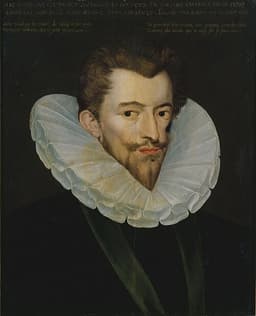
Henry I Duke of Guise
General · Modern
68.8Total
Basic Information
Born
1860
1550
Died
1932
1588
Era
Modern
Modern
Nationality
Ottoman Empire
France
Occupation
General
General
Civilization
Middle Eastern
Western
Score Comparison
Military (10%)
22.6
70.0
Political (20%)
29.3
72.0
Influence (20%)
50.2
82.0
Legacy (20%)
39.2
52.0
Leadership (15%)
33.5
80.0
Strategy (15%)
30.3
55.0
TOTAL
37.1
68.8
Ali Riza Pasha — Complete Timeline
1919 AD
Appointed Grand VizierPolitical Action◆ Major
Ali Riza Pasha was appointed Grand Vizier by Sultan Mehmed VI in October 1919. He attempted to mediate between the Istanbul government and the Turkish Nationalists, but his efforts were undermined by the Allies and the sultan.
Grand VizierTurkish War of IndependenceMediation
Impact: national
Negotiated with Mustafa KemalPolitical Action
Ali Riza Pasha attempted to negotiate with Mustafa Kemal Atat
NegotiationMustafa KemalSivas Congress
Impact: national
1920 AD
Resigned as Grand VizierPolitical Action◆ Major
Ali Riza Pasha resigned as Grand Vizier after the Allied occupation of Istanbul in March 1920. His resignation was forced by the British who demanded a more compliant government to enforce the Treaty of S
ResignationOccupationTreaty of Sèvres
Impact: national
Henry I Duke of Guise — Complete Timeline
1576 AD
Formation of the Catholic LeaguePolitical Action◆ Major
Henry I, Duke of Guise, helped found the Catholic League, a militant Catholic faction opposed to Huguenot concessions. The League aimed to protect Catholicism in France and became a powerful political and military force during the Wars of Religion.
Catholic LeagueReligious ConflictPolitical Faction
Impact: national
1588 AD
Day of the BarricadesPolitical Action
Henry I, Duke of Guise, led a popular uprising in Paris against King Henry III. The city's Catholic population erected barricades, forcing the king to flee. This event demonstrated the League's power and led to the king's submission to the League's demands.
UprisingCatholic LeaguePower Struggle
Impact: nationaldestructive
Assassination at BloisOther◆ Major
Henry I, Duke of Guise, was assassinated on the orders of King Henry III at the Ch
AssassinationCatholic LeagueWars of Religion
Impact: nationaltragic
Expert Analysis
Origins
**Ali Riza Pasha** (1860-1932) was born into a modest Ottoman family in Constantinople. He graduated from the Ottoman Military Academy and served in various administrative and military posts, including as a division commander in the Balkan Wars. His early career was marked by loyalty to the Ottoman sultanate, but he lacked the charisma and revolutionary drive of his contemporaries.
**Henry I, Duke of Guise** (1550-1588) was born into the powerful Guise family, a leading Catholic noble house in France. From childhood, he was groomed for military and political leadership. His father, Francis, Duke of Guise, was a prominent military commander during the French Wars of Religion. Henry inherited both the family's militant Catholicism and its ambition to challenge royal authority.
Rise to Power
Ali Riza Pasha rose to prominence through bureaucratic and military service. In October 1919, Sultan Mehmed VI appointed him Grand Vizier, a position he used to attempt mediation between the Istanbul government and the emerging nationalist movement led by Mustafa Kemal Atatürk. His key ally was the Sultan, but his opponents included both the British occupiers and the nationalists. His tenure was short-lived; he resigned in March 1920 after the Allied occupation of Istanbul.
Henry I Duke of Guise rose to power by championing the Catholic cause. In 1576, he helped found the Catholic League, an organization dedicated to suppressing Protestantism and limiting royal concessions to Huguenots. His turning point came during the Day of the Barricades (May 12, 1588) in Paris, when he led a popular uprising that forced King Henry III to flee. This event made him the de facto ruler of Paris and a direct challenger to the crown.
Leadership & Governance
Ali Riza Pasha's leadership was cautious and conciliatory. He attempted to negotiate with Mustafa Kemal, sending delegations to the Sivas Congress (1919) and seeking a compromise to avoid civil war. However, his reliance on the Sultan and inability to control the Allies made him ineffective. His governance score of 29.3 reflects his failure to assert authority.
Henry I Duke of Guise was a bold and charismatic leader. He governed Paris through the Catholic League, enforcing Catholic orthodoxy and mobilizing popular support. His leadership score of 80.0 indicates his ability to command loyalty. He used propaganda and street power to pressure the monarchy, but his governance was factional and destabilizing.
Triumph & Tragedy
Ali Riza Pasha's greatest success was his brief role in attempting to bridge the gap between the Ottoman government and the nationalists, though ultimately unsuccessful. His greatest failure was his resignation under British pressure, which effectively ended his political influence. He scored 22.6 in military and 39.2 in legacy, reflecting his limited impact.
Henry I Duke of Guise's greatest triumph was the Day of the Barricades, where he demonstrated his popular support and forced the king to capitulate. However, his greatest tragedy was his assassination at Blois (December 23, 1588) on orders of Henry III. His death removed the League's leader but intensified the civil war. He scored 70.0 in military and 52.0 in legacy.
Character & Destiny
Ali Riza Pasha was a loyalist and mediator, but his cautious nature and lack of strategic foresight led to his irrelevance. He sought compromise in a period that required decisive action. Historians view him as a well-intentioned but weak figure.
Henry I Duke of Guise was ambitious, ruthless, and charismatic. His willingness to challenge royal authority made him a hero to Catholics but a threat to the monarchy. His assassination was a direct result of his overreach and the king's fear of his power. He scored 72.0 in political and 80.0 in leadership.
Legacy
Ali Riza Pasha's legacy is minimal. He is remembered primarily as one of the last grand viziers of the Ottoman Empire, a transitional figure overshadowed by Atatürk. His attempts at mediation had no lasting effect.
Henry I Duke of Guise left a more significant legacy. The Catholic League's resistance shaped the French Wars of Religion and contributed to the eventual consolidation of royal power under Henry IV. He is remembered as a symbol of Catholic militancy and noble ambition. His legacy score of 52.0 is higher than Ali Riza's 39.2.
Conclusion
Henry I Duke of Guise had a greater impact on history than Ali Riza Pasha. With a total score of 68.8 versus 37.1, Guise's military and political actions directly shaped the course of the French Wars of Religion, while Ali Riza's brief tenure had little lasting effect. Guise's assassination also had more profound consequences, destabilizing the French monarchy and altering the balance of power. In contrast, Ali Riza Pasha's resignation was a footnote in the Turkish War of Independence. Thus, Henry I Duke of Guise emerges as the more influential figure.
Rankings
🥇
Henry I Duke of GuiseLeader
Mil: 70.0Pol: 72.0Inf: 82.0
68.8
🥈
Ali Riza Pasha
Mil: 22.6Pol: 29.3Inf: 50.2
37.1
+31.7 behind
How This Comparison Works
Algorithm
Each figure is scored on 6 dimensions (0—100 scale) based on structured historical data: Military (10%), Political (20%), Influence (20%), Legacy (20%), Leadership (15%), Strategy (15%). The weighted total produces the final ranking.
Data Sources
Scores are computed from structured sub-indicators in the database. Scale factors adjust for era (Ancient ×0.85, Modern ×1.0) and civilization size (Eastern ×1.05, Other ×0.80) to account for differences in population and military scale.
Maximum 3 Figures
Comparisons are limited to 2—3 figures to ensure readability and statistical meaningfulness.
Error Margins
±5 points per dimension — Sub-scores are derived from historical records with inherent uncertainty. Two figures within 5 points on a dimension should be considered roughly equivalent in that area.
Total Score Accuracy
±3 points overall — The weighted combination of 6 dimensions produces a total score with approximately ±3 points of uncertainty. Differences of less than 3 points are not statistically significant— the figures are effectively tied.
Known Limitations
- Historical records are incomplete and uneven across civilizations
- Figures from oral-tradition societies may be underrepresented
- Occupation labels can misclassify multi-role figures
- Scores measure capability and impact, not moral character
- Quantitative scoring is a comparison tool, not absolute truth
Capability Radar
Military (10%) — Battles & Warfare
Battles
10
65
Win Rate
10
60
Expansion
5
50
Political (20%) — Governance & Reform
Reform
10
60
Diplomacy
20
70
Economy
10
45
Influence (20%) — Cultural & Global Reach
Cultural
5
55
Global
5
45
Legacy (20%) — Historical Impact
Historical
15
60
Longevity
10
50
Leadership (15%) — Power & Stability
Tenure
15
65
Stability
10
30
Strategy (15%) — Tactics & Innovation
Strategy
15
75
Tactics
15
70
Reform
10
55
Similar Comparisons
Comments & Discussion
No comments yet. Be the first to share your thoughts!