Loading...
Claire Chennault vs Henry I Duke of Guise
Claire Chennault leads by 0.5 pts · 2 figures compared
…
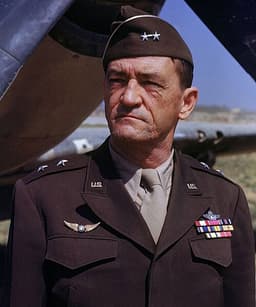
Claire Chennault
General · Modern
69.3Total
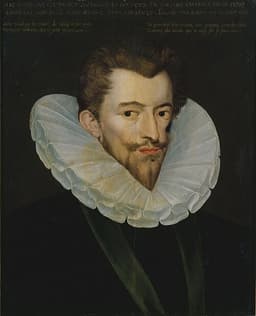
Henry I Duke of Guise
General · Modern
68.8Total
Basic Information
Born
1893
1550
Died
1958
1588
Era
Modern
Modern
Nationality
United States
France
Occupation
General
General
Civilization
Western
Western
Score Comparison
Military (10%)
61.7
70.0
Political (20%)
62.7
72.0
Influence (20%)
75.0
82.0
Legacy (20%)
72.0
52.0
Leadership (15%)
68.0
80.0
Strategy (15%)
68.0
55.0
TOTAL
69.3
68.8
Claire Chennault — Complete Timeline
1937 AD
Development of Air Power TheoryCultural
Chennault developed and advocated for the use of fighter aircraft in offensive operations, contrary to prevailing US doctrine. His theories were later validated in combat and influenced US air tactics in World War II.
Air PowerTheoryTactics
Impact: nationalconstructive
Retirement from US Army Air CorpsPolitical Action
Chennault retired from the US Army Air Corps due to deafness and disagreements over air doctrine. He then accepted a position as an advisor to the Chinese Air Force, where he began developing the Flying Tigers.
US ArmyRetirementChina
Impact: national
1941 AD
Formation of the Flying TigersWar◆ Major
Chennault organized and commanded the American Volunteer Group, known as the Flying Tigers, to fight the Japanese in China. The group of volunteer pilots flew P-40 Warhawks and achieved notable success against Japanese aircraft.
World War IIChinaFlying Tigers
Impact: regionalconstructive
1943 AD
Command of 14th Air ForceWar◆ Major
Chennault was appointed commander of the US 14th Air Force in China. He led the air force in operations against Japanese forces, including attacks on shipping, airfields, and supply lines.
World War IIChinaAir Force
Impact: regional
Henry I Duke of Guise — Complete Timeline
1576 AD
Formation of the Catholic LeaguePolitical Action◆ Major
Henry I, Duke of Guise, helped found the Catholic League, a militant Catholic faction opposed to Huguenot concessions. The League aimed to protect Catholicism in France and became a powerful political and military force during the Wars of Religion.
Catholic LeagueReligious ConflictPolitical Faction
Impact: national
1588 AD
Day of the BarricadesPolitical Action
Henry I, Duke of Guise, led a popular uprising in Paris against King Henry III. The city's Catholic population erected barricades, forcing the king to flee. This event demonstrated the League's power and led to the king's submission to the League's demands.
UprisingCatholic LeaguePower Struggle
Impact: nationaldestructive
Assassination at BloisOther◆ Major
Henry I, Duke of Guise, was assassinated on the orders of King Henry III at the Ch
AssassinationCatholic LeagueWars of Religion
Impact: nationaltragic
Expert Analysis
Origins
Claire Lee Chennault was born on September 6, 1893, in Commerce, Texas. Raised in rural Louisiana, he developed an early interest in aviation, but his formal education was limited to college-level studies at Louisiana State University without graduating. He taught school before enlisting in the U.S. Army in 1917. His early military career was marked by flight training, but he was hindered by partial deafness and clashes with superiors over air doctrine.
Henry I, Duke of Guise, was born on December 31, 1550, into the powerful House of Guise, a leading Catholic family in France. His father, Francis, Duke of Guise, was a military hero, and his uncle was a cardinal. Henry was raised to lead the Catholic cause. He received a military education and was deeply involved in court politics from a young age, inheriting the dukedom in 1563 after his father's assassination.
Rise to Power
Chennault's rise came through his advocacy for fighter aircraft and his service in China. After retiring from the U.S. Army Air Corps in 1937 due to deafness and doctrinal disagreements, he became an aviation advisor to Generalissimo Chiang Kai-shek. In 1941, he organized the American Volunteer Group (AVG), the Flying Tigers, composed of volunteer pilots. Their combat success against Japanese forces in Burma and China brought him international fame. In 1942, he was recalled to active duty and appointed commander of the U.S. 14th Air Force in China, a position he held until 1945.
Henry of Guise rose as a champion of Catholicism during the French Wars of Religion. He fought in the Battle of Saint-Denis (1567) and the Battle of Jarnac (1569), proving his military skill. His popularity soared after the St. Bartholomew's Day Massacre in 1572, in which he played a role. In 1576, he helped form the Catholic League to oppose Huguenot concessions. The Day of the Barricades in 1588 saw him lead a popular uprising in Paris that forced King Henry III to flee, making Guise the de facto ruler of the capital.
Leadership & Governance
Chennault's leadership was defined by his unorthodox tactics and ability to inspire loyalty. He trained his pilots in aggressive, high-altitude tactics and emphasized teamwork. Under his command, the Flying Tigers destroyed over 300 Japanese aircraft while losing only 14 pilots in combat. As head of the 14th Air Force, he prioritized attacking Japanese supply lines and airfields, contributing to the Allied victory in China. However, his strained relationship with General Joseph Stilwell and his reliance on air power over ground operations limited his strategic influence.
Henry of Guise was a charismatic leader who wielded immense influence through the Catholic League, which functioned as a parallel government. He was a skilled politician, mobilizing popular support in Paris and other cities. His governance was focused on Catholic orthodoxy and opposing the Huguenot minority. He effectively used propaganda and patronage to maintain control. However, his political ambitions led him to challenge the monarchy directly, culminating in the Day of the Barricades, which made him the effective ruler of Paris but also made him a target for the king's revenge.
Triumph & Tragedy
Chennault's greatest triumph was the creation and success of the Flying Tigers, which boosted Chinese morale and inflicted disproportionate losses on the Japanese. His air power theories, though initially rejected, later influenced U.S. fighter tactics. His tragedy was his failure to secure long-term support for his forces after the war and his inability to prevent the eventual Communist victory in China. He also suffered from personal health issues, including deafness and cancer, and died on July 27, 1958.
Henry of Guise's triumph was his leadership of the Catholic League, which established him as the most powerful figure in France by 1588. He successfully defended Catholic interests and forced the king to capitulate. His tragedy was his assassination on December 23, 1588, at the Château de Blois on the orders of Henry III. This act removed the League's leader but intensified the civil war, leading to further bloodshed. His death also prevented him from possibly claiming the throne.
Character & Destiny
Chennault was stubborn, innovative, and fiercely independent. His character clashed with military bureaucracy, but his determination allowed him to achieve results against the odds. His deafness and early retirement might have ended his career, but his move to China gave him a second chance. His destiny was shaped by war and his ability to adapt to a foreign environment.
Henry of Guise was ambitious, charismatic, and politically astute. He was a natural leader who inspired devotion, but his ambition made him a threat to the crown. His decision to challenge the king directly led to his downfall. His character and the volatile religious conflict set the stage for his dramatic end.
Legacy
Chennault's legacy is most visible in the continuing reverence for the Flying Tigers and his influence on air power doctrine. His tactical innovations are studied in military academies. The AVG's success helped forge a lasting bond between the U.S. and China. He scored 72.0 in legacy, reflecting his enduring impact on military aviation and Sino-American relations.
Henry of Guise's legacy is more mixed. He is remembered as a key figure in the French Wars of Religion, a champion of Catholicism, but also as a catalyst for violence. His assassination removed a major obstacle to Henry of Navarre's eventual accession as Henry IV, which brought peace through the Edict of Nantes. His legacy score of 52.0 reflects his limited long-term influence beyond his era.
Conclusion
Claire Chennault had a greater impact than Henry I, Duke of Guise, based on overall scores (69.3 vs 68.8) and the lasting significance of his contributions. Chennault's military innovations (strategy score 68.0) and his role in shaping air power have had a global and enduring influence, while Guise's political maneuvers (political score 72.0) were confined to a short period of French history. Chennault's legacy in fostering U.S.-China cooperation remains relevant, whereas Guise's legacy is largely historical. Therefore, Claire Chennault is the more impactful figure.
Rankings
🥇
Claire ChennaultLeader
Mil: 61.7Pol: 62.7Inf: 75.0
69.3
🥈
Henry I Duke of Guise
Mil: 70.0Pol: 72.0Inf: 82.0
68.8
+0.5 behind
How This Comparison Works
Algorithm
Each figure is scored on 6 dimensions (0—100 scale) based on structured historical data: Military (10%), Political (20%), Influence (20%), Legacy (20%), Leadership (15%), Strategy (15%). The weighted total produces the final ranking.
Data Sources
Scores are computed from structured sub-indicators in the database. Scale factors adjust for era (Ancient ×0.85, Modern ×1.0) and civilization size (Eastern ×1.05, Other ×0.80) to account for differences in population and military scale.
Maximum 3 Figures
Comparisons are limited to 2—3 figures to ensure readability and statistical meaningfulness.
Error Margins
±5 points per dimension — Sub-scores are derived from historical records with inherent uncertainty. Two figures within 5 points on a dimension should be considered roughly equivalent in that area.
Total Score Accuracy
±3 points overall — The weighted combination of 6 dimensions produces a total score with approximately ±3 points of uncertainty. Differences of less than 3 points are not statistically significant— the figures are effectively tied.
Known Limitations
- Historical records are incomplete and uneven across civilizations
- Figures from oral-tradition societies may be underrepresented
- Occupation labels can misclassify multi-role figures
- Scores measure capability and impact, not moral character
- Quantitative scoring is a comparison tool, not absolute truth
Capability Radar
Military (10%) — Battles & Warfare
Battles
65
65
Win Rate
70
60
Expansion
60
50
Political (20%) — Governance & Reform
Reform
50
60
Diplomacy
75
70
Economy
30
45
Influence (20%) — Cultural & Global Reach
Cultural
65
55
Global
65
45
Legacy (20%) — Historical Impact
Historical
70
60
Longevity
60
50
Leadership (15%) — Power & Stability
Tenure
40
65
Stability
35
30
Strategy (15%) — Tactics & Innovation
Strategy
75
75
Tactics
85
70
Reform
80
55
Similar Comparisons
Comments & Discussion
No comments yet. Be the first to share your thoughts!