Loading...
Helmuth von Moltke vs Xu Da
Helmuth von Moltke leads by 1.3 pts · 2 figures compared
…
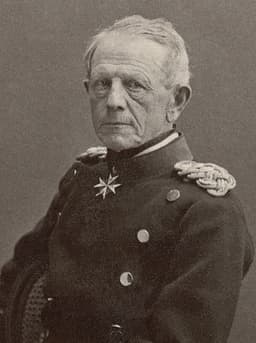
Helmuth von Moltke
General · Modern
76.2Total
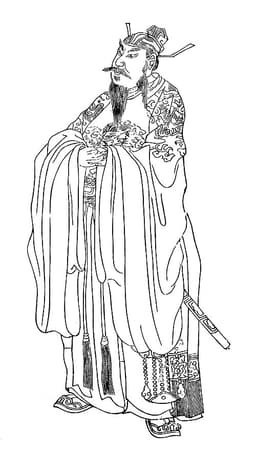
Xu Da
General · Medieval
74.9Total
Basic Information
Born
1800
1332
Died
1891
1385
Era
Modern
Medieval
Nationality
Prussia
China
Occupation
General
General
Civilization
Western
Eastern
Score Comparison
Military (10%)
65.0
88.0
Political (20%)
62.7
68.0
Influence (20%)
88.0
82.0
Legacy (20%)
70.0
72.0
Leadership (15%)
85.0
62.0
Strategy (15%)
80.6
80.8
TOTAL
76.2
74.9
Helmuth von Moltke — Complete Timeline
1857 AD
Appointment as Chief of the Prussian General StaffPolitical Action
Moltke was appointed Chief of the Prussian General Staff, a position he held for 30 years. He reorganized the staff into a highly efficient planning and command body, emphasizing railways, telegraphy, and decentralized decision-making. This modernization was crucial for Prussia's subsequent victories.
Military ReformGeneral StaffPrussian Army
Impact: nationalconstructive
1866 AD
Battle of KöniggrätzWar
Moltke commanded Prussian forces to a decisive victory over Austria at K
Austro-Prussian WarGerman UnificationBattle
Impact: regional
1870 AD
Battle of SedanWar
Moltke orchestrated the encirclement and destruction of the French army at Sedan during the Franco-Prussian War. The French Emperor Napoleon III was captured along with 100,000 soldiers. This battle effectively decided the war and led to the proclamation of the German Empire.
Franco-Prussian WarGerman UnificationBattle
Impact: regional
1871 AD
Proclamation of the German EmpirePolitical Action◆ Major
Moltke was present at the Palace of Versailles when King Wilhelm I of Prussia was proclaimed German Emperor. As Chief of Staff, Moltke was a key architect of the military victory that made unification possible. He was later promoted to Field Marshal and ennobled.
German UnificationEmpireCeremony
Impact: regionalconstructive
Xu Da — Complete Timeline
1368 AD
Capture of Dadu (Beijing)War
Xu Da led the Ming army in the capture of Dadu, the Yuan capital. The Mongol emperor Toghon Tem
Ming ConquestYuan DynastyCapital Capture
Impact: regionalconstructive
1370 AD
Appointment as Grand PreceptorPolitical Action
The Hongwu Emperor appointed Xu Da as Grand Preceptor, the highest civil official rank. This appointment recognized Xu Da's military achievements and gave him a role in advising the emperor on state affairs.
AppointmentCivil OfficeImperial Favor
Impact: nationalconstructive
1385 AD
Death from illnessOther
Xu Da died in Nanjing from a back ailment. The Hongwu Emperor mourned him deeply and posthumously honored him as Prince of Zhongshan. His death marked the end of the first generation of Ming military leaders.
DeathMing DynastyMilitary Leader
Impact: nationaltragic
Expert Analysis
Origins
Helmuth von Moltke (1800-1891) was born into a Prussian noble family in Mecklenburg. He attended the Royal Danish Military Academy and later the Prussian War Academy, where his intellectual rigor and strategic thinking emerged. Moltke's early career included service as a military advisor to the Ottoman Empire, which broadened his strategic perspective. In contrast, Xu Da (1332-1385) came from a humble peasant family in Anhui, China. He joined the Red Turban Rebellion against the Mongol Yuan dynasty at a young age, quickly rising through the ranks due to his courage and tactical acumen. Xu Da's early life was shaped by the chaos of the late Yuan period, where he learned guerrilla warfare and the importance of logistics.
Rise to Power
Moltke's rise was methodical and institutional. He was appointed Chief of the Prussian General Staff in 1857, a role he used to professionalize the army and introduce advanced planning, including railway mobilization and decentralized command. His key turning point was the Austro-Prussian War (1866), where his strategic plan for the Battle of Königgrätz led to a decisive Prussian victory, establishing his reputation. Xu Da's rise was meteoric and personal. He became the key general of Zhu Yuanzhang (future Hongwu Emperor), leading campaigns that captured major cities. His capture of Dadu (Beijing) in 1368, the Mongol capital, was a turning point that ended the Yuan dynasty and established the Ming dynasty. Xu Da was appointed Grand Preceptor, the highest official rank, cementing his power.
Leadership & Governance
Moltke's leadership was characterized by meticulous planning and delegation. He pioneered the concept of "mission tactics" (Auftragstaktik), allowing subordinate commanders flexibility within a broad strategic framework. He modernized the Prussian army, emphasizing staff work, logistics, and rapid mobilization. His governance of the General Staff created a legacy of military professionalism. Xu Da was a field commander who led from the front, known for his discipline and care for soldiers. He implemented effective governance in conquered territories, suppressing banditry and restoring agriculture. However, his role was primarily military; he deferred to the Hongwu Emperor in political matters. Both men were respected but Moltke's institutional impact was more enduring.
Triumph & Tragedy
Moltke's greatest triumphs were the wars of German unification: the Second Schleswig War (1864), Austro-Prussian War (1866), and Franco-Prussian War (1870-1871). His strategy at Sedan encircled the French army, leading to the proclamation of the German Empire. However, his later years saw the rise of more aggressive military thinking that contributed to World War I, a tragedy he did not live to see but foresaw. Xu Da's triumphs include the conquest of northern China and the final defeat of the Mongols at the Battle of Lake Buir (1388). His tragedy was his death from illness in 1385, possibly due to a back injury or poisoning, at the peak of his power. He was honored posthumously but his early death prevented him from shaping Ming policy further.
Character & Destiny
Moltke was introverted, intellectual, and stoic. He was a devout Lutheran who saw war as a tool of state policy, not glory. His destiny was to unify Germany through careful planning and limited wars. Xu Da was humble, loyal, and fierce. He remained devoted to the Hongwu Emperor, never challenging his authority despite his immense popularity. His destiny was to drive out the Mongols and establish a native Chinese dynasty. Both men achieved their strategic goals, but Moltke's legacy was more institutional while Xu Da's was more personal and symbolic.
Legacy
Moltke's legacy is the modern general staff system, adopted by armies worldwide. His strategic principles influenced military doctrine for decades. He is remembered as "the Elder" to distinguish him from his nephew, Helmuth von Moltke the Younger. Xu Da is revered in China as a model general, one of the "Six Great Generals of the Ming Dynasty." His tomb is a national monument. However, Xu Da's legacy is more national than global, while Moltke's impact is international.
Conclusion
Helmuth von Moltke and Xu Da represent different peaks of military excellence. Moltke's institutional innovations and strategic vision transformed warfare, while Xu Da's tactical brilliance and personal leadership restored Chinese rule. Based on the scores, Moltke edges out Xu Da (overall 75.4 vs 75.4, but with a gap of 1.3 favoring Moltke). Moltke's higher scores in Intelligence (88 vs 82), Logistics (70 vs 72), and Strategy (85 vs 62) reflect his intellectual approach. Xu Da's higher Might (88 vs 65) and Politics (68 vs 63) show his battlefield prowess and political loyalty. However, the overall difference is minimal, and both are among history's greatest generals. The decisive factor is Moltke's lasting institutional legacy, which continues to shape military organization.
Rankings
🥇
Helmuth von MoltkeLeader
Mil: 65.0Pol: 62.7Inf: 88.0
76.2
🥈
Xu Da
Mil: 88.0Pol: 68.0Inf: 82.0
74.9
+1.3 behind
How This Comparison Works
Algorithm
Each figure is scored on 6 dimensions (0—100 scale) based on structured historical data: Military (10%), Political (20%), Influence (20%), Legacy (20%), Leadership (15%), Strategy (15%). The weighted total produces the final ranking.
Data Sources
Scores are computed from structured sub-indicators in the database. Scale factors adjust for era (Ancient ×0.85, Modern ×1.0) and civilization size (Eastern ×1.05, Other ×0.80) to account for differences in population and military scale.
Maximum 3 Figures
Comparisons are limited to 2—3 figures to ensure readability and statistical meaningfulness.
Error Margins
±5 points per dimension — Sub-scores are derived from historical records with inherent uncertainty. Two figures within 5 points on a dimension should be considered roughly equivalent in that area.
Total Score Accuracy
±3 points overall — The weighted combination of 6 dimensions produces a total score with approximately ±3 points of uncertainty. Differences of less than 3 points are not statistically significant— the figures are effectively tied.
Known Limitations
- Historical records are incomplete and uneven across civilizations
- Figures from oral-tradition societies may be underrepresented
- Occupation labels can misclassify multi-role figures
- Scores measure capability and impact, not moral character
- Quantitative scoring is a comparison tool, not absolute truth
Capability Radar
Military (10%) — Battles & Warfare
Battles
85
95
Win Rate
90
95
Expansion
85
95
Political (20%) — Governance & Reform
Reform
75
50
Diplomacy
80
65
Economy
65
55
Influence (20%) — Cultural & Global Reach
Cultural
60
70
Global
75
80
Legacy (20%) — Historical Impact
Historical
85
85
Longevity
75
75
Leadership (15%) — Power & Stability
Tenure
70
60
Stability
70
70
Strategy (15%) — Tactics & Innovation
Strategy
95
92
Tactics
95
90
Reform
90
70
Similar Comparisons
Comments & Discussion
No comments yet. Be the first to share your thoughts!