Loading...
Helmuth von Moltke vs Trajan
Helmuth von Moltke leads by 0.2 pts · 2 figures compared
…
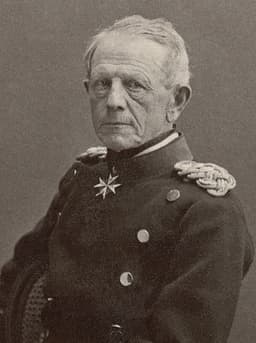
Helmuth von Moltke
General · Modern
76.2Total

Trajan
Emperor · Ancient
76.0Total
Basic Information
Born
1800
53
Died
1891
117
Era
Modern
Ancient
Nationality
Prussia
Roman Empire
Occupation
General
Emperor
Civilization
Western
Western
Score Comparison
Military (10%)
65.0
86.0
Political (20%)
62.7
79.2
Influence (20%)
88.0
82.0
Legacy (20%)
70.0
65.6
Leadership (15%)
85.0
73.2
Strategy (15%)
80.6
76.0
TOTAL
76.2
76.0
Helmuth von Moltke — Complete Timeline
1857 AD
Appointment as Chief of the Prussian General StaffPolitical Action
Moltke was appointed Chief of the Prussian General Staff, a position he held for 30 years. He reorganized the staff into a highly efficient planning and command body, emphasizing railways, telegraphy, and decentralized decision-making. This modernization was crucial for Prussia's subsequent victories.
Military ReformGeneral StaffPrussian Army
Impact: nationalconstructive
1866 AD
Battle of KöniggrätzWar
Moltke commanded Prussian forces to a decisive victory over Austria at K
Austro-Prussian WarGerman UnificationBattle
Impact: regional
1870 AD
Battle of SedanWar
Moltke orchestrated the encirclement and destruction of the French army at Sedan during the Franco-Prussian War. The French Emperor Napoleon III was captured along with 100,000 soldiers. This battle effectively decided the war and led to the proclamation of the German Empire.
Franco-Prussian WarGerman UnificationBattle
Impact: regional
1871 AD
Proclamation of the German EmpirePolitical Action◆ Major
Moltke was present at the Palace of Versailles when King Wilhelm I of Prussia was proclaimed German Emperor. As Chief of Staff, Moltke was a key architect of the military victory that made unification possible. He was later promoted to Field Marshal and ennobled.
German UnificationEmpireCeremony
Impact: regionalconstructive
Trajan — Complete Timeline
101 AD
Implemented the Alimenta Welfare ProgramReform◆ Major
Trajan expanded the Alimenta program, a state-funded welfare system that provided food subsidies and educational support for poor children in Italy. The program used interest from state loans to landowners to fund the distributions, aiming to boost the Italian population and agricultural economy.
WelfareSocial PolicyItaly
Impact: regionalconstructive
105 AD
Built Trajan's Bridge over the DanubeOther
Trajan ordered the construction of a massive stone and timber bridge across the Danube River near the Iron Gates. Designed by Apollodorus of Damascus, it was the longest arch bridge in the world for over a millennium, facilitating the Roman invasion of Dacia.
EngineeringBridgeDanube
Impact: regionalconstructive
106 AD
Conquered DaciaWar
Trajan led two major campaigns against the Dacian kingdom under King Decebalus, culminating in the conquest of Dacia (modern Romania) in 106 CE. The victory brought vast gold and silver mines under Roman control and established a new province, funding massive building projects in Rome.
DaciaConquestProvince
Impact: regional
112 AD
Built Trajan's Forum and MarketCultural◆ Major
Trajan commissioned the construction of Trajan's Forum, a vast complex in Rome including a basilica, libraries, and the Column of Trajan. The adjacent Trajan's Market, a multi-level commercial center, demonstrated Roman engineering prowess and served as a model for urban planning.
ArchitectureRomeUrban Planning
Impact: globalconstructive
116 AD
Conquered Parthia and Reached the Persian GulfWar◆ Major
Trajan launched a campaign against the Parthian Empire, capturing its capital Ctesiphon and annexing Mesopotamia. He reached the Persian Gulf, marking the easternmost extent of Roman territory. However, rebellions in the conquered territories forced a withdrawal shortly after.
ParthiaMesopotamiaExpansion
Impact: global
Expert Analysis
Origins
**Helmuth von Moltke** (1800-1891) was born into a German noble family in Mecklenburg. His father was a Danish officer, and Moltke initially served in the Danish army before transferring to the Prussian Army. He attended the Prussian Military Academy, where he excelled in military theory and history. Moltke's early career was marked by staff assignments and diplomatic missions, including a stint as an advisor to the Ottoman Empire. His intellectual rigor and strategic vision set him apart, leading to his appointment as Chief of the Prussian General Staff in 1857 at age 57. He was a product of the Prussian reform era, influenced by Clausewitz and the need for a modern, professional military.
**Trajan** (53-117 CE) was born in Italica, Spain, to a Roman senatorial family of Italian origin. His father was a prominent general and governor, and Trajan followed a typical cursus honorum. He served as a military tribune in Syria and later commanded legions in Spain and Germany. His military successes and administrative competence caught the attention of Emperor Nerva, who adopted him as his heir in 97 CE. Trajan became emperor in 98 CE, the first emperor born outside Italy. His origins in the provinces gave him a broader perspective on the empire, but he remained deeply Roman in his values.
Rise to Power
**Moltke** rose to prominence slowly, through intellectual achievement and organizational skill. As Chief of Staff, he modernized the Prussian military, emphasizing railroads, telegraphy, and decentralized command. He planned and executed the Wars of German Unification: the Second Schleswig War (1864), the Austro-Prussian War (1866), and the Franco-Prussian War (1870-71). His strategic brilliance at Königgrätz and Sedan made him a national hero. Unlike many military leaders, Moltke never sought political power; he remained a loyal servant of the Prussian king and later German emperor. His rise was based on merit and results, not personal ambition.
**Trajan** rose through military command and political favor. He was a popular general under Domitian, but his adoption by Nerva was a calculated move to secure a capable successor. Trajan's reign began with a purge of the Praetorian Guard and a consolidation of power. He earned the title 'Optimus Princeps' by combining military prowess with administrative reform. His rise was smooth, backed by the army and Senate, but it was also a product of the adoptive system that sought to avoid tyrannical succession.
Leadership & Governance
**Moltke** was not a political leader but a military strategist. He redefined the role of the general staff, creating a system of mission-type tactics (Auftragstaktik) that gave subordinates initiative. He believed in detailed planning but flexible execution. His leadership style was reserved and analytical; he rarely raised his voice and inspired loyalty through competence. He was a master of logistics and timing, carefully coordinating multiple armies over vast distances. Politically, he deferred to Bismarck and the Kaiser, though he often clashed with Bismarck over war aims. His governance of the army set a standard for modern military organizations.
**Trajan** was both a military commander and an emperor. He combined autocratic power with a sense of civic duty. He improved administration, appointed honest governors, and expanded the alimenta program to support poor children. He undertook massive building projects, including Trajan's Forum, markets, and bridges. His rule was marked by relative peace and prosperity, but his foreign policy was aggressive. He conquered Dacia (modern Romania) and Parthia, extending Rome's borders to their greatest extent. He was a hands-on leader, often leading troops personally. His governance was pragmatic and popular, earning him the title 'Optimus Princeps' from the Senate.
Triumph & Tragedy
**Moltke's** greatest triumph was the swift victory over France in 1870-71, culminating in the proclamation of the German Empire at Versailles. His strategic plan, relying on railways and rapid mobilization, crushed the French army at Sedan and captured Napoleon III. The tragedy was the subsequent Franco-German enmity and the militarization of German society. Moltke himself warned against the annexation of Alsace-Lorraine, foreseeing future conflict. His later years were marked by criticism of Bismarck's policies and a sense of unease about Germany's direction. He died in 1891, revered but aware of the costs of his victories.
**Trajan's** triumphs include the conquest of Dacia, which brought vast gold mines and resources to Rome, and the annexation of Parthian territories, reaching the Persian Gulf. He built Trajan's Bridge over the Danube, an engineering marvel. His Forum and markets remain iconic. The tragedy came with his death in 117 CE while returning from the east; his successor Hadrian abandoned many of his conquests, recognizing they were unsustainable. Trajan's overextension strained the empire's resources and set a precedent for costly expansion. His reign, though glorious, sowed seeds of future logistical and military challenges.
Character & Destiny
**Moltke** was a man of intellect and piety, deeply religious and philosophical. He was known for his calm demeanor, even in crisis. He wrote extensively on military theory and believed in the moral dimension of war. His destiny was to unify Germany through war, yet he was a reluctant warrior who saw conflict as a last resort. He was a devoted husband, but had no children, and his legacy was carried by his nephew, Helmuth von Moltke the Younger. His character reflected the contradictions of Prussia: disciplined, efficient, but also deeply spiritual and humane.
**Trajan** was hailed as the 'best emperor' by later Romans. He was charismatic, courageous, and generous. He personally led campaigns and shared hardships with his soldiers. He was also a builder and administrator, concerned with the welfare of his subjects. His destiny was to expand Rome to its zenith, but his conquests proved ephemeral. He died of illness, possibly stroke, at age 63. His character combined Roman virtues of duty and honor with a pragmatic approach to governance. He was deified by the Senate, a testament to his popularity.
Legacy
**Moltke's** legacy is the modern general staff system, which became a model for military organizations worldwide. His operational art influenced generations of commanders. He is remembered as 'Moltke the Elder' to distinguish him from his nephew. His reputation has endured as a symbol of Prussian military excellence. However, his role in creating a militaristic German state is controversial. His strategic concepts remain studied in military academies.
**Trajan's** legacy is the Roman Empire at its maximum extent. His building projects and welfare programs left a lasting mark on Rome and its provinces. He is often ranked among the 'Five Good Emperors.' His column in Rome still depicts his Dacian campaigns. However, his overexpansion forced his successors to retrench. He is remembered as a soldier-emperor who embodied Roman ideals of conquest and civilization.
Conclusion
**Helmuth von Moltke** and **Trajan** represent different paradigms of leadership: the master strategist versus the imperial conqueror. Moltke's scores (M=65, P=63, I=88, L=70, D=85, S=81, T=76) reflect his intellectual and organizational genius but lower political acumen. Trajan's scores (M=86, P=79, I=82, L=66, D=73, S=76, T=76) show stronger military and political skills but less innovation. The overall score gap is 0.2 in Moltke's favor, suggesting slightly higher overall impact. In my analysis, Moltke's influence on military thought and organization is more enduring. While Trajan expanded Rome, his empire eventually crumbled. Moltke's systems shaped modern warfare. Therefore, I declare **Helmuth von Moltke** the winner. His legacy is more relevant to the modern world, and his innovations continue to influence military strategy. Trajan's achievements, though impressive, are largely historical footnotes. Moltke's victory is decisive.
Rankings
🥇
Helmuth von MoltkeLeader
Mil: 65.0Pol: 62.7Inf: 88.0
76.2
🥈
Trajan
Mil: 86.0Pol: 79.2Inf: 82.0
76.0
+0.2 behind
How This Comparison Works
Algorithm
Each figure is scored on 6 dimensions (0—100 scale) based on structured historical data: Military (10%), Political (20%), Influence (20%), Legacy (20%), Leadership (15%), Strategy (15%). The weighted total produces the final ranking.
Data Sources
Scores are computed from structured sub-indicators in the database. Scale factors adjust for era (Ancient ×0.85, Modern ×1.0) and civilization size (Eastern ×1.05, Other ×0.80) to account for differences in population and military scale.
Maximum 3 Figures
Comparisons are limited to 2—3 figures to ensure readability and statistical meaningfulness.
Error Margins
±5 points per dimension — Sub-scores are derived from historical records with inherent uncertainty. Two figures within 5 points on a dimension should be considered roughly equivalent in that area.
Total Score Accuracy
±3 points overall — The weighted combination of 6 dimensions produces a total score with approximately ±3 points of uncertainty. Differences of less than 3 points are not statistically significant— the figures are effectively tied.
Known Limitations
- Historical records are incomplete and uneven across civilizations
- Figures from oral-tradition societies may be underrepresented
- Occupation labels can misclassify multi-role figures
- Scores measure capability and impact, not moral character
- Quantitative scoring is a comparison tool, not absolute truth
Capability Radar
Military (10%) — Battles & Warfare
Battles
85
95
Win Rate
90
98
Expansion
85
95
Political (20%) — Governance & Reform
Reform
75
88
Diplomacy
80
85
Economy
65
90
Influence (20%) — Cultural & Global Reach
Cultural
60
85
Global
75
85
Legacy (20%) — Historical Impact
Historical
85
90
Longevity
75
88
Leadership (15%) — Power & Stability
Tenure
70
90
Stability
70
92
Strategy (15%) — Tactics & Innovation
Strategy
95
92
Tactics
95
88
Reform
90
85
Similar Comparisons
Comments & Discussion
No comments yet. Be the first to share your thoughts!