Loading...
This comparison has not been analyzed yet.
One-time AI generation (~1 minute). Scores and timeline are already available below.
Helmuth von Moltke vs Konishi Yukinaga
Helmuth von Moltke leads by 23.6 pts · 2 figures compared
…
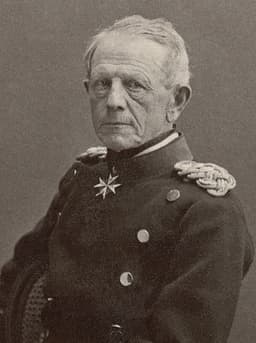
Helmuth von Moltke
General · Modern
76.2Total

Konishi Yukinaga
General · Modern
52.6Total
Basic Information
Born
1800
1555
Died
1891
1600
Era
Modern
Modern
Nationality
Prussia
Japan
Occupation
General
General
Civilization
Western
Eastern
Score Comparison
Military (10%)
65.0
47.5
Political (20%)
62.7
45.1
Influence (20%)
88.0
56.4
Legacy (20%)
70.0
43.3
Leadership (15%)
85.0
68.0
Strategy (15%)
80.6
60.0
TOTAL
76.2
52.6
Helmuth von Moltke — Complete Timeline
1857 AD
Appointment as Chief of the Prussian General StaffPolitical Action
Moltke was appointed Chief of the Prussian General Staff, a position he held for 30 years. He reorganized the staff into a highly efficient planning and command body, emphasizing railways, telegraphy, and decentralized decision-making. This modernization was crucial for Prussia's subsequent victories.
Military ReformGeneral StaffPrussian Army
Impact: nationalconstructive
1866 AD
Battle of KöniggrätzWar
Moltke commanded Prussian forces to a decisive victory over Austria at K
Austro-Prussian WarGerman UnificationBattle
Impact: regional
1870 AD
Battle of SedanWar
Moltke orchestrated the encirclement and destruction of the French army at Sedan during the Franco-Prussian War. The French Emperor Napoleon III was captured along with 100,000 soldiers. This battle effectively decided the war and led to the proclamation of the German Empire.
Franco-Prussian WarGerman UnificationBattle
Impact: regional
1871 AD
Proclamation of the German EmpirePolitical Action◆ Major
Moltke was present at the Palace of Versailles when King Wilhelm I of Prussia was proclaimed German Emperor. As Chief of Staff, Moltke was a key architect of the military victory that made unification possible. He was later promoted to Field Marshal and ennobled.
German UnificationEmpireCeremony
Impact: regionalconstructive
Konishi Yukinaga — Complete Timeline
1583 AD
Conversion to ChristianityCultural
Konishi Yukinaga converted to Roman Catholicism under the influence of Jesuit missionaries. He became a Christian daimyo, supporting missionary work and building churches in his domain.
ChristianityDaimyoReligion
constructive
1592 AD
First Invasion of Korea (Imjin War)War◆ Major
Konishi Yukinaga led the Japanese vanguard in the invasion of Korea, capturing Busan and advancing to Seoul and Pyongyang. His forces faced resistance from Korean and Ming Chinese armies, leading to a stalemate.
Imjin WarJapanese InvasionKorea
Impact: regionaldestructive
1593 AD
Battle of ByeokjegwanWar◆ Major
Konishi Yukinaga's forces were defeated by a combined Korean and Ming Chinese army at Byeokjegwan near Seoul. This battle forced the Japanese to retreat from Pyongyang and negotiate a truce.
Imjin WarBattleDefeat
Impact: regionaltragic
1600 AD
Battle of SekigaharaWar
Konishi Yukinaga fought on the Western Army side under Ishida Mitsunari at Sekigahara. His forces were defeated by Tokugawa Ieyasu's Eastern Army, leading to his capture and execution.
SekigaharaBattleExecution
Impact: nationaltragic
This comparison has not been analyzed yet.
One-time AI generation (~1 minute). Scores and timeline are already available below.
Rankings
🥇
Helmuth von MoltkeLeader
Mil: 65.0Pol: 62.7Inf: 88.0
76.2
🥈
Konishi Yukinaga
Mil: 47.5Pol: 45.1Inf: 56.4
52.6
+23.6 behind
How This Comparison Works
Algorithm
Each figure is scored on 6 dimensions (0—100 scale) based on structured historical data: Military (10%), Political (20%), Influence (20%), Legacy (20%), Leadership (15%), Strategy (15%). The weighted total produces the final ranking.
Data Sources
Scores are computed from structured sub-indicators in the database. Scale factors adjust for era (Ancient ×0.85, Modern ×1.0) and civilization size (Eastern ×1.05, Other ×0.80) to account for differences in population and military scale.
Maximum 3 Figures
Comparisons are limited to 2—3 figures to ensure readability and statistical meaningfulness.
Error Margins
±5 points per dimension — Sub-scores are derived from historical records with inherent uncertainty. Two figures within 5 points on a dimension should be considered roughly equivalent in that area.
Total Score Accuracy
±3 points overall — The weighted combination of 6 dimensions produces a total score with approximately ±3 points of uncertainty. Differences of less than 3 points are not statistically significant— the figures are effectively tied.
Known Limitations
- Historical records are incomplete and uneven across civilizations
- Figures from oral-tradition societies may be underrepresented
- Occupation labels can misclassify multi-role figures
- Scores measure capability and impact, not moral character
- Quantitative scoring is a comparison tool, not absolute truth
Capability Radar
Military (10%) — Battles & Warfare
Battles
85
55
Win Rate
90
40
Expansion
85
50
Political (20%) — Governance & Reform
Reform
75
20
Diplomacy
80
45
Economy
65
30
Influence (20%) — Cultural & Global Reach
Cultural
60
25
Global
75
25
Legacy (20%) — Historical Impact
Historical
85
30
Longevity
75
20
Leadership (15%) — Power & Stability
Tenure
70
40
Stability
70
35
Strategy (15%) — Tactics & Innovation
Strategy
95
45
Tactics
95
50
Reform
90
20
Similar Comparisons
Comments & Discussion
No comments yet. Be the first to share your thoughts!