Loading...
Fukanggan vs Helmuth von Moltke
Helmuth von Moltke leads by 24.1 pts · 2 figures compared
…

Fukanggan
General · Modern
52.1Total
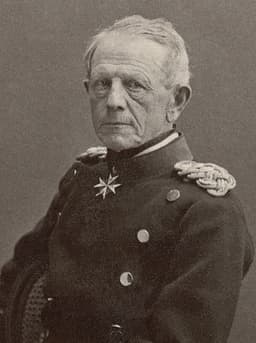
Helmuth von Moltke
General · Modern
76.2Total
Basic Information
Born
1753
1800
Died
1796
1891
Era
Modern
Modern
Nationality
China
Prussia
Occupation
General
General
Civilization
Eastern
Western
Score Comparison
Military (10%)
67.5
65.0
Political (20%)
45.1
62.7
Influence (20%)
51.8
88.0
Legacy (20%)
42.5
70.0
Leadership (15%)
62.0
85.0
Strategy (15%)
57.5
80.6
TOTAL
52.1
76.2
Fukanggan — Complete Timeline
1787 AD
Taiwan RebellionWar
Fukanggan led Qing forces to suppress the Lin Shuangwen rebellion in Taiwan. The rebellion was crushed, and Fukanggan restored Qing control over the island, but the campaign exposed corruption in the Qing military.
RebellionTaiwanSuppression
Impact: regionaldestructive
1792 AD
Gurkha WarWar◆ Major
Fukanggan commanded Qing forces in the invasion of Nepal against the Gurkha kingdom. The campaign forced the Gurkhas to submit to Qing suzerainty and pay tribute, extending Qing influence into the Himalayas.
Sino-Nepalese WarExpeditionTribute
Impact: regional
Helmuth von Moltke — Complete Timeline
1857 AD
Appointment as Chief of the Prussian General StaffPolitical Action
Moltke was appointed Chief of the Prussian General Staff, a position he held for 30 years. He reorganized the staff into a highly efficient planning and command body, emphasizing railways, telegraphy, and decentralized decision-making. This modernization was crucial for Prussia's subsequent victories.
Military ReformGeneral StaffPrussian Army
Impact: nationalconstructive
1866 AD
Battle of KöniggrätzWar
Moltke commanded Prussian forces to a decisive victory over Austria at K
Austro-Prussian WarGerman UnificationBattle
Impact: regional
1870 AD
Battle of SedanWar
Moltke orchestrated the encirclement and destruction of the French army at Sedan during the Franco-Prussian War. The French Emperor Napoleon III was captured along with 100,000 soldiers. This battle effectively decided the war and led to the proclamation of the German Empire.
Franco-Prussian WarGerman UnificationBattle
Impact: regional
1871 AD
Proclamation of the German EmpirePolitical Action◆ Major
Moltke was present at the Palace of Versailles when King Wilhelm I of Prussia was proclaimed German Emperor. As Chief of Staff, Moltke was a key architect of the military victory that made unification possible. He was later promoted to Field Marshal and ennobled.
German UnificationEmpireCeremony
Impact: regionalconstructive
Expert Analysis
Origins
Fukanggan (born 1748) was a Manchu nobleman of the Fuca clan, a prominent family serving the Qing dynasty. His father, Fuheng, was a grand councilor, and his sister was Empress Xiaoxianchun, wife of the Qianlong Emperor. Fukanggan entered the military through the imperial guard, benefiting from patronage and the banner system. He lacked formal military education but gained experience in campaigns against the Dzungars and Jinchuan rebellions.
Helmuth von Moltke (born 1800) was born into a noble but impoverished family in Mecklenburg-Schwerin. His father was a Danish officer, and Moltke initially served in the Danish army before transferring to Prussia. He attended the Prussian Military Academy, where he studied military history and engineering. His early career included staff work and mapmaking, which honed his analytical skills.
Rise to Power
Fukanggan rose through the Qing military hierarchy due to his family connections and successful campaigns. His first major command came in 1776 during the Jinchuan campaign, where he served under Agui. He was appointed to lead the suppression of the Lin Shuangwen rebellion in Taiwan (1787-1788), which he crushed decisively, restoring Qing control. His greatest achievement was the Gurkha War (1791-1792), where he led a 10,000-man force into Nepal, forcing the Gurkhas to submit and pay tribute to the Qing. In 1796, he was sent to suppress the White Lotus Rebellion but died of illness en route.
Moltke's rise was slower but more systematic. He became Chief of the Prussian General Staff in 1857, a position he held for 30 years. He reorganized the staff into a highly efficient planning body, emphasizing railway logistics and decentralized command. His first major test was the Austro-Prussian War (1866), where he directed the rapid mobilization and concentration of Prussian armies, leading to the decisive Battle of Königgrätz. The Franco-Prussian War (1870-1871) cemented his reputation; he orchestrated the encirclement of the French army at Sedan, capturing Emperor Napoleon III. In 1871, he was present at the proclamation of the German Empire.
Leadership & Governance
Fukanggan's leadership style was typical of Qing generals: direct command, reliance on Manchu and Han officers, and harsh discipline. He was known for personal bravery but also for nepotism and corruption. In Taiwan, he reportedly executed thousands of rebels and civilians to restore order. His governance approach was punitive rather than conciliatory, aiming to demonstrate Qing power. He did not implement lasting reforms or institutional changes.
Moltke's leadership was revolutionary. He pioneered the concept of mission-type tactics (Auftragstaktik), giving subordinates freedom to execute orders based on local conditions. He emphasized careful planning and railway logistics, allowing rapid concentration of forces. He was methodical and reserved, avoiding personal glory. His reforms created a professional general staff system that became a model for modern armies. Politically, he was a conservative who supported Bismarck's unification agenda but avoided direct involvement in governance.
Triumph & Tragedy
Fukanggan's greatest success was the Gurkha War, where he forced a formidable enemy to accept Qing suzerainty, securing the southern border. However, his brutality in Taiwan and suspected corruption tarnished his record. He died before the White Lotus Rebellion escalated, avoiding a potential failure. His military score of 67.5 reflects competent but not exceptional performance.
Moltke's triumphs include the victories at Königgrätz (scored 80.6 in strategy) and Sedan, leading to German unification. His system of staff planning and railway mobilization became a standard. His tragedy was the inability to prevent World War I, as his strategic concepts were later misapplied by successors. He also faced criticism for the siege of Paris and the harsh terms imposed on France.
Character & Destiny
Fukanggan was ambitious and ruthless, leveraging family ties to gain command. His decisions were often driven by personal advancement rather than strategic necessity. His character suited the Qing system, where loyalty and connections mattered more than innovation. He died at 48, likely from disease, leaving no lasting military legacy.
Moltke was introspective, disciplined, and deeply analytical. He was a devout Lutheran and a prolific writer. His calm demeanor and strategic foresight earned him the nickname "The Great Silent One." His character shaped his fate: he avoided political intrigue, allowing him to focus on military reform. He lived to 91, witnessing the empire he helped create.
Legacy
Fukanggan's legacy is limited to Qing military history. He is remembered for the Gurkha War but not studied for strategic innovation. His scores: Legacy 42.5, Influence 51.8. He did not alter the course of Chinese military thought.
Moltke's legacy is immense. He revolutionized warfare with modern staff systems, railway logistics, and decentralized command. His influence scored 88.0, Legacy 70.0. His methods were adopted worldwide, shaping World War I strategies. The German General Staff became a model for military organizations. His total score of 76.2 reflects his transformative impact.
Conclusion
Helmuth von Moltke had a greater impact on history. His strategic innovations changed how wars were fought, influencing military doctrine for generations. Fukanggan was a competent Qing general whose achievements were confined to regional conflicts. Moltke's 76.2 total versus Fukanggan's 52.1 underscores his superior influence and legacy. While Fukanggan succeeded in his campaigns, his methods were conventional, and his contributions did not extend beyond his era. Moltke, by contrast, shaped the modern world through German unification and military reform.
Rankings
🥇
Helmuth von MoltkeLeader
Mil: 65.0Pol: 62.7Inf: 88.0
76.2
🥈
Fukanggan
Mil: 67.5Pol: 45.1Inf: 51.8
52.1
+24.1 behind
How This Comparison Works
Algorithm
Each figure is scored on 6 dimensions (0—100 scale) based on structured historical data: Military (10%), Political (20%), Influence (20%), Legacy (20%), Leadership (15%), Strategy (15%). The weighted total produces the final ranking.
Data Sources
Scores are computed from structured sub-indicators in the database. Scale factors adjust for era (Ancient ×0.85, Modern ×1.0) and civilization size (Eastern ×1.05, Other ×0.80) to account for differences in population and military scale.
Maximum 3 Figures
Comparisons are limited to 2—3 figures to ensure readability and statistical meaningfulness.
Error Margins
±5 points per dimension — Sub-scores are derived from historical records with inherent uncertainty. Two figures within 5 points on a dimension should be considered roughly equivalent in that area.
Total Score Accuracy
±3 points overall — The weighted combination of 6 dimensions produces a total score with approximately ±3 points of uncertainty. Differences of less than 3 points are not statistically significant— the figures are effectively tied.
Known Limitations
- Historical records are incomplete and uneven across civilizations
- Figures from oral-tradition societies may be underrepresented
- Occupation labels can misclassify multi-role figures
- Scores measure capability and impact, not moral character
- Quantitative scoring is a comparison tool, not absolute truth
Capability Radar
Military (10%) — Battles & Warfare
Battles
60
85
Win Rate
65
90
Expansion
55
85
Political (20%) — Governance & Reform
Reform
20
75
Diplomacy
50
80
Economy
25
65
Influence (20%) — Cultural & Global Reach
Cultural
20
60
Global
20
75
Legacy (20%) — Historical Impact
Historical
30
85
Longevity
15
75
Leadership (15%) — Power & Stability
Tenure
40
70
Stability
45
70
Strategy (15%) — Tactics & Innovation
Strategy
60
95
Tactics
55
95
Reform
30
90
Similar Comparisons
Comments & Discussion
No comments yet. Be the first to share your thoughts!