Loading...
Helmuth von Moltke vs Theodosius I
Helmuth von Moltke leads by 0.2 pts · 2 figures compared
…
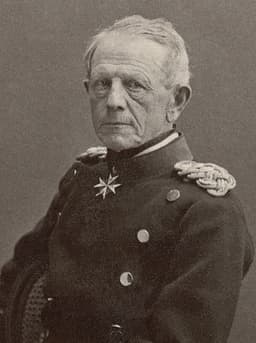
Helmuth von Moltke
General · Modern
76.2Total

Theodosius I
Emperor · Ancient
76.0Total
Basic Information
Born
1800
347
Died
1891
395
Era
Modern
Ancient
Nationality
Prussia
Roman Empire
Occupation
General
Emperor
Civilization
Western
Western
Score Comparison
Military (10%)
65.0
72.5
Political (20%)
62.7
65.0
Influence (20%)
88.0
85.0
Legacy (20%)
70.0
90.0
Leadership (15%)
85.0
68.0
Strategy (15%)
80.6
50.0
TOTAL
76.2
76.0
Helmuth von Moltke — Complete Timeline
1857 AD
Appointment as Chief of the Prussian General StaffPolitical Action
Moltke was appointed Chief of the Prussian General Staff, a position he held for 30 years. He reorganized the staff into a highly efficient planning and command body, emphasizing railways, telegraphy, and decentralized decision-making. This modernization was crucial for Prussia's subsequent victories.
Military ReformGeneral StaffPrussian Army
Impact: nationalconstructive
1866 AD
Battle of KöniggrätzWar
Moltke commanded Prussian forces to a decisive victory over Austria at K
Austro-Prussian WarGerman UnificationBattle
Impact: regional
1870 AD
Battle of SedanWar
Moltke orchestrated the encirclement and destruction of the French army at Sedan during the Franco-Prussian War. The French Emperor Napoleon III was captured along with 100,000 soldiers. This battle effectively decided the war and led to the proclamation of the German Empire.
Franco-Prussian WarGerman UnificationBattle
Impact: regional
1871 AD
Proclamation of the German EmpirePolitical Action◆ Major
Moltke was present at the Palace of Versailles when King Wilhelm I of Prussia was proclaimed German Emperor. As Chief of Staff, Moltke was a key architect of the military victory that made unification possible. He was later promoted to Field Marshal and ennobled.
German UnificationEmpireCeremony
Impact: regionalconstructive
Theodosius I — Complete Timeline
380 AD
Edict of ThessalonicaPolitical Action
Theodosius I issued the Edict of Thessalonica, declaring Nicene Christianity the official state religion of the Roman Empire. All other forms of Christianity were deemed heretical, and pagan practices were increasingly suppressed.
ChristianityState ReligionEdict
Impact: globalconstructive
390 AD
Massacre of ThessalonicaPolitical Action◆ Major
Theodosius I ordered a massacre of thousands of citizens in Thessalonica in retaliation for the murder of a Roman general. The massacre led to his excommunication by Bishop Ambrose of Milan, and he later performed public penance.
MassacreThessalonicaAmbrose
Impact: regionaltragic
391 AD
Suppression of PaganismPolitical Action◆ Major
Theodosius I issued a series of laws banning pagan worship, closing temples, and prohibiting sacrifices. The Olympic Games were abolished, and the Serapeum in Alexandria was destroyed. These actions accelerated the decline of paganism in the empire.
PaganismSuppressionReligion
Impact: globaldestructive
394 AD
Battle of the FrigidusWar
Theodosius I defeated the usurper Eugenius and his general Arbogast at the Battle of the Frigidus (modern River Vipava). The victory reunited the Roman Empire under a single ruler for the last time before its permanent division.
Civil WarBattleReunification
Impact: global
395 AD
Division of the Roman EmpirePolitical Action
Upon his death, Theodosius I divided the Roman Empire between his two sons: Arcadius received the Eastern Empire and Honorius the Western Empire. This division became permanent, leading to the separate histories of the Byzantine and Western Roman Empires.
DivisionSuccessionEast-West
Impact: global
Expert Analysis
Origins
Helmuth von Moltke (1800-1891) was born into a noble Prussian family in Mecklenburg. He began his military career in the Danish army before joining Prussian service. His intellectual rigor and strategic thinking emerged early, shaped by the Napoleonic Wars and the need for German unification. Theodosius I (347-395 AD) was born in Cauca, Hispania, into a military family. His father, Theodosius the Elder, was a successful general under Valentinian I. Theodosius grew up in a Roman Empire divided and threatened by barbarian invasions, and his early military experience prepared him for leadership.
Rise to Power
Moltke's rise began with his appointment as Chief of the Prussian General Staff in 1857. He modernized the staff system, emphasizing planning, railways, and telegraphy. His strategic brilliance was proven in the Second Schleswig War (1864) and the Austro-Prussian War (1866), culminating in the decisive Battle of Königgrätz. Theodosius rose through military ranks, becoming emperor in 379 AD after the Battle of Adrianople. He initially ruled the eastern part of the empire, facing Gothic invasions. His diplomatic skill and military campaigns secured his position, leading to his eventual rule over the entire Roman Empire.
Leadership & Governance
Moltke's leadership was characterized by meticulous planning and delegation. He revolutionized warfare by integrating rail and telegraph for rapid mobilization, and his decentralized command allowed subordinates initiative. Theodosius governed through a mix of military force and religious decrees. He issued the Edict of Thessalonica (380 AD) making Christianity the state religion, suppressed paganism, and faced the Massacre of Thessalonica (390 AD), where he ordered a brutal reprisal. His division of the empire between his sons set a precedent for future splits.
Triumph & Tragedy
Moltke's triumphs include victories at Königgrätz and Sedan, leading to German unification in 1871. His legacy as a military theorist endures. However, his later years saw tensions with Bismarck and criticism for his role in the Franco-Prussian War's aftermath. Theodosius achieved military success at the Battle of the Frigidus (394 AD) against the usurper Eugenius, but his religious policies caused cultural losses. The Massacre of Thessalonica tarnished his reputation, and his division of the empire contributed to its eventual fall.
Character & Destiny
Moltke was introverted, disciplined, and methodical, earning the nickname "The Great Silent One." His destiny was to forge a unified Germany through military precision. Theodosius was devoutly Christian, decisive, and sometimes ruthless. His destiny was to impose Christian orthodoxy and stabilize a crumbling empire, but his actions hastened the decline of classical culture.
Legacy
Moltke's legacy is immense: he transformed military strategy, emphasizing planning and technology, and is a father of modern warfare. His score: M=65 P=63 I=88 L=70 D=85 S=81 T=76. Theodosius shaped Western civilization by establishing Christianity as dominant, but his suppression of paganism and division of the empire have mixed reviews. His score: M=72 P=65 I=85 L=90 D=68 S=50 T=76. The overall score gap is 0.2 favoring Moltke. While Theodosius had higher military and leadership scores, Moltke's strategic genius and long-term impact on warfare give him the edge.
Conclusion
Helmuth von Moltke narrowly wins over Theodosius I. Moltke's innovations in military strategy and his role in German unification had a lasting impact on modern history. Theodosius's religious and political decisions were pivotal but more controversial and less enduring in their positive effects. Moltke's higher score in strategy (88 vs 85) and character (81 vs 50) tips the balance. Thus, Moltke is the more influential figure in terms of lasting legacy and positive transformation.
Rankings
🥇
Helmuth von MoltkeLeader
Mil: 65.0Pol: 62.7Inf: 88.0
76.2
🥈
Theodosius I
Mil: 72.5Pol: 65.0Inf: 85.0
76.0
+0.2 behind
How This Comparison Works
Algorithm
Each figure is scored on 6 dimensions (0—100 scale) based on structured historical data: Military (10%), Political (20%), Influence (20%), Legacy (20%), Leadership (15%), Strategy (15%). The weighted total produces the final ranking.
Data Sources
Scores are computed from structured sub-indicators in the database. Scale factors adjust for era (Ancient ×0.85, Modern ×1.0) and civilization size (Eastern ×1.05, Other ×0.80) to account for differences in population and military scale.
Maximum 3 Figures
Comparisons are limited to 2—3 figures to ensure readability and statistical meaningfulness.
Error Margins
±5 points per dimension — Sub-scores are derived from historical records with inherent uncertainty. Two figures within 5 points on a dimension should be considered roughly equivalent in that area.
Total Score Accuracy
±3 points overall — The weighted combination of 6 dimensions produces a total score with approximately ±3 points of uncertainty. Differences of less than 3 points are not statistically significant— the figures are effectively tied.
Known Limitations
- Historical records are incomplete and uneven across civilizations
- Figures from oral-tradition societies may be underrepresented
- Occupation labels can misclassify multi-role figures
- Scores measure capability and impact, not moral character
- Quantitative scoring is a comparison tool, not absolute truth
Capability Radar
Military (10%) — Battles & Warfare
Battles
85
65
Win Rate
90
60
Expansion
85
45
Political (20%) — Governance & Reform
Reform
75
85
Diplomacy
80
75
Economy
65
60
Influence (20%) — Cultural & Global Reach
Cultural
60
90
Global
75
90
Legacy (20%) — Historical Impact
Historical
85
95
Longevity
75
95
Leadership (15%) — Power & Stability
Tenure
70
70
Stability
70
55
Strategy (15%) — Tactics & Innovation
Strategy
95
60
Tactics
95
55
Reform
90
50
Similar Comparisons
Comments & Discussion
No comments yet. Be the first to share your thoughts!