Loading...
Helmuth von Moltke vs Suleiman I
Suleiman I leads by 2.6 pts · 2 figures compared
…
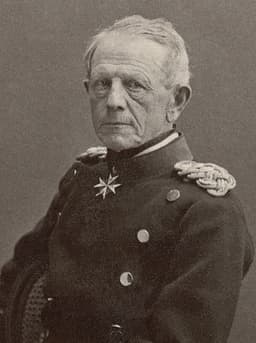
Helmuth von Moltke
General · Modern
76.2Total
Suleiman I
Emperor · Medieval
78.8Total
Basic Information
Born
1800
1494
Died
1891
1566
Era
Modern
Medieval
Nationality
Prussia
Ottoman Empire
Occupation
General
Emperor
Civilization
Western
Middle Eastern
Score Comparison
Military (10%)
65.0
78.5
Political (20%)
62.7
82.0
Influence (20%)
88.0
85.0
Legacy (20%)
70.0
70.8
Leadership (15%)
85.0
81.7
Strategy (15%)
80.6
74.4
TOTAL
76.2
78.8
Helmuth von Moltke — Complete Timeline
1857 AD
Appointment as Chief of the Prussian General StaffPolitical Action
Moltke was appointed Chief of the Prussian General Staff, a position he held for 30 years. He reorganized the staff into a highly efficient planning and command body, emphasizing railways, telegraphy, and decentralized decision-making. This modernization was crucial for Prussia's subsequent victories.
Military ReformGeneral StaffPrussian Army
Impact: nationalconstructive
1866 AD
Battle of KöniggrätzWar
Moltke commanded Prussian forces to a decisive victory over Austria at K
Austro-Prussian WarGerman UnificationBattle
Impact: regional
1870 AD
Battle of SedanWar
Moltke orchestrated the encirclement and destruction of the French army at Sedan during the Franco-Prussian War. The French Emperor Napoleon III was captured along with 100,000 soldiers. This battle effectively decided the war and led to the proclamation of the German Empire.
Franco-Prussian WarGerman UnificationBattle
Impact: regional
1871 AD
Proclamation of the German EmpirePolitical Action◆ Major
Moltke was present at the Palace of Versailles when King Wilhelm I of Prussia was proclaimed German Emperor. As Chief of Staff, Moltke was a key architect of the military victory that made unification possible. He was later promoted to Field Marshal and ennobled.
German UnificationEmpireCeremony
Impact: regionalconstructive
Suleiman I — Complete Timeline
1522 AD
Siege of RhodesWar◆ Major
Suleiman I led a massive Ottoman army and fleet to besiege the island of Rhodes, held by the Knights Hospitaller. After a six-month siege, the knights surrendered and were allowed to leave. This victory secured Ottoman control over the eastern Mediterranean.
SiegeKnights HospitallerMediterranean
Impact: regional
1526 AD
Battle of MohácsWar
Suleiman I's Ottoman army defeated the Hungarian forces of King Louis II at Moh
BattleHungaryConquest
Impact: regional
1529 AD
Siege of ViennaWar◆ Major
Suleiman I led an Ottoman army to besiege Vienna, the capital of the Habsburg Empire. The siege failed due to supply problems and the onset of winter. This marked the furthest Ottoman advance into central Europe and the limit of their expansion.
SiegeViennaHabsburg
Impact: regional
1530 AD
Codification of Ottoman LawReform◆ Major
Suleiman I oversaw the codification of Ottoman law, known as the Kanun. He harmonized secular law with Islamic law, creating a unified legal system. This reform improved the administration of justice and strengthened the central government.
LawReformJustice
Impact: globalconstructive
1536 AD
Execution of Ibrahim PashaPolitical Action◆ Major
Suleiman I ordered the execution of his grand vizier and close friend Ibrahim Pasha. Ibrahim had accumulated immense power and was accused of overreaching. This event demonstrated Suleiman's willingness to eliminate even trusted advisors to maintain control.
ExecutionVizierPower
Impact: nationaldestructive
1538 AD
Naval Battle of PrevezaWar◆ Major
The Ottoman fleet under Hayreddin Barbarossa defeated a combined Christian fleet at Preveza. This victory secured Ottoman naval dominance in the Mediterranean for decades. It allowed the Ottomans to control trade routes and raid coastal areas.
Naval BattleBarbarossaMediterranean
Impact: regional
Expert Analysis
Origins
Suleiman I was born in 1494 in Trabzon, son of Sultan Selim I. He inherited a vast, expanding empire and was groomed for rule. Helmuth von Moltke was born in 1800 in Parchim, Mecklenburg-Schwerin, into a noble but modest family. He chose a military career, attending the Danish and Prussian cadet schools. Their origins shaped their paths: Suleiman as a born ruler, Moltke as a professional officer.
Rise to Power
Suleiman ascended the throne in 1520 at age 26, without major internal opposition. His early campaigns—conquest of Belgrade (1521) and Rhodes (1522)—established his military reputation. Moltke's rise was slower; he served as a staff officer, then as military advisor to the Ottoman Empire (1835-1839) before being appointed Chief of the Prussian General Staff in 1857 at age 57. Suleiman's rise was swift and hereditary; Moltke's was meritocratic and gradual.
Leadership & Governance
Suleiman ruled as an absolute monarch, personally leading campaigns and overseeing law codification (Kanun). He was both sultan and caliph, wielding immense authority. His execution of Grand Vizier Ibrahim Pasha shows his unilateral power. Moltke led through influence and planning, not command. As Chief of Staff, he reformed the Prussian army, emphasizing railways, telegraphy, and decentralized decision-making. His leadership was indirect but transformative.
Triumph & Tragedy
Suleiman's triumphs include the victory at Mohács (1526) and the conquest of Rhodes. His tragedy was the failed Siege of Vienna (1529) and the execution of his son Mustafa, leading to succession crises. Moltke's triumphs were the decisive victories at Königgrätz (1866) and Sedan (1870), leading to German unification. His tragedy is less personal; he saw the unification he helped create but died before WWI. Both had mixed legacies.
Character & Destiny
Suleiman was confident, just, but ruthless. He was called "the Lawgiver" for his legal reforms but also "the Magnificent" for his cultural patronage. His destiny was to embody the Ottoman Golden Age. Moltke was methodical, introverted, and strategic. Known as "Moltke the Elder," his destiny was to be the architect of Germany's victory. Suleiman's character was more flamboyant; Moltke's was reserved.
Legacy
Suleiman's legacy is the Ottoman Empire at its peak—culturally, legally, and militarily. He influenced architecture, law, and poetry. Moltke's legacy is modern warfare: he pioneered the use of railways and general staff systems, influencing military thinking worldwide. Both are revered in their respective contexts, but Suleiman's impact is more symbolic, Moltke's more technical.
Conclusion
Suleiman I scores higher overall (78.7 vs 76.1) due to his multifaceted impact as ruler, lawgiver, and conqueror. While Moltke's military innovations were profound, Suleiman's broader influence on civilization edges him ahead. However, Moltke's strategic genius arguably had a more lasting effect on warfare. In a direct confrontation, Suleiman's massive empire would likely overwhelm Moltke's smaller Prussian state, but Moltke's tactics could exploit weaknesses. Ultimately, Suleiman's legacy as a universal monarch surpasses Moltke's as a specialist.
**Scores:** Suleiman: 78.7 | Moltke: 76.1
Rankings
🥇
Suleiman ILeader
Mil: 78.5Pol: 82.0Inf: 85.0
78.8
🥈
Helmuth von Moltke
Mil: 65.0Pol: 62.7Inf: 88.0
76.2
+2.6 behind
How This Comparison Works
Algorithm
Each figure is scored on 6 dimensions (0—100 scale) based on structured historical data: Military (10%), Political (20%), Influence (20%), Legacy (20%), Leadership (15%), Strategy (15%). The weighted total produces the final ranking.
Data Sources
Scores are computed from structured sub-indicators in the database. Scale factors adjust for era (Ancient ×0.85, Modern ×1.0) and civilization size (Eastern ×1.05, Other ×0.80) to account for differences in population and military scale.
Maximum 3 Figures
Comparisons are limited to 2—3 figures to ensure readability and statistical meaningfulness.
Error Margins
±5 points per dimension — Sub-scores are derived from historical records with inherent uncertainty. Two figures within 5 points on a dimension should be considered roughly equivalent in that area.
Total Score Accuracy
±3 points overall — The weighted combination of 6 dimensions produces a total score with approximately ±3 points of uncertainty. Differences of less than 3 points are not statistically significant— the figures are effectively tied.
Known Limitations
- Historical records are incomplete and uneven across civilizations
- Figures from oral-tradition societies may be underrepresented
- Occupation labels can misclassify multi-role figures
- Scores measure capability and impact, not moral character
- Quantitative scoring is a comparison tool, not absolute truth
Capability Radar
Military (10%) — Battles & Warfare
Battles
85
95
Win Rate
90
92
Expansion
85
95
Political (20%) — Governance & Reform
Reform
75
90
Diplomacy
80
88
Economy
65
85
Influence (20%) — Cultural & Global Reach
Cultural
60
85
Global
75
85
Legacy (20%) — Historical Impact
Historical
85
88
Longevity
75
80
Leadership (15%) — Power & Stability
Tenure
70
95
Stability
70
80
Strategy (15%) — Tactics & Innovation
Strategy
95
90
Tactics
95
88
Reform
90
85
Similar Comparisons
Comments & Discussion
No comments yet. Be the first to share your thoughts!