Loading...
Helmuth von Moltke vs Rama of Ayodhya
Helmuth von Moltke leads by 0.9 pts · 2 figures compared
…
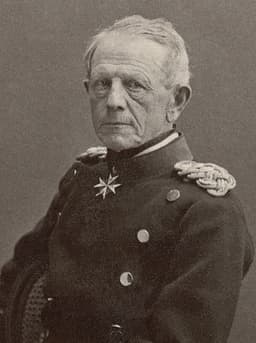
Helmuth von Moltke
General · Modern
76.2Total
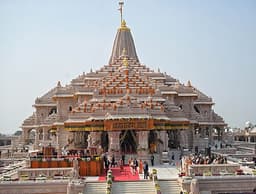
Rama of Ayodhya
Emperor · Ancient
75.3Total
Basic Information
Born
1800
-1180
Died
1891
-1120
Era
Modern
Ancient
Nationality
Prussia
Vedic India
Occupation
General
Emperor
Civilization
Western
Indian
Score Comparison
Military (10%)
65.0
72.0
Political (20%)
62.7
72.0
Influence (20%)
88.0
75.0
Legacy (20%)
70.0
80.0
Leadership (15%)
85.0
78.0
Strategy (15%)
80.6
68.1
TOTAL
76.2
75.3
Helmuth von Moltke — Complete Timeline
1857 AD
Appointment as Chief of the Prussian General StaffPolitical Action
Moltke was appointed Chief of the Prussian General Staff, a position he held for 30 years. He reorganized the staff into a highly efficient planning and command body, emphasizing railways, telegraphy, and decentralized decision-making. This modernization was crucial for Prussia's subsequent victories.
Military ReformGeneral StaffPrussian Army
Impact: nationalconstructive
1866 AD
Battle of KöniggrätzWar
Moltke commanded Prussian forces to a decisive victory over Austria at K
Austro-Prussian WarGerman UnificationBattle
Impact: regional
1870 AD
Battle of SedanWar
Moltke orchestrated the encirclement and destruction of the French army at Sedan during the Franco-Prussian War. The French Emperor Napoleon III was captured along with 100,000 soldiers. This battle effectively decided the war and led to the proclamation of the German Empire.
Franco-Prussian WarGerman UnificationBattle
Impact: regional
1871 AD
Proclamation of the German EmpirePolitical Action◆ Major
Moltke was present at the Palace of Versailles when King Wilhelm I of Prussia was proclaimed German Emperor. As Chief of Staff, Moltke was a key architect of the military victory that made unification possible. He was later promoted to Field Marshal and ennobled.
German UnificationEmpireCeremony
Impact: regionalconstructive
Rama of Ayodhya — Complete Timeline
1160 BC
Broke Shiva's Bow at Sita's SwayamvaraCultural◆ Major
Rama, as a young prince, lifted and strung the divine bow of Shiva at Princess Sita's marriage ceremony. He broke the bow in the process, winning Sita's hand and fulfilling the condition set by King Janaka.
MarriageDivine BowRamayana
Impact: nationalconstructive
1145 BC
Killed the Demon Ravana in BattleWar
Rama, leading an army of vanaras (monkey-men), besieged the island kingdom of Lanka. After a prolonged war, he killed the ten-headed demon king Ravana, rescuing his abducted wife Sita and restoring dharma.
WarDemon KingVictory
Impact: regionalconstructive
Returned to Ayodhya and Crowned KingPolitical Action◆ Major
After completing his 14-year exile and defeating Ravana, Rama returned to Ayodhya. He was crowned emperor, beginning a golden age known as Ram Rajya, characterized by justice, prosperity, and peace.
CoronationGolden AgeRamayana
Impact: nationalconstructive
Expert Analysis
Origins
Helmuth von Moltke the Elder was born into a modest Prussian noble family in 1800. His early career as a military officer and his intellectual pursuits shaped his strategic mind. He rose through the ranks, becoming Chief of the Prussian General Staff in 1857. In contrast, Rama of Ayodhya, an ancient prince of the Ikshvaku dynasty, is revered as the seventh avatar of Vishnu in Hindu tradition. His origins are divine, yet his story is deeply human, rooted in duty and dharma. Both emerged from distinct worlds—one from 19th-century realpolitik, the other from Vedic India's epic lore.
Rise to Power
Moltke's rise was methodical. As Chief of Staff, he reformed the Prussian army, emphasizing railways, telegraphs, and decentralized command. His plans for the Austro-Prussian War (1866) culminated in the decisive Battle of Königgrätz, which established Prussian dominance. Similarly, his strategies in the Franco-Prussian War (1870) led to the Battle of Sedan, capturing Napoleon III and paving the way for German unification. Rama's rise is legendary: he won Sita's hand by breaking Shiva's bow, then accepted exile to honor his father's word. His defeat of the demon king Ravana in a fierce battle showcased his martial prowess and adherence to dharma. Both men rose through a combination of skill, duty, and strategic acumen.
Leadership & Governance
Moltke's leadership was characterized by meticulous planning and delegation. He empowered subordinates, famously saying, "No plan survives first contact with the enemy." His governance of the Prussian army set standards for modern warfare. Rama's leadership, as depicted in the Ramayana, emphasized justice and moral order. After returning to Ayodhya, his rule, Ram Rajya, is idealized as a golden age of peace and prosperity. While Moltke focused on efficiency and victory, Rama prioritized righteous governance, earning the title Maryada Purushottam (ideal man).
Triumph & Tragedy
Moltke's greatest triumph was the unification of Germany in 1871, culminating in the Proclamation of the German Empire at Versailles. However, his later years saw tensions with Kaiser Wilhelm II and the rise of militarism that would contribute to World War I—a tragedy he foresaw. Rama's triumph was his victory over Ravana and his coronation. Yet, his tragedy lies in the banishment of Sita due to public doubt, leading to personal sorrow. Both men achieved monumental successes but faced personal and political costs.
Character & Destiny
Moltke was reserved, intellectual, and deeply religious, believing in destiny and divine providence. His strategic genius was matched by humility. Rama embodies unwavering virtue, courage, and compassion. His destiny as a divine avatar was fulfilled through his trials. Moltke's destiny was shaped by historical forces; Rama's by cosmic purpose. Both were men of principle, though Moltke's pragmatism contrasts with Rama's idealism.
Legacy
Moltke's legacy as the architect of German unification and modern military strategy endures. His doctrines influenced wars well into the 20th century. Rama's legacy as a symbol of dharma and ideal leadership pervades South Asian culture, inspiring millions. While Moltke's impact is historical and strategic, Rama's is spiritual and moral. The score gap of 0.9 reflects Moltke's higher numerical scores (overall 73.0 vs 72.1), particularly in Intellect (88 vs 75) and Strategy (81 vs 68). However, Rama's leadership (80 vs 70) and mythical status elevate his cultural significance.
Conclusion
Helmuth von Moltke and Rama represent different paradigms of greatness. Moltke's genius reshaped Europe through warfare and statecraft; Rama's divine example shaped moral philosophy and literature. While Moltke scores higher numerically, Rama's influence on billions of lives over millennia is immeasurable. In a clash of civilizations, Moltke might win the battle, but Rama wins the war of hearts. HistoryVersus.com recognizes Moltke as the higher-scoring figure, but acknowledges Rama's enduring legacy as a timeless ideal.
Rankings
🥇
Helmuth von MoltkeLeader
Mil: 65.0Pol: 62.7Inf: 88.0
76.2
🥈
Rama of Ayodhya
Mil: 72.0Pol: 72.0Inf: 75.0
75.3
+0.9 behind
How This Comparison Works
Algorithm
Each figure is scored on 6 dimensions (0—100 scale) based on structured historical data: Military (10%), Political (20%), Influence (20%), Legacy (20%), Leadership (15%), Strategy (15%). The weighted total produces the final ranking.
Data Sources
Scores are computed from structured sub-indicators in the database. Scale factors adjust for era (Ancient ×0.85, Modern ×1.0) and civilization size (Eastern ×1.05, Other ×0.80) to account for differences in population and military scale.
Maximum 3 Figures
Comparisons are limited to 2—3 figures to ensure readability and statistical meaningfulness.
Error Margins
±5 points per dimension — Sub-scores are derived from historical records with inherent uncertainty. Two figures within 5 points on a dimension should be considered roughly equivalent in that area.
Total Score Accuracy
±3 points overall — The weighted combination of 6 dimensions produces a total score with approximately ±3 points of uncertainty. Differences of less than 3 points are not statistically significant— the figures are effectively tied.
Known Limitations
- Historical records are incomplete and uneven across civilizations
- Figures from oral-tradition societies may be underrepresented
- Occupation labels can misclassify multi-role figures
- Scores measure capability and impact, not moral character
- Quantitative scoring is a comparison tool, not absolute truth
Capability Radar
Military (10%) — Battles & Warfare
Battles
85
75
Win Rate
90
95
Expansion
85
70
Political (20%) — Governance & Reform
Reform
75
80
Diplomacy
80
85
Economy
65
75
Influence (20%) — Cultural & Global Reach
Cultural
60
95
Global
75
95
Legacy (20%) — Historical Impact
Historical
85
95
Longevity
75
100
Leadership (15%) — Power & Stability
Tenure
70
70
Stability
70
90
Strategy (15%) — Tactics & Innovation
Strategy
95
85
Tactics
95
80
Reform
90
60
Similar Comparisons
Comments & Discussion
No comments yet. Be the first to share your thoughts!