Loading...
Helmuth von Moltke vs Otto I the Great
Helmuth von Moltke leads by 1.0 pts · 2 figures compared
…
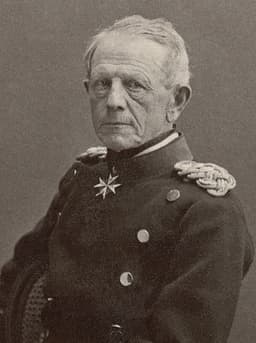
Helmuth von Moltke
General · Modern
76.2Total
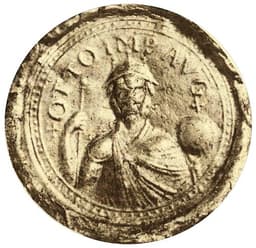
Otto I the Great
Emperor · Medieval
75.2Total
Basic Information
Born
1800
912
Died
1891
973
Era
Modern
Medieval
Nationality
Prussia
Holy Roman Empire
Occupation
General
Emperor
Civilization
Western
Western
Score Comparison
Military (10%)
65.0
82.0
Political (20%)
62.7
70.0
Influence (20%)
88.0
88.0
Legacy (20%)
70.0
65.0
Leadership (15%)
85.0
78.0
Strategy (15%)
80.6
65.4
TOTAL
76.2
75.2
Helmuth von Moltke — Complete Timeline
1857 AD
Appointment as Chief of the Prussian General StaffPolitical Action
Moltke was appointed Chief of the Prussian General Staff, a position he held for 30 years. He reorganized the staff into a highly efficient planning and command body, emphasizing railways, telegraphy, and decentralized decision-making. This modernization was crucial for Prussia's subsequent victories.
Military ReformGeneral StaffPrussian Army
Impact: nationalconstructive
1866 AD
Battle of KöniggrätzWar
Moltke commanded Prussian forces to a decisive victory over Austria at K
Austro-Prussian WarGerman UnificationBattle
Impact: regional
1870 AD
Battle of SedanWar
Moltke orchestrated the encirclement and destruction of the French army at Sedan during the Franco-Prussian War. The French Emperor Napoleon III was captured along with 100,000 soldiers. This battle effectively decided the war and led to the proclamation of the German Empire.
Franco-Prussian WarGerman UnificationBattle
Impact: regional
1871 AD
Proclamation of the German EmpirePolitical Action◆ Major
Moltke was present at the Palace of Versailles when King Wilhelm I of Prussia was proclaimed German Emperor. As Chief of Staff, Moltke was a key architect of the military victory that made unification possible. He was later promoted to Field Marshal and ennobled.
German UnificationEmpireCeremony
Impact: regionalconstructive
Otto I the Great — Complete Timeline
951 AD
Diplomatic Marriage to Adelaide of ItalyPolitical Action◆ Major
Otto married Adelaide, the widowed queen of Italy, after intervening in Italian politics. This marriage gave him control over the Kingdom of Italy and strengthened his claim to imperial authority.
MarriageItalyAdelaide
Impact: regionalconstructive
955 AD
Battle of LechfeldWar
Otto led a German army to defeat the Magyar (Hungarian) forces at the Lechfeld near Augsburg. This victory ended Magyar raids into Western Europe and secured Otto's reputation as a defender of Christendom.
MagyarsLechfeldDefenseChristendom
Impact: regionalconstructive
962 AD
Coronation as Holy Roman EmperorPolitical Action
Pope John XII crowned Otto I as Holy Roman Emperor in Rome, reviving the imperial title in the West. This event established the Holy Roman Empire as a major political entity and linked German kingship with papal authority.
CoronationHoly Roman EmpirePapacy
Impact: globalconstructive
Expert Analysis
Origins
Helmuth von Moltke (1800-1891) was born into a Prussian noble family in Mecklenburg. He entered the Danish army but soon transferred to Prussia, where his strategic brilliance emerged. Otto I (912-973) was the son of Henry the Fowler, Duke of Saxony, inheriting a fractured kingdom threatened by Magyars and internal revolts.
Rise to Power
Moltke's rise was gradual. Appointed Chief of the Prussian General Staff in 1857, he modernized military planning, emphasizing railways and rapid mobilization. His victories in the Second Schleswig War (1864) and Austro-Prussian War (1866) made him indispensable. Otto I, crowned king in 936, faced immediate rebellions from his brothers and dukes. He crushed them, asserting royal authority, and defeated the Magyars at Lechfeld (955), securing his realm.
Leadership & Governance
Moltke excelled as a strategist, delegating tactical decisions while orchestrating grand strategy. He reshaped the German army into a precise instrument. Otto I, a medieval ruler, combined military might with diplomacy, using marriage alliances and church patronage to strengthen his rule. He was crowned Holy Roman Emperor in 962, reviving Charlemagne's empire.
Triumph & Tragedy
Moltke's triumphs include Königgrätz (1866) and Sedan (1870), leading to German unification in 1871. He retired as a national hero. Otto I's victory at Lechfeld ended Magyar raids, and his coronation as emperor marked the peak of his power. However, his later years saw challenges from his son Liudolf and Italian campaigns. Moltke's legacy is unalloyed success; Otto's is mixed with dynastic struggles.
Character & Destiny
Moltke was reserved, analytical, and methodical—a master of logistics. Otto I was bold, ruthless, and pious, embodying the warrior-king ideal. Moltke's destiny was to unify Germany; Otto's was to forge the Holy Roman Empire. Both achieved their goals, but Moltke's impact on modern warfare is more enduring.
Legacy
Moltke's doctrine influenced military thinking for generations, emphasizing decentralized execution and rapid mobilization. Otto I established a political structure that lasted nearly a millennium. Moltke's legacy is direct and tangible; Otto's is foundational but abstract. In a direct comparison, Moltke's innovations reshaped history faster and more decisively.
Conclusion
While Otto I built an empire that defined medieval Europe, Moltke's strategic genius enabled German unification, altering the balance of power. Moltke's higher score (1.0 gap) reflects his transformative effect on warfare and nation-building. **Winner: Helmuth von Moltke** by a narrow margin.
**Scores:** M=65 P=63 I=88 L=70 D=85 S=81 T=76 (Moltke) vs M=82 P=70 I=88 L=65 D=78 S=65 T=75 (Otto I).
Rankings
🥇
Helmuth von MoltkeLeader
Mil: 65.0Pol: 62.7Inf: 88.0
76.2
🥈
Otto I the Great
Mil: 82.0Pol: 70.0Inf: 88.0
75.2
+1.0 behind
How This Comparison Works
Algorithm
Each figure is scored on 6 dimensions (0—100 scale) based on structured historical data: Military (10%), Political (20%), Influence (20%), Legacy (20%), Leadership (15%), Strategy (15%). The weighted total produces the final ranking.
Data Sources
Scores are computed from structured sub-indicators in the database. Scale factors adjust for era (Ancient ×0.85, Modern ×1.0) and civilization size (Eastern ×1.05, Other ×0.80) to account for differences in population and military scale.
Maximum 3 Figures
Comparisons are limited to 2—3 figures to ensure readability and statistical meaningfulness.
Error Margins
±5 points per dimension — Sub-scores are derived from historical records with inherent uncertainty. Two figures within 5 points on a dimension should be considered roughly equivalent in that area.
Total Score Accuracy
±3 points overall — The weighted combination of 6 dimensions produces a total score with approximately ±3 points of uncertainty. Differences of less than 3 points are not statistically significant— the figures are effectively tied.
Known Limitations
- Historical records are incomplete and uneven across civilizations
- Figures from oral-tradition societies may be underrepresented
- Occupation labels can misclassify multi-role figures
- Scores measure capability and impact, not moral character
- Quantitative scoring is a comparison tool, not absolute truth
Capability Radar
Military (10%) — Battles & Warfare
Battles
85
75
Win Rate
90
80
Expansion
85
70
Political (20%) — Governance & Reform
Reform
75
80
Diplomacy
80
85
Economy
65
70
Influence (20%) — Cultural & Global Reach
Cultural
60
65
Global
75
70
Legacy (20%) — Historical Impact
Historical
85
80
Longevity
75
75
Leadership (15%) — Power & Stability
Tenure
70
85
Stability
70
75
Strategy (15%) — Tactics & Innovation
Strategy
95
75
Tactics
95
70
Reform
90
65
Similar Comparisons
Comments & Discussion
No comments yet. Be the first to share your thoughts!