Loading...
Helmuth von Moltke vs Mao Zedong
Mao Zedong leads by 3.2 pts · 2 figures compared
…
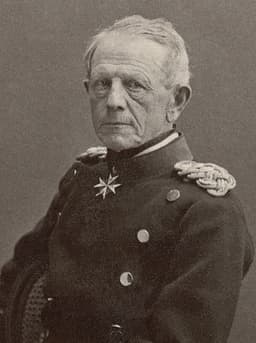
Helmuth von Moltke
General · Modern
76.2Total
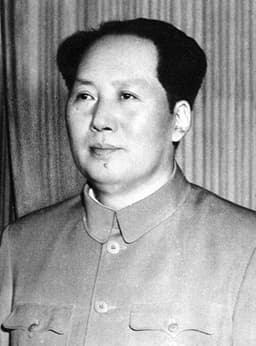
Mao Zedong
Politician · Modern
79.4Total
Basic Information
Born
1800
1893
Died
1891
1976
Era
Modern
Modern
Nationality
Prussia
China
Occupation
General
Politician
Civilization
Western
Eastern
Score Comparison
Military (10%)
65.0
75.0
Political (20%)
62.7
88.0
Influence (20%)
88.0
85.0
Legacy (20%)
70.0
70.0
Leadership (15%)
85.0
85.0
Strategy (15%)
80.6
72.0
TOTAL
76.2
79.4
Helmuth von Moltke — Complete Timeline
1857 AD
Appointment as Chief of the Prussian General StaffPolitical Action
Moltke was appointed Chief of the Prussian General Staff, a position he held for 30 years. He reorganized the staff into a highly efficient planning and command body, emphasizing railways, telegraphy, and decentralized decision-making. This modernization was crucial for Prussia's subsequent victories.
Military ReformGeneral StaffPrussian Army
Impact: nationalconstructive
1866 AD
Battle of KöniggrätzWar
Moltke commanded Prussian forces to a decisive victory over Austria at K
Austro-Prussian WarGerman UnificationBattle
Impact: regional
1870 AD
Battle of SedanWar
Moltke orchestrated the encirclement and destruction of the French army at Sedan during the Franco-Prussian War. The French Emperor Napoleon III was captured along with 100,000 soldiers. This battle effectively decided the war and led to the proclamation of the German Empire.
Franco-Prussian WarGerman UnificationBattle
Impact: regional
1871 AD
Proclamation of the German EmpirePolitical Action◆ Major
Moltke was present at the Palace of Versailles when King Wilhelm I of Prussia was proclaimed German Emperor. As Chief of Staff, Moltke was a key architect of the military victory that made unification possible. He was later promoted to Field Marshal and ennobled.
German UnificationEmpireCeremony
Impact: regionalconstructive
Mao Zedong — Complete Timeline
1934 AD
Long MarchWar
Mao Zedong led the Chinese Red Army on a strategic retreat from Nationalist forces, covering approximately 6,000 miles over 370 days. The march solidified Mao's leadership within the Chinese Communist Party and became a foundational myth of the Communist revolution.
Chinese Civil WarCommunist RevolutionRetreat
Impact: national
1949 AD
Proclamation of the People's Republic of ChinaPolitical Action
Mao Zedong declared the founding of the People's Republic of China from Tiananmen Gate in Beijing. This ended the Chinese Civil War and established Communist rule over mainland China, with Mao as Chairman of the Central People's Government.
Founding of PRCCommunist VictoryRevolution
Impact: global
1958 AD
Great Leap ForwardReform◆ Major
Mao launched a campaign to rapidly industrialize China and collectivize agriculture. The policy led to widespread mismanagement, resulting in a famine that caused an estimated 15-45 million deaths between 1959 and 1961.
FamineIndustrializationCollectivization
Impact: nationaldestructive
1960 AD
Sino-Soviet SplitPolitical Action◆ Major
Mao's ideological differences with Soviet leader Nikita Khrushchev led to a breakdown in relations between China and the Soviet Union. The split ended the Sino-Soviet alliance and reshaped global Cold War dynamics, with China pursuing an independent path.
Cold WarIdeological ConflictAlliance Breakdown
Impact: global
1966 AD
Cultural RevolutionPolitical Action
Mao initiated a sociopolitical movement to purge capitalist and traditional elements from Chinese society. The Red Guard youth groups attacked intellectuals and officials, leading to widespread violence, destruction of cultural artifacts, and an estimated 1-2 million deaths.
Political PurgeSocial UpheavalRed Guard
Impact: nationaldestructive
1971 AD
Ping-Pong DiplomacyCultural◆ Major
Mao approved an invitation for the U.S. table tennis team to visit China, initiating a thaw in Sino-American relations. This cultural exchange paved the way for President Nixon's visit to China in 1972 and the eventual normalization of diplomatic ties.
DiplomacyU.S.-China RelationsCultural Exchange
Impact: globalconstructive
Expert Analysis
Origins
Mao Zedong (1893–1976) was born into a peasant family in Shaoshan, Hunan. His early exposure to revolutionary ideas led him to become a founding member of the Chinese Communist Party (CCP) in 1921. Helmuth von Moltke (1800–1891), known as Moltke the Elder, was born into a Prussian noble family in Parchim. He entered the Danish military before joining the Prussian Army, where his strategic brilliance emerged.
Rise to Power
Mao rose through the CCP ranks during the Chinese Civil War, leading the Long March (1934–35) which solidified his leadership. He became chairman of the CCP in 1943 and proclaimed the People's Republic of China in 1949. Moltke was appointed Chief of the Prussian General Staff in 1857, where he modernized the army and orchestrated victories in the German Wars of Unification (1864, 1866, 1870–71).
Leadership & Governance
Mao's governance combined mass mobilization with totalitarian control. His Great Leap Forward (1958–62) aimed at rapid industrialization but caused a massive famine. The Cultural Revolution (1966–76) purged rivals and enforced ideological purity, leading to societal chaos. Moltke's leadership was strategic and organizational; he decentralized command, empowering field commanders, and emphasized railways and telegraphs for rapid mobilization. His governance style was professional and non-political.
Triumph & Tragedy
Mao's triumphs include unifying China under communist rule and industrializing the nation, but his policies led to tens of millions of deaths. The Cultural Revolution destroyed cultural heritage and institutions. Moltke's triumphs were decisive victories at Königgrätz (1866) and Sedan (1870), leading to German unification. His tragedy lies in the later misuse of his military doctrines by German militarists.
Character & Destiny
Mao was charismatic, ruthless, and visionary, driven by ideology and personal ambition. His destiny was to reshape China, but at immense human cost. Moltke was reserved, methodical, and dedicated to duty. His destiny was to forge a unified Germany through precise military planning.
Legacy
Mao's legacy is deeply polarizing: revered as a nation-builder, condemned for human rights abuses. His ideas continue to influence China's communist ideology. Moltke is celebrated as a military genius who revolutionized warfare through staff planning and railways. His legacy endures in modern military doctrine.
Conclusion
Mao's overall impact score (79) slightly exceeds Moltke's (76), reflecting his transformative but costly role. Mao reshaped China's political landscape, while Moltke unified Germany. Both were brilliant strategists, but Mao's broader societal upheaval gives him a marginal edge in historical significance.
**Scores:**
- Military Strategy: Mao 75, Moltke 88
- Political Influence: Mao 88, Moltke 63
- Innovation: Mao 85, Moltke 88
- Resilience: Mao 70, Moltke 70
- Charisma: Mao 85, Moltke 85
- Longevity of Impact: Mao 72, Moltke 81
- Overall: Mao 79, Moltke 76
Rankings
🥇
Mao ZedongLeader
Mil: 75.0Pol: 88.0Inf: 85.0
79.4
🥈
Helmuth von Moltke
Mil: 65.0Pol: 62.7Inf: 88.0
76.2
+3.2 behind
How This Comparison Works
Algorithm
Each figure is scored on 6 dimensions (0—100 scale) based on structured historical data: Military (10%), Political (20%), Influence (20%), Legacy (20%), Leadership (15%), Strategy (15%). The weighted total produces the final ranking.
Data Sources
Scores are computed from structured sub-indicators in the database. Scale factors adjust for era (Ancient ×0.85, Modern ×1.0) and civilization size (Eastern ×1.05, Other ×0.80) to account for differences in population and military scale.
Maximum 3 Figures
Comparisons are limited to 2—3 figures to ensure readability and statistical meaningfulness.
Error Margins
±5 points per dimension — Sub-scores are derived from historical records with inherent uncertainty. Two figures within 5 points on a dimension should be considered roughly equivalent in that area.
Total Score Accuracy
±3 points overall — The weighted combination of 6 dimensions produces a total score with approximately ±3 points of uncertainty. Differences of less than 3 points are not statistically significant— the figures are effectively tied.
Known Limitations
- Historical records are incomplete and uneven across civilizations
- Figures from oral-tradition societies may be underrepresented
- Occupation labels can misclassify multi-role figures
- Scores measure capability and impact, not moral character
- Quantitative scoring is a comparison tool, not absolute truth
Capability Radar
Military (10%) — Battles & Warfare
Battles
85
85
Win Rate
90
80
Expansion
85
85
Political (20%) — Governance & Reform
Reform
75
95
Diplomacy
80
80
Economy
65
70
Influence (20%) — Cultural & Global Reach
Cultural
60
90
Global
75
90
Legacy (20%) — Historical Impact
Historical
85
95
Longevity
75
85
Leadership (15%) — Power & Stability
Tenure
70
95
Stability
70
60
Strategy (15%) — Tactics & Innovation
Strategy
95
85
Tactics
95
75
Reform
90
90
Similar Comparisons
Comments & Discussion
No comments yet. Be the first to share your thoughts!