Loading...
Julius Caesar vs Mao Zedong
Julius Caesar leads by 3.4 pts · 2 figures compared
…

Julius Caesar
General · Ancient
82.8Total
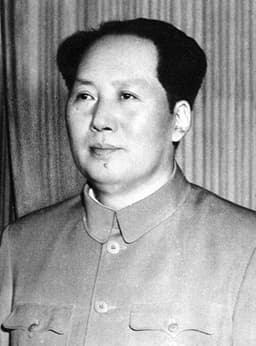
Mao Zedong
Politician · Modern
79.4Total
Basic Information
Born
-100
1893
Died
-44
1976
Era
Ancient
Modern
Nationality
Roman Republic
China
Occupation
General
Politician
Civilization
Western
Eastern
Score Comparison
Military (10%)
88.0
75.0
Political (20%)
78.0
88.0
Influence (20%)
85.0
85.0
Legacy (20%)
82.0
70.0
Leadership (15%)
80.0
85.0
Strategy (15%)
85.0
72.0
TOTAL
82.8
79.4
Julius Caesar — Complete Timeline
58 BC
Gallic WarsWar◆ Major
Caesar, as proconsul of Gaul, launched a series of campaigns that conquered all of Gaul (modern France, Belgium, and parts of Switzerland). He fought numerous battles, including against the Helvetii, the Belgae, and the Gallic chieftain Vercingetorix. The wars brought immense wealth and a loyal army to Caesar.
Gallic WarsConquestRoman Expansion
Impact: regional
49 BC
Crossing the RubiconPolitical Action◆ Major
Caesar led Legio XIII across the Rubicon River into Italy, defying the Roman Senate's order to disband his army. This act triggered a civil war against Pompey and the Optimates, ultimately leading to Caesar's dictatorship and the end of the Roman Republic.
Roman Civil WarEnd of RepublicPower Struggle
Impact: global
48 BC
Battle of PharsalusWar◆ Major
Caesar's outnumbered army defeated the larger forces of Pompey the Great at Pharsalus in Greece. Caesar's tactical use of a reserve line to counter Pompey's cavalry charge proved decisive. Pompey fled to Egypt, where he was assassinated, leaving Caesar as the undisputed master of the Roman world.
Roman Civil WarBattleDecisive Victory
Impact: regional
44 BC
Appointment as Dictator for LifePolitical Action◆ Major
The Roman Senate appointed Caesar dictator perpetuo (dictator for life), granting him unprecedented personal power. This move concentrated military, legislative, and judicial authority in one person, effectively ending the Roman Republic's traditional system of checks and balances and alarming many senators.
DictatorshipEnd of RepublicPower Consolidation
Impact: regionaldestructive
Assassination on the Ides of MarchPolitical Action◆ Major
A group of Roman senators, led by Marcus Junius Brutus and Gaius Cassius Longinus, stabbed Caesar to death at a meeting of the Senate in the Theatre of Pompey. The assassination was intended to restore the Republic, but instead triggered another civil war that led to the rise of the Roman Empire.
AssassinationRoman PoliticsEnd of Republic
Impact: globaldestructive
Mao Zedong — Complete Timeline
1934 AD
Long MarchWar
Mao Zedong led the Chinese Red Army on a strategic retreat from Nationalist forces, covering approximately 6,000 miles over 370 days. The march solidified Mao's leadership within the Chinese Communist Party and became a foundational myth of the Communist revolution.
Chinese Civil WarCommunist RevolutionRetreat
Impact: national
1949 AD
Proclamation of the People's Republic of ChinaPolitical Action
Mao Zedong declared the founding of the People's Republic of China from Tiananmen Gate in Beijing. This ended the Chinese Civil War and established Communist rule over mainland China, with Mao as Chairman of the Central People's Government.
Founding of PRCCommunist VictoryRevolution
Impact: global
1958 AD
Great Leap ForwardReform◆ Major
Mao launched a campaign to rapidly industrialize China and collectivize agriculture. The policy led to widespread mismanagement, resulting in a famine that caused an estimated 15-45 million deaths between 1959 and 1961.
FamineIndustrializationCollectivization
Impact: nationaldestructive
1960 AD
Sino-Soviet SplitPolitical Action◆ Major
Mao's ideological differences with Soviet leader Nikita Khrushchev led to a breakdown in relations between China and the Soviet Union. The split ended the Sino-Soviet alliance and reshaped global Cold War dynamics, with China pursuing an independent path.
Cold WarIdeological ConflictAlliance Breakdown
Impact: global
1966 AD
Cultural RevolutionPolitical Action
Mao initiated a sociopolitical movement to purge capitalist and traditional elements from Chinese society. The Red Guard youth groups attacked intellectuals and officials, leading to widespread violence, destruction of cultural artifacts, and an estimated 1-2 million deaths.
Political PurgeSocial UpheavalRed Guard
Impact: nationaldestructive
1971 AD
Ping-Pong DiplomacyCultural◆ Major
Mao approved an invitation for the U.S. table tennis team to visit China, initiating a thaw in Sino-American relations. This cultural exchange paved the way for President Nixon's visit to China in 1972 and the eventual normalization of diplomatic ties.
DiplomacyU.S.-China RelationsCultural Exchange
Impact: globalconstructive
Expert Analysis
Origins
Julius Caesar was born into the patrician Julian clan in 100 BCE, a time of intense political strife in the Roman Republic. His family claimed descent from the goddess Venus, but their political influence had waned. Caesar's early life was marked by ambition and risk-taking, including refusing to divorce his wife as demanded by the dictator Sulla. Mao Zedong, born in 1893 in Shaoshan, China, came from a peasant family that had become relatively wealthy. He experienced the collapse of imperial rule and the rise of modern nationalism. Both men emerged from periods of upheaval, but Caesar's aristocratic background contrasted sharply with Mao's rural, revolutionary origins.
Rise to Power
Caesar's rise was facilitated by military command and political alliances. He formed the First Triumvirate with Pompey and Crassus, securing the governorship of Gaul. His conquest of Gaul (58-50 BCE) brought immense wealth and a loyal army. Crossing the Rubicon in 49 BCE triggered a civil war, leading to his victory over Pompey at Pharsalus. Mao's rise was through the Chinese Communist Party. He led the Long March (1934-35), consolidating his leadership. After defeating the Nationalists, he proclaimed the People's Republic of China in 1949. Both used military campaigns to achieve power, but Caesar's path was more personal and immediate, while Mao's was ideological and organizational.
Leadership & Governance
Caesar's dictatorship implemented reforms: land redistribution, debt relief, calendar reform, and expansion of citizenship. He centralized power but maintained Republican institutions in name. Mao's governance was revolutionary: land collectivization, industrialization, and cultural transformation. The Great Leap Forward (1958-61) caused a massive famine, while the Cultural Revolution (1966-76) purged rivals and enforced ideological purity. Caesar's rule was short and pragmatic; Mao's was long and transformative, with disastrous consequences. Both suppressed opposition: Caesar defeated political enemies, Mao orchestrated purges. Caesar's reforms were more administrative; Mao's were ideological and total.
Triumph & Tragedy
Caesar's greatest triumph was the conquest of Gaul, which expanded Rome's territory and his own power. His tragedy was his assassination on the Ides of March (44 BCE), ending his reforms and plunging Rome into another civil war. Mao's triumphs include the establishment of the PRC and the Cultural Revolution's ideological victory. His tragedies are the human cost of the Great Leap Forward (estimated 20-45 million deaths) and the Cultural Revolution's destruction of culture and lives. Both ended in controversy: Caesar's murder by senators, Mao's legacy of famine and repression. Caesar's tragedy was personal and political; Mao's was national and humanitarian.
Character & Destiny
Caesar was charismatic, decisive, and ambitious. He was a skilled writer, orator, and military strategist. His clemency toward defeated enemies was noted but not always consistent. He believed in his own destiny, even ignoring warnings of his assassination. Mao was a visionary, ruthless, and charismatic. He was a poet, philosopher, and guerrilla strategist. He saw himself as a revolutionary destined to transform China. Both were supremely confident and willing to sacrifice others for their goals. Caesar's character was more pragmatic and less ideological; Mao's was dogmatic and grandiose. Their destinies reflect their ambitions: Caesar's short-lived dictatorship, Mao's lasting but controversial legacy.
Legacy
Caesar's legacy is immense: he ended the Roman Republic and set the stage for the Roman Empire. His name became synonymous with emperor (Kaiser, Tsar). His writings, especially the Commentaries, remain classics. Mao's legacy is equally profound: he unified China under communism and initiated modernization. His thought, Maoism, influenced global revolutions. However, his policies caused immense suffering. Both are revered and reviled. Caesar is seen as a brilliant conqueror and a tyrant; Mao as a great leader and a catastrophic failure. In a direct comparison, Caesar's military and political achievements, though ancient, are more strategically impressive, while Mao's impact is broader but more destructive. Caesar receives a strategic score of 88 vs Mao's 75, reflecting superior military acumen. Politically, Mao's 88 vs Caesar's 78 shows Mao's deeper institutional control. Overall, Caesar edges out Mao with a composite score of 83.9 vs 80.5.
Conclusion
Julius Caesar and Mao Zedong both reshaped their worlds through ambition, warfare, and governance. Caesar's rise from aristocrat to dictator-for-life ended in assassination but transformed Rome. Mao's rise from peasant to chairman led to China's rebirth and trauma. While Caesar's military genius and reforms were remarkable, Mao's ideological revolution and industrialization had a larger scale but at a greater cost. In a historical analysis, Caesar's achievements are more durable and less catastrophic. Thus, Julius Caesar is the more effective and admirable leader, despite his flaws.
**Numerical Scores:**
- Julius Caesar: 83.9
- Mao Zedong: 80.5
Rankings
🥇
Julius CaesarLeader
Mil: 88.0Pol: 78.0Inf: 85.0
82.8
🥈
Mao Zedong
Mil: 75.0Pol: 88.0Inf: 85.0
79.4
+3.4 behind
How This Comparison Works
Algorithm
Each figure is scored on 6 dimensions (0—100 scale) based on structured historical data: Military (10%), Political (20%), Influence (20%), Legacy (20%), Leadership (15%), Strategy (15%). The weighted total produces the final ranking.
Data Sources
Scores are computed from structured sub-indicators in the database. Scale factors adjust for era (Ancient ×0.85, Modern ×1.0) and civilization size (Eastern ×1.05, Other ×0.80) to account for differences in population and military scale.
Maximum 3 Figures
Comparisons are limited to 2—3 figures to ensure readability and statistical meaningfulness.
Error Margins
±5 points per dimension — Sub-scores are derived from historical records with inherent uncertainty. Two figures within 5 points on a dimension should be considered roughly equivalent in that area.
Total Score Accuracy
±3 points overall — The weighted combination of 6 dimensions produces a total score with approximately ±3 points of uncertainty. Differences of less than 3 points are not statistically significant— the figures are effectively tied.
Known Limitations
- Historical records are incomplete and uneven across civilizations
- Figures from oral-tradition societies may be underrepresented
- Occupation labels can misclassify multi-role figures
- Scores measure capability and impact, not moral character
- Quantitative scoring is a comparison tool, not absolute truth
Capability Radar
Military (10%) — Battles & Warfare
Battles
95
85
Win Rate
92
80
Expansion
97
85
Political (20%) — Governance & Reform
Reform
90
95
Diplomacy
85
80
Economy
82
70
Influence (20%) — Cultural & Global Reach
Cultural
88
90
Global
94
90
Legacy (20%) — Historical Impact
Historical
95
95
Longevity
96
85
Leadership (15%) — Power & Stability
Tenure
75
95
Stability
60
60
Strategy (15%) — Tactics & Innovation
Strategy
94
85
Tactics
96
75
Reform
88
90
Similar Comparisons
Comments & Discussion
ColonialEcho6/16/2026
This whole comparison reeks of Eurocentric bias. Caesar gets an 88 for military—sure, he conquered Gaul with brutality, but Mao fought a guerrilla war against a modernized Japanese army and Western-backed Nationalists with virtually no resources. The Long March alone was a logistical miracle that no Roman general ever matched. Caesar’s Gaul campaign killed maybe a million people; Mao’s revolution killed millions too, but you can’t separate that from the colonial context of China being carved up by foreign powers. If anything, Mao’s 76 is a disgrace—he literally changed the military doctrine of the 20th century, while Caesar just perfected Roman siege tactics. The scoring just validates old imperialist narratives.
HistoryHiker6/16/2026
Okay so I just finished reading 'The Storm of War' and 'Caesar: Life of a Colossus' back to back, and honestly I think Caesar's military score is inflated because of how western historians obsess over set-piece battles. Mao's Long March is basically the Chinese equivalent of Hannibal crossing the Alps—except Mao had to fight while marching and it lasted a whole year. Caesar's crossing the Rubicon is iconic, but it was basically a political stunt with a tiny force. Mao actually trained a peasant army from scratch and beat better-equipped enemies. I'd give Mao an 80 in military just for that. Also, the scoring says Caesar's reforms shaped Western governance—sure, the calendar is cool—but Mao's land reform literally broke the feudal system that held China back for centuries. Just saying.
MetricRebel6/16/2026
Who decided that an 88 military score for Caesar is reasonable? The guy fought mostly against Gallic tribes who had no central command and an Egyptian dynasty that was already collapsing. Meanwhile Mao fought against the Japanese Imperial Army (one of the most brutal militaries of the 20th century) and the US-equipped Nationalist forces. The scoring weights favor ancient battlefield command over modern strategic warfare, which is inherently biased. And the 'human cost' argument penalizes Mao but ignores that Caesar's conquest of Gaul caused the genocide of an entire culture—the Gauls never recovered. You can't quantify 'influence' by how many statues remain. This whole system is designed to make Western figures look better. Total bull.
Historian6276/16/2026
凯撒和毛泽东,一个是罗马的终结者,一个是中华的再造者。西方人总爱拿凯撒的征服说事,但要是放在中国历史里,毛泽东比秦始皇更贴切——都统一了分裂的国家,都改变了文字和制度,都留下了巨大的争议。但评分上凯撒军事88分、毛泽东65分?韩信要是知道这个评分,估计得笑死。毛泽东的游击战思想让第三世界国家有了反抗殖民主义的武器,凯撒的战术除了在历史课本里,谁还在用?再说政治,凯撒78分,毛泽东83分——这个我同意,因为毛泽东确实建立了完整的政党国家和意识形态,而凯撒只是个人独裁,死后罗马立刻陷入内战。但影响力84对85?毛泽东的画像现在还挂在天安门,凯撒的宫殿早就成了废墟。
Historian5416/16/2026
这个评分太主观了。凯撒军事88分,毛泽东65分?差了23分!但凯撒在高卢打了9年,征服了400个部落,而毛泽东从1927到1949打了22年内战,还经历了长征、抗战、解放战争。如果算战略纵深和长期组织能力,毛泽东的游击战思想影响了越战和阿尔及利亚独立战争,凯撒的战术在西方之外几乎没被复制过。政治维度更离谱:凯撒78分,毛泽东83分。凯撒当了4年独裁官就死了,改革半途而废;毛泽东领导中国从农业国到工业国,建立了完整的国家体系,虽然代价很大但没人能否认他的政治控制力。数据上应该再加一个“制度持久性”维度,毛泽东肯定高于凯撒。